Artwork
View of a creek
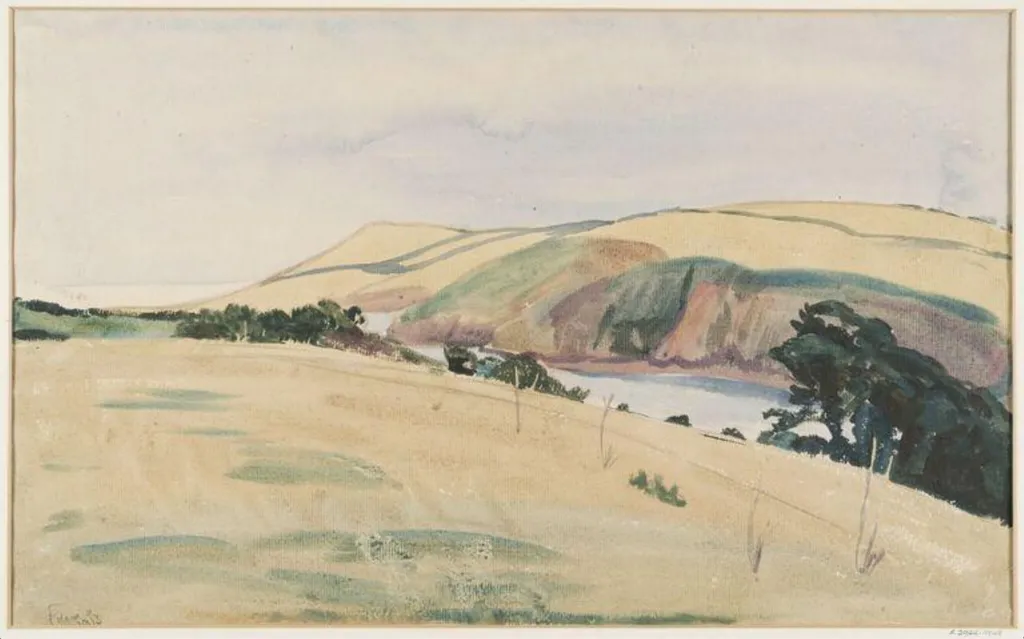
View of a creek is a watercolor work on paper by the Impressionist artist Edna Clarke Hall. It dates from 1913 and is held in the collection of the Victoria and Albert Museum. This watercolour presents a quiet rural landscape centered on a meandering creek.
About this work
Overview
The medium’s transparency enhances the lightness of the atmosphere, suggesting early morning or late afternoon light.
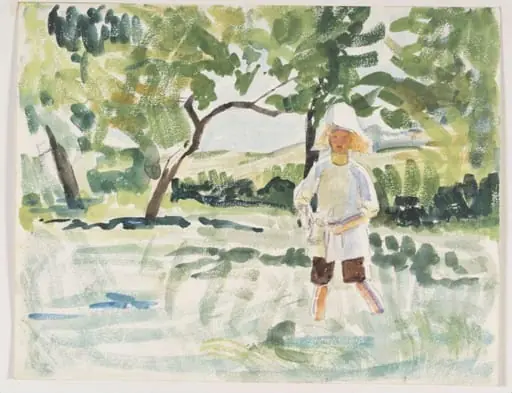
This watercolour presents a quiet rural landscape centered on a meandering creek. The composition extends from a foreground field to distant cliffs and a headland, creating a layered sense of space. Delicate brushwork and restrained tonal shifts define the scene, emphasizing stillness over drama. The medium’s transparency enhances the lightness of the atmosphere, suggesting early morning or late afternoon light.
Subject & Meaning
The scene captures an unremarkable stretch of countryside, devoid of human figures or architectural elements. The absence of narrative focus invites contemplation of natural rhythm and quiet endurance. The creek, framed by trees and open land, becomes a quiet conduit between earth and sky, reinforcing themes of solitude and natural harmony rather than any specific event or location.
Technique & Style
The artist employs thin, layered washes to build subtle gradations of green, blue, and earth tones. Brushstrokes are light and fluid, avoiding sharp definition in favor of atmospheric blending. Highlights are suggested through reserved paper rather than added pigment, enhancing the sense of luminosity. The technique prioritizes mood over detail, aligning with a tradition of lyrical landscape watercolour.
History & Provenance
The work is attributed to Edna Clarke Hall, an English artist active in the early 20th century known for her intimate landscapes. While no documented exhibition or ownership history is publicly available for this specific piece, its style and materials are consistent with her known practice. It likely dates from the 1910s–1930s, a period when she focused on rural English scenery.
Context
Created during a time when British watercolour was valued for its capacity to convey personal observation, this piece reflects a broader interest in quiet, unidealized nature. Unlike grand Romantic vistas, it aligns with a more modest, introspective tradition seen in artists like Samuel Palmer and later members of the New English Art Club, who sought emotional resonance in everyday landscapes.
Legacy
Though not widely exhibited, this watercolour exemplifies a quiet strand of early 20th-century British landscape art that valued sensitivity over spectacle. Its preservation contributes to understanding the breadth of female artists working in watercolour during a period when their contributions were often marginalized. The work remains a quiet testament to the expressive potential of restrained technique.
Artist & collection
Artist
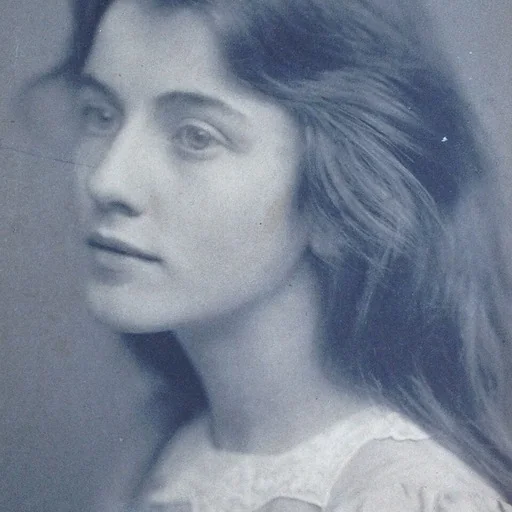
Edna Clarke Hall was a watercolour artist, etcher, lithographer and draughtsman who is mainly known for her many illustrations to Wuthering Heights by Emily Brontë.

 Derwentwater
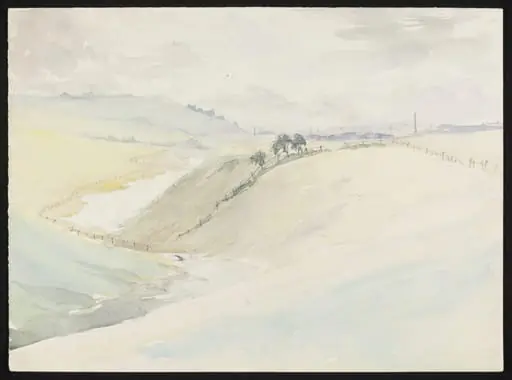 Looking towards Bury from the North of the city
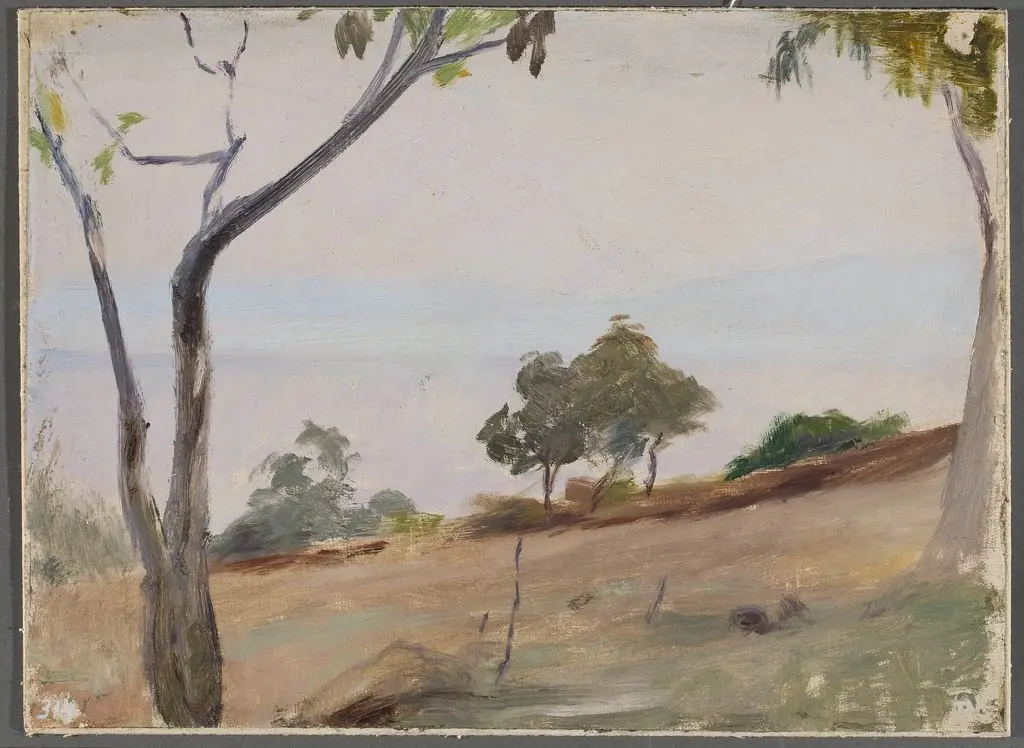 Landscape with trees. From the journey to Constantinople
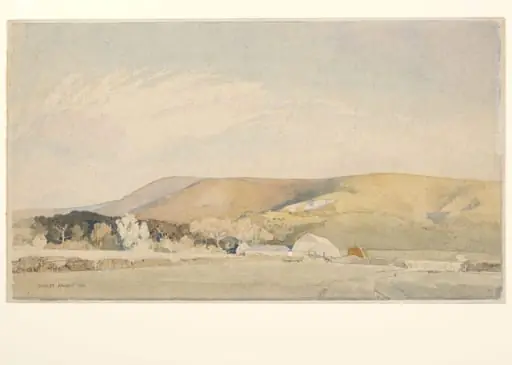 Lodge Barn, near Ditchling
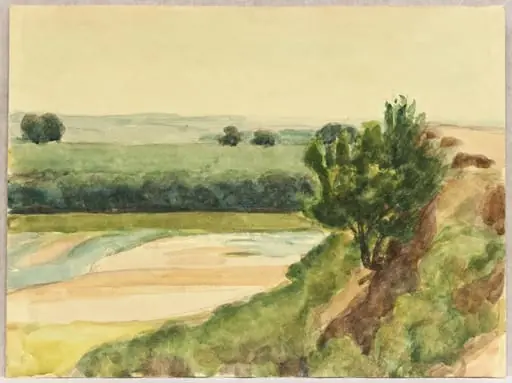 Peisaj panoramic
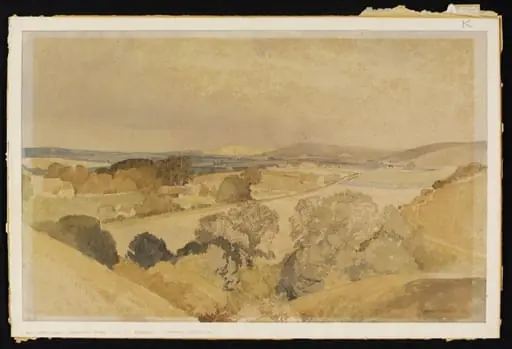 The Southdown, Underhill Road; Edburton, and the Road Eastwards
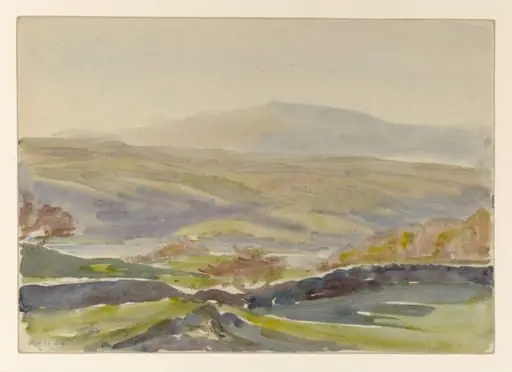 Monk Coniston moor
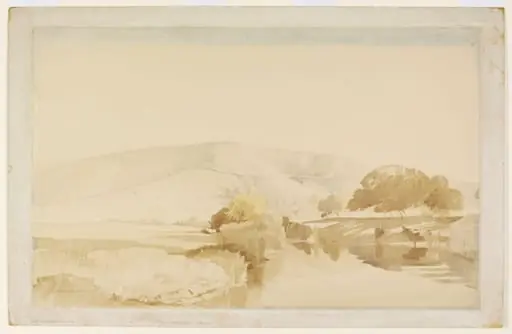 The Southdown, Underhill Road; Ditchling Beacon, from the Meadows near Westmeston
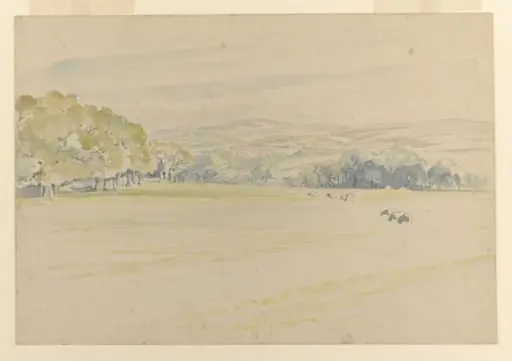 Sketch of a landscape near Denbigh
 View from the Wansdyke in Stanton St. Bernard
 Towpath, Richmond, 1913
 Untitled