Artwork
The Southdown, Underhill Road; Edburton, and the Road Eastwards
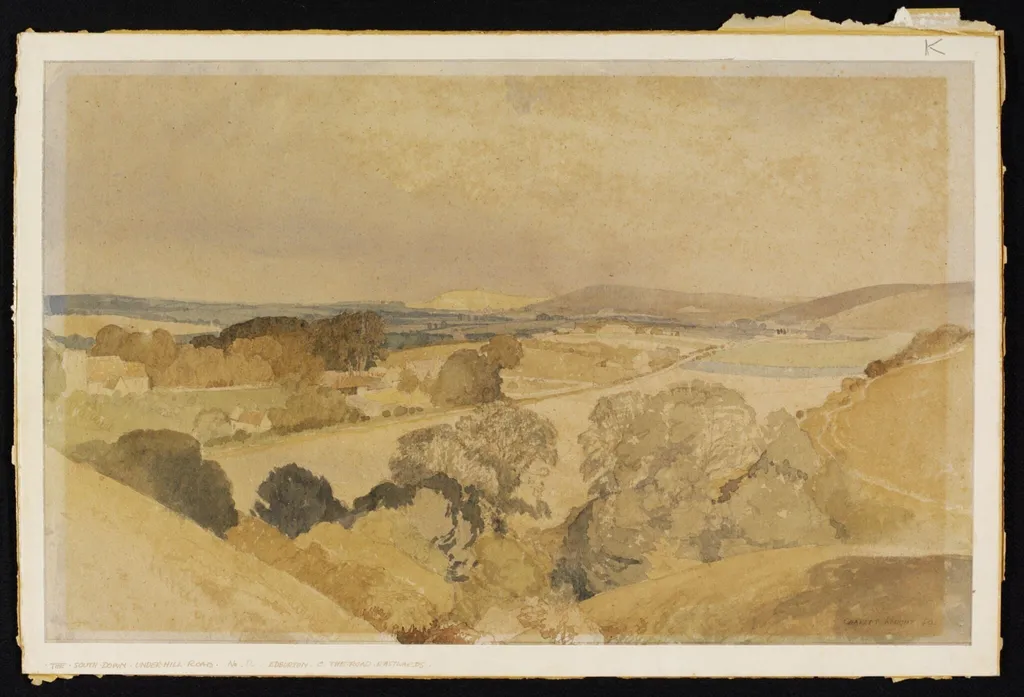
The Southdown, Underhill Road; Edburton, and the Road Eastwards is a watercolor work on paper by the British Romanticist artist Charles Knight. It dates from 1940 and is held in the collection of the Victoria and Albert Museum.
About this work
Overview
Charles Knight’s watercolour, executed in 1940, records a stretch of the Southdown near Underhill Road and the road extending eastward in the village of Edburton. The image captures a tranquil rural landscape, rendered in muted earth tones that convey a sense of quiet continuity during a period of national upheaval.
Subject & Meaning
The composition presents rolling hills, a meandering lane, scattered trees, modest dwellings, and an open sky, illustrating everyday countryside life. By documenting these ordinary features, the work underscores the value placed on preserving the visual memory of rural England at a time when war threatened both physical structures and traditional ways of life.
Technique & Style
Knight employs delicate, thin washes and light brushstrokes, allowing the paper’s surface to remain visible in places. This approach creates a sketch‑like quality, emphasizing immediacy over finish and lending the scene a slightly faded, atmospheric character.
History & Provenance
The watercolour was produced under the Recording Britain project, a wartime scheme initiated by the Ministry of Labour and National Service, financed by the Pilgrim Trust and supervised by Sir Kenneth Clark. It was intended to compile a visual archive of British locales considered at risk from bombing and post‑war change.
Context
Recorded Britain gathered contributions from artists across the country to document landscapes, towns, and customs perceived as vulnerable during World War II. Knight’s contribution reflects the broader governmental effort to safeguard cultural heritage through systematic visual documentation.
Artist & collection

Artist
Charles Knight was a British landscape painter and stained-glass artist, best remembered for his watercolour paintings of the landscapes of Sussex.

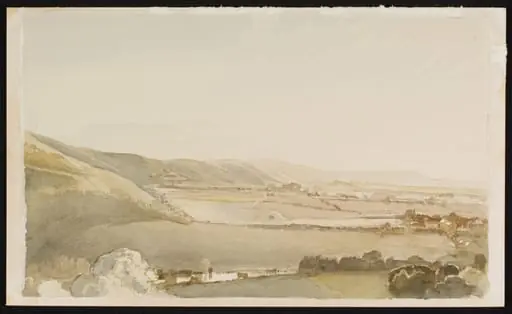 The Southdown, Underhill Road: Westwards from Poynings
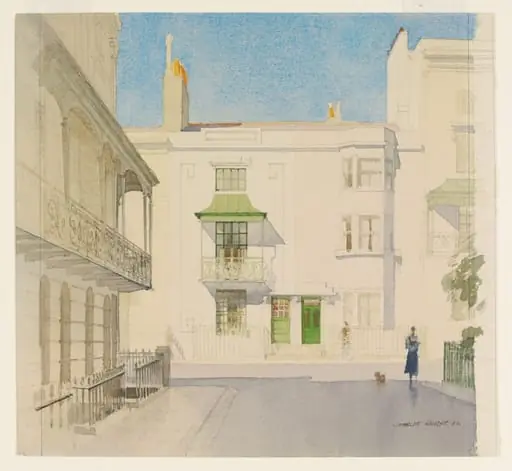 Regency Brighton: Houses in Russell Square, Sussex
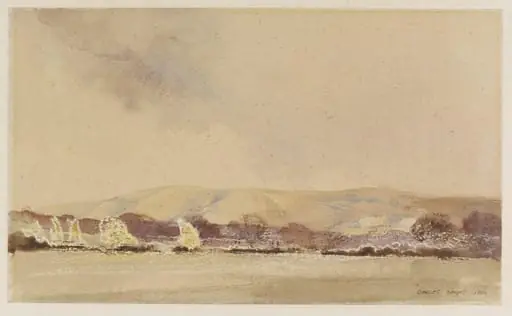 Fields and Woods South of Ditchling
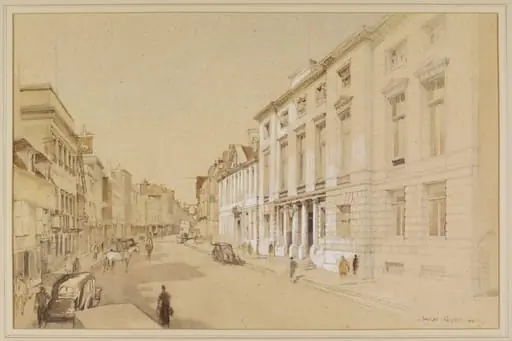 The County Hall and High Street, Lewes
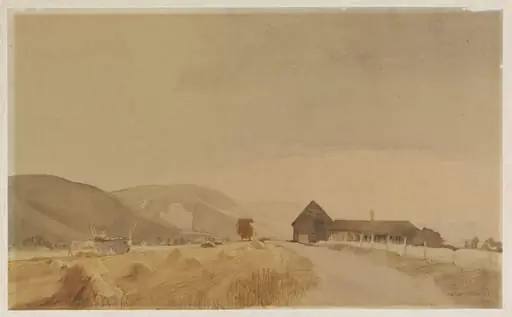 The Southdown, Underhill Road; Wickhurst Barn near Poynings looking Westwards
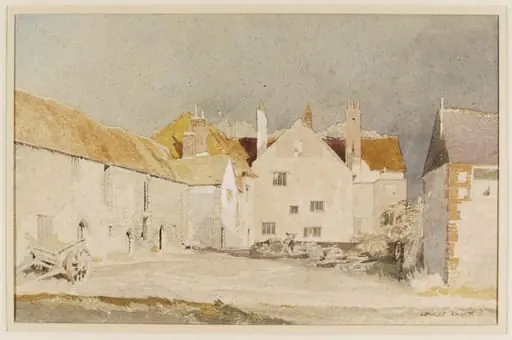 Hangleton Manor, near Brighton
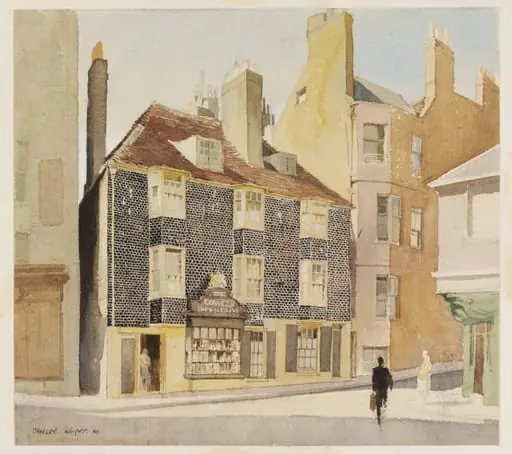 House and Shop in Pool Valley, Brighton
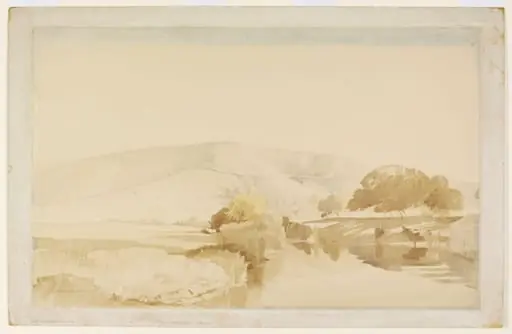 The Southdown, Underhill Road; Ditchling Beacon, from the Meadows near Westmeston
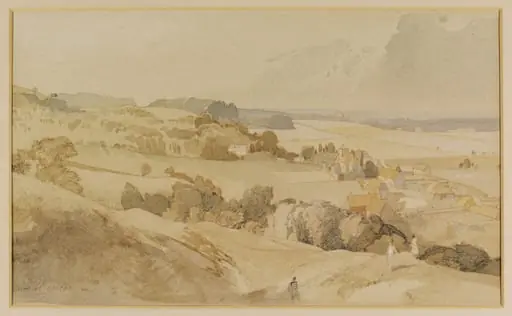 The Southdown, Underhill Road; Clayton Village
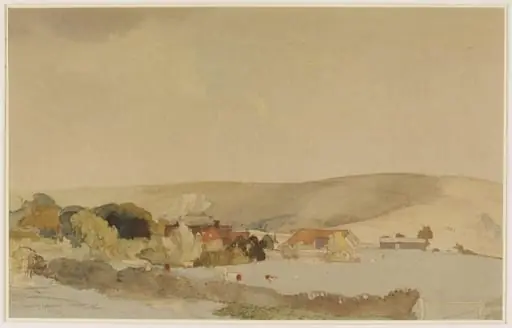 The Southdown, Underhill Road; Westmeston Place
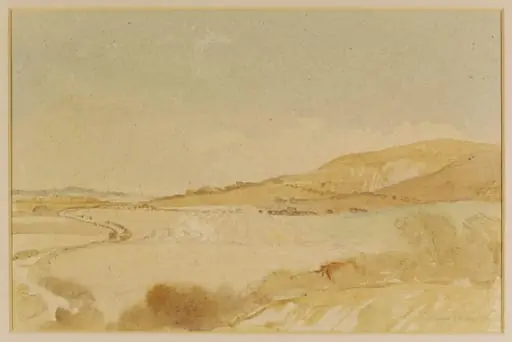 The Southdown, Underhill Road; Clayton to Westmeston
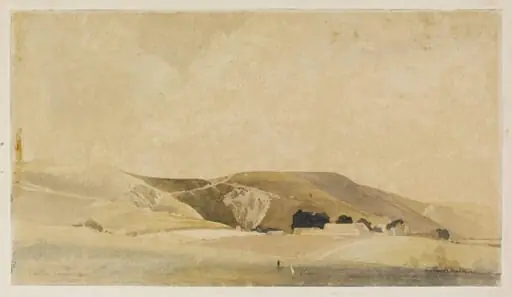 The Southdown, Underhill Road: Porching Farm from Fulking
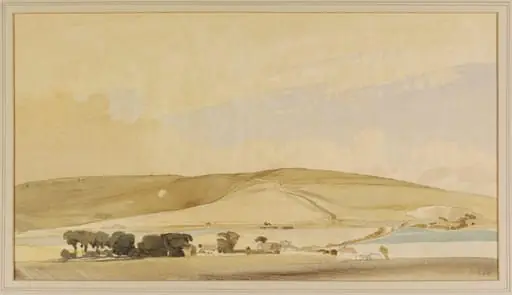 The Southdown, Underhill Road; In the Cuckmere Valley at Milton Street
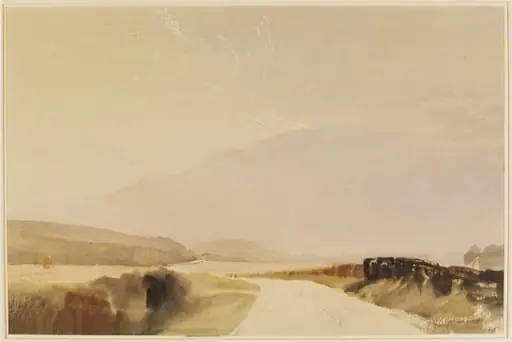 The Southdown, Underhill Road; Westwards towards Clayton
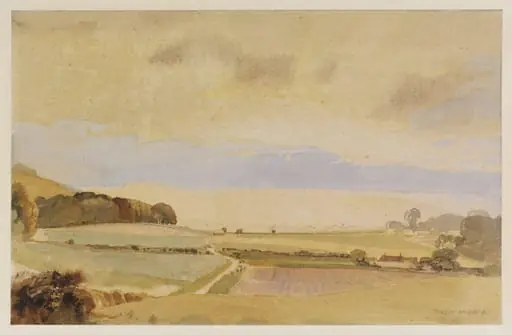 The Southdown, Underhill Road; Wolstonbury, showing Danny Farm