Artwork
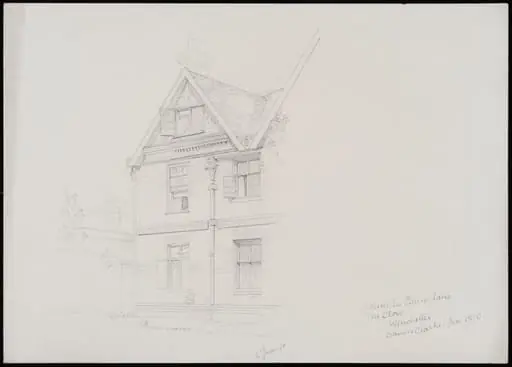
House at Ypres
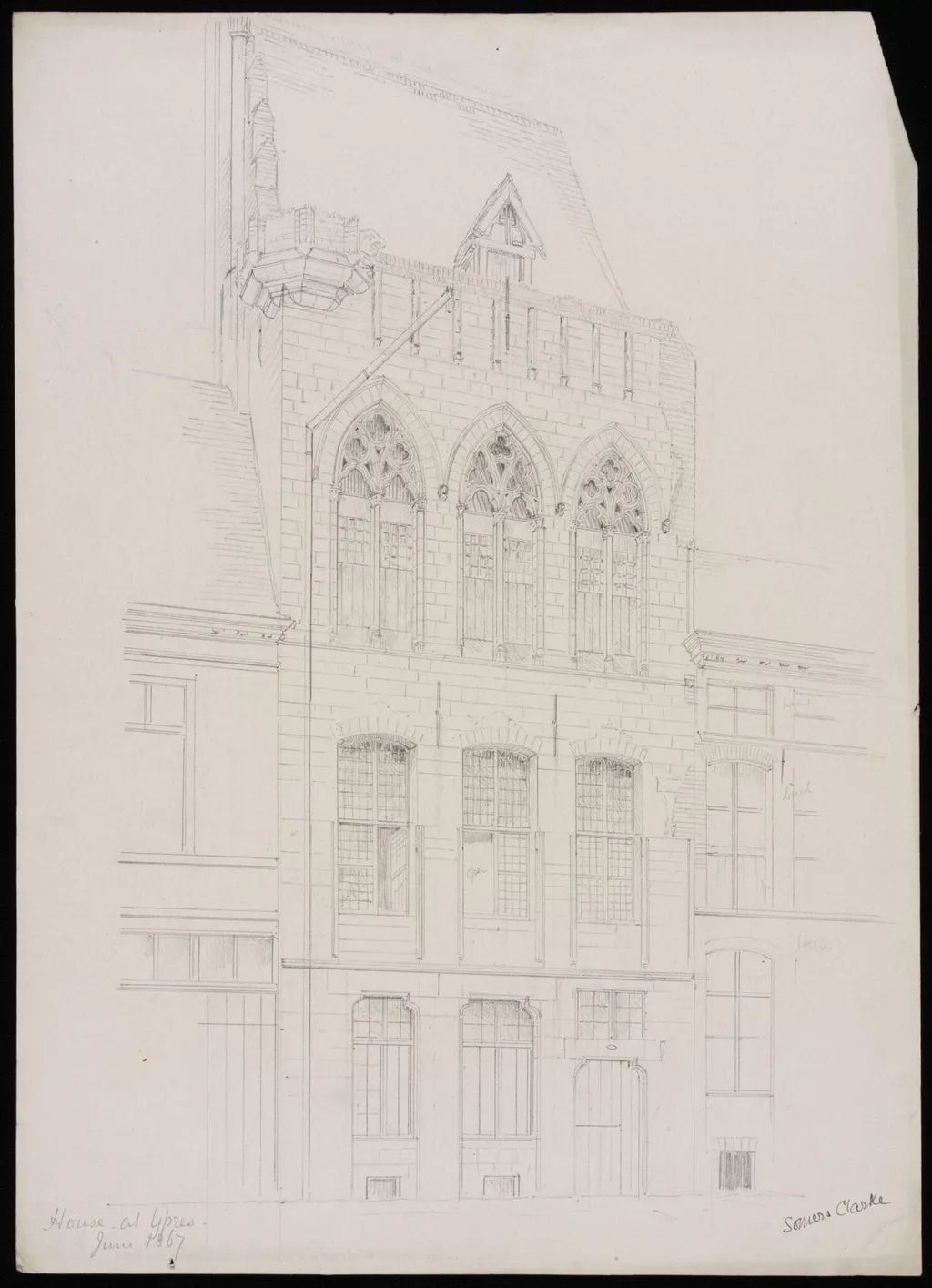
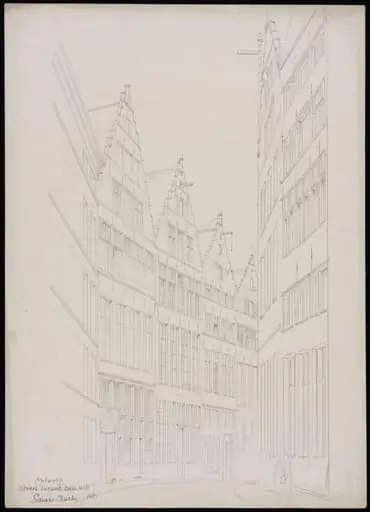
House at Ypres is a drawing by the Impressionist artist Somers Clarke. It dates from 1867 and is held in the collection of the Victoria and Albert Museum.
About this work
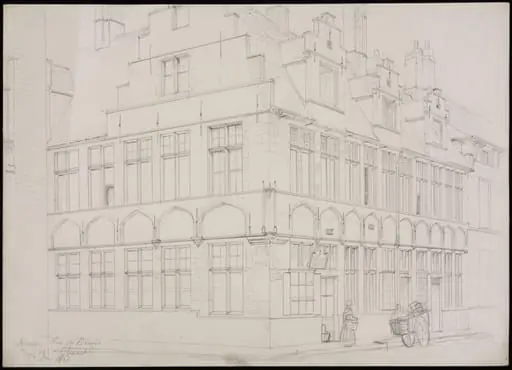
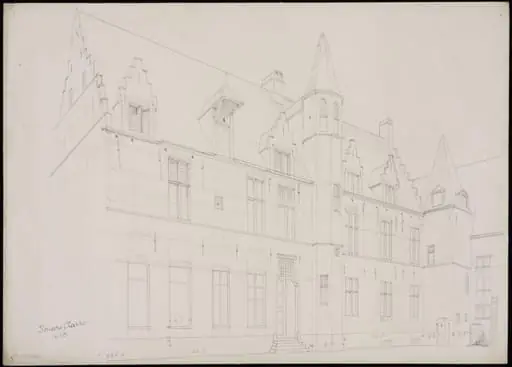
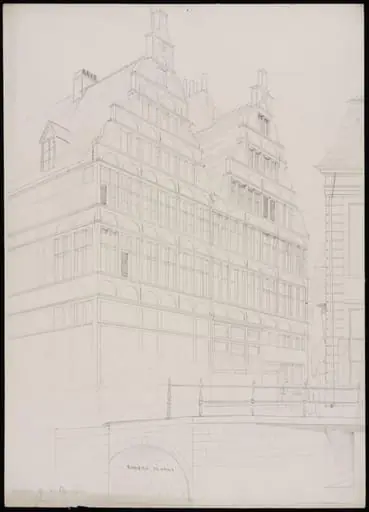
This sketch shows a tall brick building with three pointed windows near the top and smaller windows below.
This sketch shows a tall brick building with three pointed windows near the top and smaller windows below. The walls are drawn in light pencil lines, and the windows have simple glass panes. A steep roof with a small tower rises on the left side.
The artist labeled it "House at Ypres" in June 1867, showing a real building, not a dreamy scene. The pencil strokes are quick but careful, focusing on shapes and light.
Next, check out cross-hatching to see how artists build shadows with lines.
Overview
House at Ypres is a pencil drawing created by Somers Clarke in 1867, now part of the Victoria and Albert Museum's collection.
Subject & Meaning
The drawing depicts a specific, real-world building: a tall brick structure in Ypres, characterized by three upper pointed windows, smaller lower windows, and a steep roof with a small tower on the left. The subject is rendered in a straightforward, observational manner.
Technique & Style
Clarke employed light pencil lines to define the building's architecture, with simple representations of glass panes in the windows. The pencil work is marked by quick yet deliberate strokes, prioritizing the capture of shapes and light effects.
History & Provenance
Completed in June 1867, the drawing is directly attributed to Somers Clarke. It is currently housed at the Victoria and Albert Museum, though the full provenance history prior to its acquisition is not detailed here.
Artist & collection

Artist
George Somers Clarke was an architect and English Egyptologist who worked on the restoration and design of churches and at a number of sites throughout Egypt, notably in El Kab, where he built a mud brick house.