Artwork
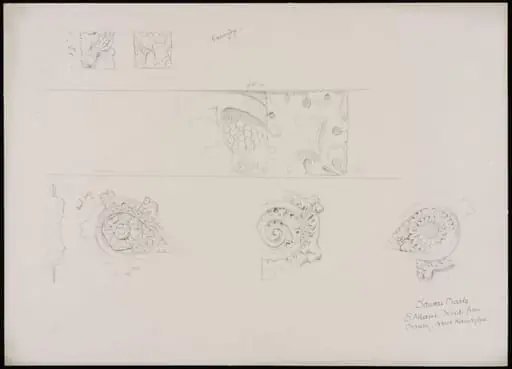
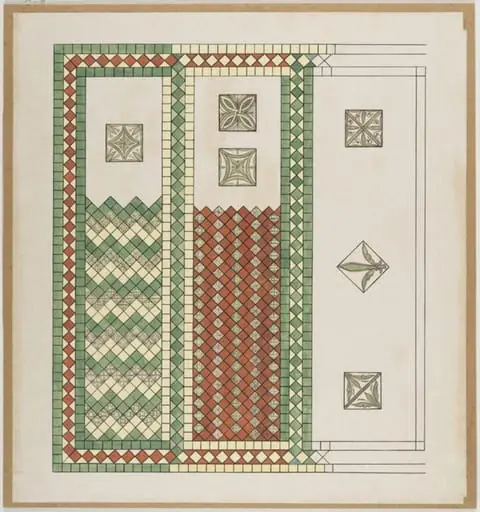
Details of marble inlay, Church of S. Miniato, Florence
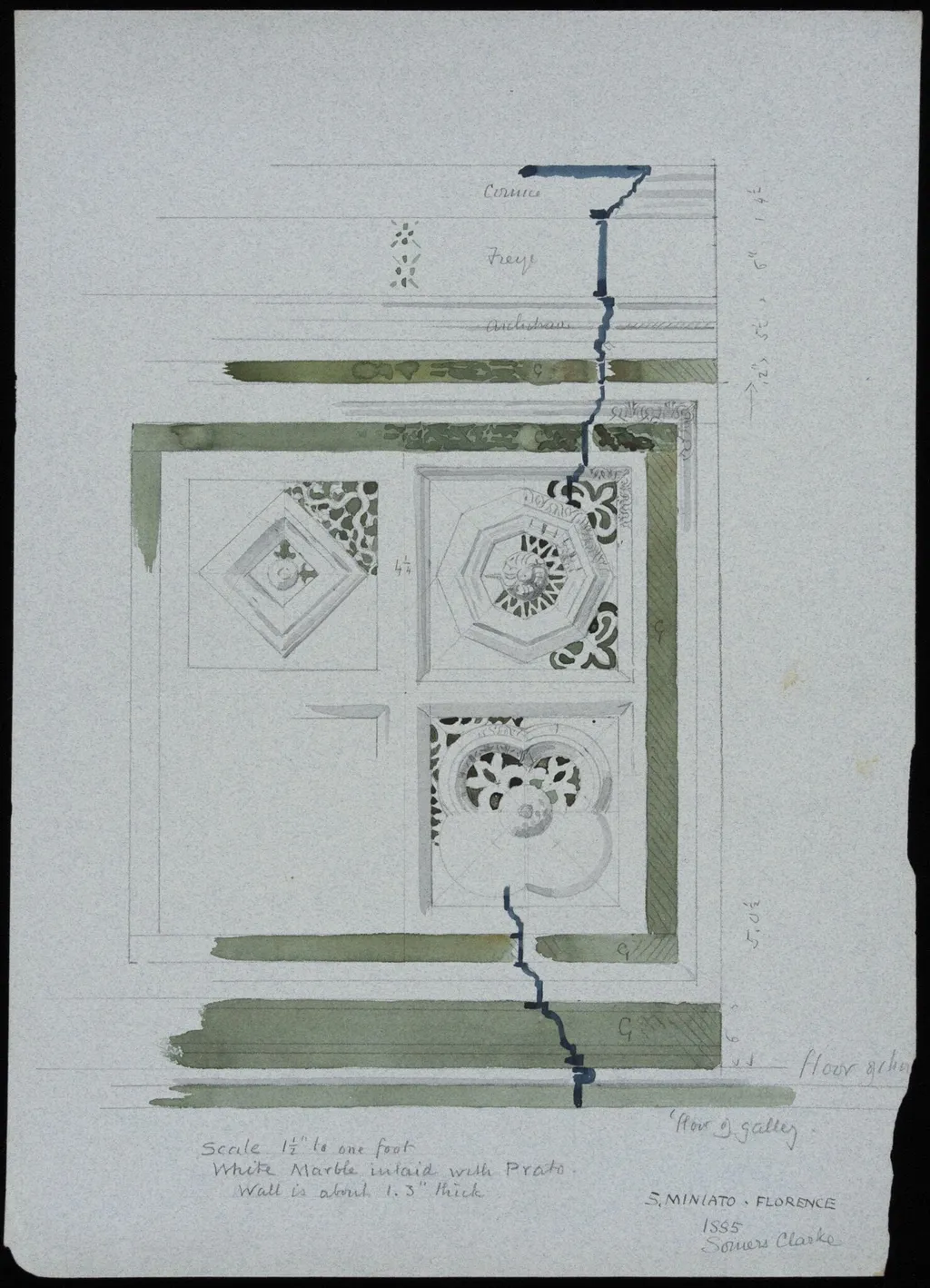
Details of marble inlay, Church of S. Miniato, Florence is a drawing by the Impressionist artist Somers Clarke. It dates from 1885 and is held in the collection of the Victoria and Albert Museum.
About this work
Overview
This pencil drawing by Somers Clarke documents specific sections of marble inlay from the Church of S. Miniato in Florence, highlighting the intricate patterns and craftsmanship of the inlaid marble surfaces.
Subject & Meaning
The drawing depicts three rectangular marble panels set into a wall, each featuring distinct geometric designs: a diamond, a starburst, and a circular motif. Included are architectural details like a gallery floor and cornice, along with technical notes on materials and dimensions.
Technique & Style
Clarke employed light pencil strokes to convey the texture of the marble and the interplay of light and shadow across its surfaces. The overall execution suggests a study or preliminary design rather than a finished artistic piece.
History & Provenance
Created as part of Clarke's documentation of the Church of S. Miniato, the drawing's primary purpose appears to be observational and possibly preparatory for further architectural or artistic work.
Context
The piece reflects 19th-century interests in detailing and preserving architectural heritage through precise drawings, likely influenced by the era's architectural and artistic documentation practices.
Legacy
As a detailed study, the drawing contributes to the archival record of the church's decorative elements, offering insights into both the craftsmanship of the period and Clarke's methodical approach to documentation.
Artist & collection

Artist
George Somers Clarke was an architect and English Egyptologist who worked on the restoration and design of churches and at a number of sites throughout Egypt, notably in El Kab, where he built a mud brick house.

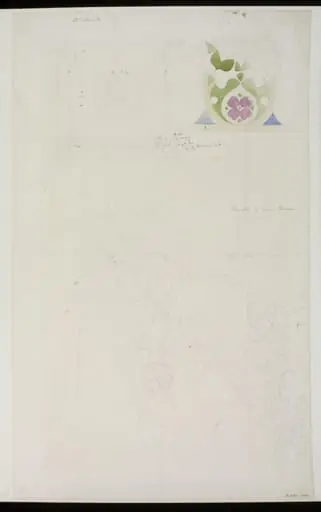 'Panells of Drawing room'
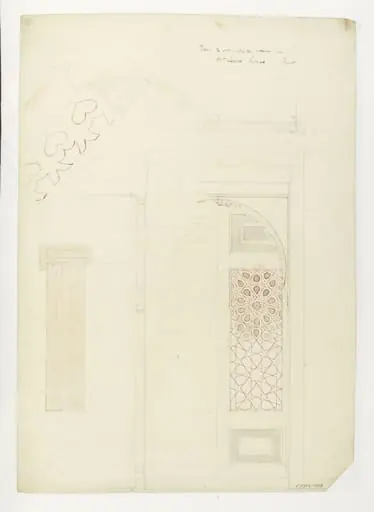 Drawing of a door, John Frederick Lewis house in Cairo
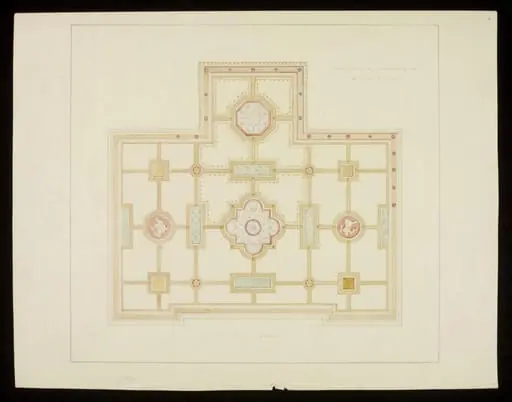 Ceiling of a drawing room at Rowfant, Crawley
 Untitled
 Untitled
 Ground Plan of the Church of Saint John the Baptist
 Study of frescos by Raphael on the ceiling of the Stanze della Segnatura in the Vatican Palace
 'Passage next to Drawing Room'
 Cairo: Loggia in Wood
 Topographical drawing
 Untitled