Artwork
House at Mechlin, formerly a convent
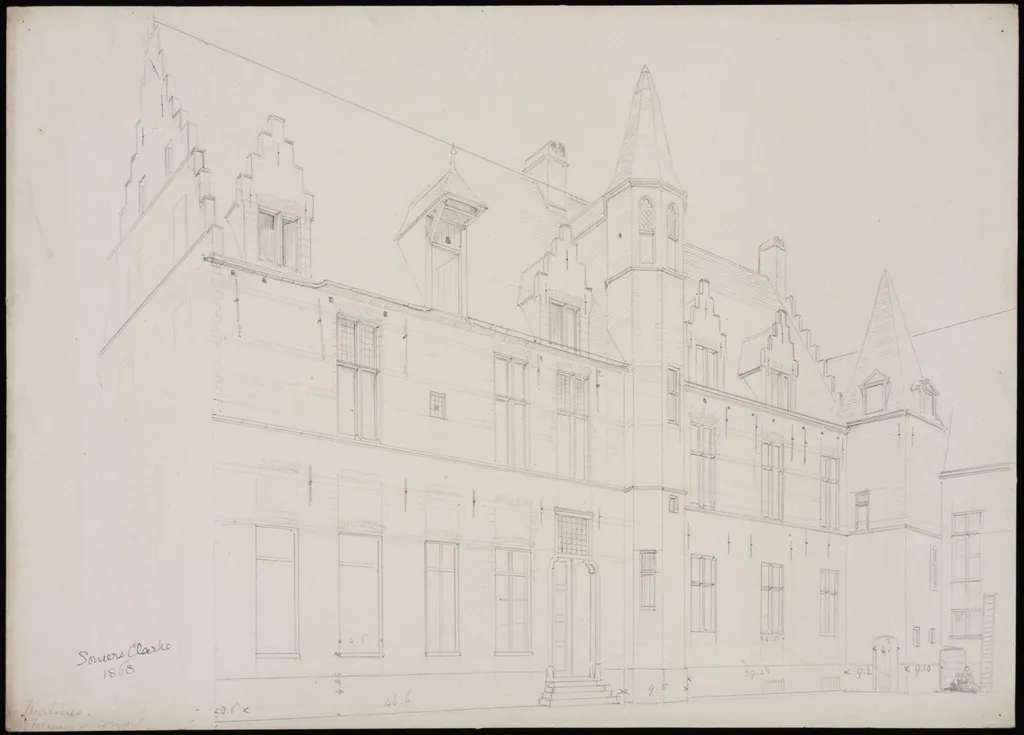
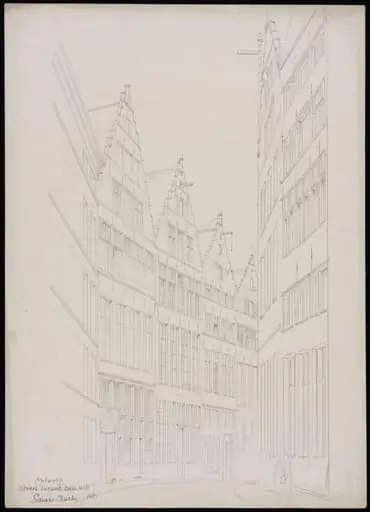
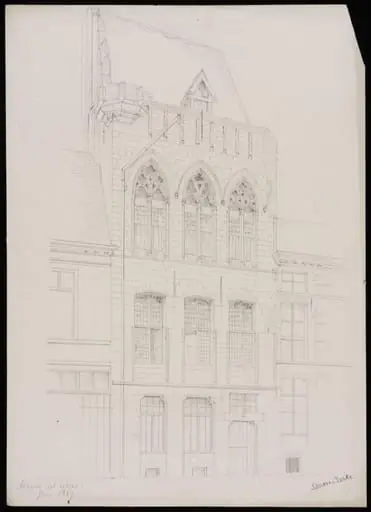
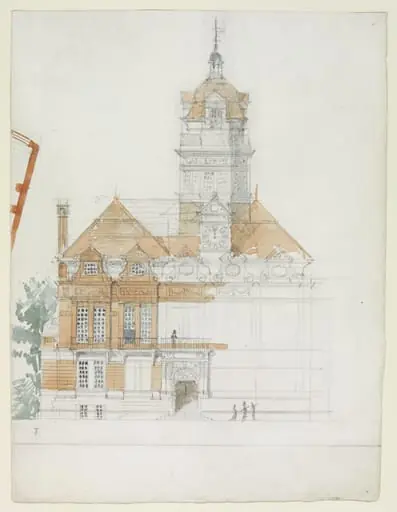
House at Mechlin, formerly a convent is a drawing by the Impressionist artist Somers Clarke. It dates from 1868 and is held in the collection of the Victoria and Albert Museum. This pencil drawing captures a former convent building in Mechlin, rendered with careful attention to architectural detail.
About this work
Overview
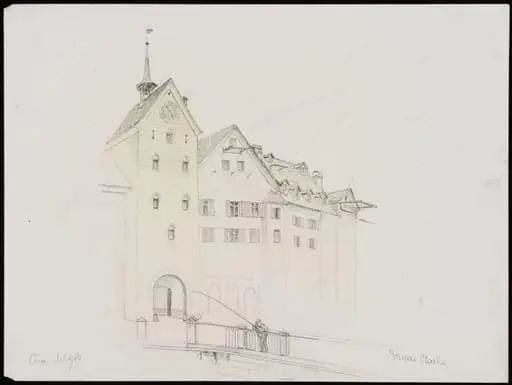
The composition centers on a prominent tower flanked by two smaller ones, with rows of windows and a substantial central doorway.
This pencil drawing captures a former convent building in Mechlin, rendered with careful attention to architectural detail. The composition centers on a prominent tower flanked by two smaller ones, with rows of windows and a substantial central doorway. The surface is densely worked with fine lines to suggest the texture of masonry and the play of light across stone surfaces, emphasizing the structure’s age and solidity.
Subject & Meaning
The building, once a religious house, retains the formal symmetry and massing typical of monastic architecture. Its conversion to secular use is implied but not explicitly stated; the drawing focuses on the physical presence of the structure rather than its past function. The open courtyard before it suggests a transition from sacred enclosure to public space, quietly marking the shift in its social role.
Technique & Style
Executed in pencil, the drawing employs layered hatching and precise contouring to define architectural elements. The artist renders stone surfaces through subtle gradations of tone and repeated linear strokes, avoiding wash or ink. The meticulous handling of window frames, arches, and rooflines reflects a topographical approach, prioritizing accuracy over expressive flourish.
History & Provenance
The drawing documents a specific building in Mechlin, likely created during or shortly after its transition from convent to private residence. While the artist’s identity is not recorded, the style aligns with 18th- or early 19th-century architectural documentation practices. Its survival suggests it was preserved as a record of local heritage, possibly for private or municipal archives.
Context
During the period of secularization following the French Revolution, many religious buildings across Europe were repurposed. This drawing belongs to a broader tradition of architectural records made by surveyors and amateur draftsmen who documented changing urban landscapes. Such works served practical and historical purposes, preserving forms that might otherwise be altered or lost.
Legacy
As a precise, unembellished record, the drawing contributes to the study of vernacular religious architecture in the Low Countries. It stands as an example of how everyday structures were observed and preserved through drawing, offering insight into the material culture of post-monastic life. Its value lies in its quiet fidelity to form, not in artistic fame.
Artist & collection

Artist
George Somers Clarke was an architect and English Egyptologist who worked on the restoration and design of churches and at a number of sites throughout Egypt, notably in El Kab, where he built a mud brick house.