Artwork
Shrimping
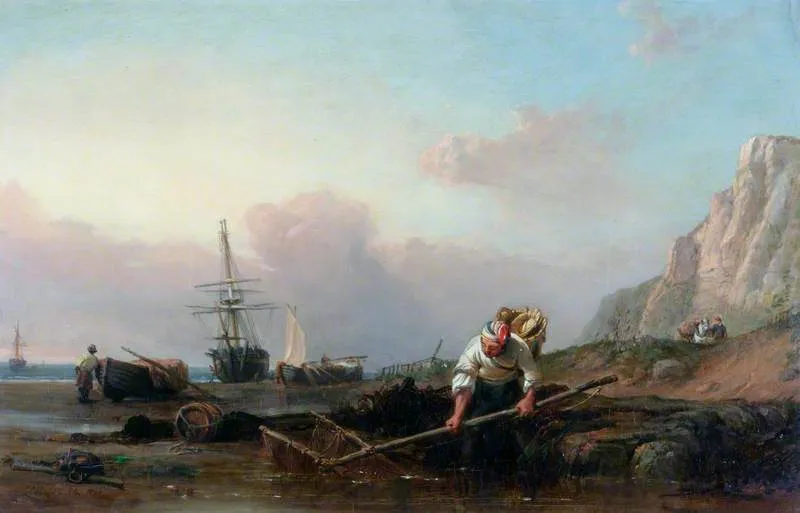
Shrimping is an unspecified painting by Clarkson Frederick Stanfield. It dates from 1848 and is held in the collection of the Victoria and Albert Museum.
About this work
Overview
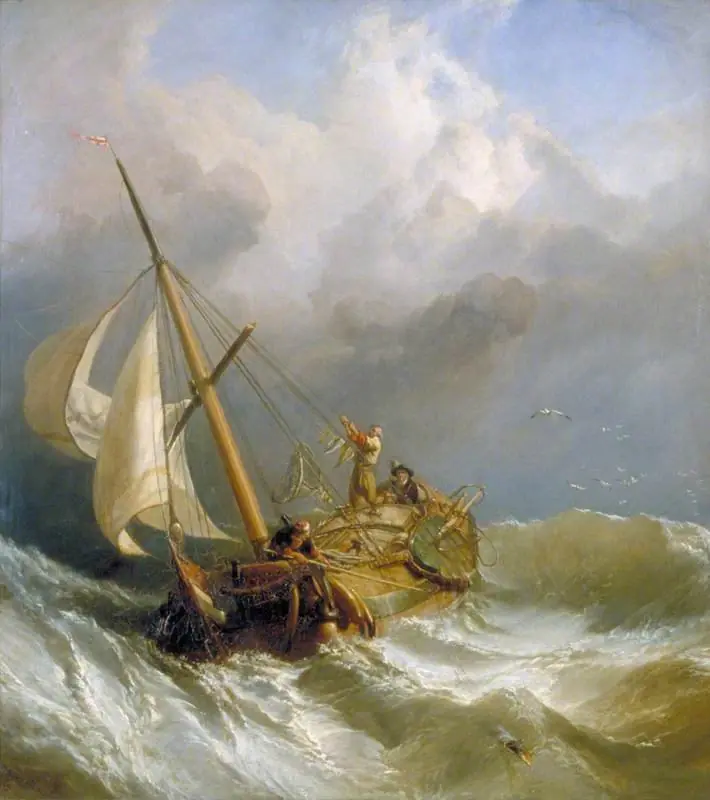
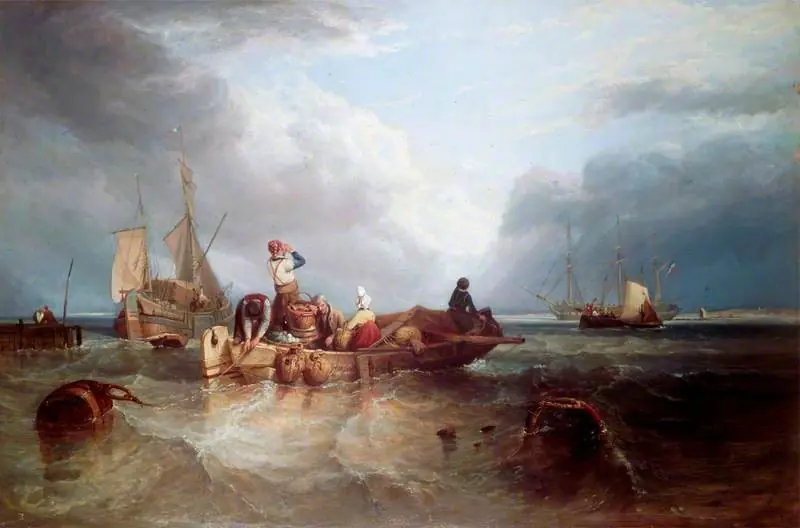
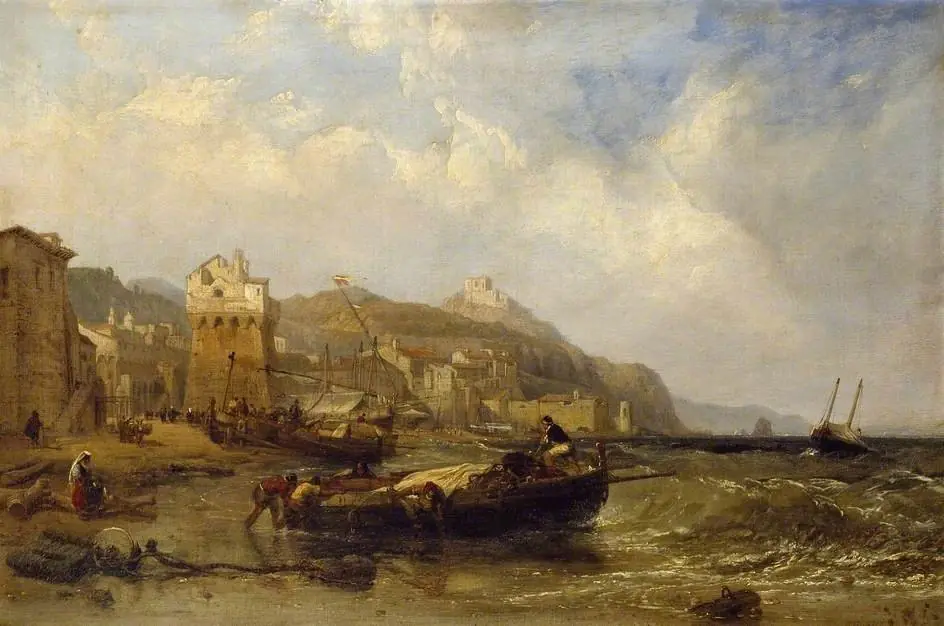
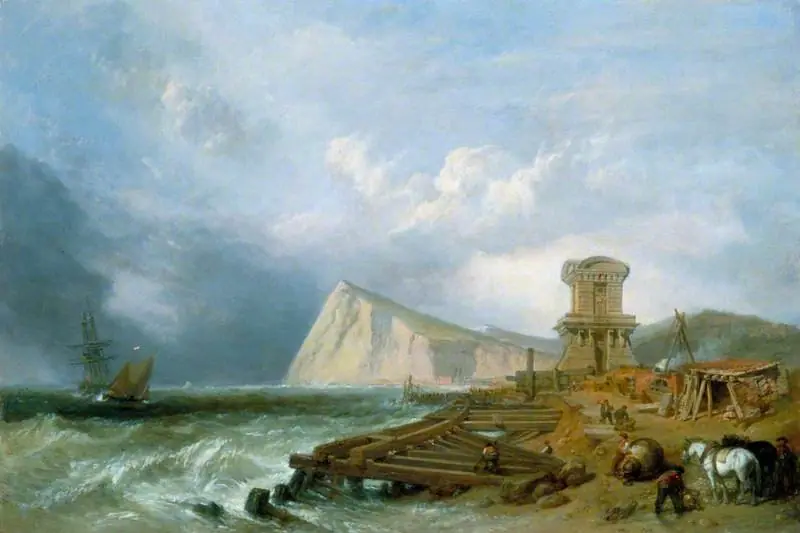
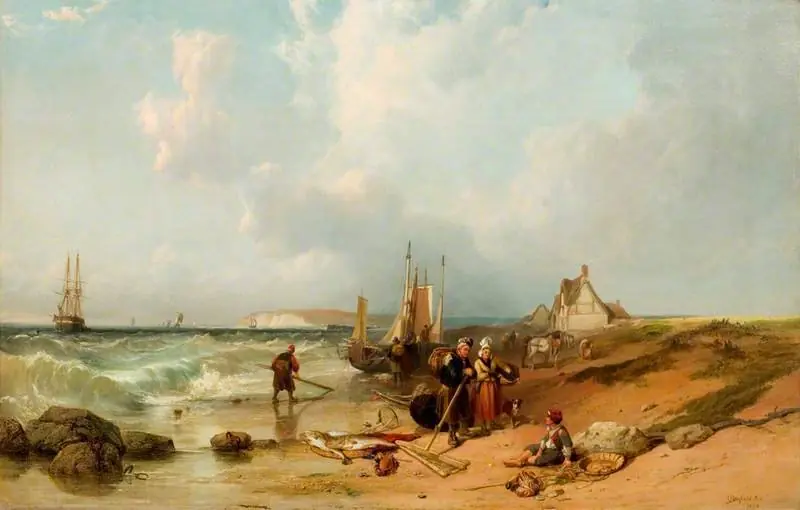
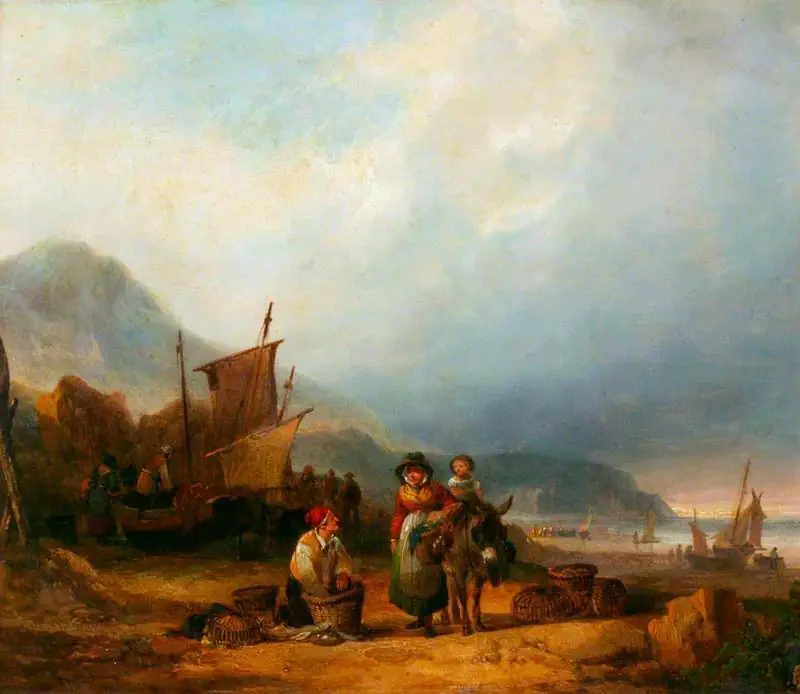
Shrimping, painted in 1848 by Clarkson Frederick Stanfield, is a maritime scene depicting a solitary figure engaged in shrimping on a beach. The work showcases Stanfield's mastery of seascapes, honed from his experiences as a sailor and later as a renowned marine artist.
Subject & Meaning
The subject is a man intently at work with a large net, set against a serene backdrop of boats, a cliff, and a light blue sky with clouds. The peaceful atmosphere and detailed rendering of the figure's attire and the net's texture emphasize the everyday, laborious aspect of the activity.
Technique & Style
Stanfield's attention to detail, particularly in the man's clothing and the net's texture, demonstrates his Realistic approach. The overall composition, with its calm, natural setting, aligns with Romantic-era sensibilities, though the focus on a common laborer adds a touch of everyday realism.
History & Provenance
Originally created in 1848, the painting's provenance is not detailed here, but its creation reflects Stanfield's established career as a marine artist following his earlier success as a scenic designer at London’s Theatre Royal, Drury Lane during the Regency era.
Context
Shrimping reflects the broader 19th-century interest in maritime themes, influenced by Stanfield's unique background as both a sailor and an artist. The piece situates itself within the Romantic tradition of capturing the sublime in nature, yet grounds this in the mundane task of shrimping.
Artist & collection
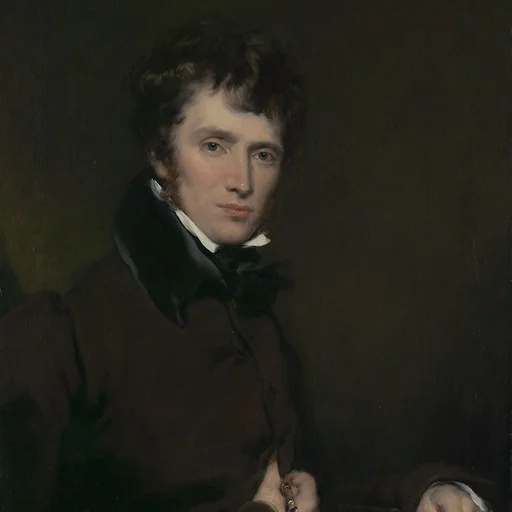
Artist
Clarkson Frederick Stanfield (3 December 1793 – 18 May 1867) was an English artist best known for his large-scale paintings of marine art and landscapes.