Artwork
Aeneas's Farewell to Dido in Carthage
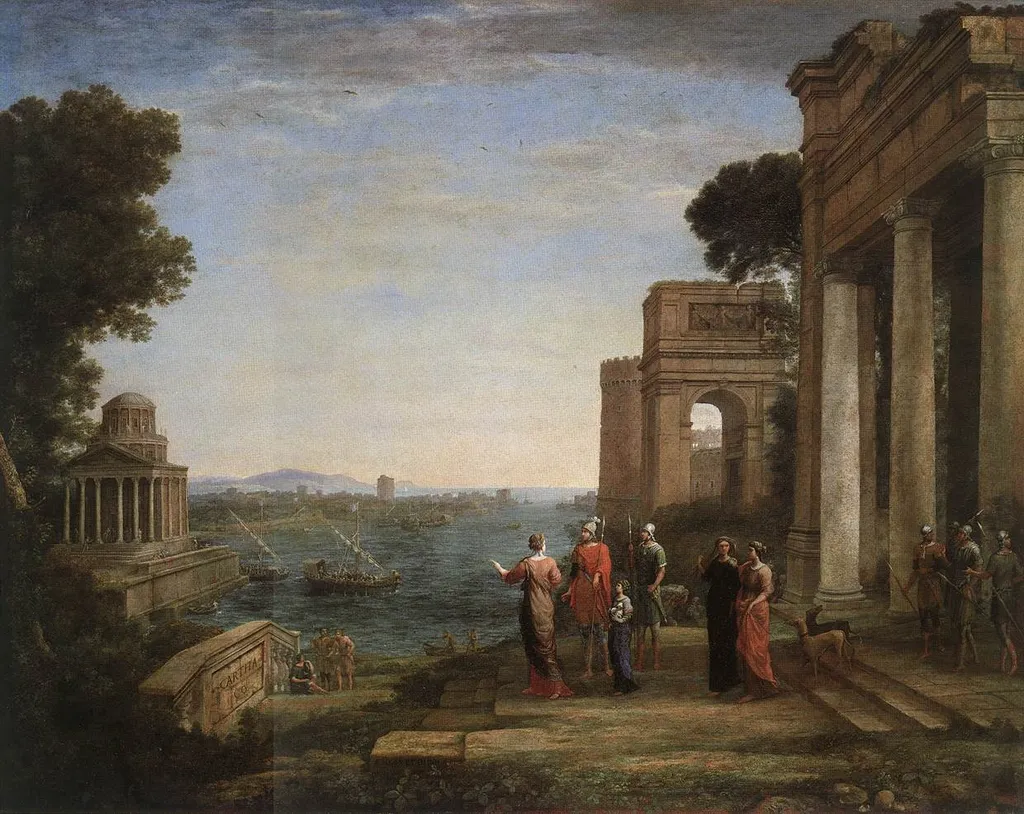
Aeneas's Farewell to Dido in Carthage is an oil painting by the French Classical Baroque artist Claude Lorrain. It is held in the collection of the Hamburger Kunsthalle.
About this work
Overview
Painted in 1688 by Claude Lorrain, this oil on canvas work depicts a moment from Virgil’s Aeneid, set against a tranquil Mediterranean landscape.
Painted in 1688 by Claude Lorrain, this oil on canvas work depicts a moment from Virgil’s Aeneid, set against a tranquil Mediterranean landscape. Lorrain, a French artist who spent most of his career in Rome, specialized in harmonious compositions that merged classical storytelling with atmospheric naturalism. The painting is part of the Hamburger Kunsthalle’s collection and exemplifies his mature style, where human drama unfolds subtly within vast, luminous surroundings.
Subject & Meaning
The scene captures Aeneas, the Trojan hero, bidding farewell to Dido, the Queen of Carthage, as he prepares to sail for Italy. Dido, dressed in red, stands beside him, her posture conveying sorrow; Aeneas, armored and resolute, turns away, bound by destiny. Surrounding figures—servants, sailors, and attendants—underscore the gravity of the moment. The painting reflects themes of duty versus love, a common motif in classical literature, rendered with restrained emotion rather than theatricality.
Technique & Style
Lorrain employed a soft, diffused light to model the landscape, with warm golden hues emanating from a low sun, casting long shadows and unifying the scene. Figures are deliberately scaled small to emphasize the grandeur of nature and architecture. His brushwork is delicate, blending tones to suggest distance and air. The composition follows a classical equilibrium, with the city of Carthage receding into the horizon, framed by water and sky, reinforcing the painting’s meditative tone.
History & Provenance
Commissioned during the final years of Lorrain’s life, the painting was likely intended for a private collector in Italy. It entered the Hamburger Kunsthalle’s holdings in the 19th century, following the acquisition of several works from German private collections. Its attribution has remained consistent, with no significant disputes over authorship. The painting’s preservation has been careful, retaining its original tonal harmony and surface quality.
Context
In late 17th-century Europe, classical mythology remained a favored subject among patrons and artists seeking to align with ideals of antiquity. Lorrain’s landscapes, though rooted in Roman scenery, were idealized, reflecting a broader Baroque interest in order, harmony, and moral allegory. His approach contrasted with the dramatic intensity of contemporaries like Caravaggio, favoring calm, poetic resolution over emotional upheaval.
Legacy
Lorrain’s integration of narrative and landscape influenced generations of painters, particularly 18th-century British artists who admired his atmospheric perspective. His works became benchmarks for the picturesque tradition. While not widely exhibited in his lifetime, his oeuvre gained scholarly recognition in the 19th century as a model of restrained elegance and compositional discipline within the Baroque canon.
Artist & collection
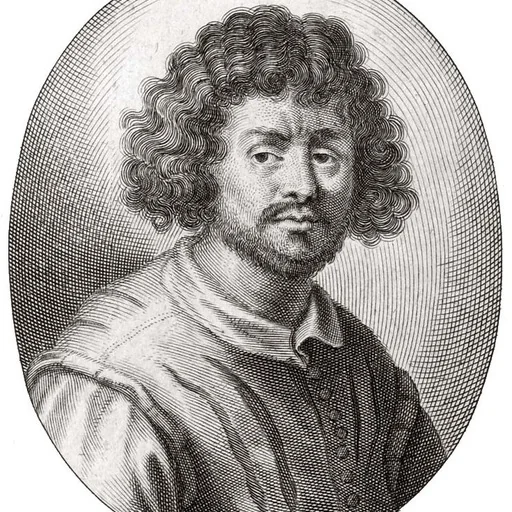
Artist
Claude Lorrain (French: ; born Claude Gellée , called le Lorrain in French; traditionally just Claude in English; c.

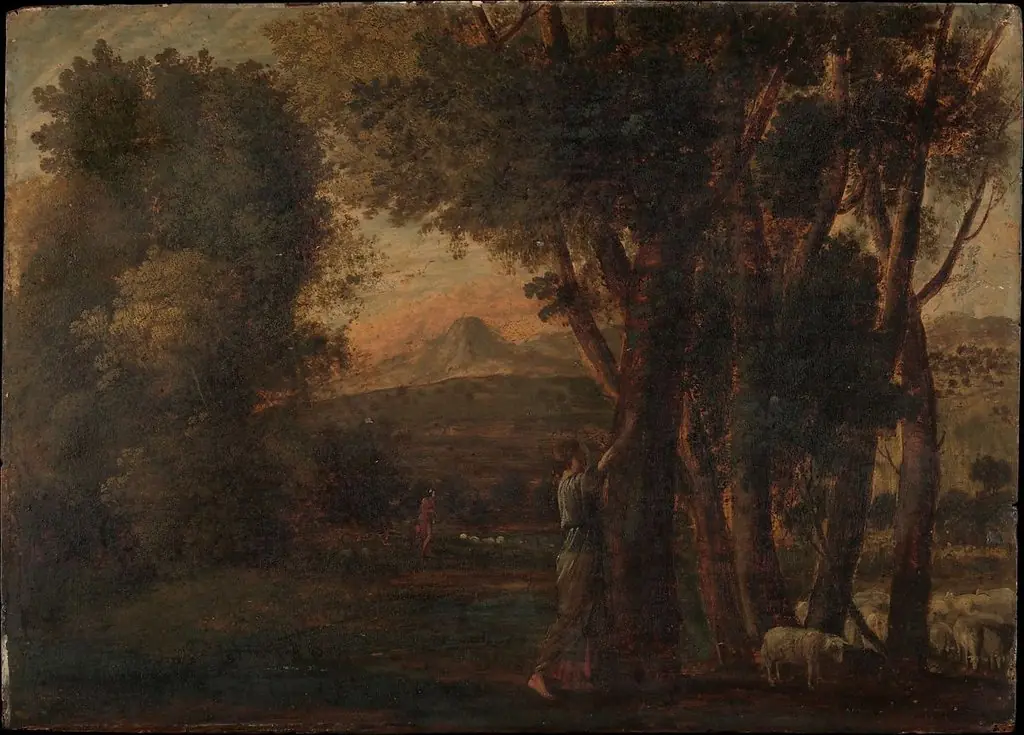
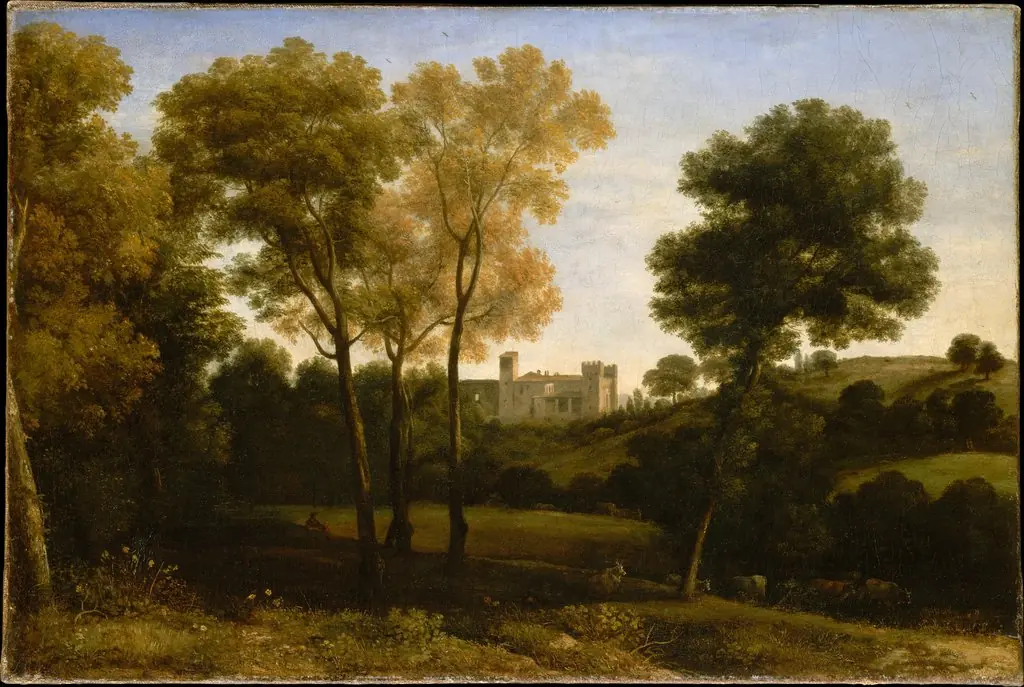
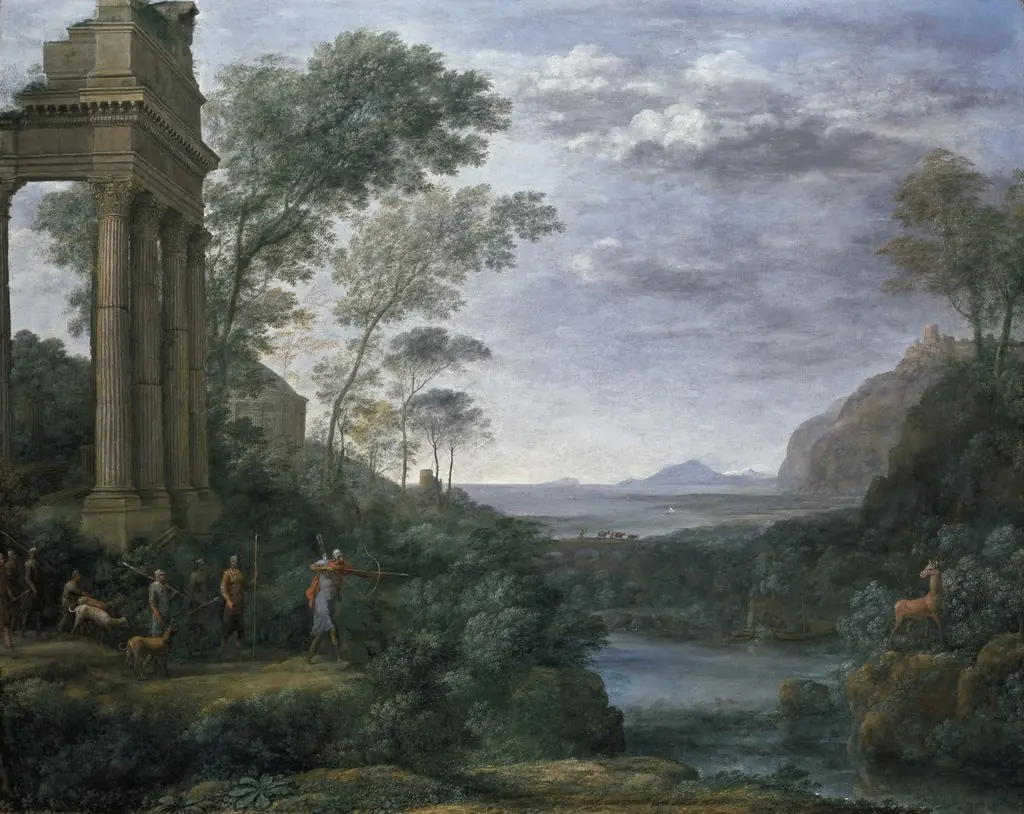 Ascanius Shooting the Stag of Sylvia
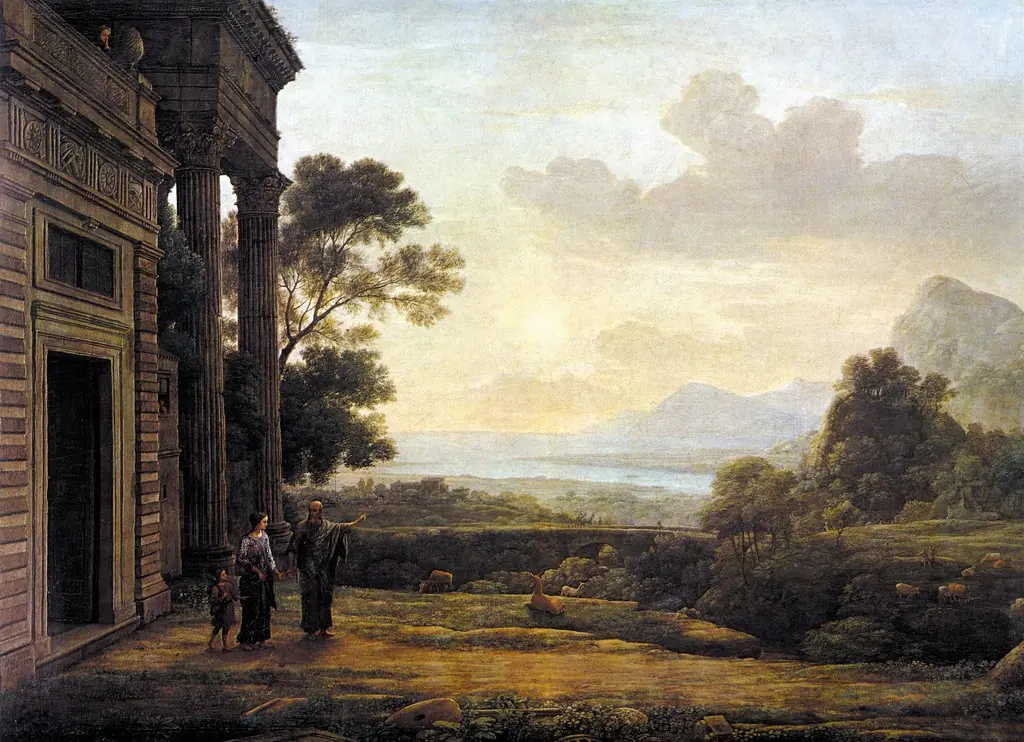 The Banishment of Hagar
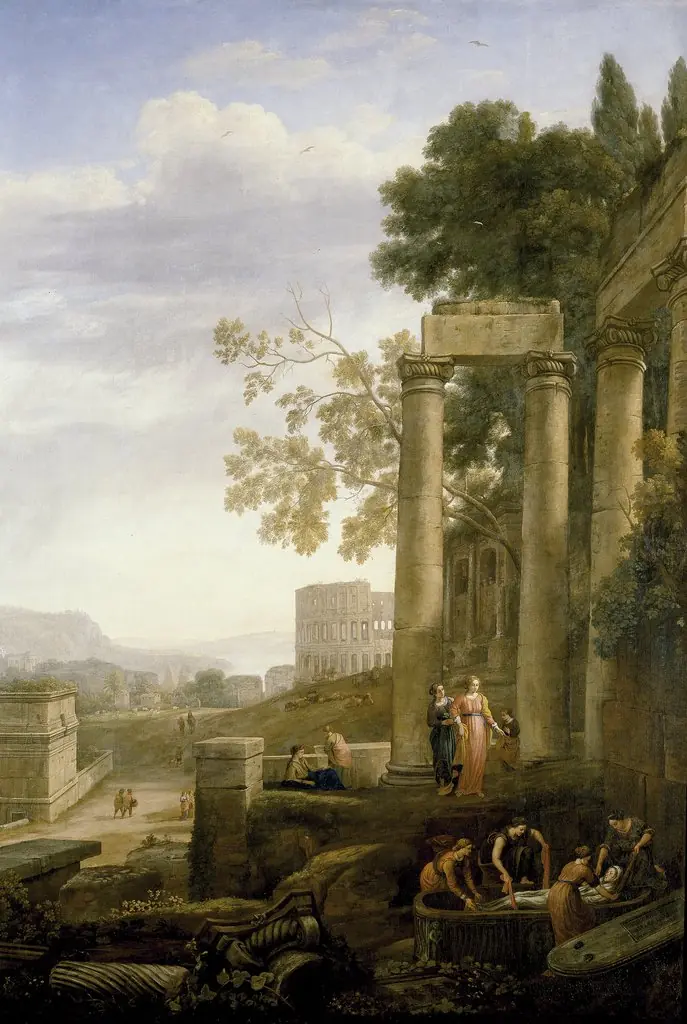 Landscape with the Burial of Saint Serapia
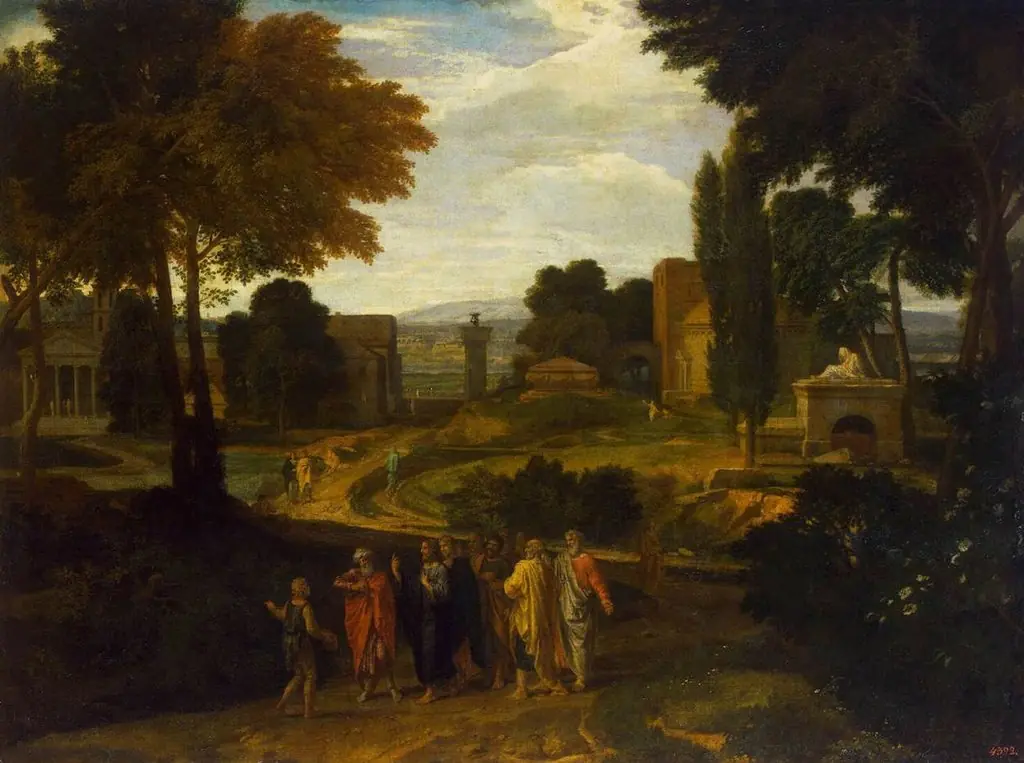 Landscape with Christ and His Disciples
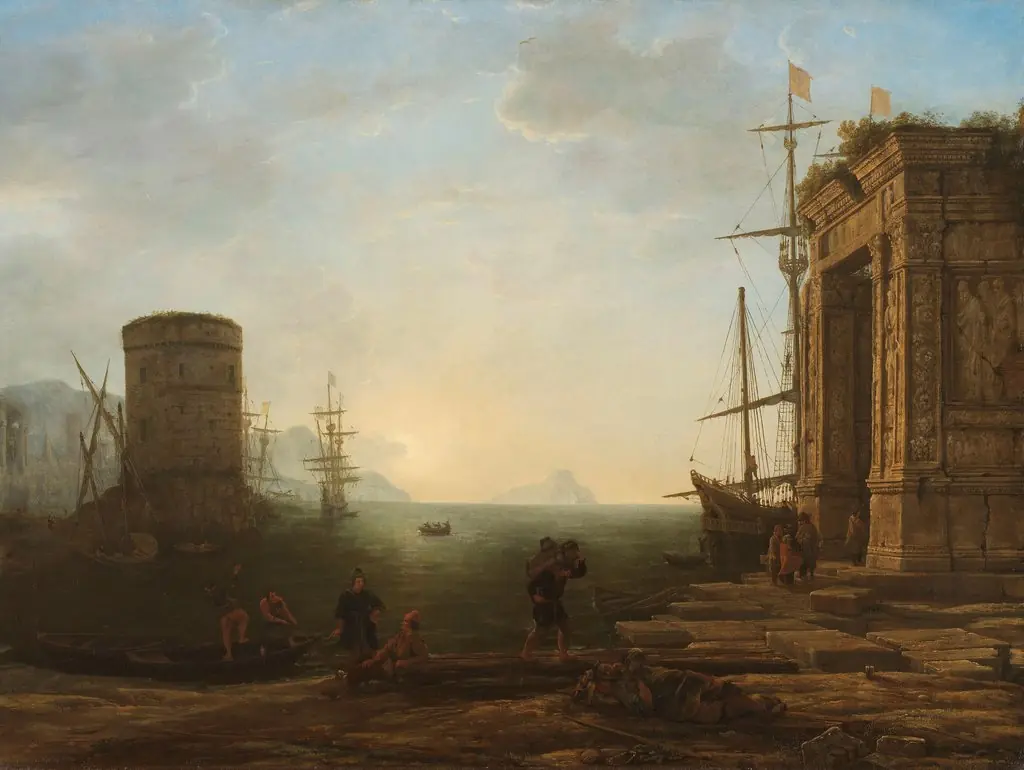
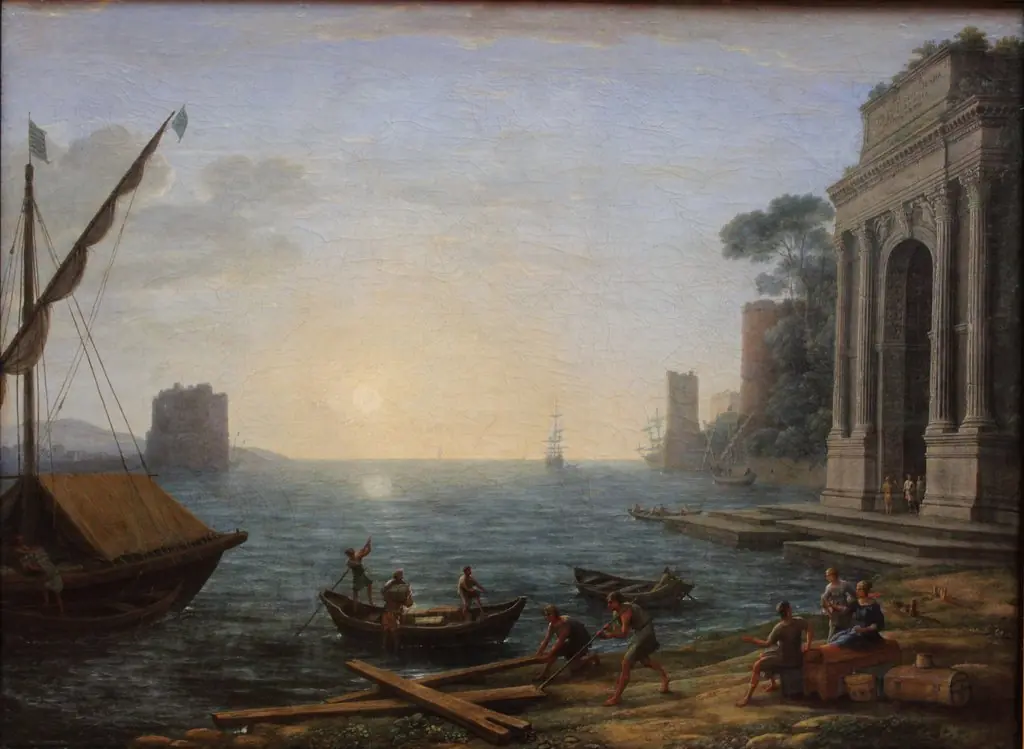 A Seaport at Sunrise
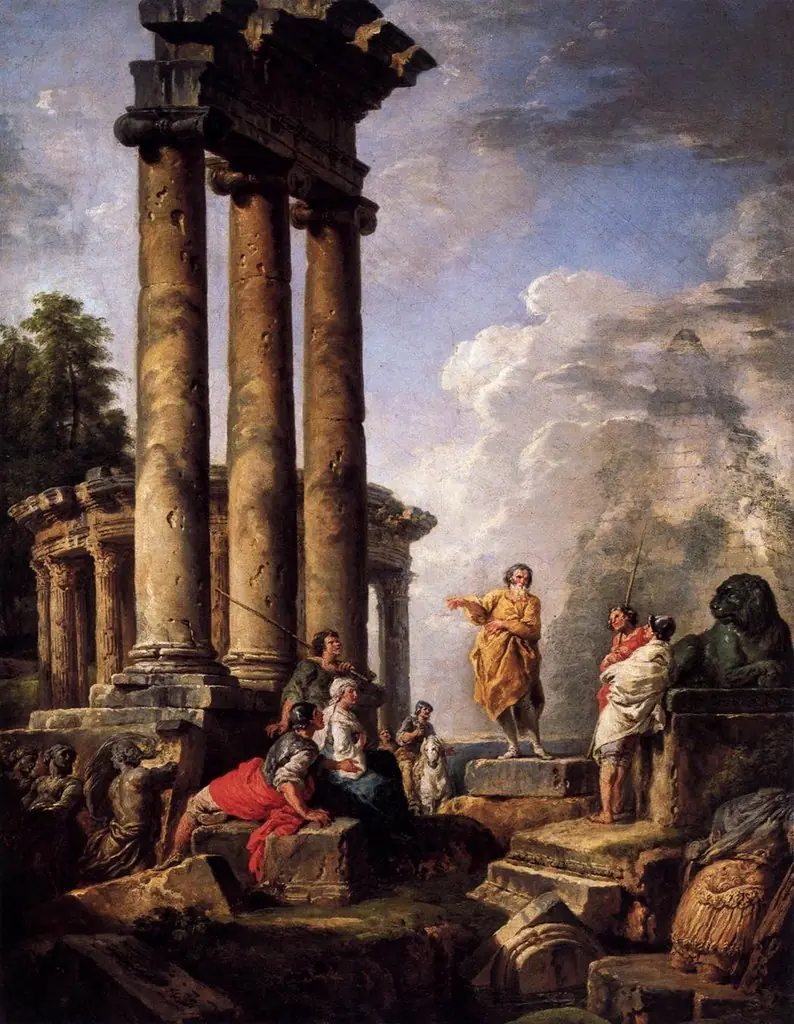 Ruins with Saint Paul preaching
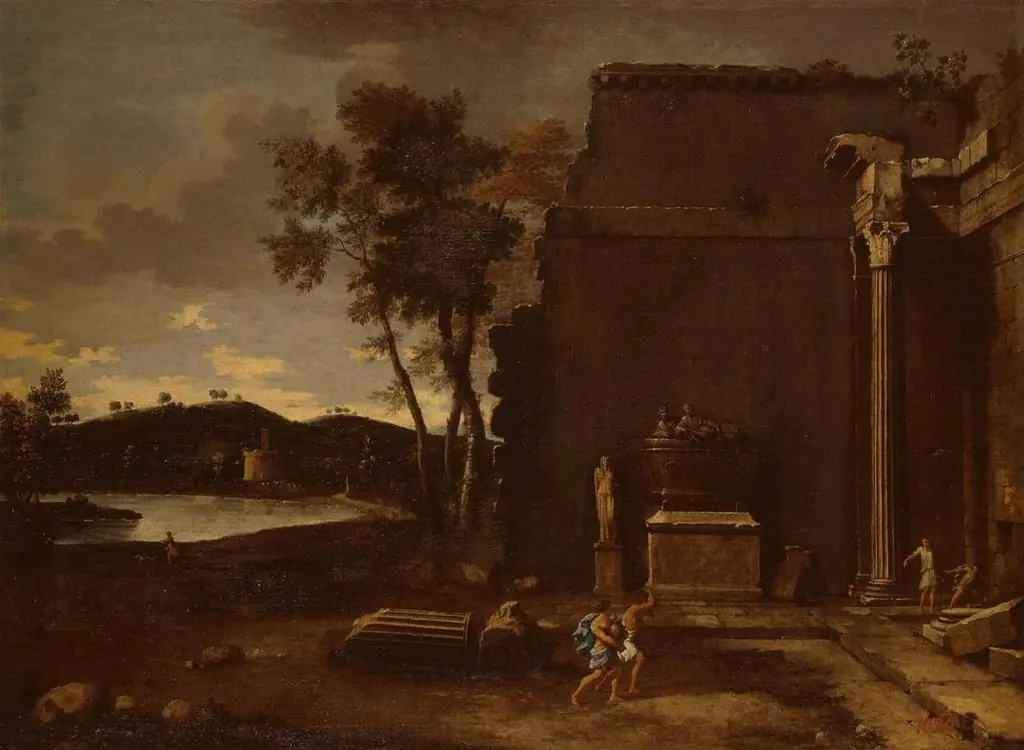 Landscape with sarcophagus
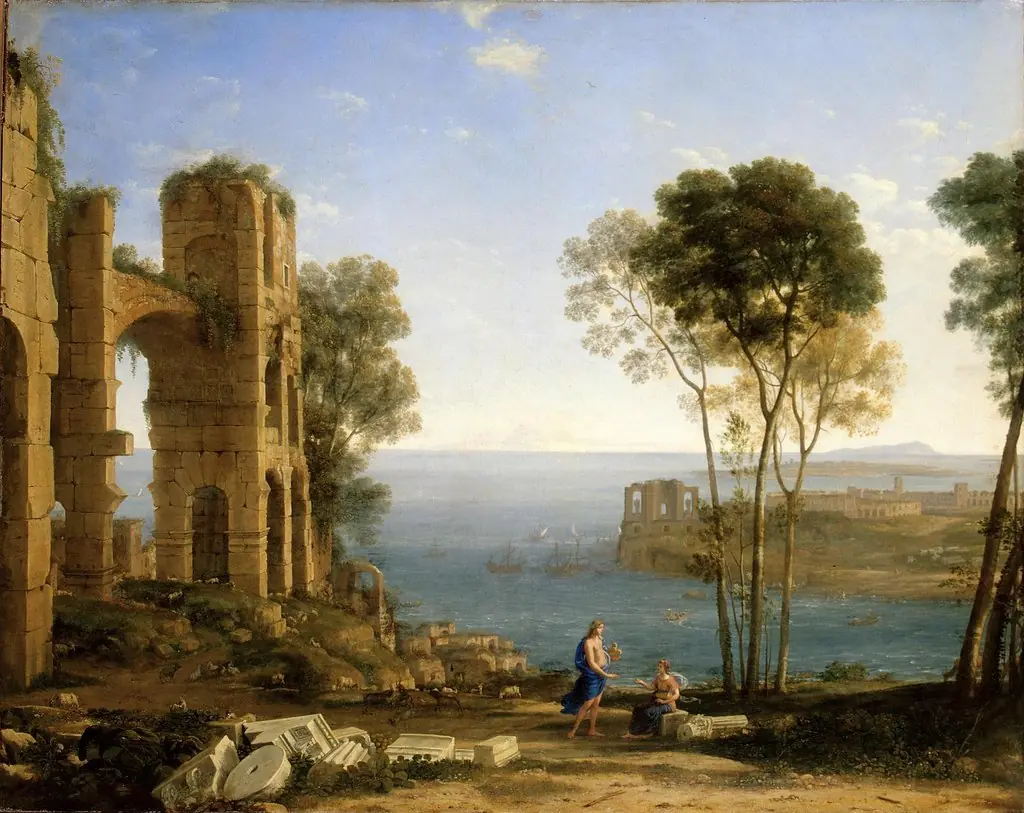 Coast View with Apollo and the Cumaean Sibyl
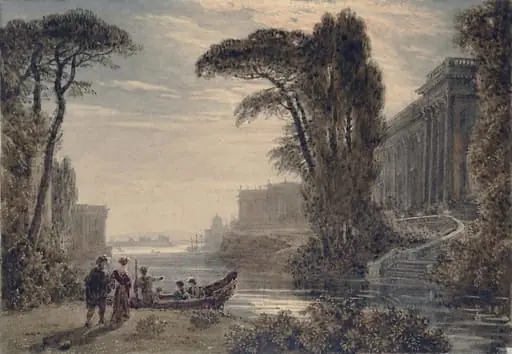 A Classical Composition
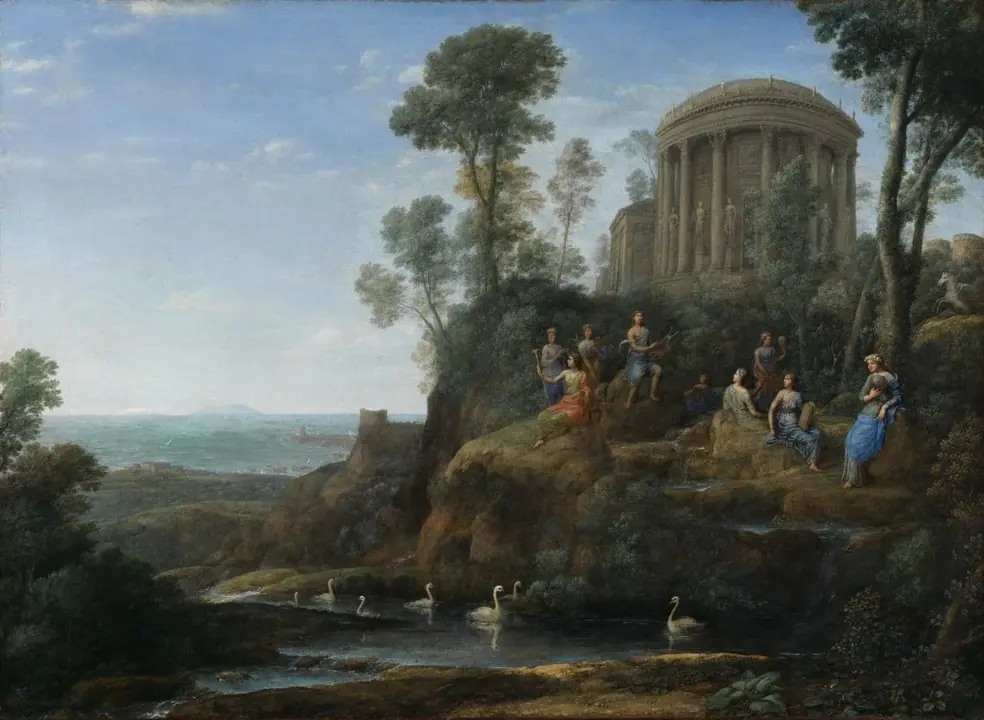 Apollo and the Muses on Mount Helicon
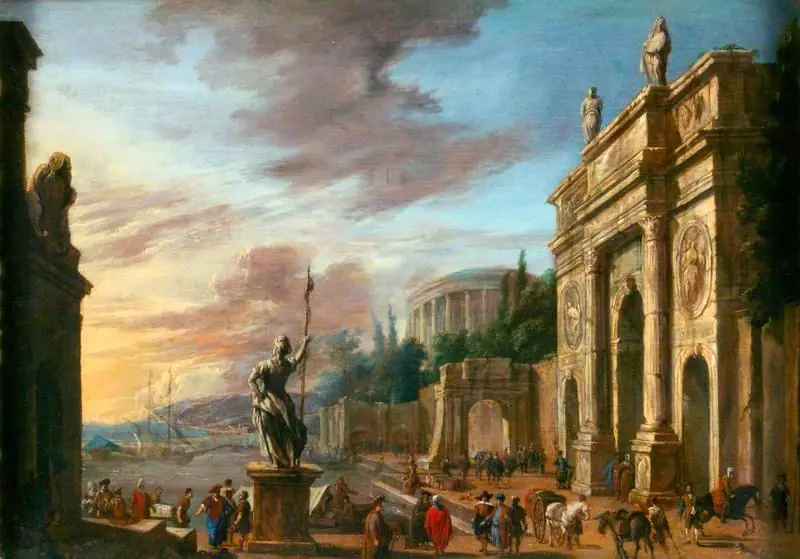 Seaport and Triumphal Arch
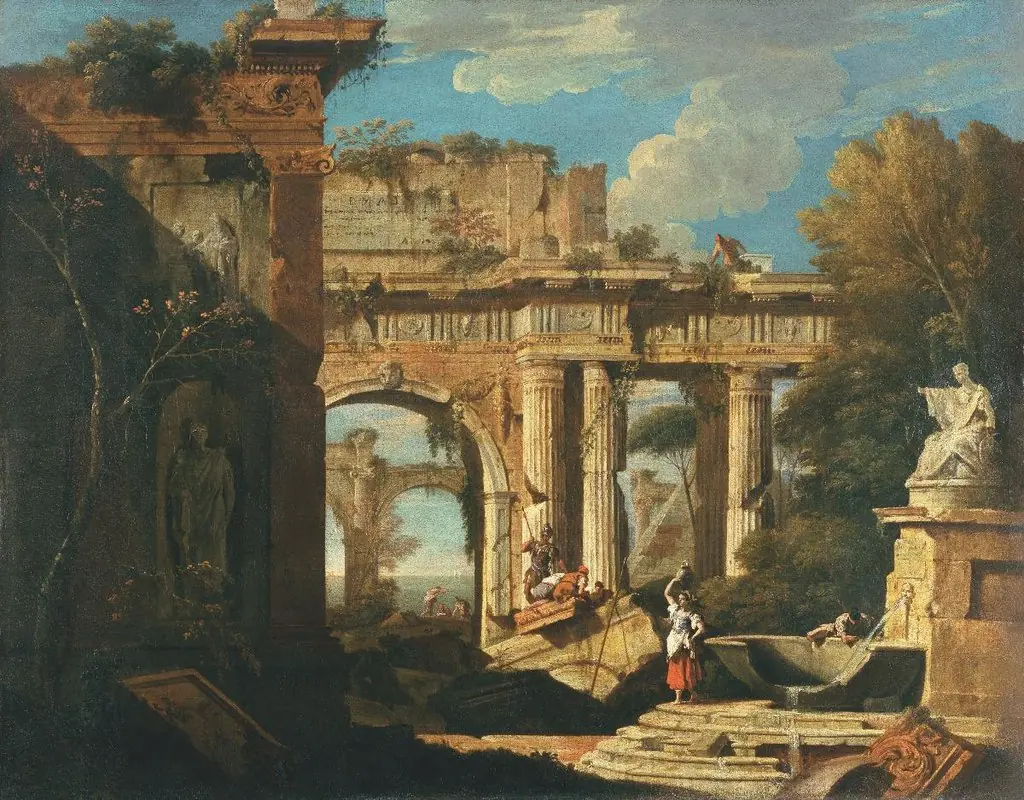 Capriccio con rovine romane