Artwork
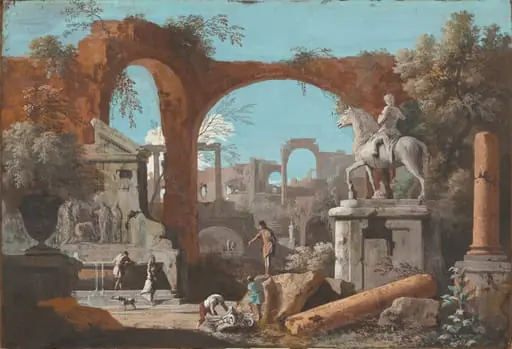
Capriccio con rovine romane
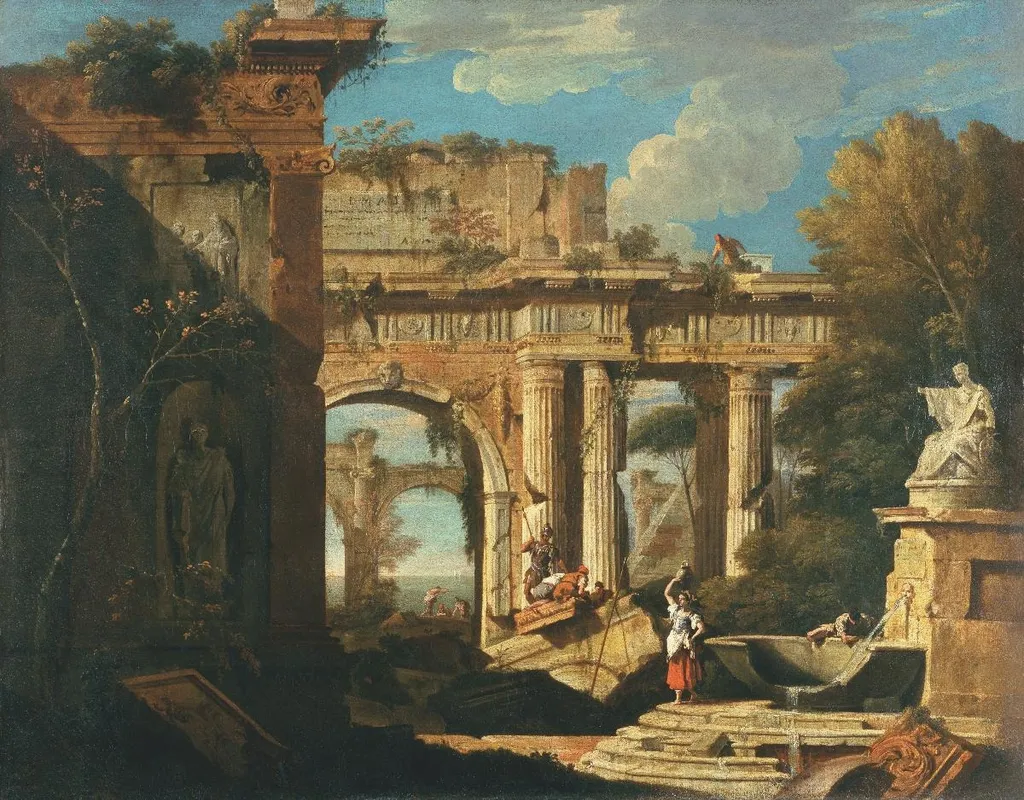
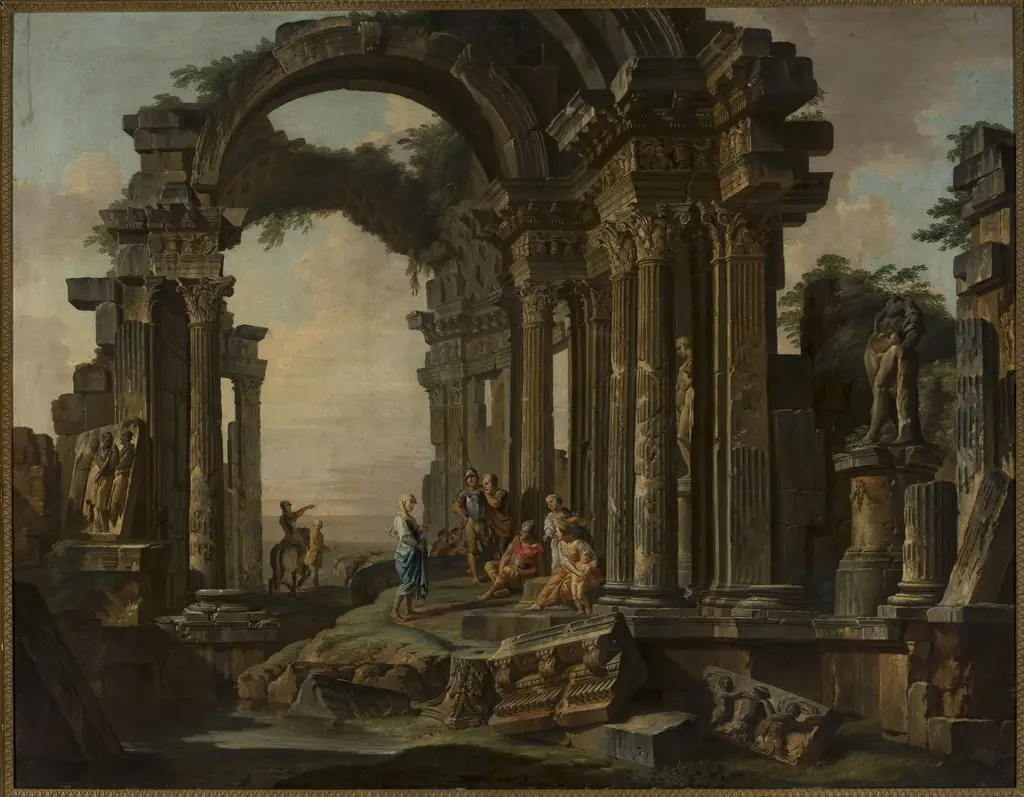
Capriccio con rovine romane is an oil painting by the Rococo painting artist Marco Ricci. It dates from 1720 and is held in the collection of the Kunsthaus Zürich.
About this work
Overview
The painting is currently held in the collection of the Kunsthaus Zürich, where it exemplifies early 18th-century Venetian landscape painting.
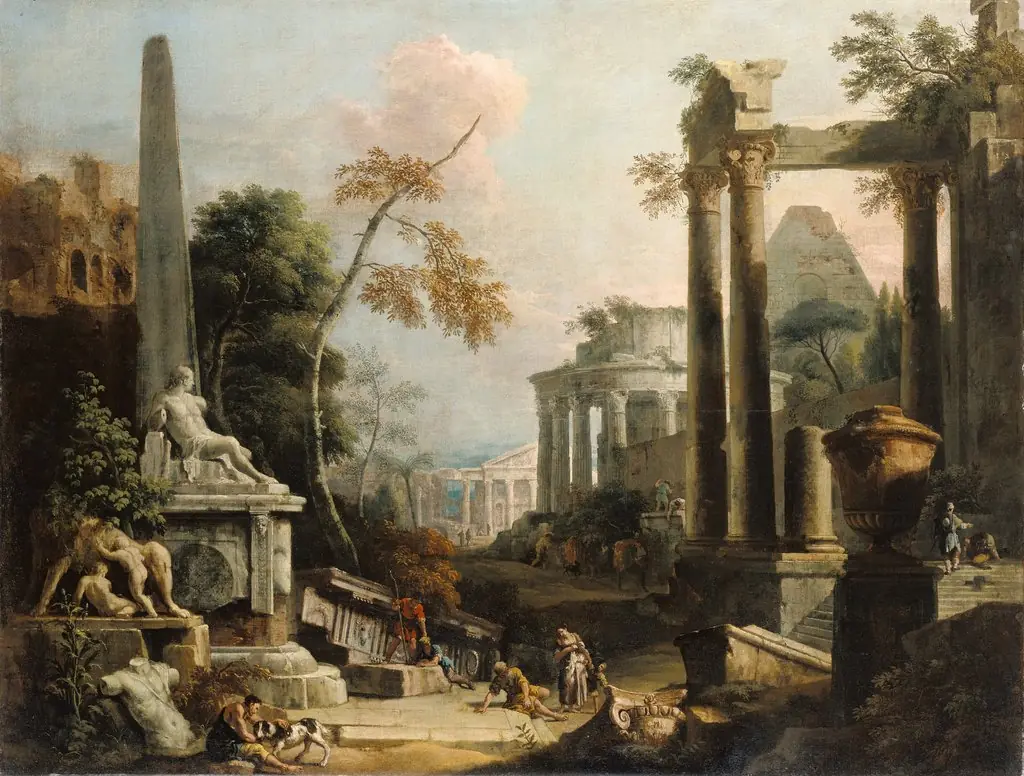
Painted in 1720 by Marco Ricci, this oil on canvas work presents a fictional landscape blending Roman ruins with contemporary figures. It belongs to the capriccio tradition, where architectural elements are imaginatively assembled rather than accurately recorded. The painting is currently held in the collection of the Kunsthaus Zürich, where it exemplifies early 18th-century Venetian landscape painting.
Subject & Meaning
The scene juxtaposes ancient stone architecture with modest human figures, suggesting a contemplative engagement with time and decay. A woman in bright clothing stands on steps, staff in hand, gazing upward, while a seated man and distant figure add narrative ambiguity. The composition invites reflection on the passage of history, without depicting a specific myth or event.
Technique & Style
Ricci employs chiaroscuro to model forms and enhance spatial depth, using warm ochres and terracottas for the ruins against cooler blues in the sky. Brushwork is loose yet deliberate, capturing texture in stone and fabric without excessive detail. The lighting suggests late afternoon, casting long shadows that anchor the figures within the monumental architecture.
History & Provenance
Created during Ricci’s mature period, the painting reflects his travels and studies of Italian antiquities. It entered the Kunsthaus Zürich collection in the 19th century, likely through a private acquisition or bequest. No earlier ownership records are widely documented, but its style aligns with other capricci produced for Grand Tour collectors.
Context
In early 18th-century Venice, capricci were popular among travelers seeking idealized visions of Rome’s past. Ricci, influenced by his uncle Sebastiano Ricci and the vedute tradition, blended real architectural fragments with invented arrangements. These works satisfied a growing demand for picturesque, emotionally resonant landscapes rather than topographical accuracy.
Legacy
Ricci’s capriccio contributed to the evolution of landscape painting in northern Europe, influencing later artists who combined archaeology with poetic imagination. While not widely known today, the work remains a representative example of how Venetian painters reimagined classical ruins as settings for quiet, human-centered contemplation.
Artist & collection

 Landscape with Classical Ruins and Figures
 Paysage avec ruines romaines
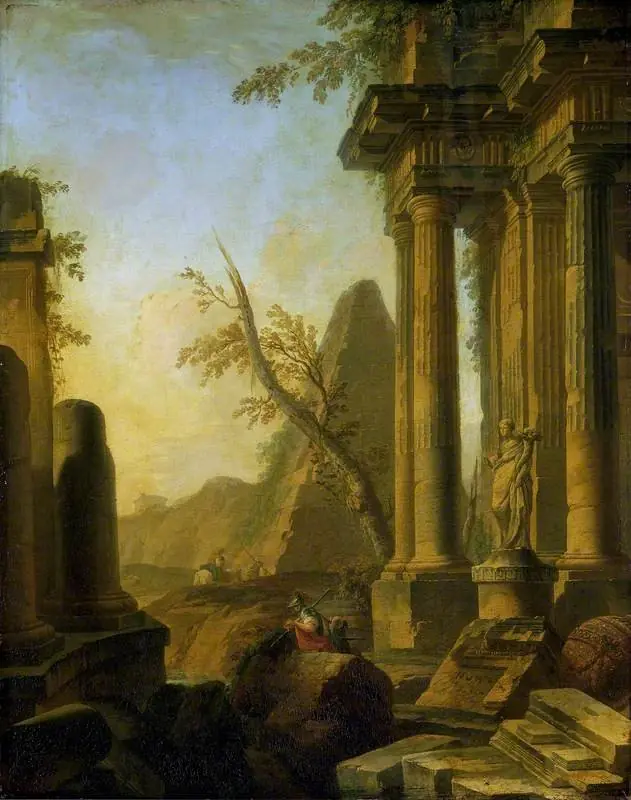 Classical Ruins with Soldiers
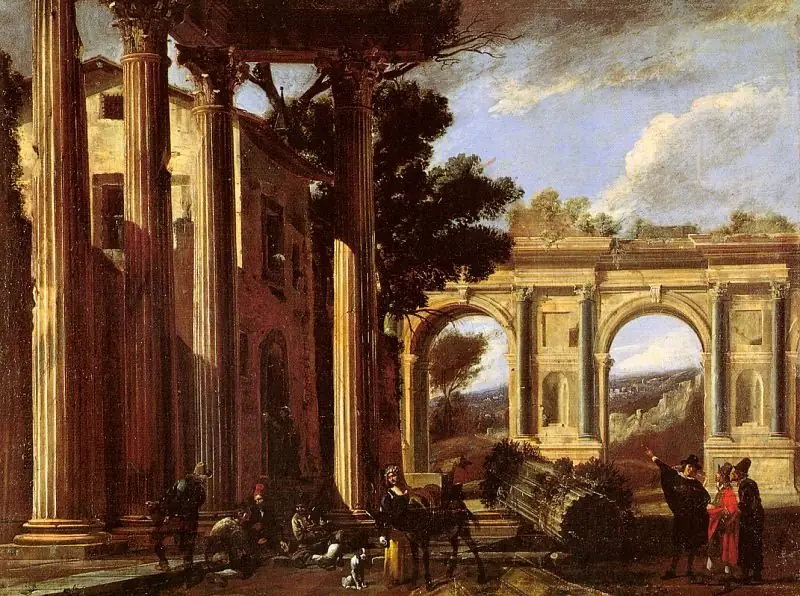 Architectural View
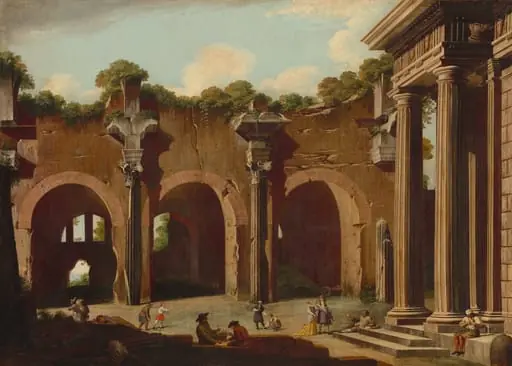 The Basilica of Constantine with a Doric Colonnade
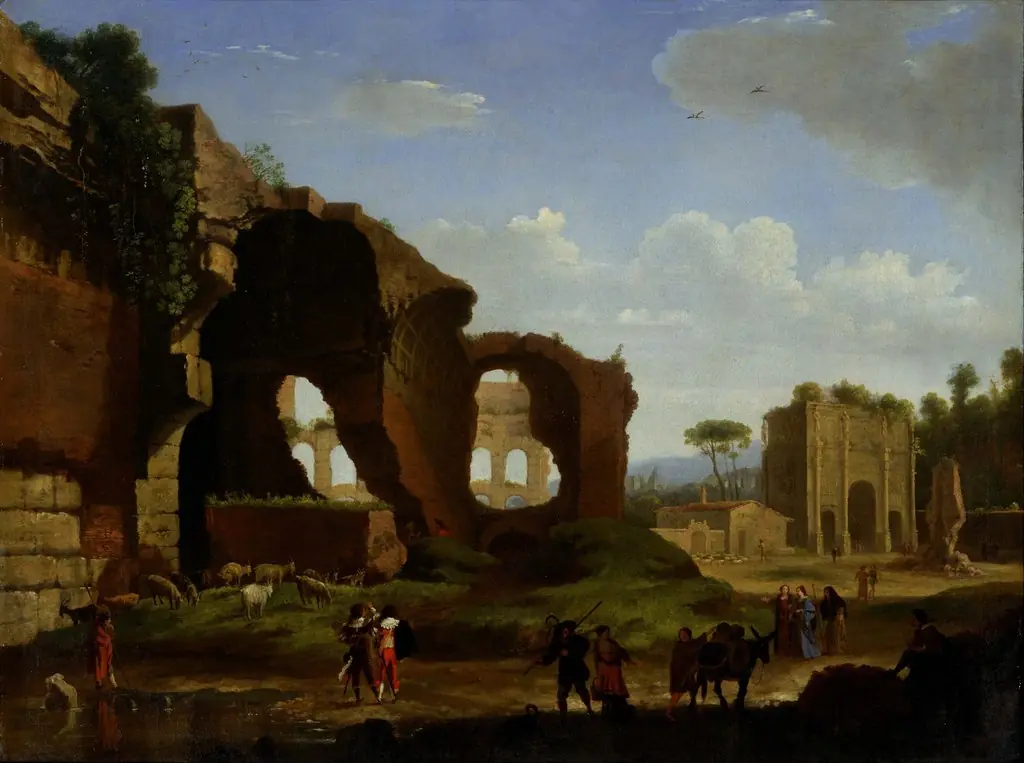 A Roman View of the Ruins of the Temple of Venus and Rome with the Colosseum and the Arch of Constantine
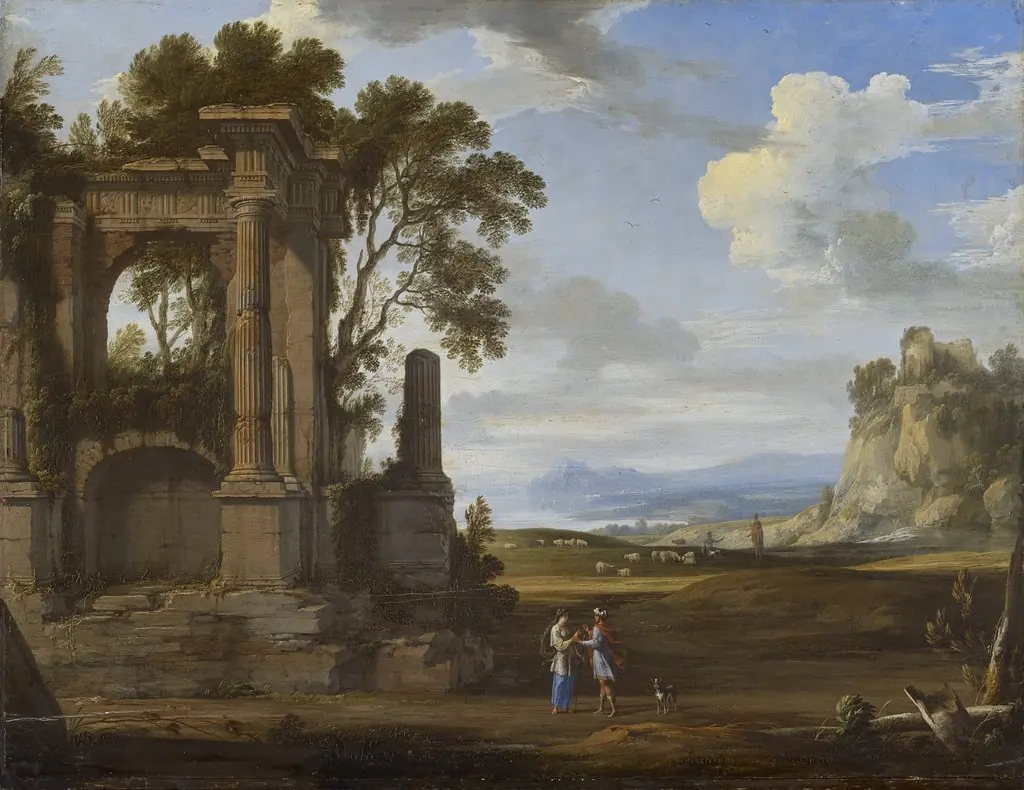 A Classical Landscape with Judah and Tamar
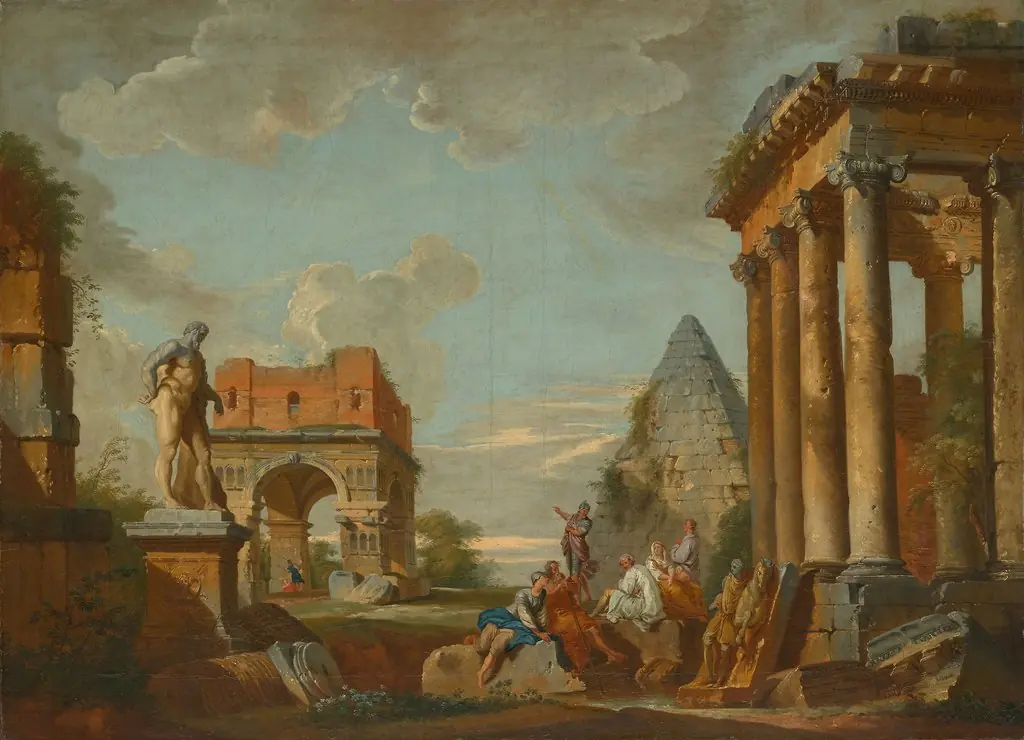 Classical Landscape
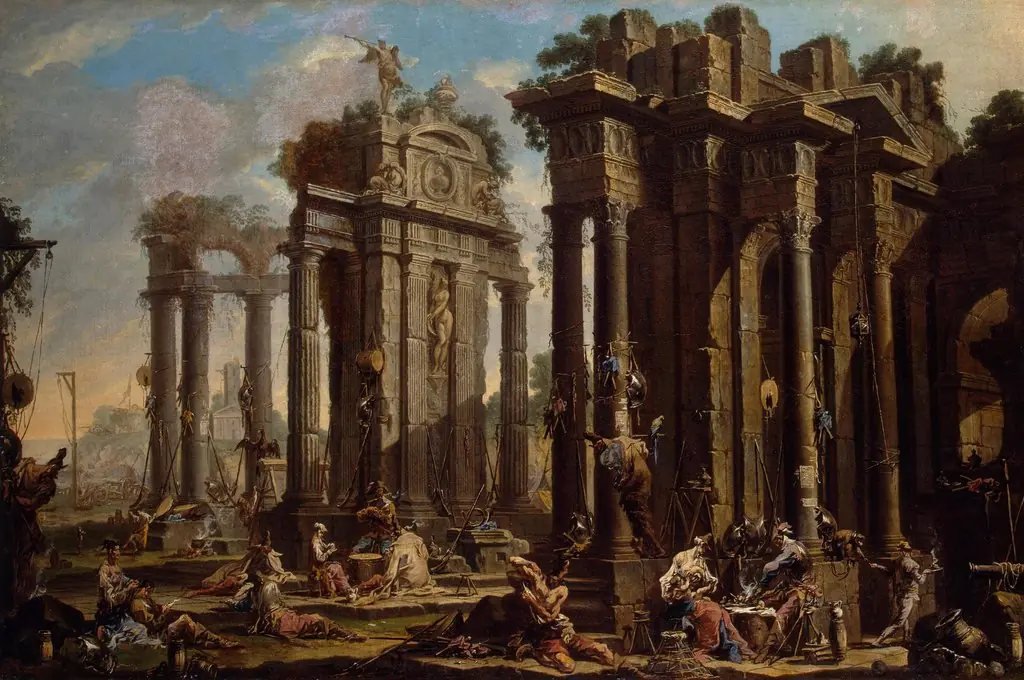 Halt of the Brigands
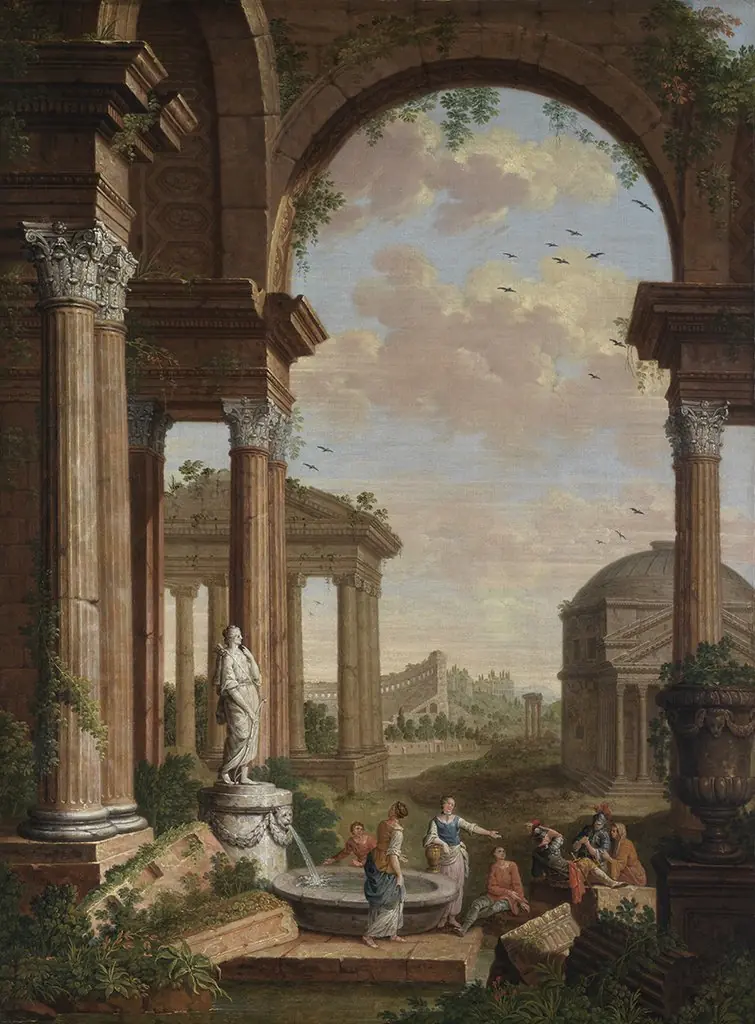 Landscape with Roman Ruins
 Roman ruins