Artwork
The Ford
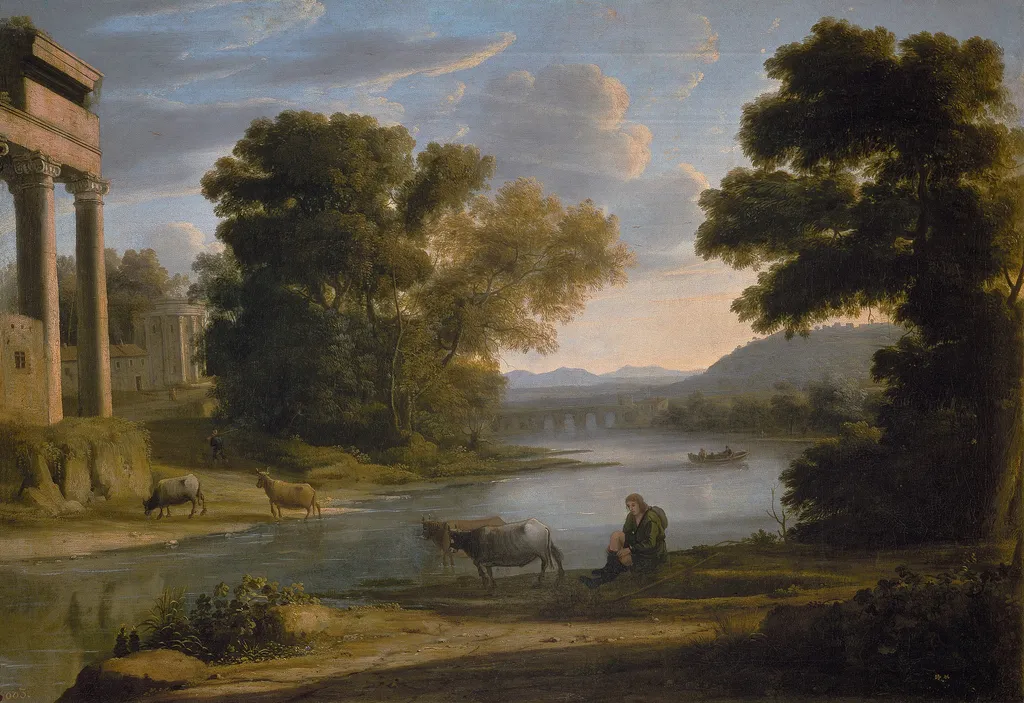
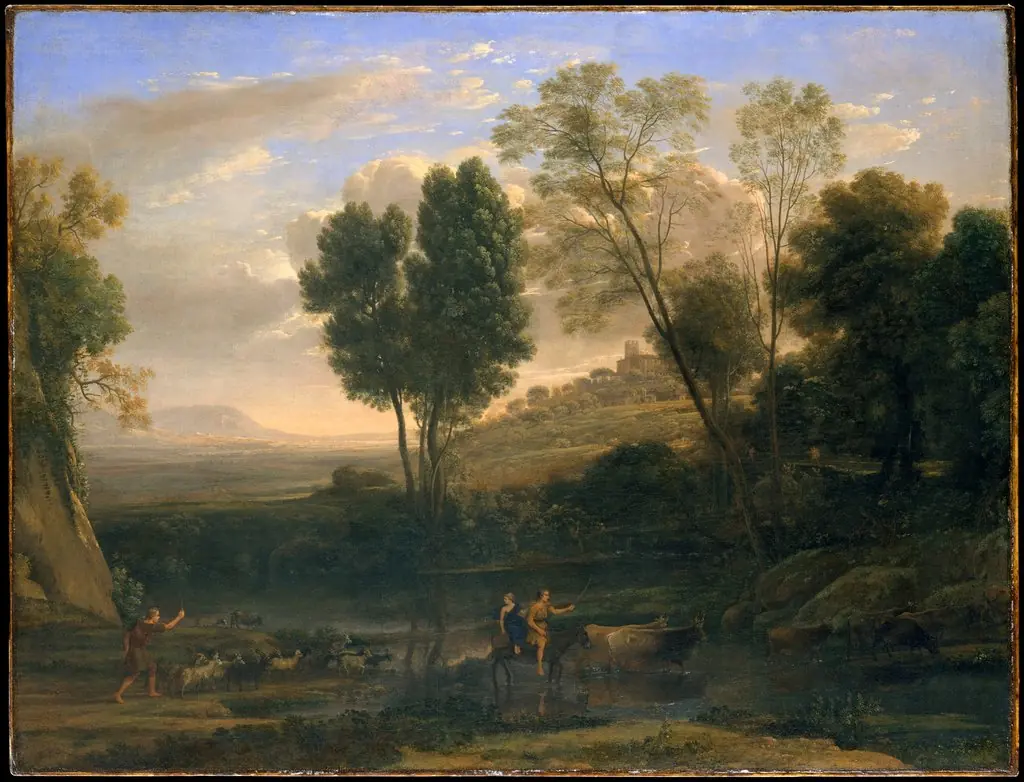
The Ford is an oil painting by the Barbizon school artist Claude Lorrain. It dates from 1644 and is held in the collection of the Museo del Prado.
About this work
Overview
Claude Lorrain’s 1644 oil canvas, titled *The Ford* (also known as *Landscape with Shepherds*), presents a tranquil riverside at twilight. A solitary figure rests on the bank, while cattle graze nearby and a modest boat drifts past a distant bridge. Tall trees and the remnants of a classical structure frame the composition, creating a balanced, serene vista.
Subject & Meaning
The scene juxtaposes human contemplation with pastoral activity, suggesting a moment of quiet reflection within an idealized countryside. The lone figure, perhaps a shepherd, embodies solitude, while the grazing cows and distant bridge hint at everyday rural life, inviting viewers to consider the harmony between nature and modest human presence.
Technique & Style
Lorrain employs a nuanced handling of light, allowing the setting sun to illuminate portions of the landscape while leaving other areas in gentle shadow. This chiaroscuro effect enhances depth and atmosphere, giving the river’s surface a luminous quality and the surrounding foliage a subtle, three‑dimensional presence.
History & Provenance
The painting entered the Spanish royal collection by the mid‑18th century, recorded in 1746 among the holdings of Philip V at the Royal Palace of La Granja de San Ildefonso. It later appeared in the Royal Palace of Aranjuez, documented there from at least 1794 through 1827, before being transferred to the Prado Museum in Madrid, where it remains on display.
Own this work as a print
Artist & collection
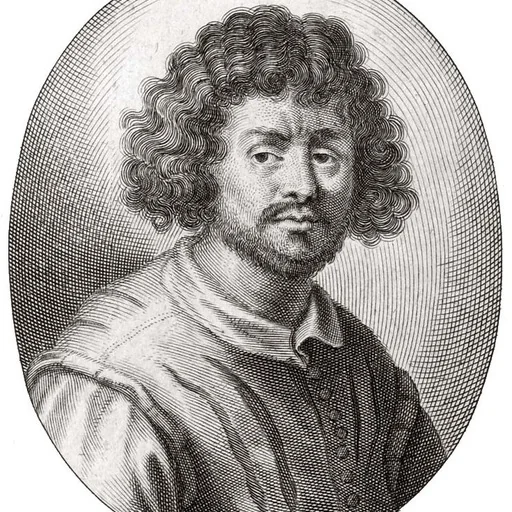
Artist
Claude Lorrain (French: ; born Claude Gellée , called le Lorrain in French; traditionally just Claude in English; c.

 Landscape with a Bridge
 Self-Portrait
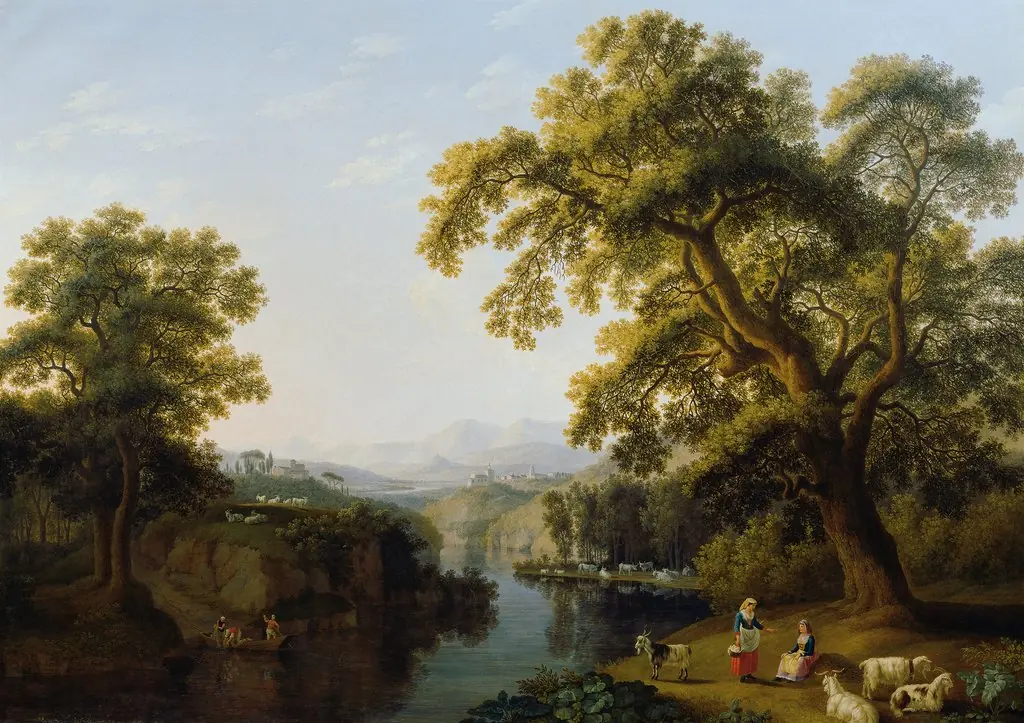 Flusstal von Isernia bei Neapel
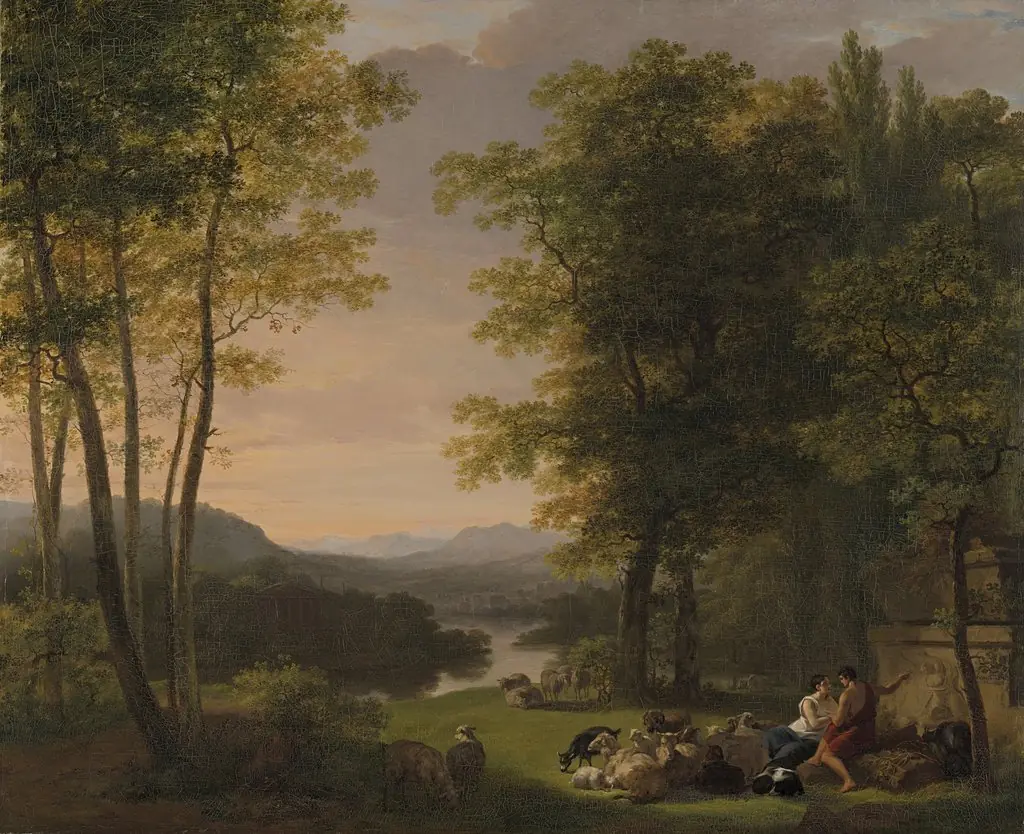 Arcadian Landscape
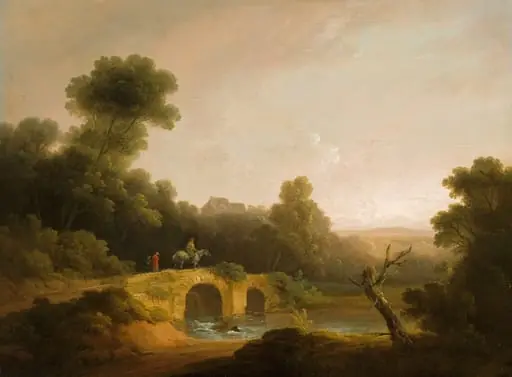 Landscape with Figures Crossing a Bridge
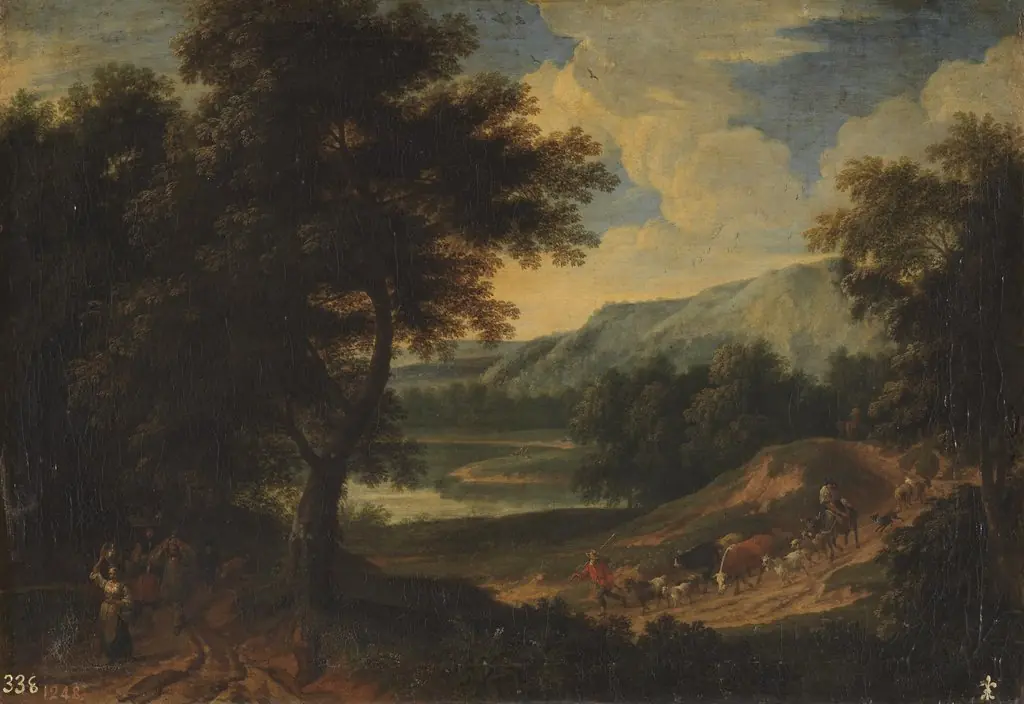 Paisaje con pastores y ganado
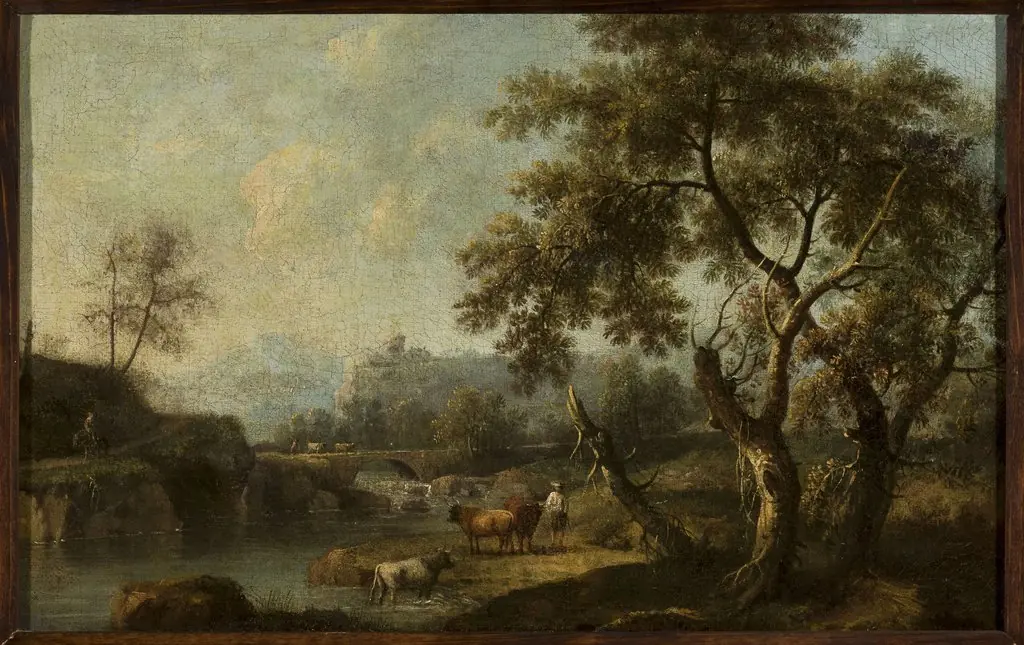 Mountain landscape with cattle at the waterhole
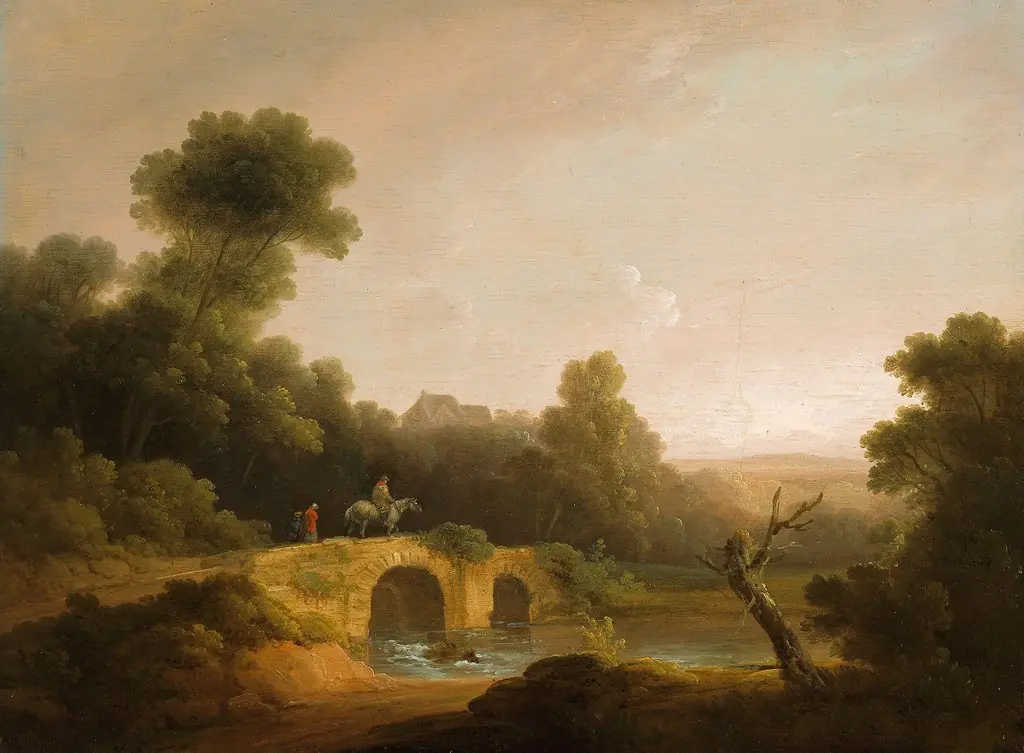 Landscape with Figures Crossing a Bridge
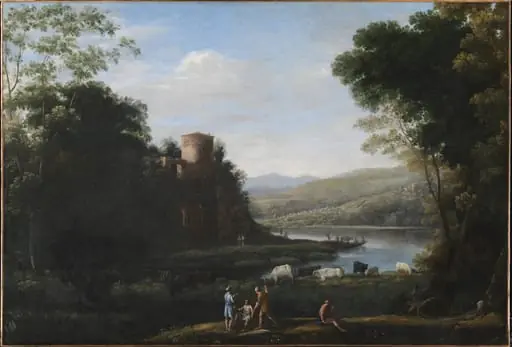 River Landscape with Herdsmen
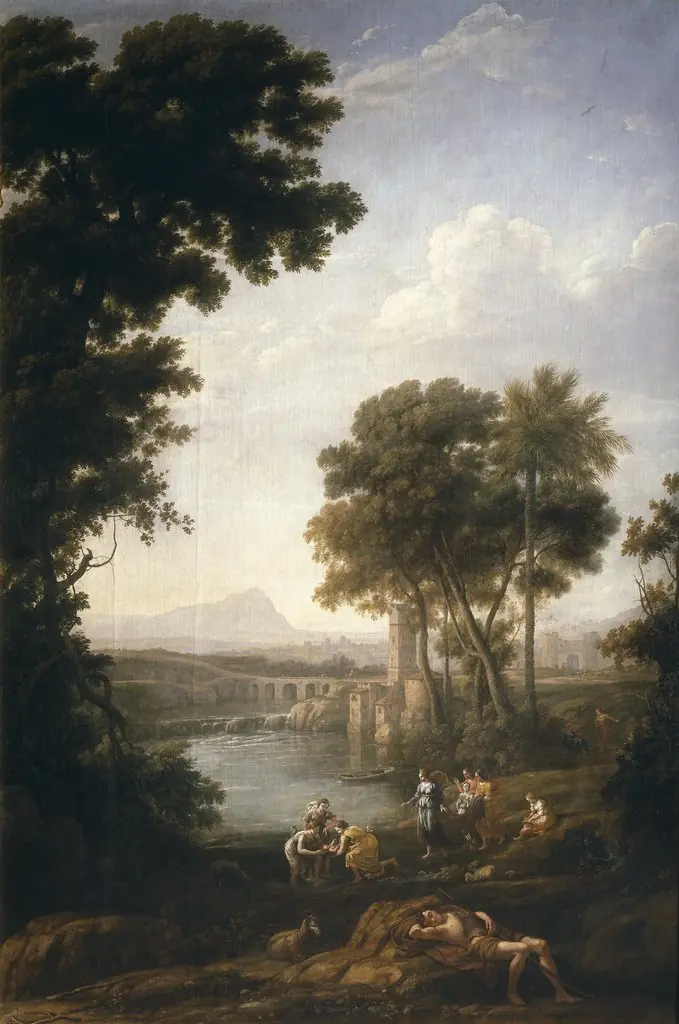 Landscape with the Finding of Moses