Artwork
Landscape with Figures Crossing a Bridge
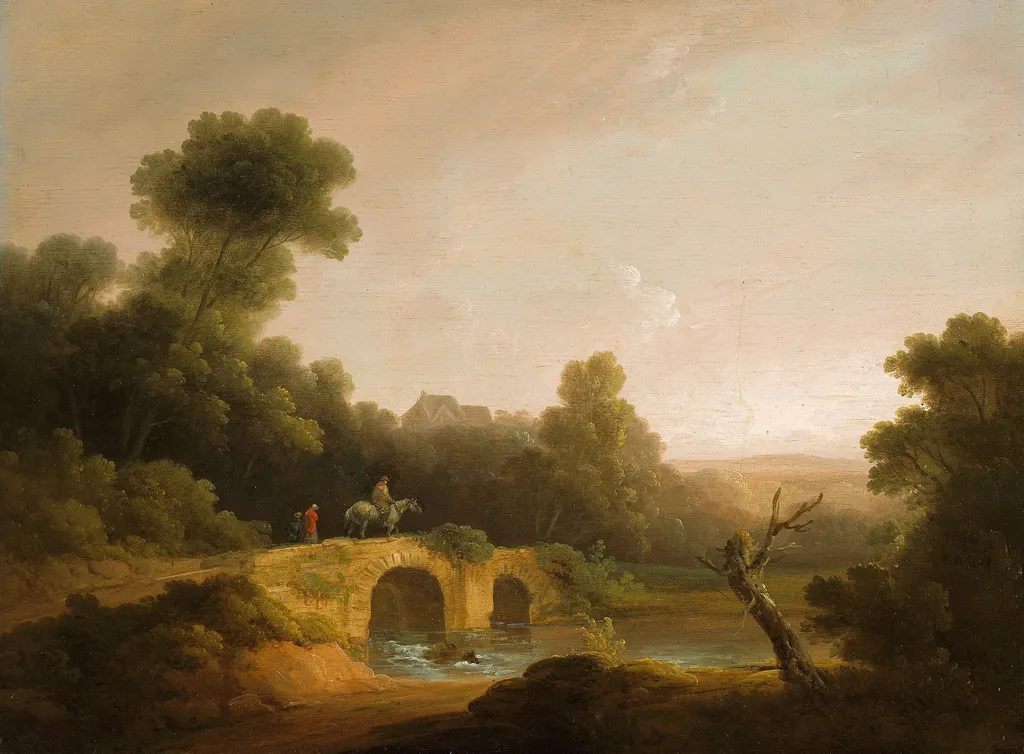
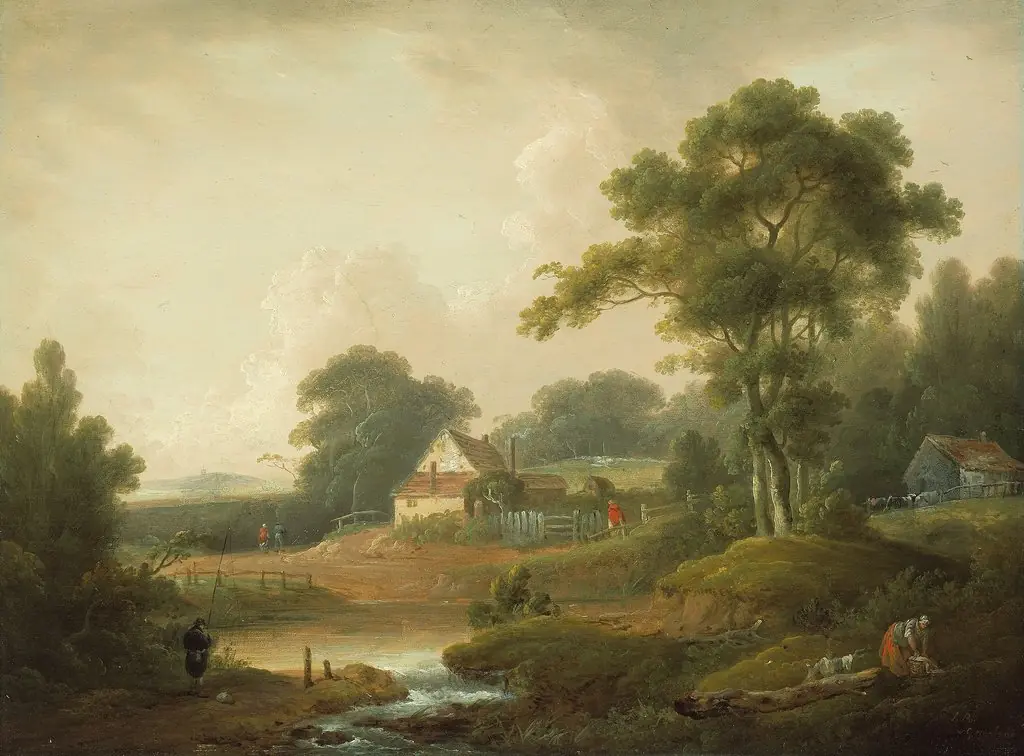
Landscape with Figures Crossing a Bridge is an unspecified painting by the British Romanticist artist George Morland. It dates from 1796 and is held in the collection of the Art Institute of Chicago.
About this work
Overview
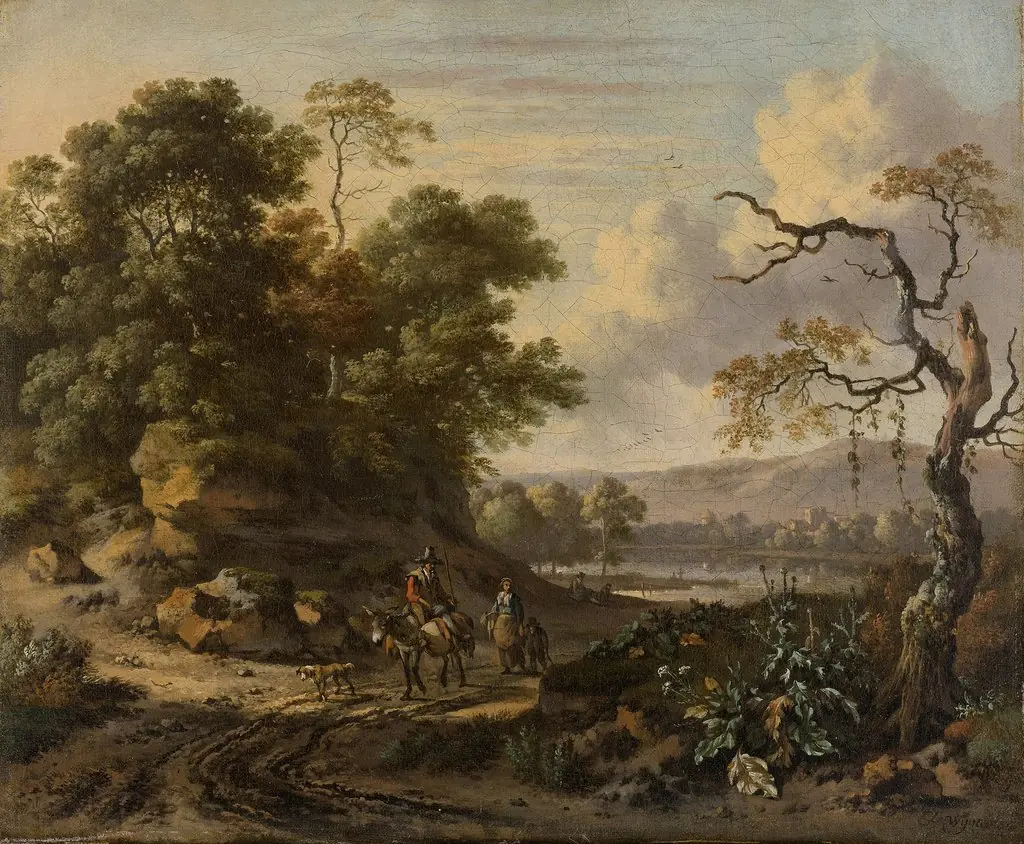
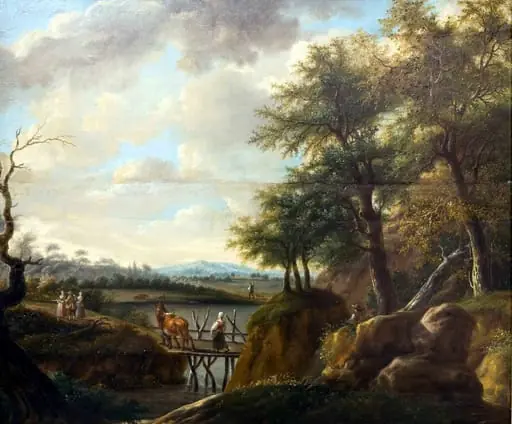
Painted in 1796 by George Morland, this work captures a tranquil rural scene with figures crossing a stone bridge over a shallow stream.
Painted in 1796 by George Morland, this work captures a tranquil rural scene with figures crossing a stone bridge over a shallow stream. It reflects Morland’s consistent focus on everyday country life, rendered with quiet observation rather than dramatic flourish. Though associated with British Romanticism, the painting avoids idealization, favoring a grounded, atmospheric realism rooted in direct observation of the natural world.
Subject & Meaning
Three individuals—a pair of pedestrians and a horseback rider—move slowly across the bridge, their presence unobtrusive yet integral to the scene’s rhythm. The setting, with distant buildings and dense foliage, suggests a modest agricultural community. There is no narrative climax; instead, the painting conveys a sense of quiet continuity, emphasizing the harmony between human movement and the enduring landscape.
Technique & Style
Morland employed soft, layered brushwork to model light across the landscape, creating subtle contrasts between sunlit grasses and shaded undergrowth. The trees frame the composition with dense, textured foliage, while the bridge and stream form a gentle diagonal that leads the eye into the distance. His approach to light, influenced by Dutch landscape traditions, enhances the scene’s tactile realism without overt stylization.
History & Provenance
The painting entered the collection of the Art Institute of Chicago, where it remains today. Morland’s prolific output was matched by financial hardship and personal instability, yet his works circulated widely through prints, ensuring broader public recognition than his lifetime success might suggest. This painting survives as one of many examples of his unassuming yet enduring rural visions.
Context
In late 18th-century Britain, interest in rural life grew alongside industrialization, prompting artists to document the countryside as a site of authenticity. Morland’s scenes, though not overtly political, aligned with this cultural shift by portraying laborers and travelers without sentimentality. His work stood apart from grand historical or pastoral traditions, offering instead intimate glimpses of ordinary movement through the land.
Legacy
Morland’s influence endured through his accessible compositions and attention to natural light, which resonated with later landscape painters seeking realism over idealism. Though his personal life was marked by turmoil, his paintings contributed to a broader shift in British art toward valuing quiet, everyday moments. This work exemplifies his ability to transform mundane scenes into quiet, resonant observations of place.
Own this work as a print
Artist & collection
Artist
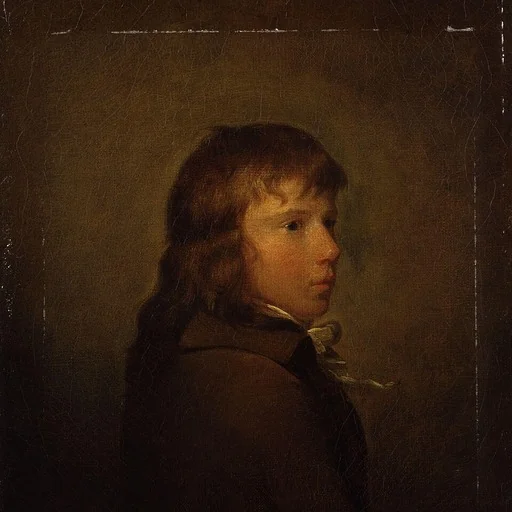
George Morland (26 June 1763 – 29 October 1804) was an English painter. His early work was influenced by Francis Wheatley, but after the 1790s he came into his own style. His best compositions focus on rustic scenes:…