Artwork
Le Pont japonais
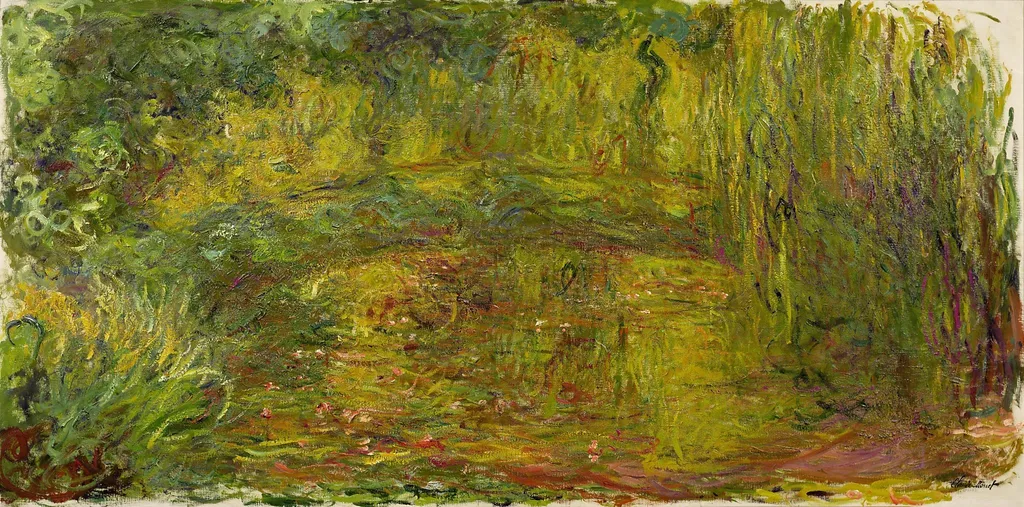
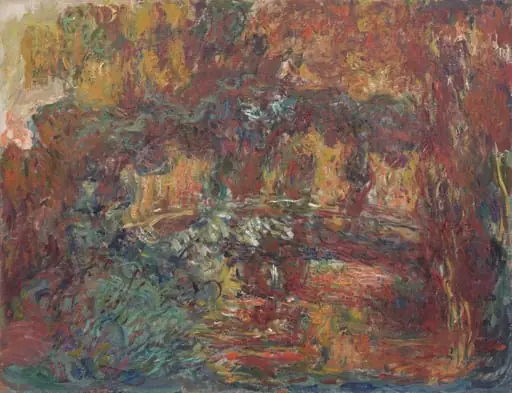
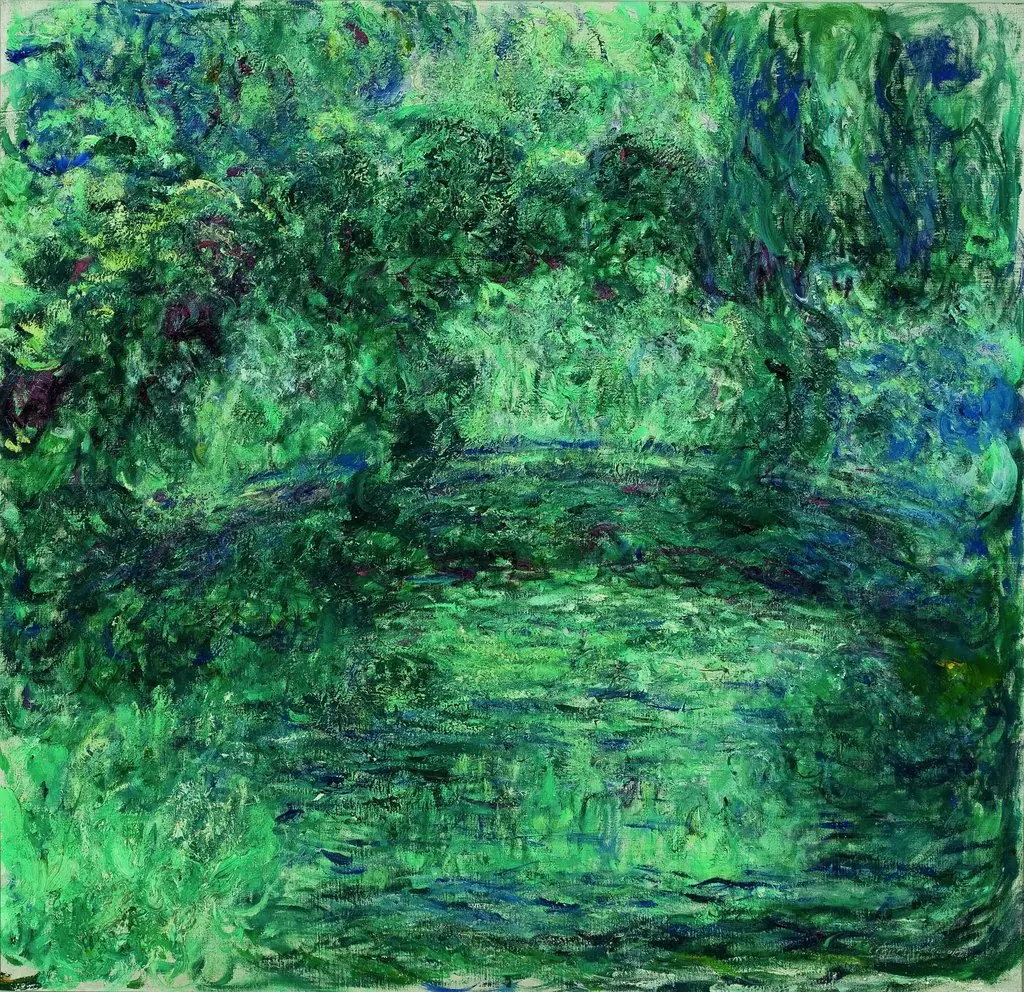
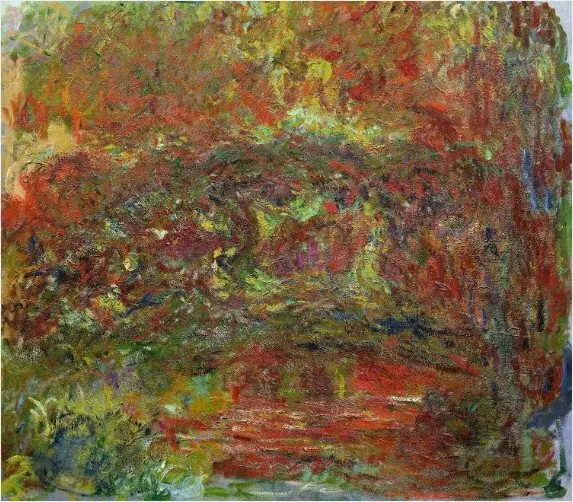
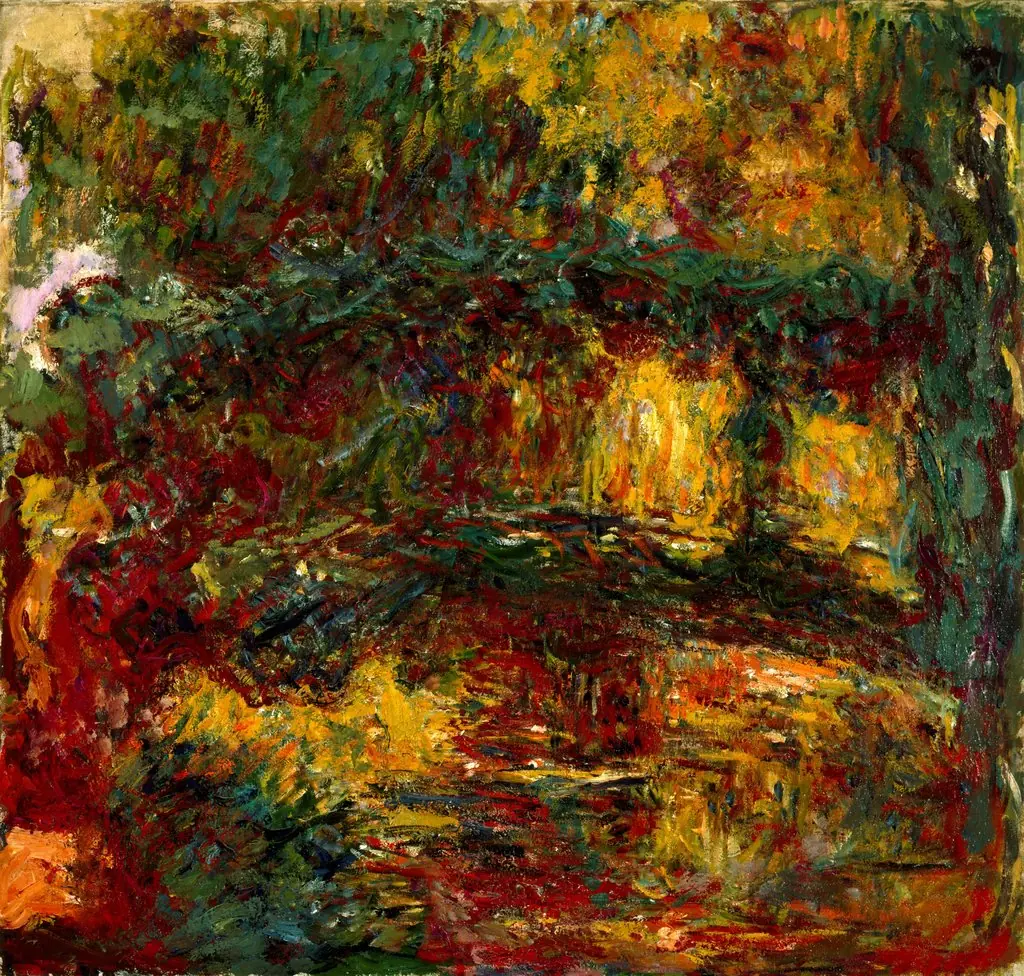
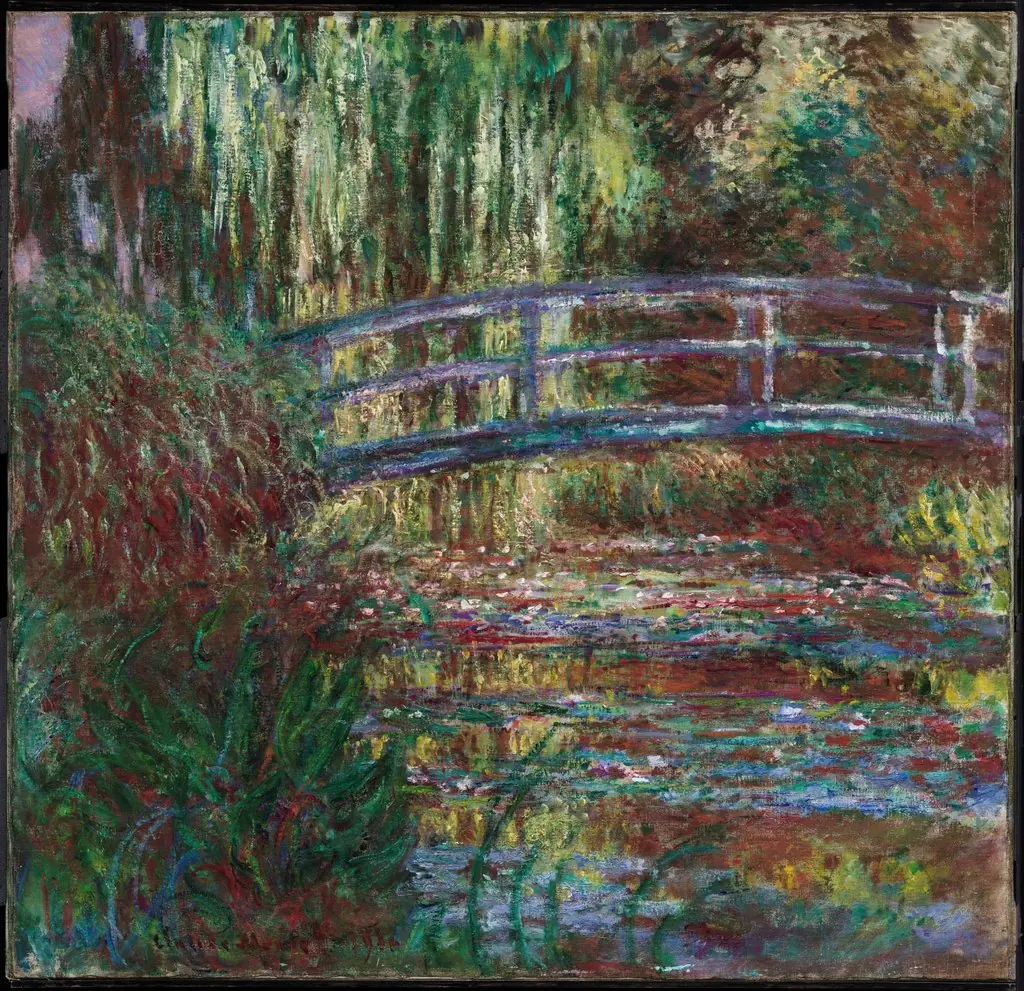
Le Pont japonais is an oil painting by the Impressionist artist Claude Monet. It dates from 1918 and is held in the collection of the Musée Marmottan Monet.
About this work
Overview
Painted in 1918, Le Pont japonais is an oil on canvas work by Claude Monet, part of his later series focused on the water garden at Giverny.
Painted in 1918, Le Pont japonais is an oil on canvas work by Claude Monet, part of his later series focused on the water garden at Giverny. It resides in the Musée Marmottan Monet in Paris. The composition centers on a Japanese-style bridge arched over a pond, surrounded by dense vegetation. Monet’s brushwork is fluid and layered, emphasizing atmosphere over precise detail, reflecting his deepening abstraction in his final years.
Subject & Meaning
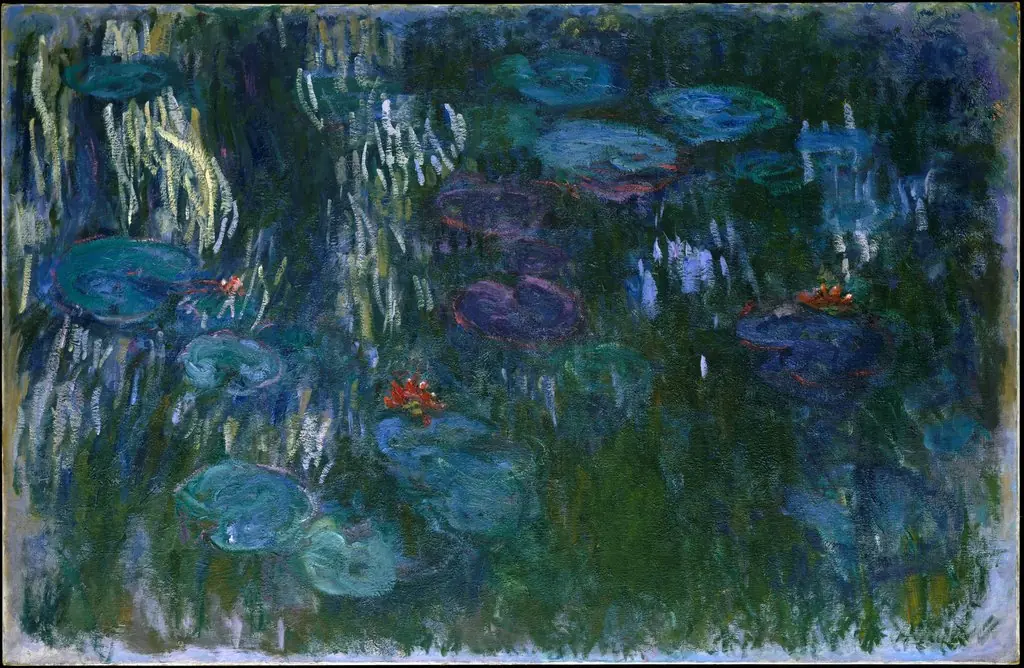
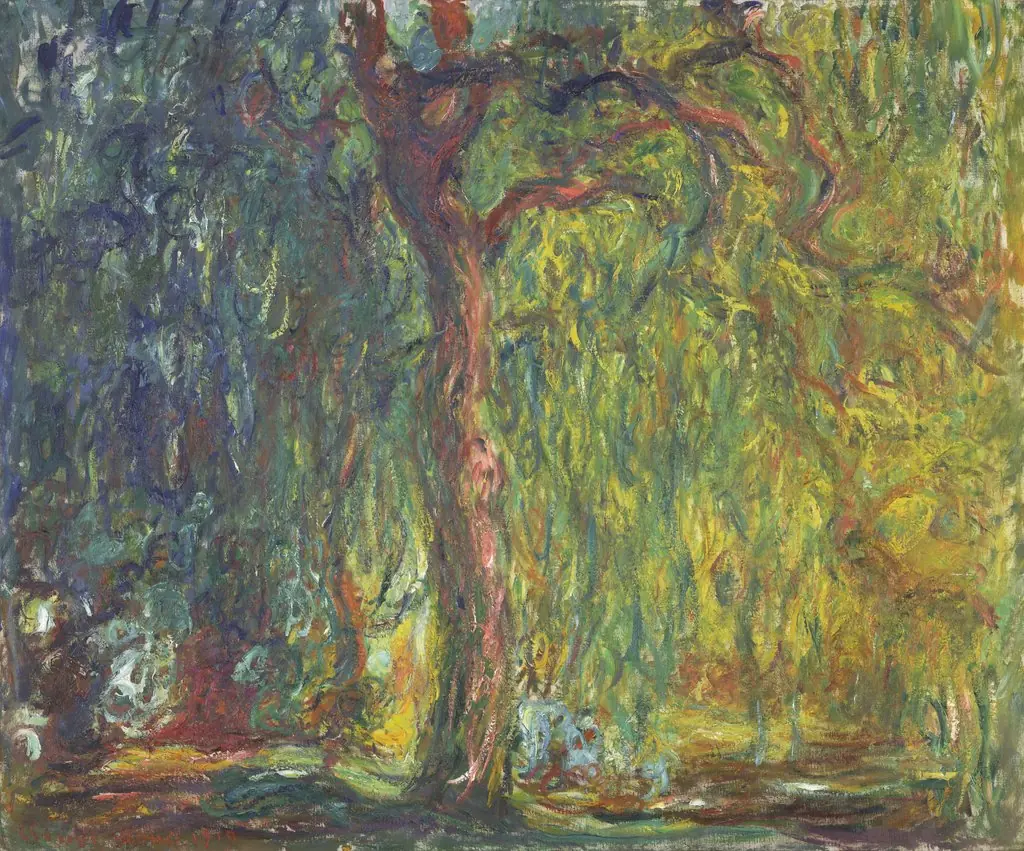
The painting depicts Monet’s own garden at Giverny, with the curved wooden bridge as a structural anchor. Water lilies float on the pond’s surface, their pink and white blooms contrasting with the surrounding greens and browns. The weeping willow dips its branches into the water, framing the scene with a sense of quiet enclosure. Rather than a literal record, the image conveys a meditative immersion in nature, a recurring theme in Monet’s late work.
Technique & Style
Monet applied oil paint in broad, broken strokes, building texture through layered pigments rather than blending. Greens dominate the palette, modulated with ochres, pinks, and muted yellows to suggest shifting light and foliage. The water’s surface is rendered with dappled marks, avoiding reflection in favor of chromatic vibration. Brushwork remains visible throughout, reinforcing the immediacy of perception over polished finish.
History & Provenance
Created during Monet’s final decade, the painting emerged from his sustained focus on the Giverny pond after the death of his second wife and the onset of cataracts. It remained in his possession until his death in 1926, then passed to his son Michel. In 1966, Michel donated it to the Musée Marmottan Monet, where it has been held since, forming part of the core collection of his late works.
Context
Le Pont japonais belongs to a series Monet produced between 1914 and 1926, responding to his deteriorating vision and growing interest in immersive, large-scale compositions. These works moved away from traditional landscape conventions, prioritizing sensory experience over topographical accuracy. The garden became both subject and studio, a private world where Monet explored color, light, and form without external constraints.
Legacy
The painting exemplifies Monet’s late evolution toward abstraction, influencing later movements that valued emotional resonance over representation. Its emphasis on color fields and tactile brushwork prefigured aspects of Abstract Expressionism. Though not widely exhibited during his lifetime, its inclusion in the Marmottan collection ensured its role as a key document of his artistic maturity and enduring engagement with nature.
Artist & collection

Artist
Oscar-Claude Monet was born in Paris on November 14, 1840, and raised from the age of five in Le Havre, where he began selling charcoal caricatures as a teenager.