Artwork
Weeping Willow
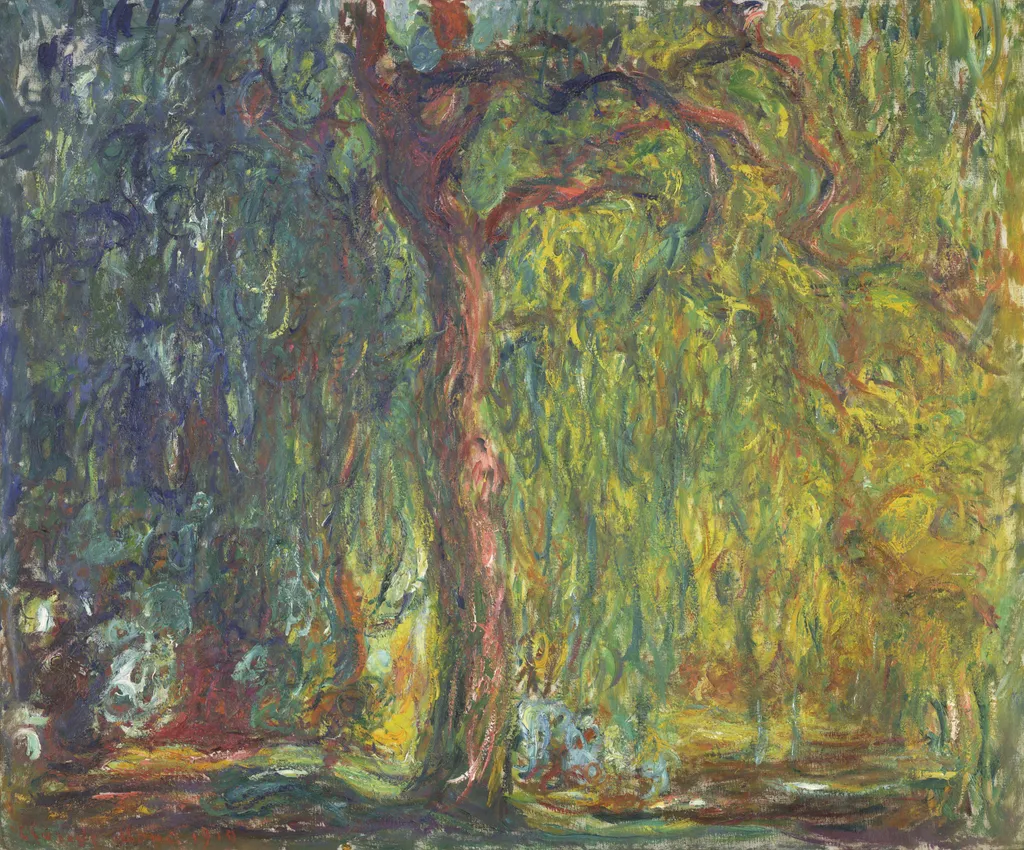
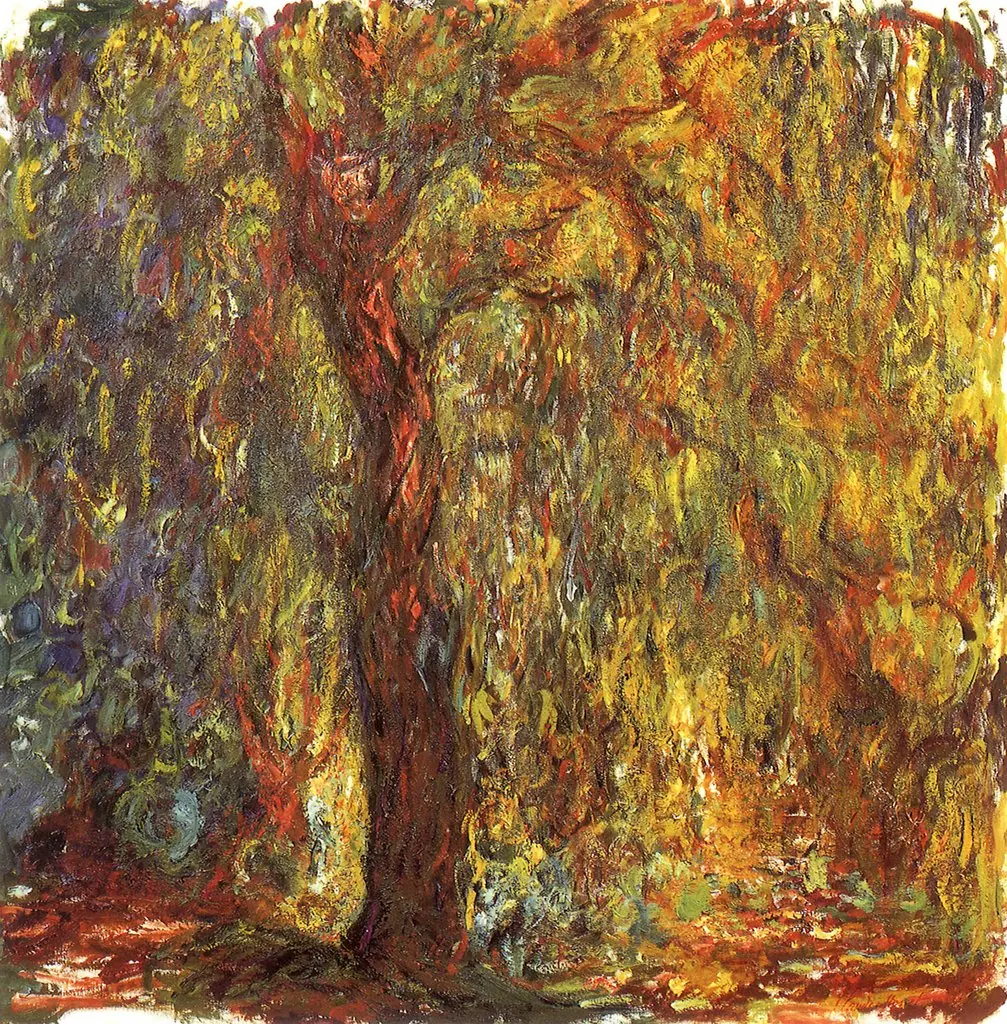
Weeping Willow is an oil painting by the Impressionist artist Claude Monet. It dates from 1918 and is held in the collection of the Kimbell Art Museum.
About this work
Overview
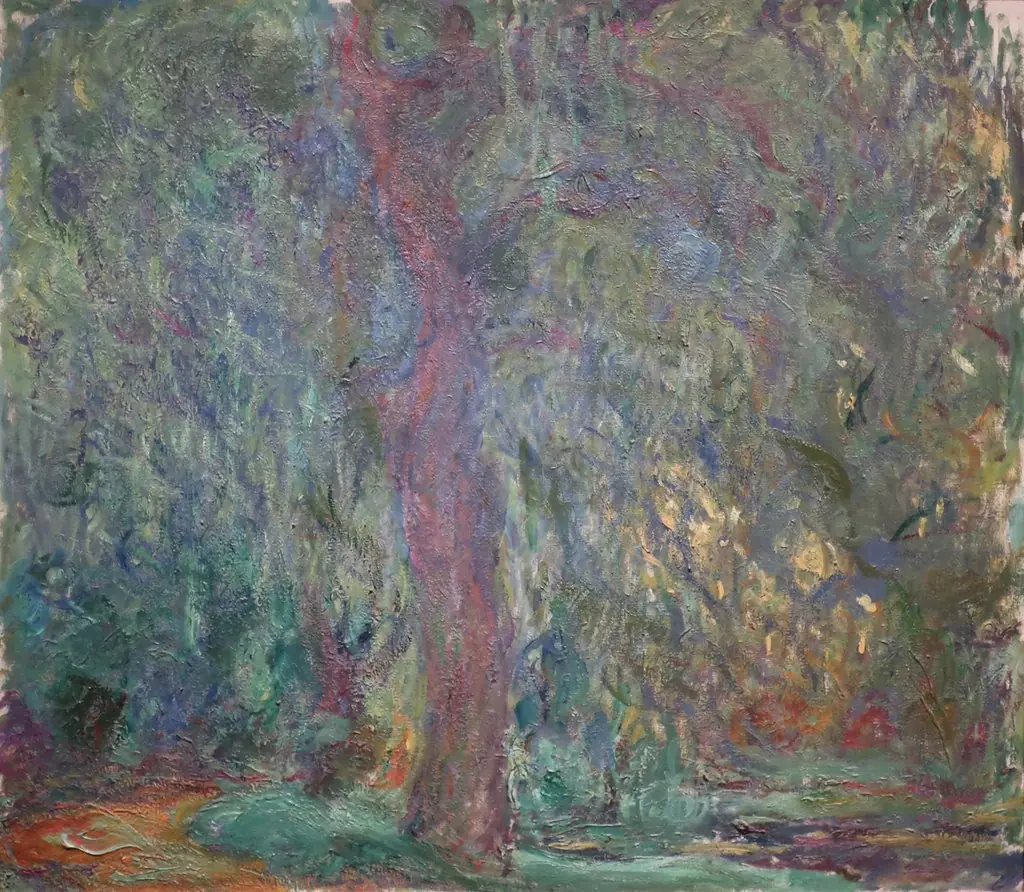
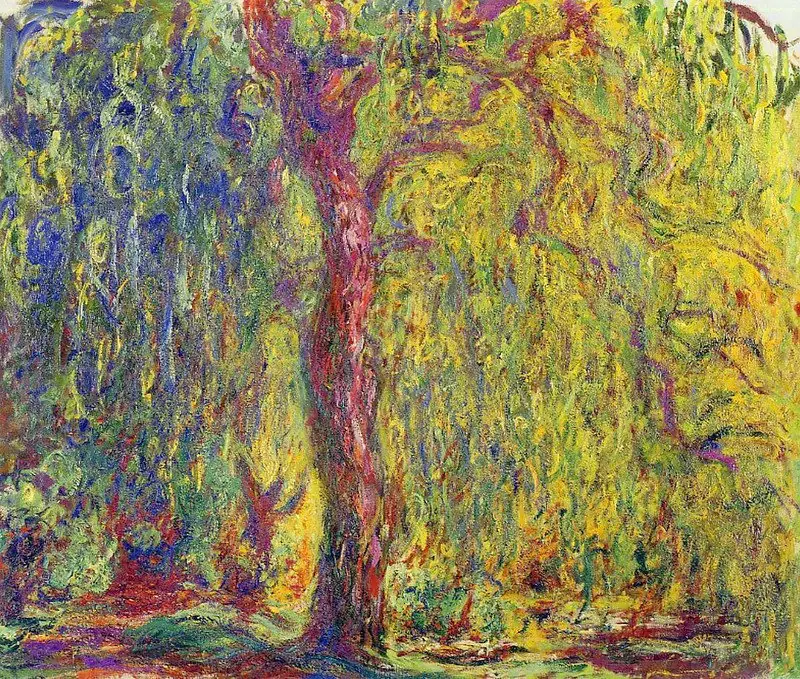
Claude Monet’s 1918 oil painting titled *Weeping Willow* presents a solitary willow tree dominating the canvas. The composition balances the tree’s dark, twisting trunk and branches against a softly rendered backdrop of muted greens, yellows, and browns, creating a tranquil, atmospheric landscape.
Subject & Meaning
The central figure is a Salix babylonica, commonly known as a weeping willow. Its drooping foliage, rendered in a palette of green, yellow, and occasional red‑orange tones, conveys both the vigor of the living tree and a gentle, contemplative mood that invites quiet reflection.
Technique & Style
Monet employs loose, impressionistic brushwork to blur the surrounding scenery, allowing light and color to merge into a hazy ambience. The interplay of thick, textured strokes for the trunk and finer, translucent layers for the leaves produces depth, while the subtle modulation of hue enhances the sense of atmospheric perspective.
History & Provenance
Created in the final year of Monet’s life, *Weeping Willow* entered the collection of the Kimbell Art Museum, where it remains on display. The work exemplifies Monet’s late‑period focus on natural subjects rendered with a mature, nuanced handling of light and color.
Own this work as a print
Artist & collection
Artist
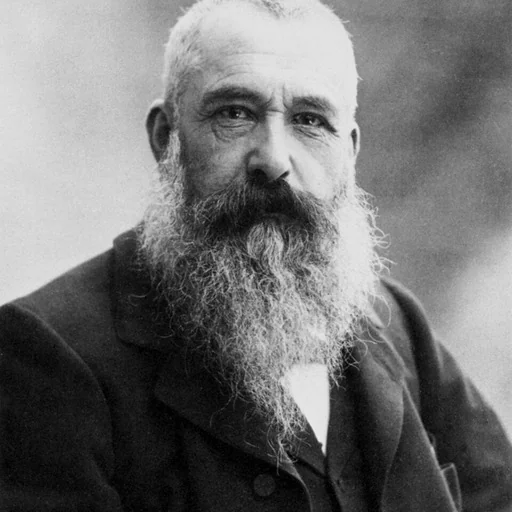
Oscar-Claude Monet was born in Paris on November 14, 1840, and raised from the age of five in Le Havre, where he began selling charcoal caricatures as a teenager.