Artwork
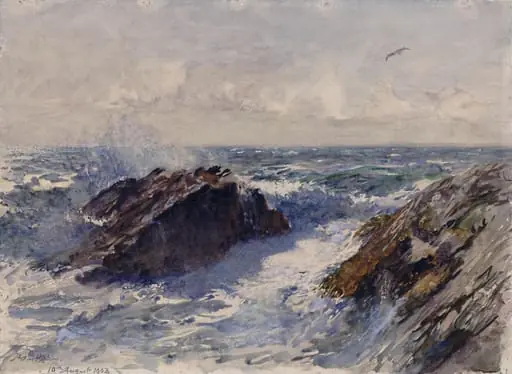
Rocks at Port-Coton, the Lion Rock, Belle Ile
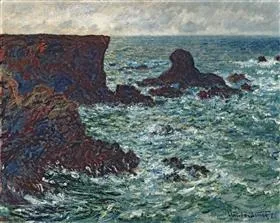
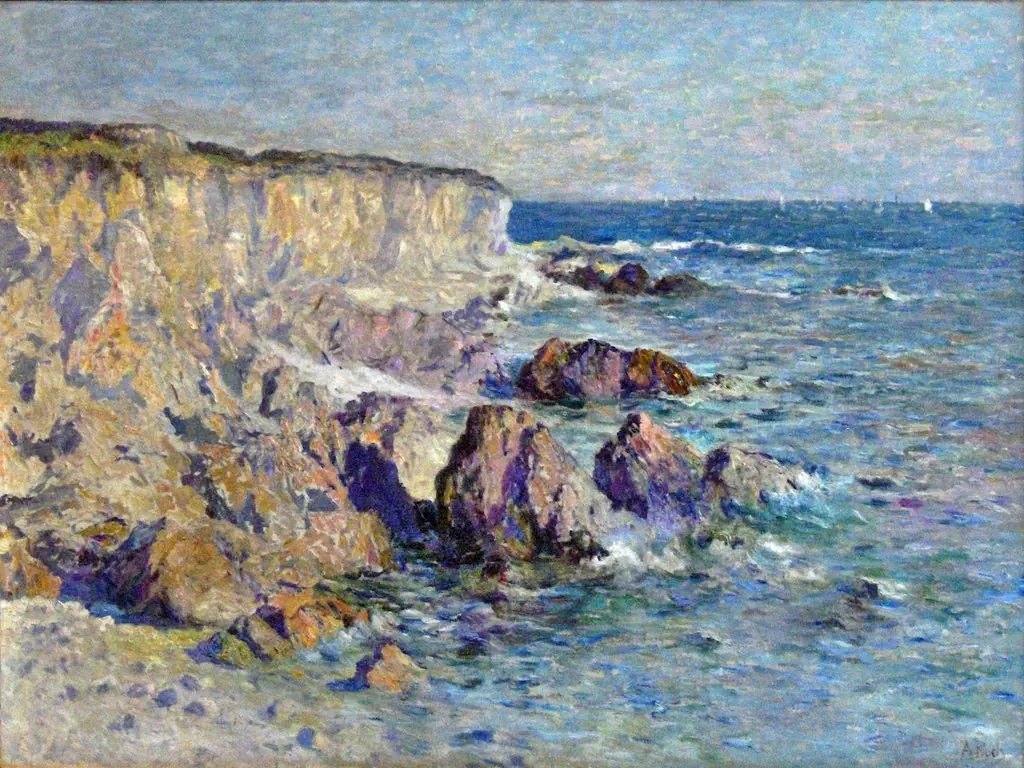
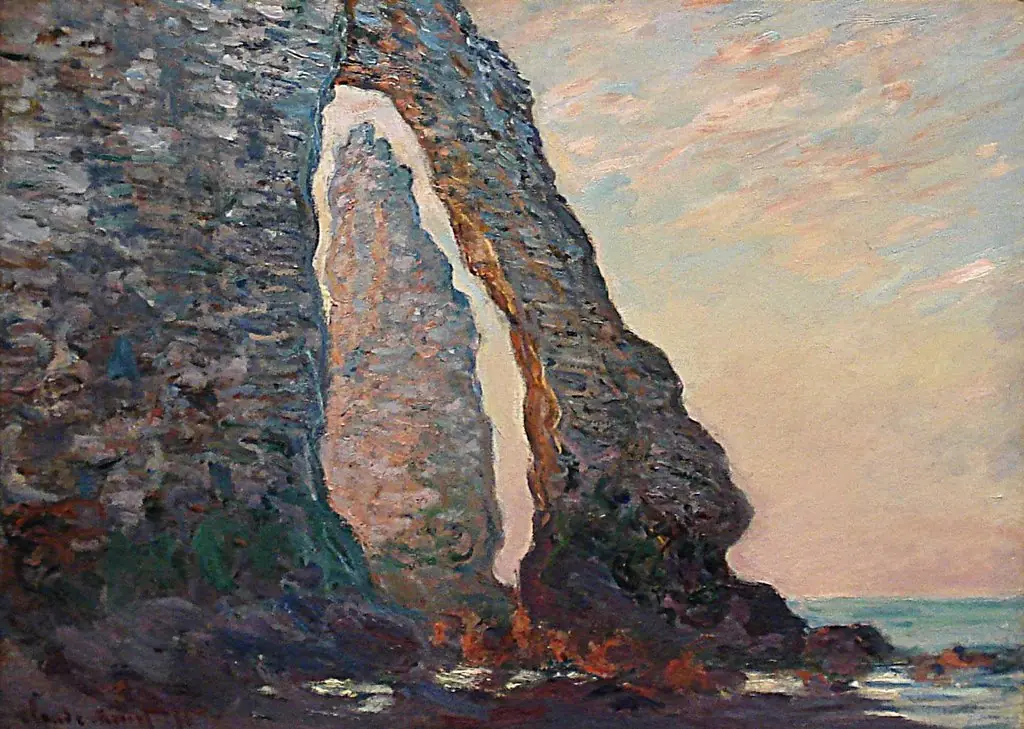
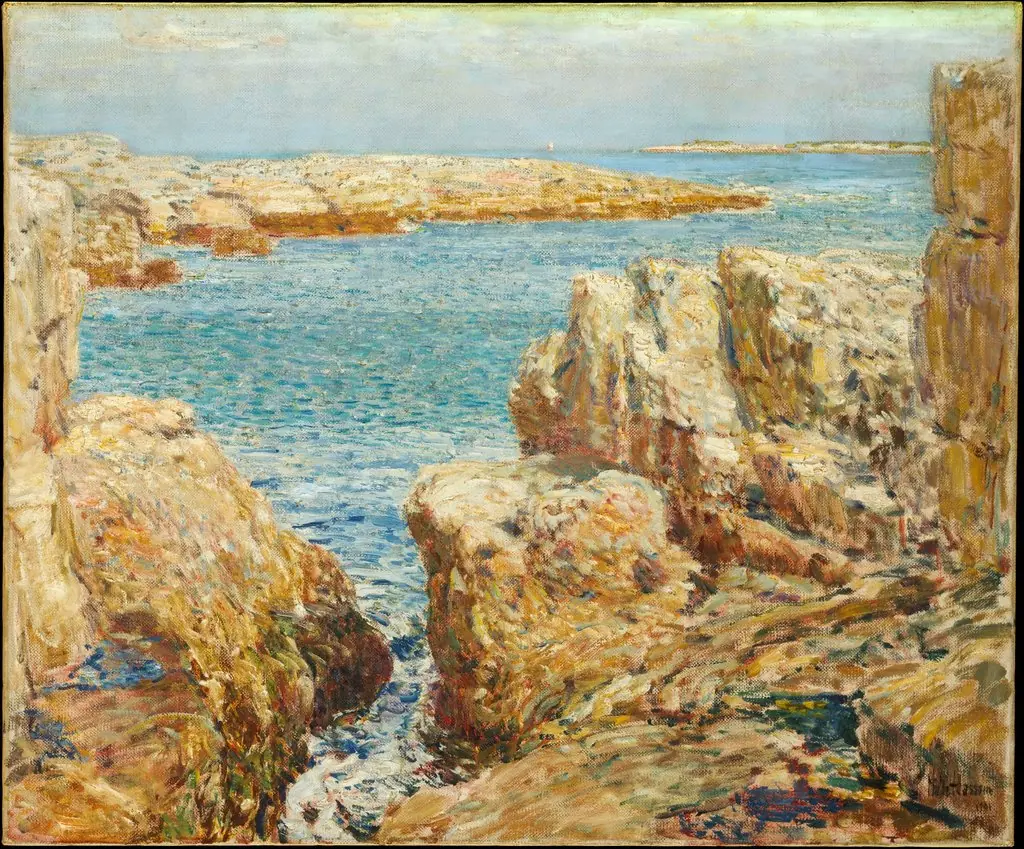
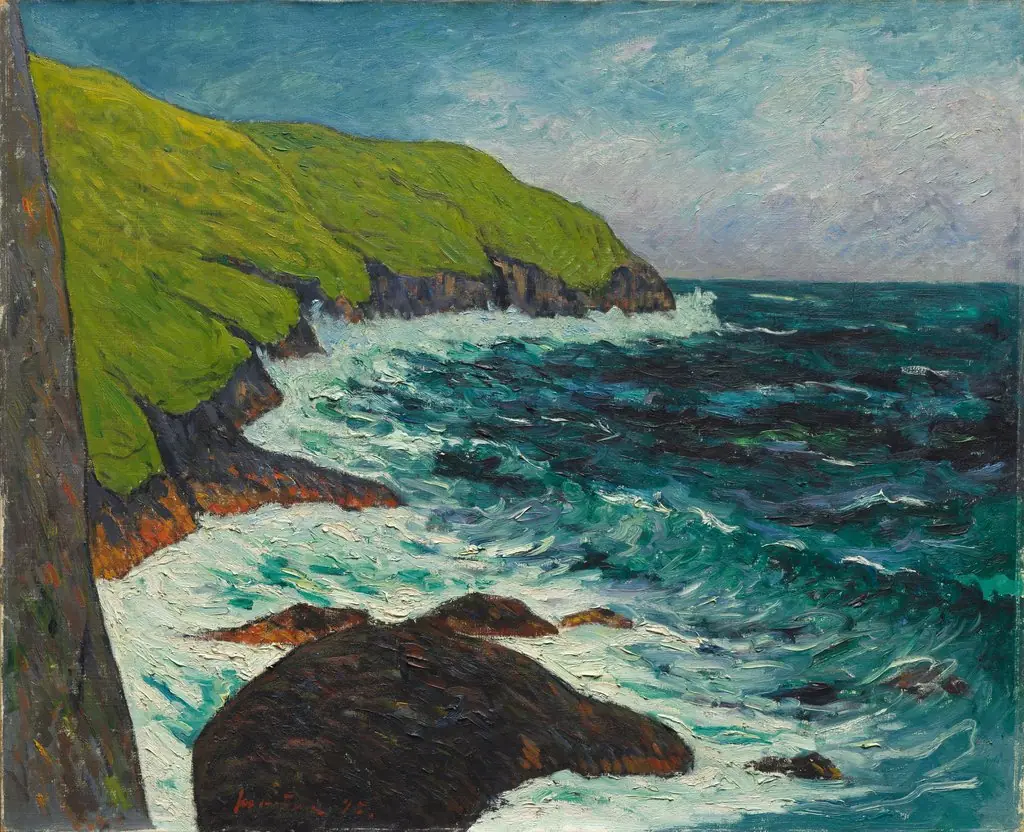
Rocks at Port-Coton, the Lion Rock, Belle Ile is an oil painting by Claude Monet. It dates from 1894 and is held in the collection of the Fitzwilliam Museum.
About this work
Overview
Monet’s focus on natural forces over human presence reflects his deep engagement with landscape as a living, shifting entity.
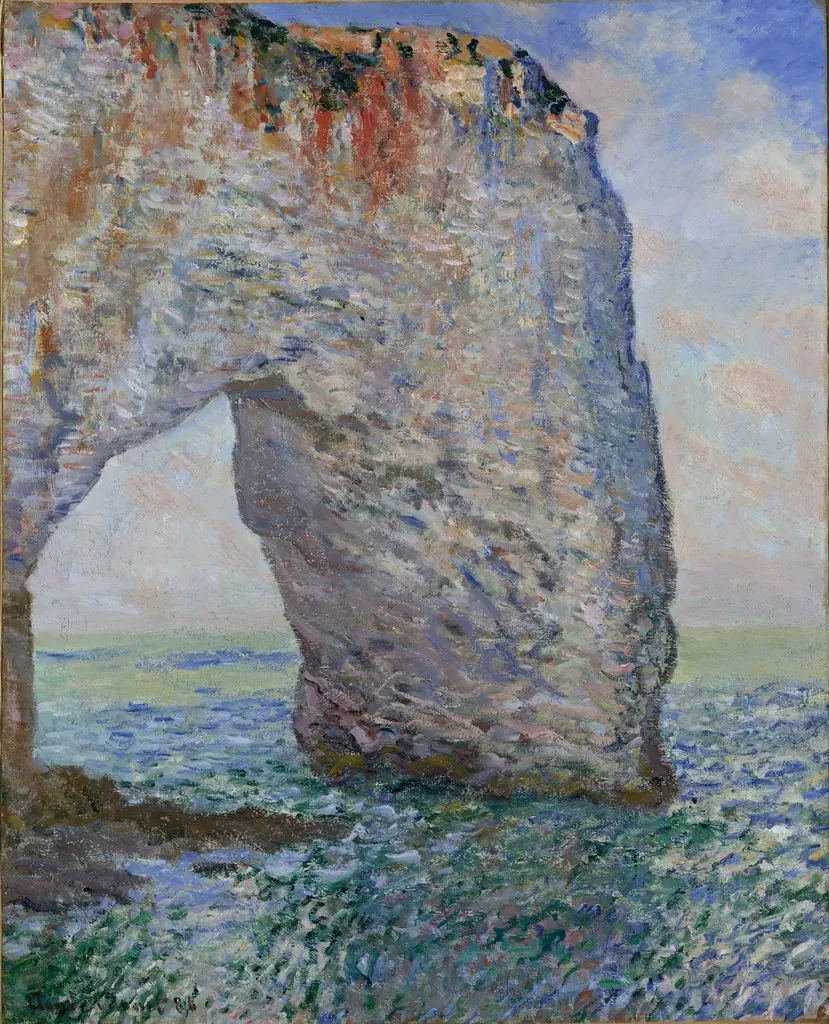
Painted in 1894, Rocks at Port-Coton, the Lion Rock, Belle Ile is an oil work by Claude Monet capturing a dramatic stretch of coastline on the Breton island of Belle Île. The composition centers on massive, erosion-scarred rocks rising from the sea, framed by churning waves and a subdued sky. Monet’s focus on natural forces over human presence reflects his deep engagement with landscape as a living, shifting entity.
Subject & Meaning
The painting portrays the Lion Rock, a distinctive formation at Port-Coton, where the Atlantic’s force meets the island’s ancient geology. Monet was drawn to the raw, untamed character of this site, emphasizing the persistent interaction between land and sea. Rather than idealizing the scene, he presents it as a site of elemental struggle — enduring, indifferent, and alive with motion.
Technique & Style
Monet applied thick, textured brushwork to convey the roughness of the rocks and the turbulence of the water. Dark, earthy pigments anchor the foreground, while cooler blues and greens suggest depth and movement in the sea. The impasto technique lends physicality to the surface, with visible strokes that mimic the irregularity of nature itself, reinforcing the immediacy of the moment observed.
History & Provenance
Monet painted this work during a stay on Belle Île in 1886 and returned to it in 1894, refining the composition after earlier studies. It entered the Fitzwilliam Museum’s collection in 1917 as part of the bequest of Sir Richard Wallace, who had acquired it directly from the artist. The painting has remained in the museum’s holdings since, preserving its connection to Monet’s late coastal series.
Context
This painting belongs to a series Monet produced during his time on Belle Île, where he explored the effects of light and weather on rugged shores. Unlike his more famous water lilies or haystacks, these coastal works reveal his interest in structural forms and the power of natural forces. The period coincided with his increasing focus on serial observation and the transient qualities of the marine environment.
Legacy
Rocks at Port-Coton exemplifies Monet’s late commitment to capturing nature’s unvarnished rhythms. While less widely known than his impressionist interiors, this work influenced later artists seeking to convey geological permanence and elemental motion through paint. Its presence in the Fitzwilliam Museum ensures continued study of his evolving approach to landscape beyond traditional impressionist themes.
Artist & collection
Artist
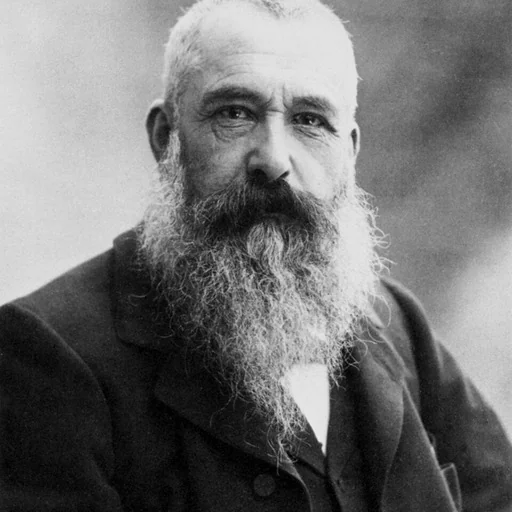
Oscar-Claude Monet was born in Paris on November 14, 1840, and raised from the age of five in Le Havre, where he began selling charcoal caricatures as a teenager.