Artwork
The Aiguille through the Porte d'Aval
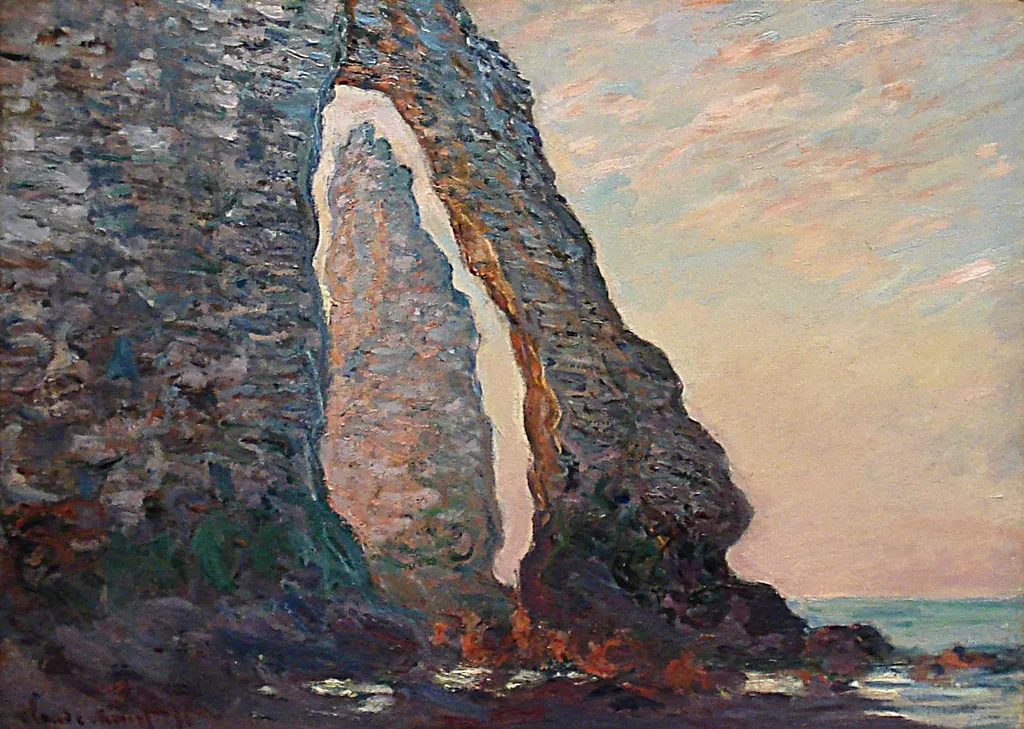
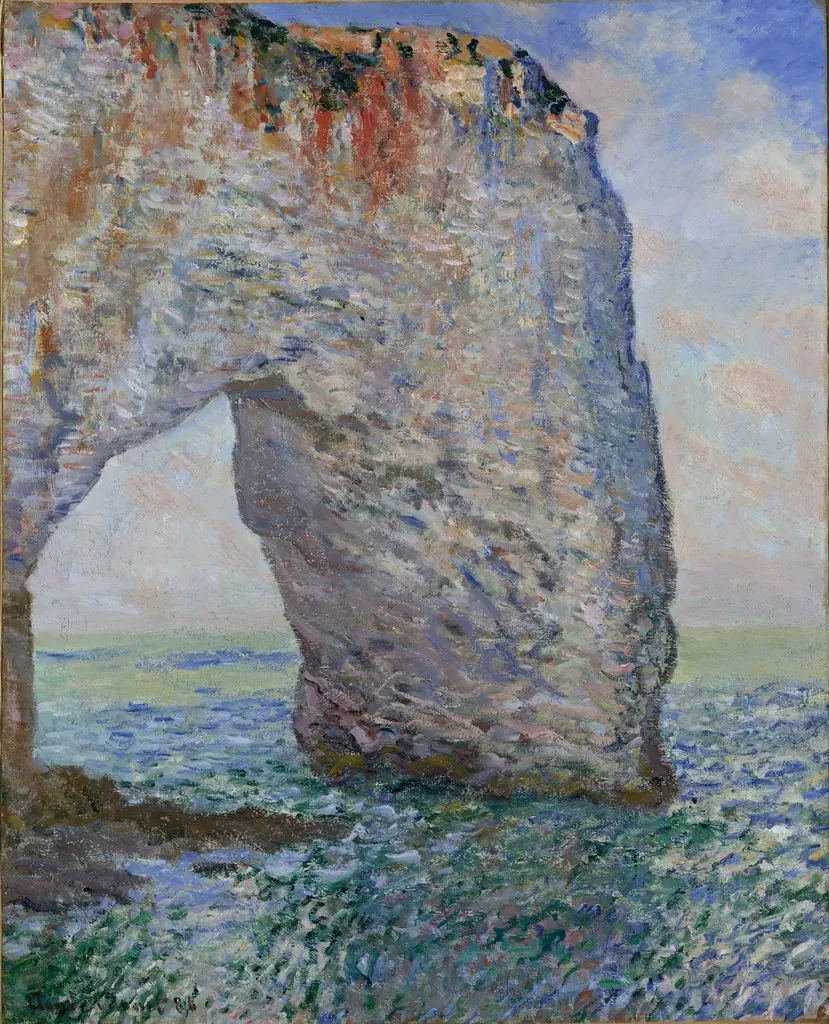
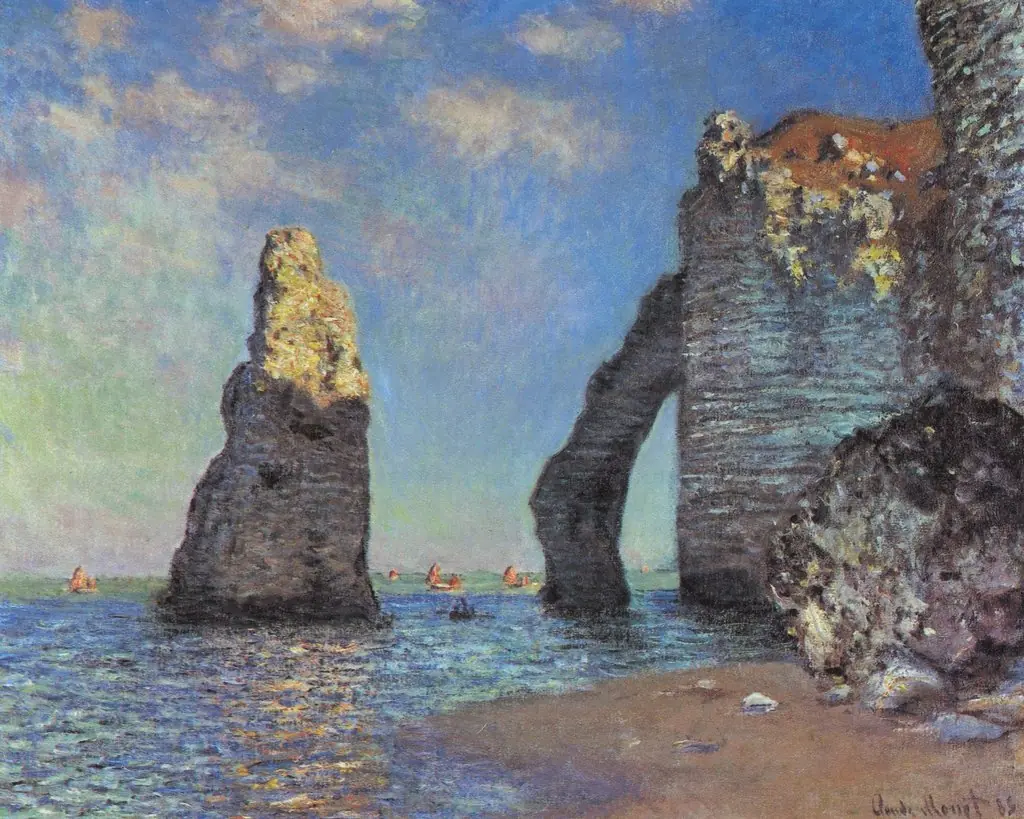
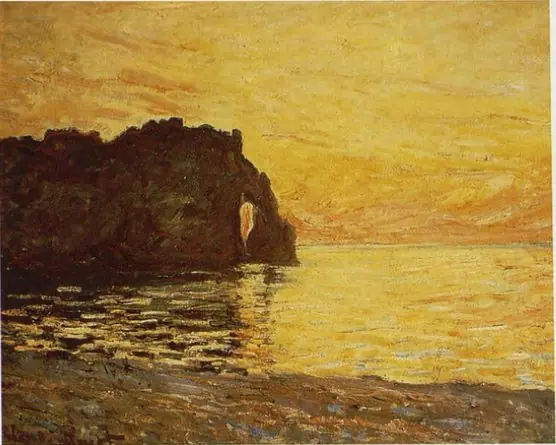
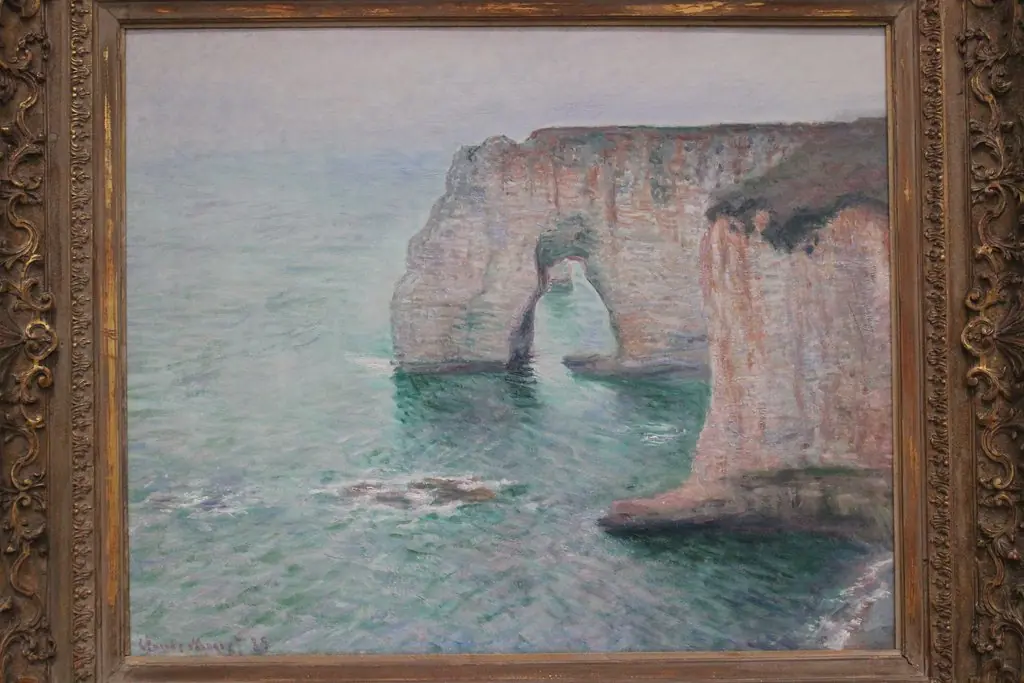
The Aiguille through the Porte d'Aval is an oil painting by the Impressionist artist Claude Monet. It dates from 1894 and is held in the collection of the National Gallery of Canada.
About this work
Overview
Painted in 1894, The Aiguille through the Porte d'Aval is an oil on canvas work by Claude Monet, capturing a natural limestone arch along the Normandy coast.
Painted in 1894, The Aiguille through the Porte d'Aval is an oil on canvas work by Claude Monet, capturing a natural limestone arch along the Normandy coast. The composition centers on the dramatic silhouette of the Aiguille, a slender needle-like rock formation, framed by the Porte d'Aval, a sea-carved opening in the cliff. The scene reflects Monet’s sustained interest in coastal light and geology during his later years.
Subject & Meaning
The painting presents a view of Étretat’s iconic cliffs, where the sea has carved natural arches and spires over millennia. Rather than romanticizing the landscape, Monet treats it as a study in form and atmosphere. The arch functions as a visual threshold, framing the open sea and sky, suggesting the passage of time and the enduring power of natural forces over human perception.
Technique & Style
Monet employs layered brushwork to convey the stratified texture of the chalk and flint cliffs, using muted grays, browns, and blacks to suggest geological depth. The sky and sea are rendered with soft, diffused strokes, emphasizing the transient quality of light. Color is subdued, prioritizing tonal relationships over vivid hues, aligning with his late-period focus on atmospheric nuance over decorative effect.
History & Provenance
Created during Monet’s visits to Étretat in the 1880s and 1890s, this painting was acquired by the National Gallery of Canada in 1913, among the earliest major acquisitions of his work in North America. It remained in private hands until its purchase by the gallery, reflecting early institutional recognition of his coastal series outside France.
Context
Monet painted multiple views of Étretat’s cliffs between 1883 and 1890, drawn to their dramatic geology and shifting light. The Porte d'Aval series emerged as part of his broader exploration of natural monuments, paralleling his haystacks and cathedrals. These works reflect a shift from Impressionist immediacy toward a more contemplative, structural engagement with landscape.
Legacy
The painting contributes to a body of work that redefined how natural landmarks could be interpreted through light and texture rather than narrative. Its quiet intensity influenced later landscape painters interested in geological form and atmospheric continuity. Today, it remains a key example of Monet’s mature style, valued for its restraint and observational depth.
Artist & collection
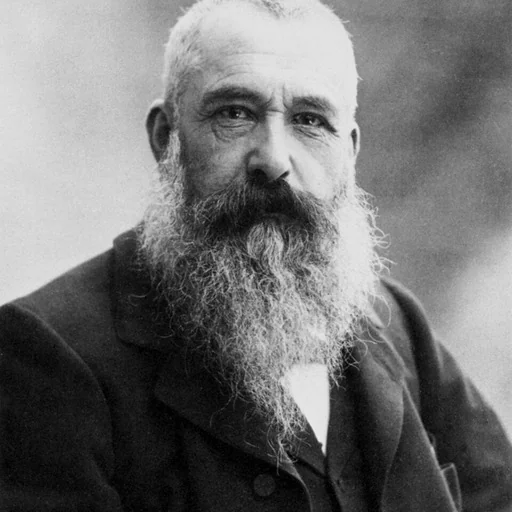
Artist
Oscar-Claude Monet was born in Paris on November 14, 1840, and raised from the age of five in Le Havre, where he began selling charcoal caricatures as a teenager.