Artwork
Spring in Giverny
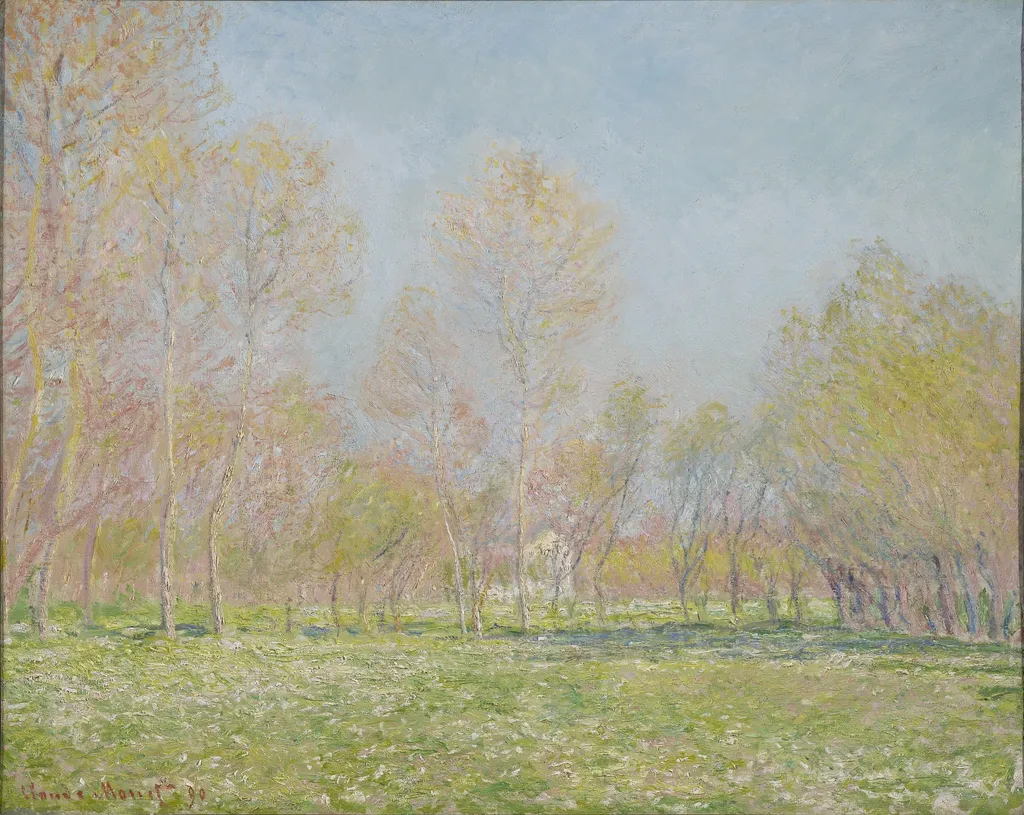
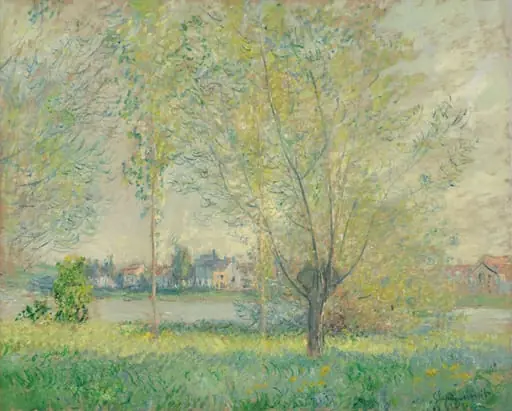
Spring in Giverny is an oil painting by the Impressionist artist Claude Monet. It dates from 1896 and is held in the collection of the Clark Art Institute.
About this work
Overview
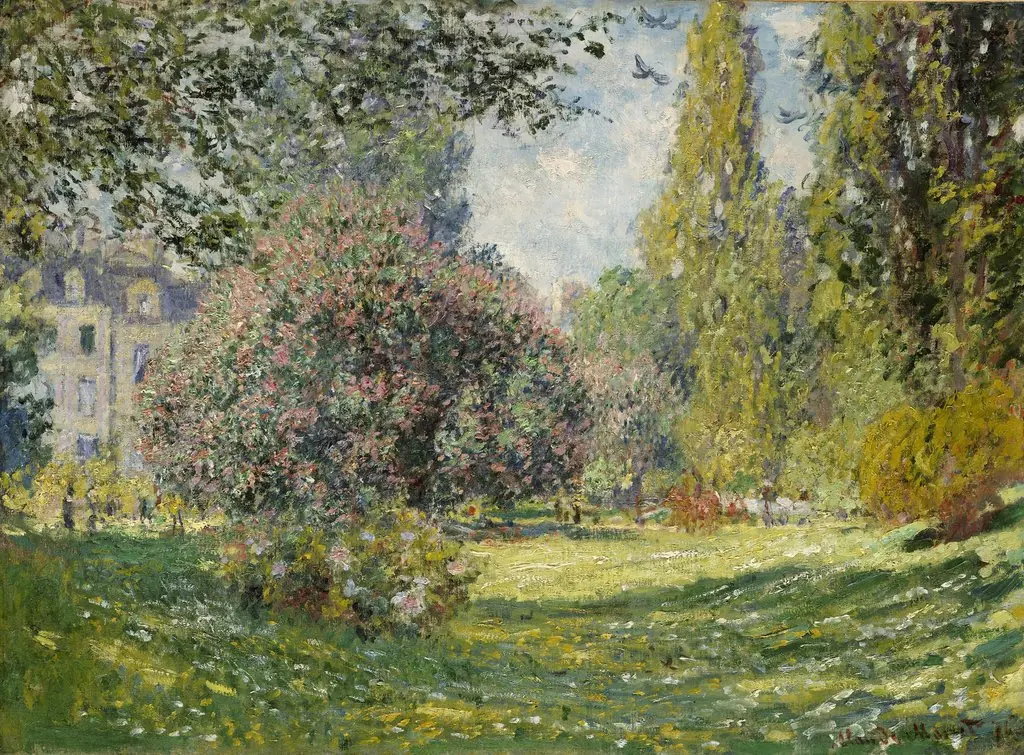
Claude Monet’s 1896 oil on canvas, titled Spring in Giverny, depicts a tranquil garden scene near the artist’s home. The composition is dominated by a foreground of verdant grass dotted with pale blossoms, while a modest stand of trees recedes toward a clear, pale‑blue sky. The overall effect is one of calm, seasonal renewal captured in a brief, luminous moment.
Subject & Meaning
The work presents a modest landscape of early spring, with mostly leafless trees hinting at the season’s transition, and a carpet of green grass punctuated by delicate white flowers. The sparse foliage and open sky convey a sense of quiet anticipation, reflecting Monet’s fascination with the subtle changes in light and atmosphere that accompany the onset of spring.
Technique & Style
Executed in oil, Monet employs loose, impressionistic brushwork to render the grass and blossoms, allowing color and texture to suggest rather than delineate form. The sky is rendered in soft, uniform washes, while the trees are suggested with minimal strokes, emphasizing the interplay of light and shadow over precise detail.
History & Provenance
Created in 1896, the painting has been part of the collection at the Clark Art Institute in Williamstown, Massachusetts. It entered the museum’s holdings through acquisition in the mid‑20th century, where it remains on display as part of the institution’s representation of Monet’s later garden works.
Artist & collection
Artist
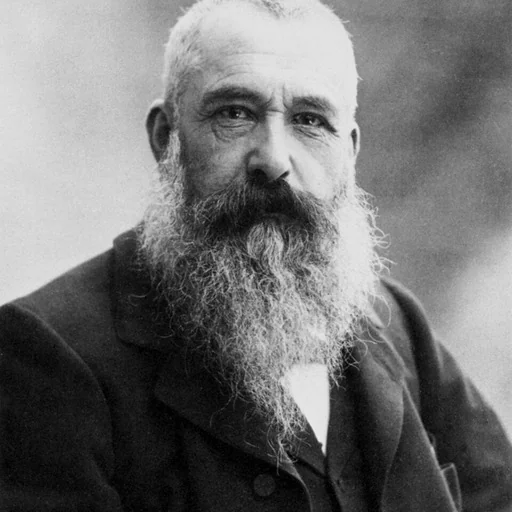
Oscar-Claude Monet was born in Paris on November 14, 1840, and raised from the age of five in Le Havre, where he began selling charcoal caricatures as a teenager.