Artwork
The Rock Needle and Porte d' Aval, Etretat
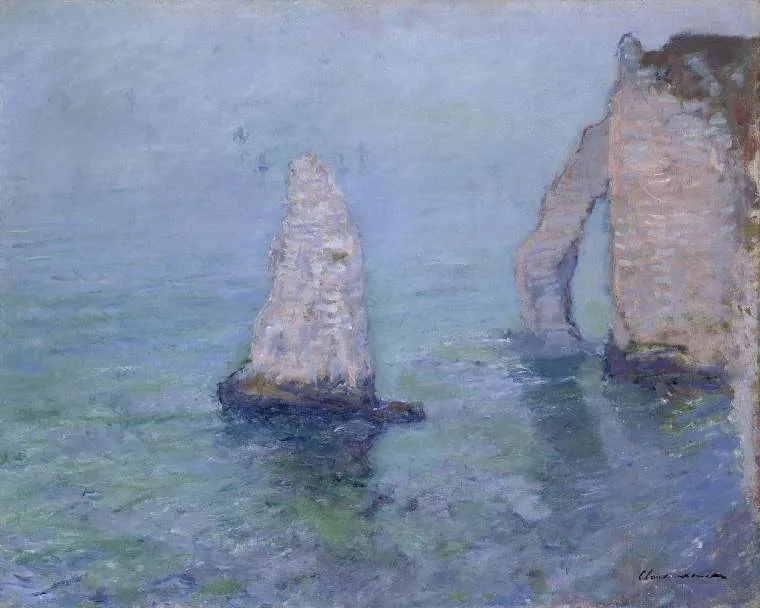
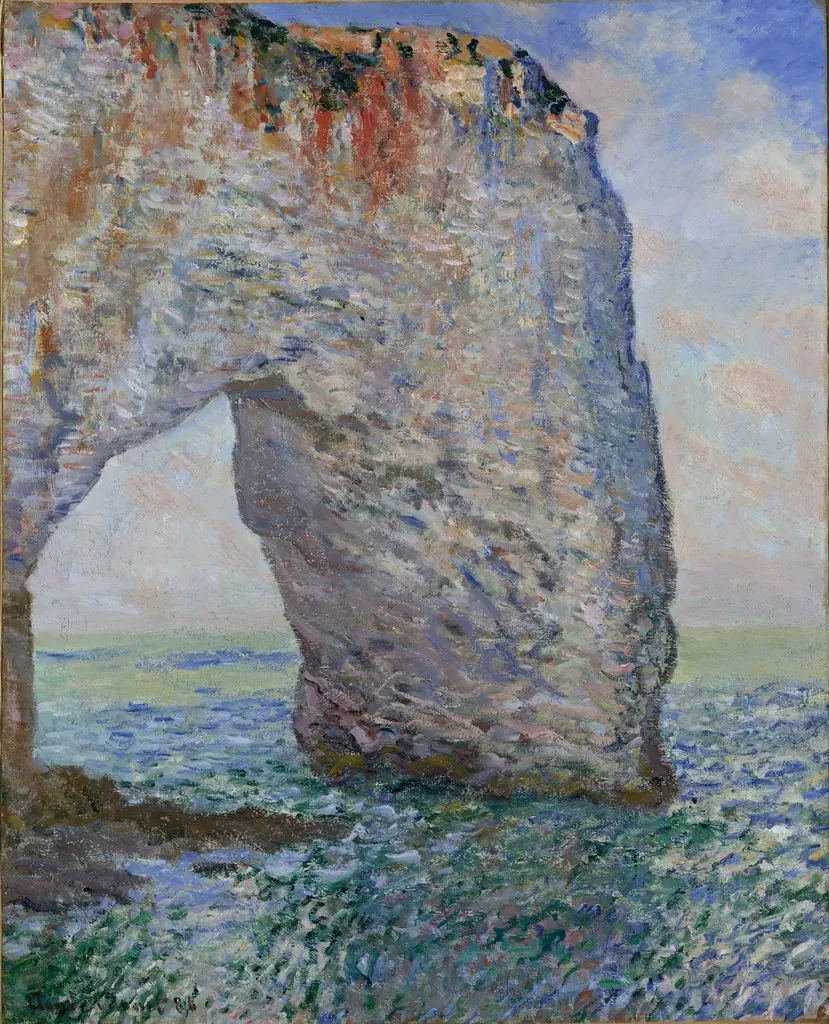
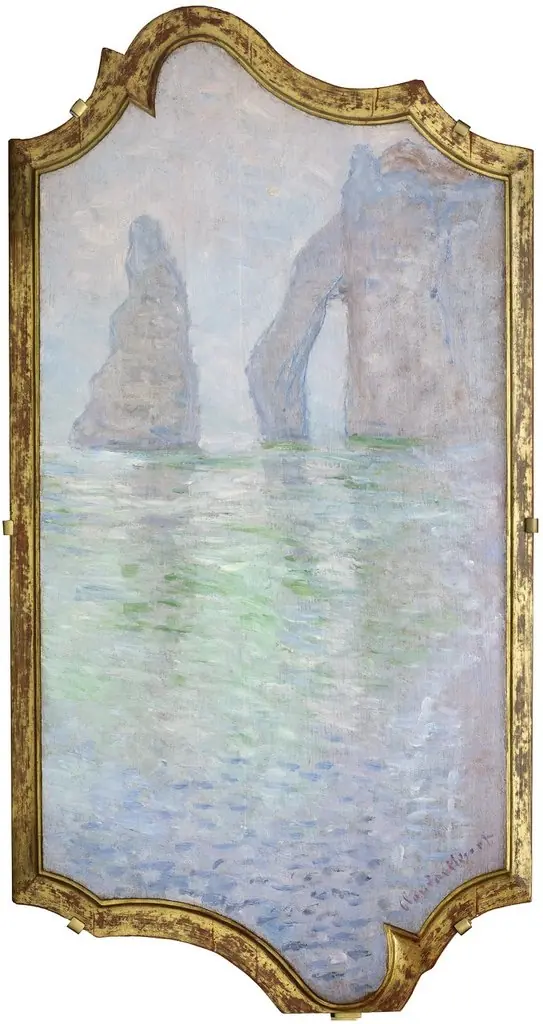
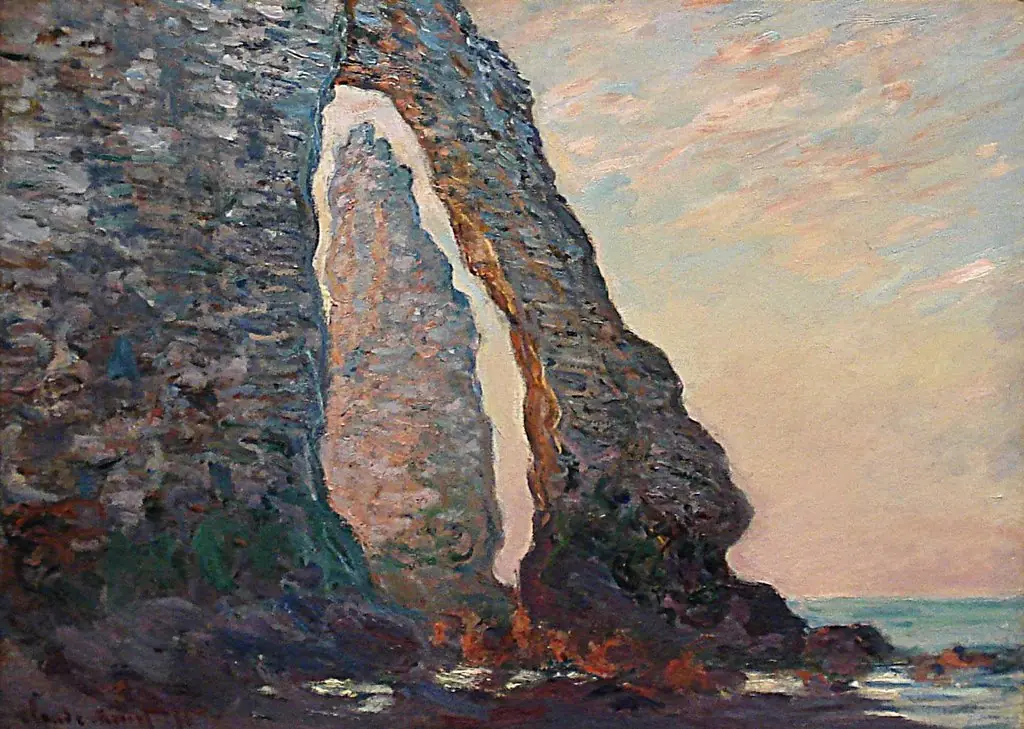
The Rock Needle and Porte d' Aval, Etretat is an oil painting by Claude Monet. It dates from 1893 and is held in the collection of the Fitzwilliam Museum.
About this work
Overview
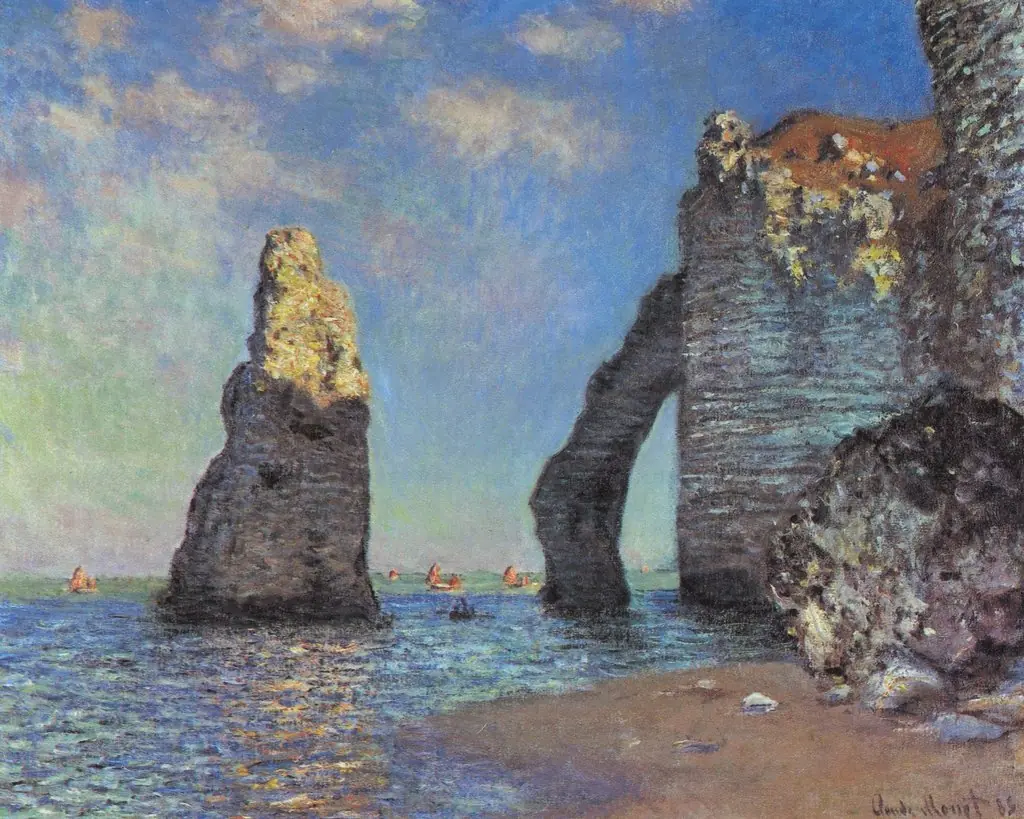
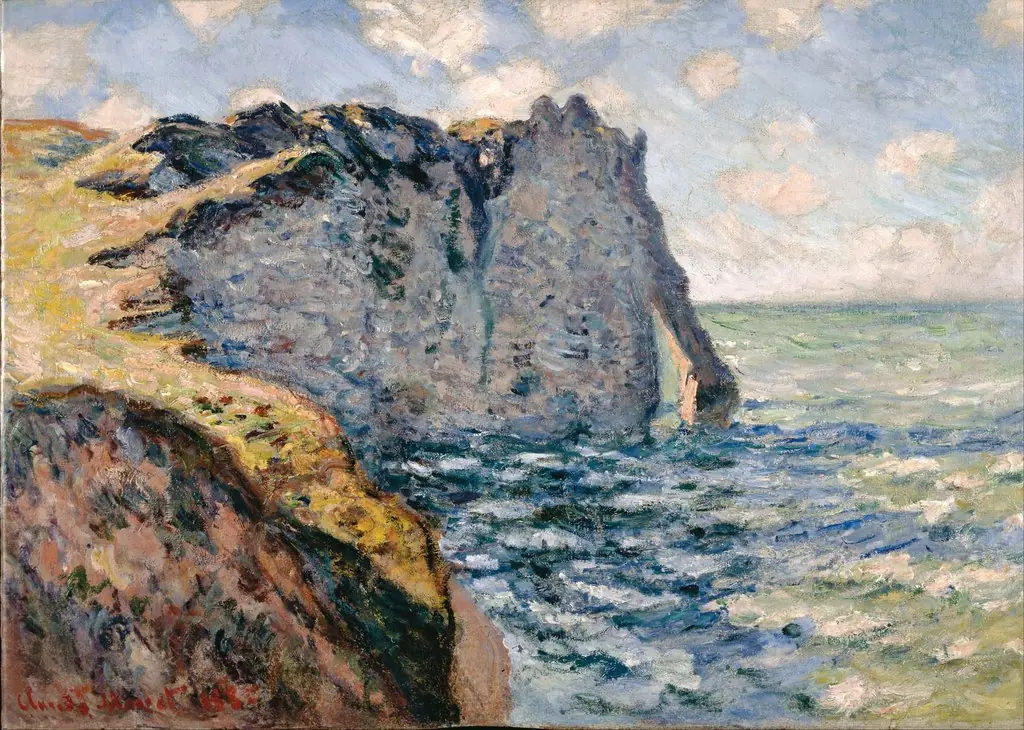
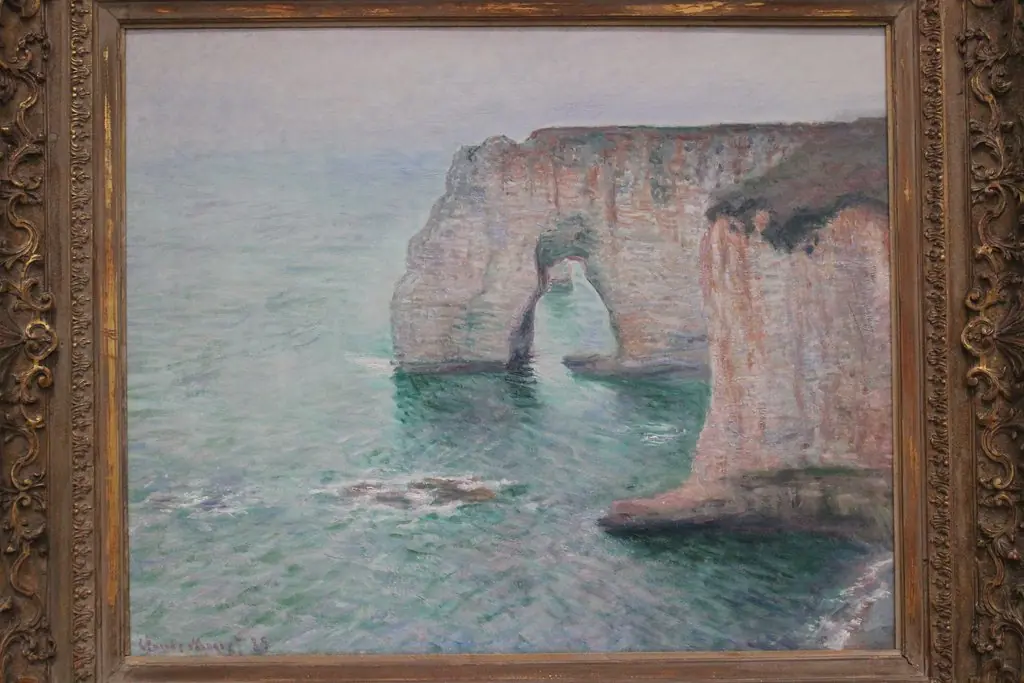
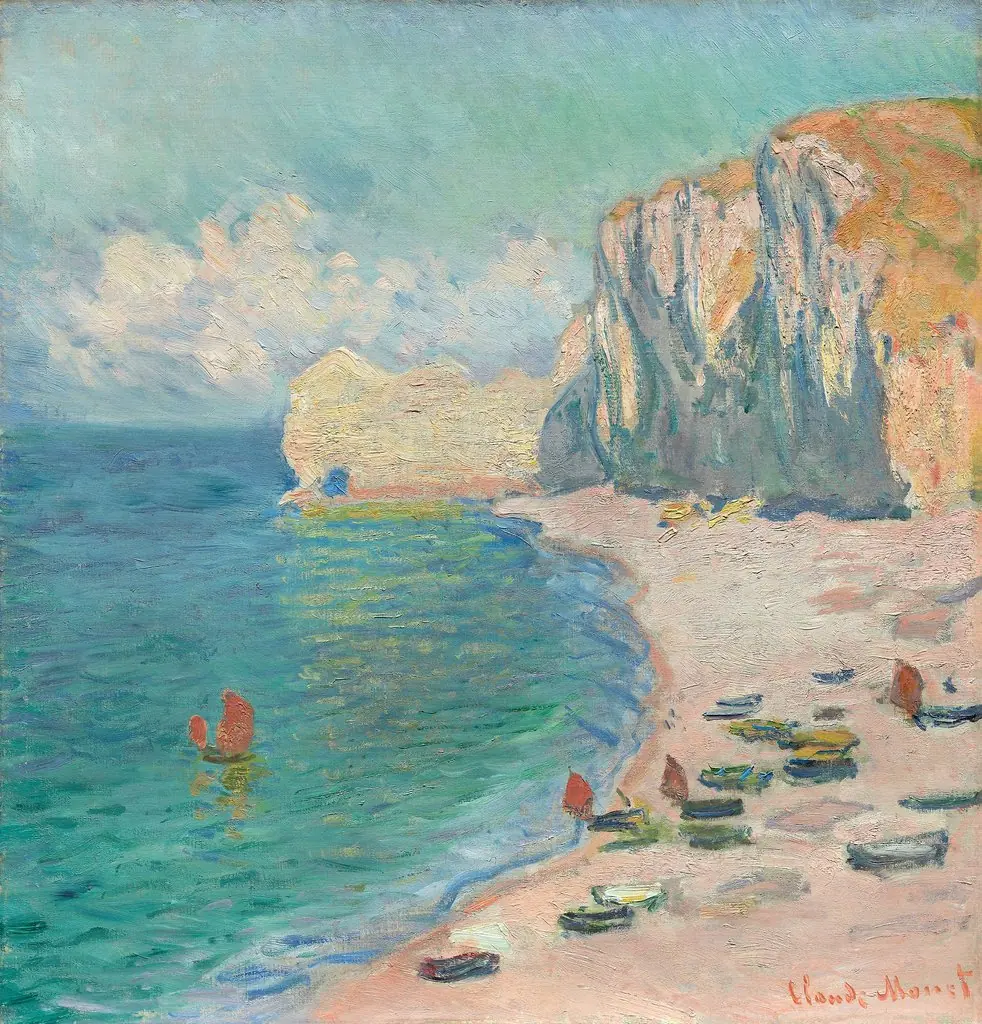
Painted in 1893, this oil on canvas depicts a coastal scene at Étretat in Normandy, capturing the natural arch known as Porte d'Aval and the nearby needle-like rock formation. The work belongs to a series Monet produced during multiple visits to the area, focusing on the interplay of light, sea, and limestone cliffs. It is now held in the collection of the Fitzwilliam Museum in Cambridge.
Subject & Meaning
The composition centers on two distinctive geological features of Étretat’s coastline: the towering needle and the arched opening carved by the sea. Rather than emphasizing grandeur, Monet presents them as quiet, enduring elements within a shifting marine environment. The scene conveys a sense of timelessness, where nature’s forms persist despite the constant motion of waves and weather.
Technique & Style
Colors are restrained: cool grays, muted blues, and soft ochres dominate, yet their layered application creates depth and luminosity.
Monet applied thin, broken brushstrokes to suggest texture and movement—rough cliffs, rippling water, and shifting sky are rendered with subtle shifts in hue rather than defined outlines. Colors are restrained: cool grays, muted blues, and soft ochres dominate, yet their layered application creates depth and luminosity. The surface vibrates with implied motion, reflecting his commitment to capturing transient atmospheric conditions.
History & Provenance
Monet painted this work during a prolonged stay in Étretat in the early 1890s, returning to the site after earlier visits in the 1880s. It entered the Fitzwilliam Museum’s collection in 1917 as part of a bequest from a British collector who acquired it directly from the artist’s dealer. Its provenance remains largely unbroken since its creation.
Context
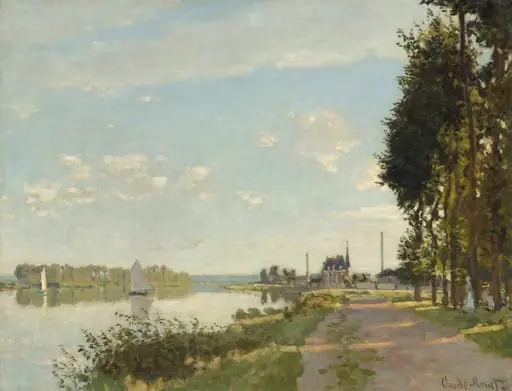
During this period, Monet was deeply engaged in series painting, exploring the same subjects under varying light and weather. Étretat’s dramatic cliffs offered a compelling contrast to his earlier works at Argenteuil and Giverny. The site was also popular among other artists, but Monet’s approach emphasized atmospheric nuance over topographical precision.
Legacy
This painting exemplifies Monet’s mature style, where observation of natural phenomena supersedes narrative or symbolic intent. It contributed to the broader acceptance of Impressionist landscapes in British collections and remains a key example of how he transformed geological forms into studies of light and perception.
Artist & collection
Artist
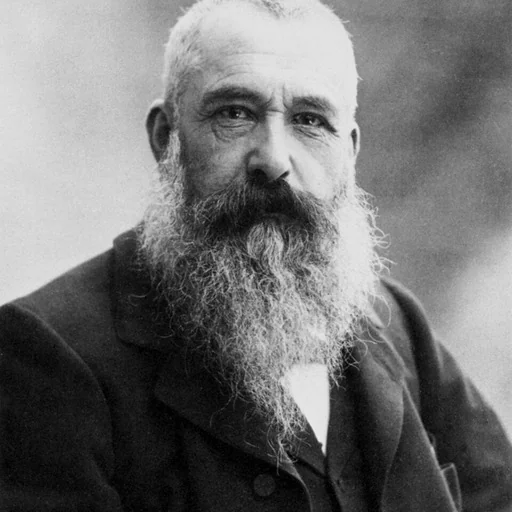
Oscar-Claude Monet was born in Paris on November 14, 1840, and raised from the age of five in Le Havre, where he began selling charcoal caricatures as a teenager.