Artwork
Water Lilies

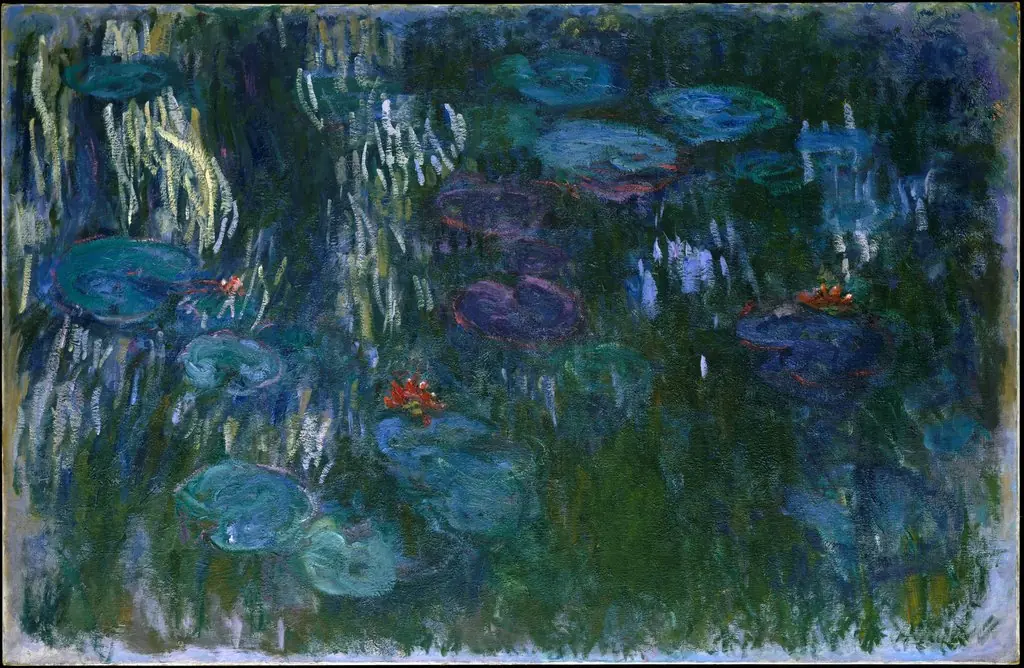
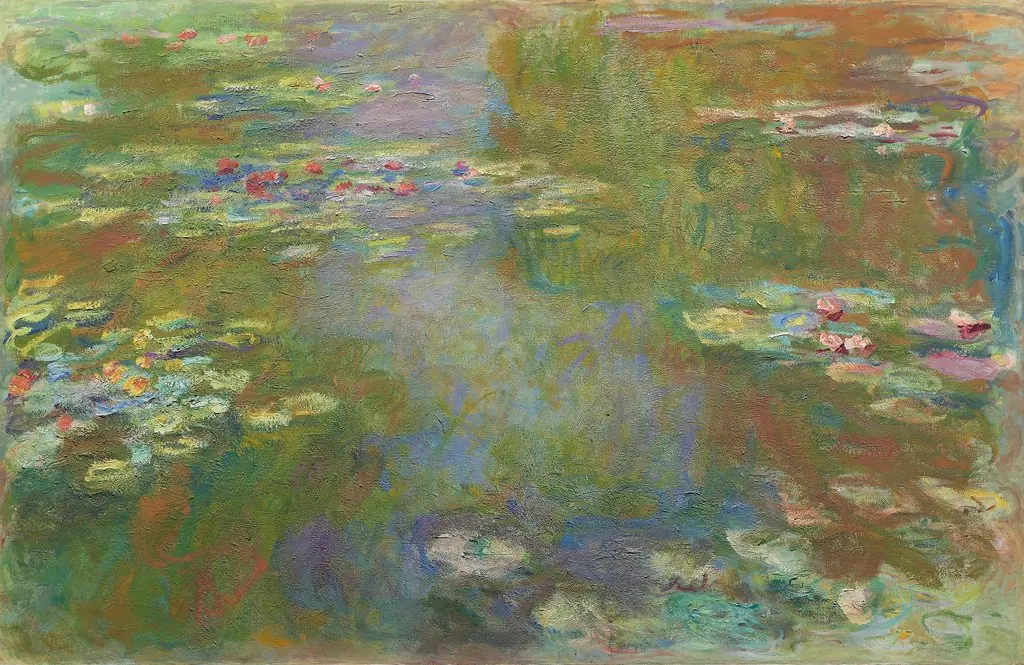
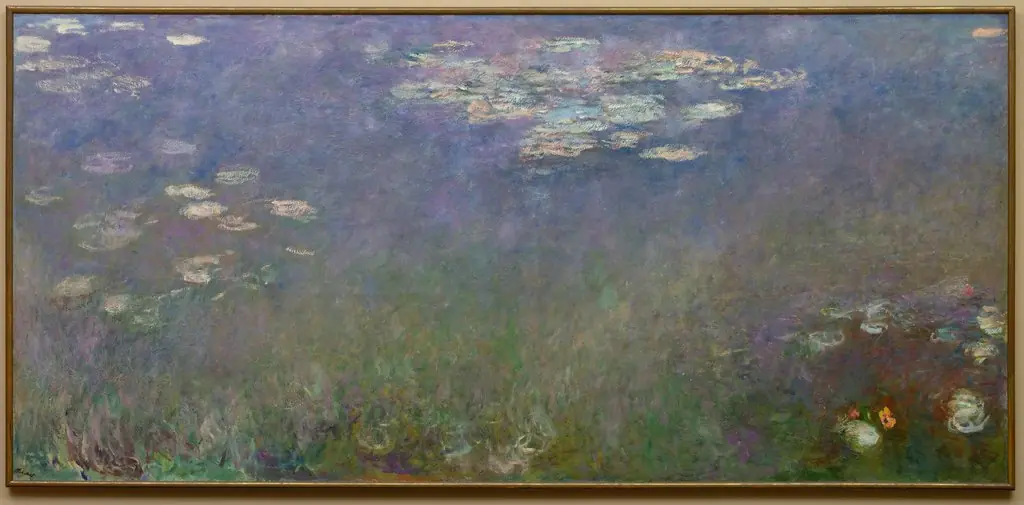
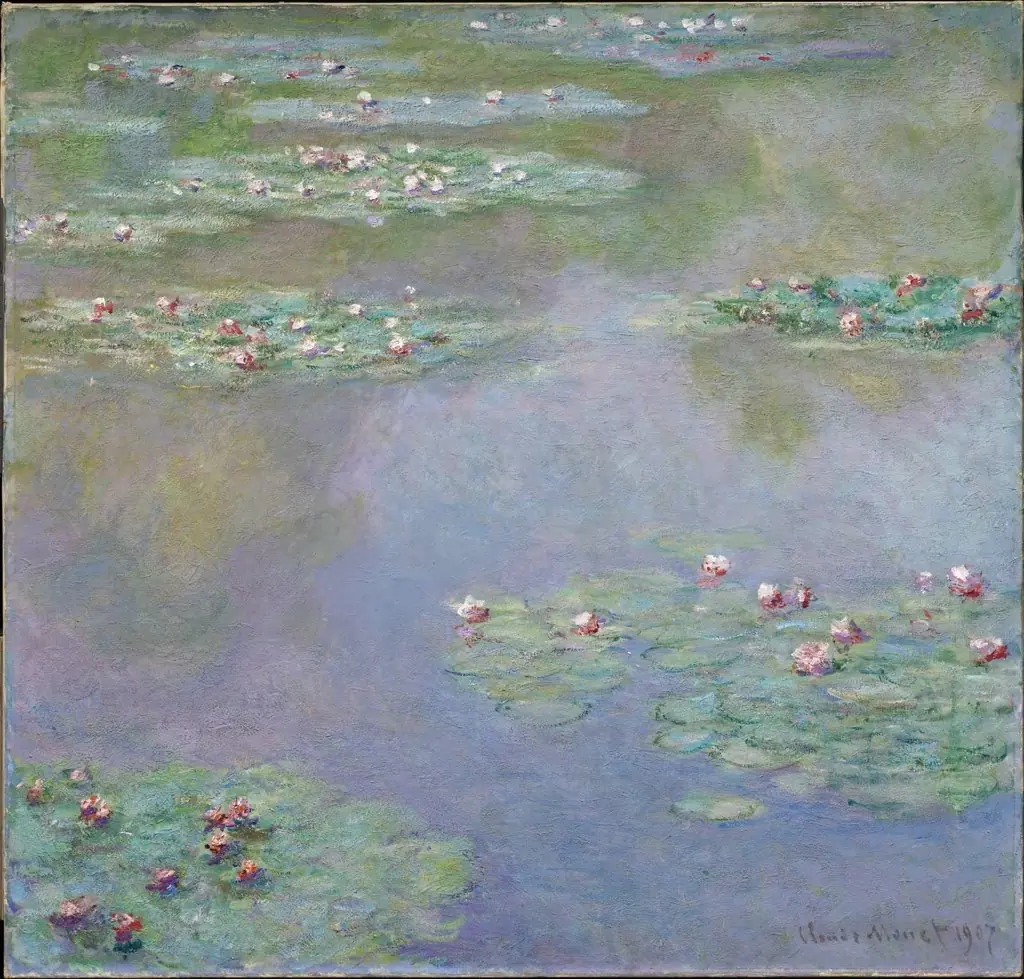
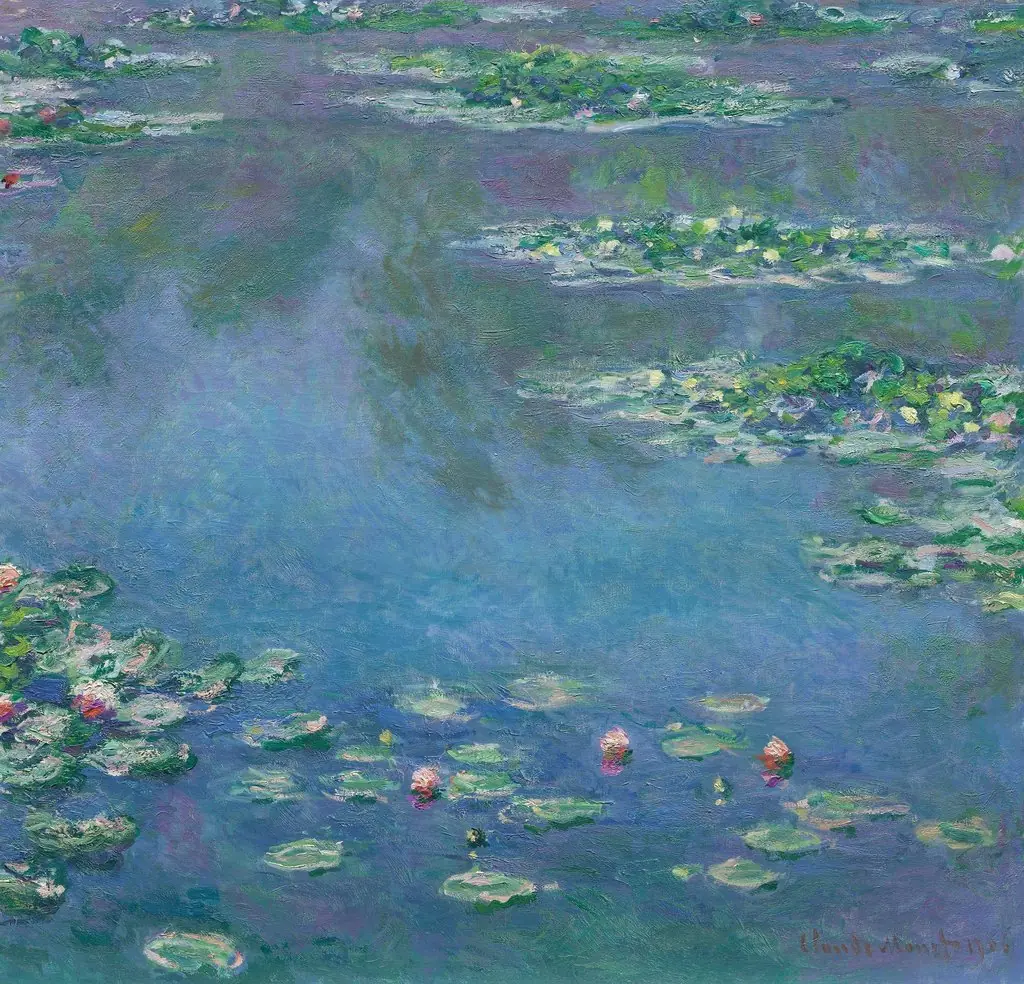
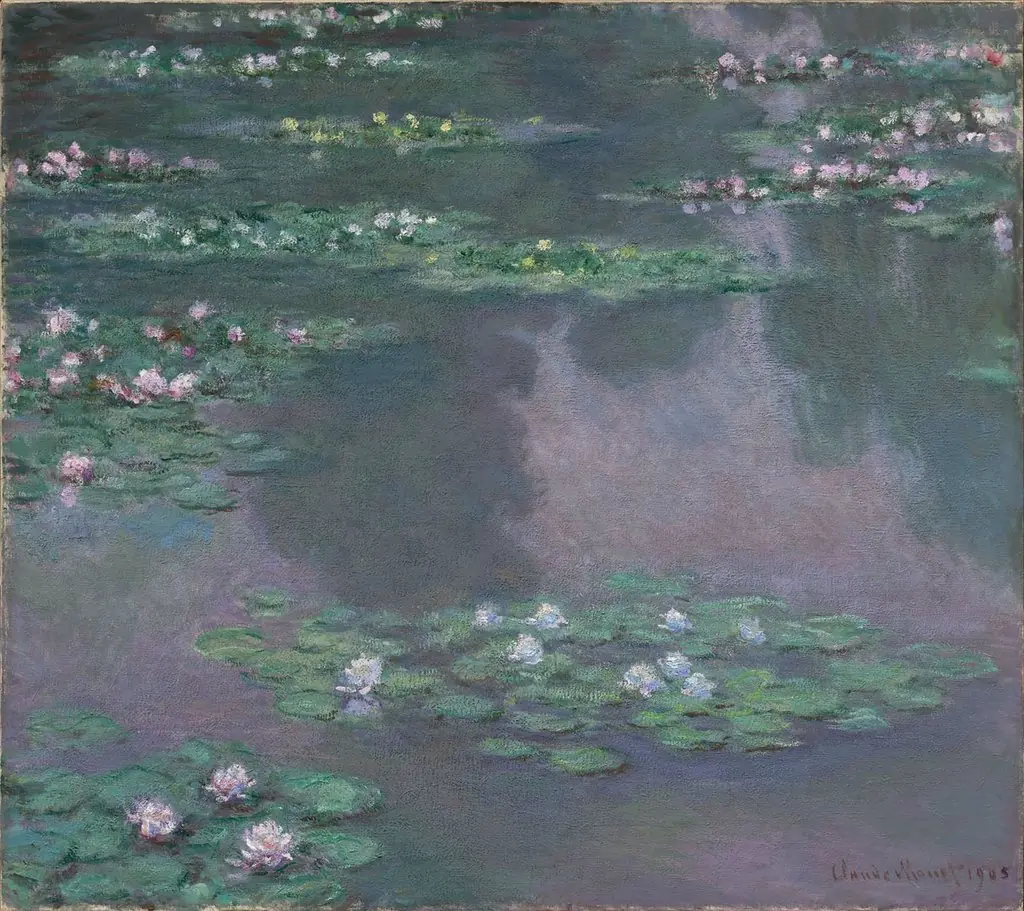
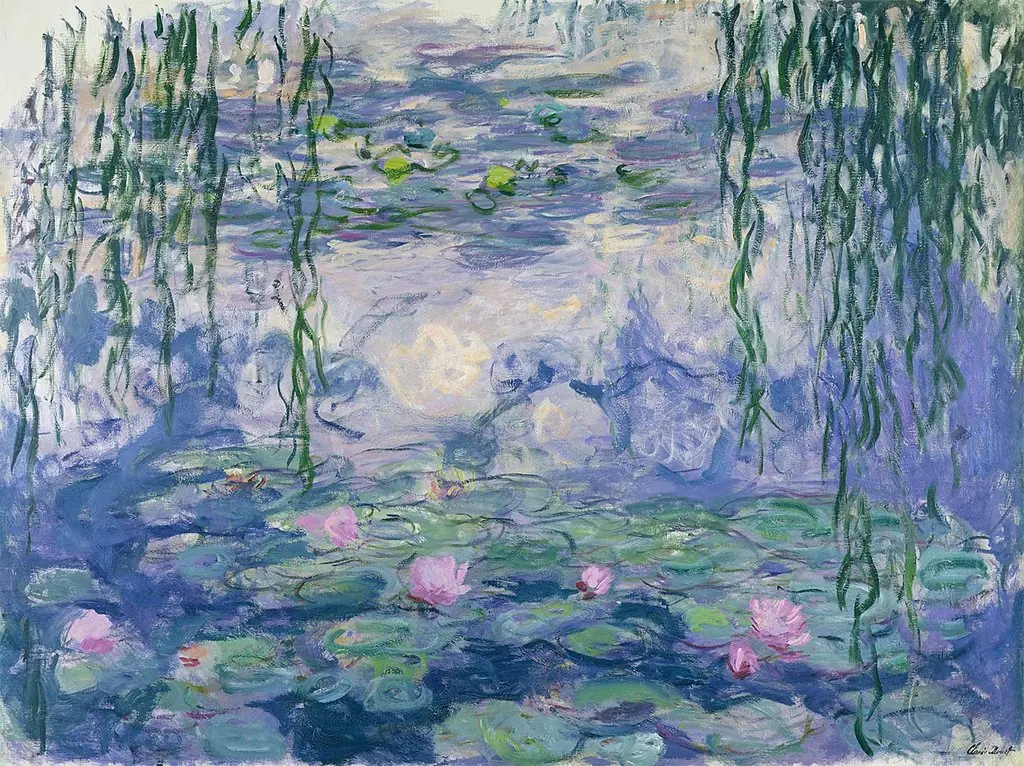
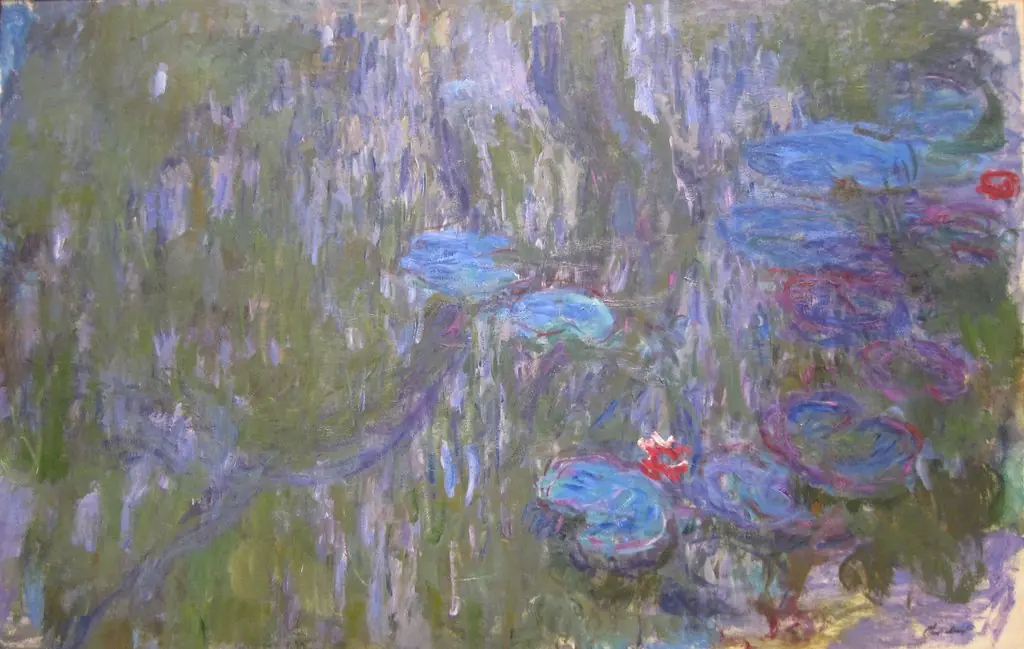
Water Lilies is an oil painting by the Impressionist artist Claude Monet. It dates from 1914 and is held in the collection of the Museum of Modern Art.
About this work
Overview
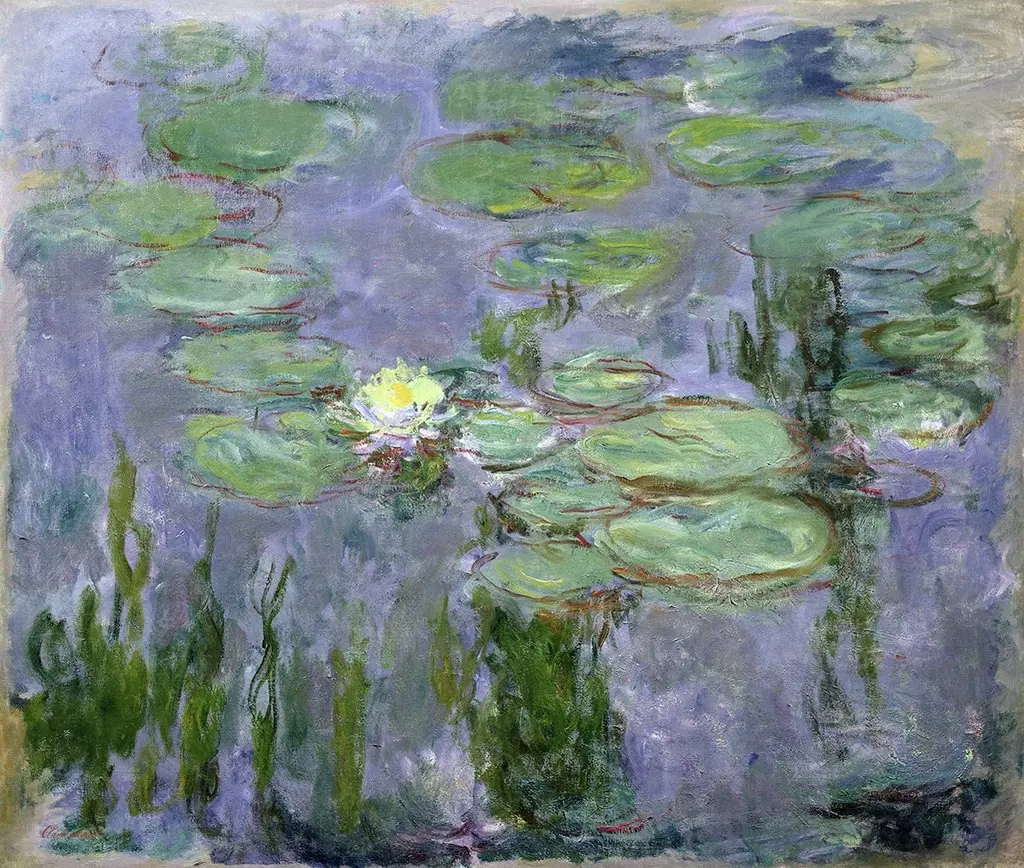
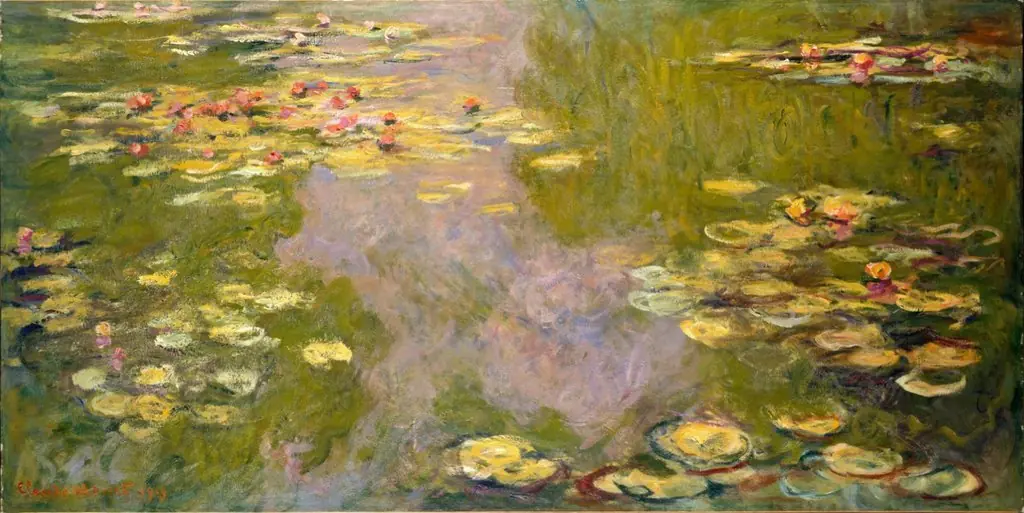
Claude Monet’s 1914 oil work titled “Water Lilies” presents a panoramic view of a pond surface, rendered on a wide, three‑panel canvas. The composition is dominated by cool blues and greens, punctuated by subtle yellow and pink accents, creating a tranquil atmosphere that reflects the artist’s garden at Giverny.
Subject & Meaning
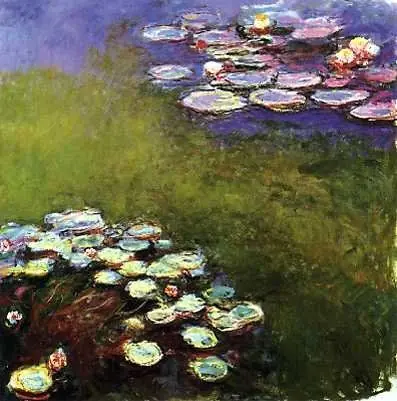
The painting captures the surface of a lily‑filled pond, with floating pads and delicate blossoms rendered in soft focus. By dissolving detail into color and light, Monet conveys the fleeting impression of water’s surface, emphasizing mood over precise representation.
Technique & Style
Monet employs loose, expressive brushwork that leaves the texture of the paint visible, a hallmark of Impressionist practice. The layered strokes suggest movement and the play of reflections, while the muted palette is enlivened by occasional bright highlights, reinforcing the work’s serene yet dynamic quality.
History & Provenance
Created toward the end of Monet’s career, the piece reflects his mature exploration of water and light. It entered the collection of the Museum of Modern Art, where it remains on display as part of the institution’s holdings of early‑20th‑century modern art.
Context
This work belongs to Monet’s extensive series of water‑lily paintings, produced while he cultivated his garden in Giverny. The series epitomizes the Impressionist focus on capturing atmospheric conditions and the transient effects of natural light.
Artist & collection
Artist
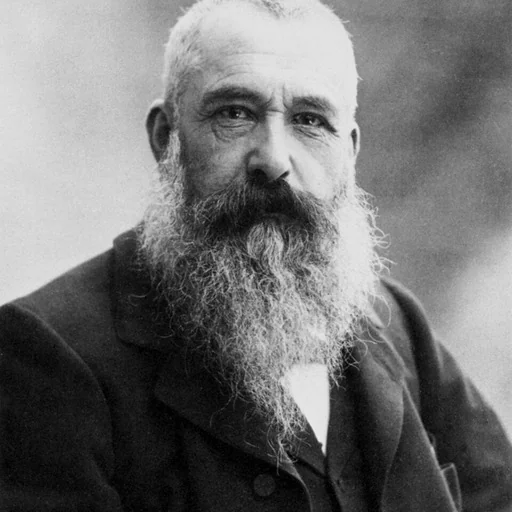
Oscar-Claude Monet was born in Paris on November 14, 1840, and raised from the age of five in Le Havre, where he began selling charcoal caricatures as a teenager.