Artwork
Jupiter and Io
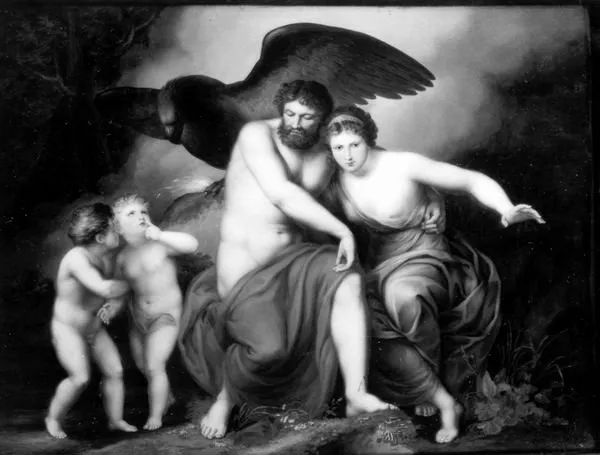
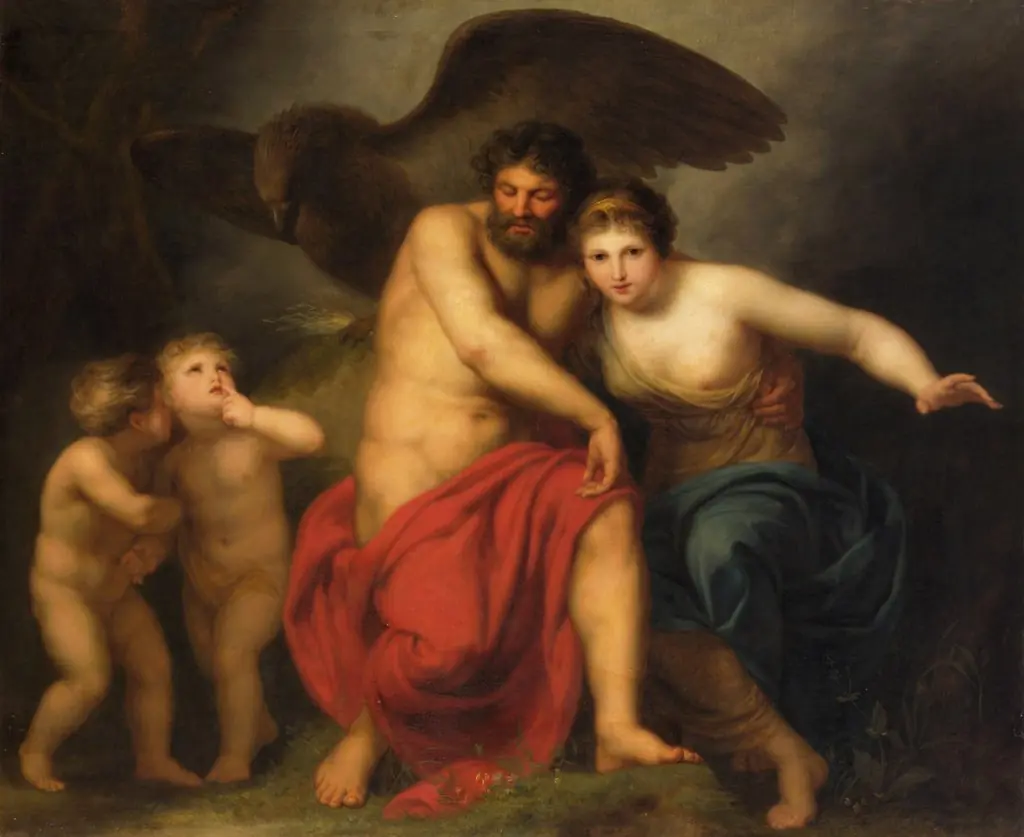
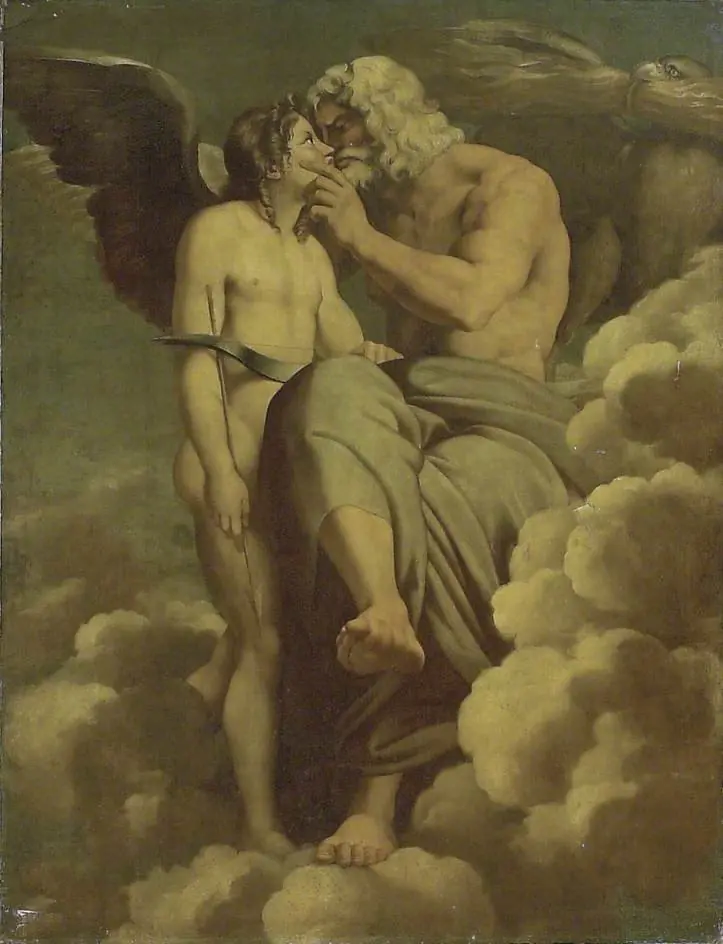
Jupiter and Io is an unspecified painting by the German Romanticist artist Claudius Herr. It dates from 1821 and is held in the collection of the Hungarian National Gallery.
About this work
Overview
It is now part of the Hungarian National Gallery’s collection and exemplifies the emotional intensity characteristic of early 19th-century German Romanticism.
Johann Claudius Herr, an Austrian artist associated with the Vienna Porcelain Manufactory, painted *Jupiter and Io* in 1821. Though primarily known for miniature work, this oil painting reflects his engagement with larger-scale mythological themes. It is now part of the Hungarian National Gallery’s collection and exemplifies the emotional intensity characteristic of early 19th-century German Romanticism.
Subject & Meaning
The painting illustrates the myth of Jupiter, king of the gods, taking the form of a dark-winged figure to seduce Io, a mortal priestess. Io stands beside him, arm outstretched, suggesting hesitation or awe. Two small children, possibly symbols of their union or divine offspring, observe from the shadows. The scene captures a moment of divine intrusion into human life, charged with tension between power and vulnerability.
Technique & Style
Herr employs chiaroscuro to heighten the drama, contrasting deep shadows with selective illumination on the figures’ robes and skin. The dark, indistinct background isolates the central pair, focusing attention on their interaction. Brushwork is controlled yet expressive, with soft modeling of flesh and textured fabric that enhances the emotional gravity without overt detail.
History & Provenance
Created in 1821, the painting remained in private or institutional hands in Central Europe before entering the Hungarian National Gallery’s collection. Its journey reflects the broader movement of Romantic-era works into national collections during the 19th century. Herr’s reputation as a miniaturist makes this large-scale mythological piece a rare and notable exception in his oeuvre.
Context
In the early 1800s, German Romantic artists turned to classical myths to explore emotion, transformation, and the sublime. Herr’s depiction aligns with this trend, emphasizing psychological depth over narrative clarity. While not part of a major artistic movement’s core, the work reflects the permeation of Romantic ideals across regional studios and lesser-known practitioners.
Legacy
Though Herr’s name is largely tied to porcelain design, *Jupiter and Io* stands as a singular testament to his ambition in oil painting. It remains a quiet example of how Romantic themes reached beyond major centers, influencing artists in peripheral regions. The work contributes to understanding the diversity of mythological interpretation in early 19th-century Central Europe.
Artist & collection
Artist
Johann Claudius Herr (1775 – after 1838), alternatively spelled Klaudius Herr or Claudius Heer, was an Austrian painter and miniaturist. He was well known as an exceptional artist of the Vienna Porcelain Manufactory.