Artwork
Tree
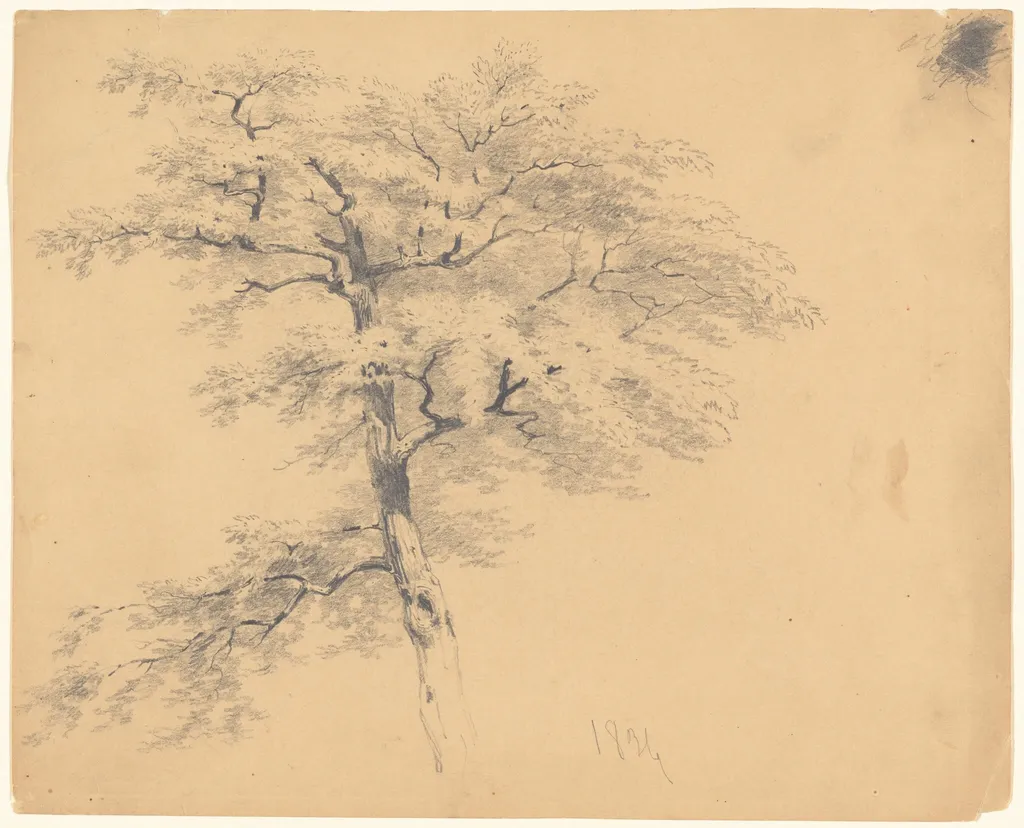
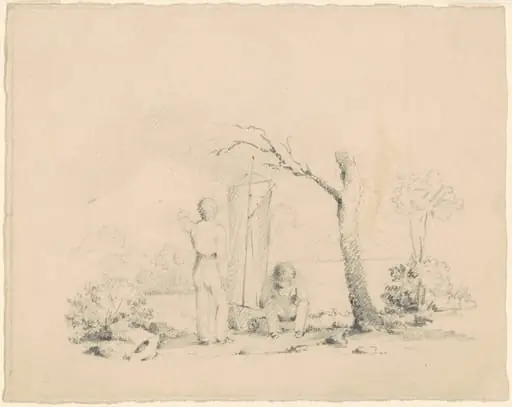
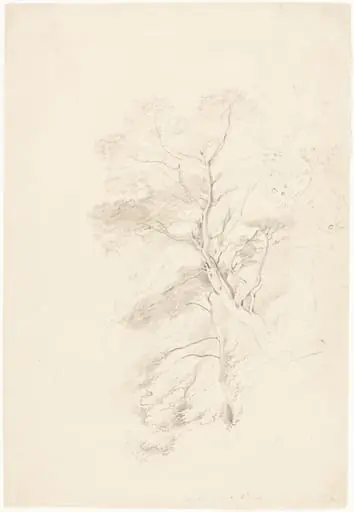
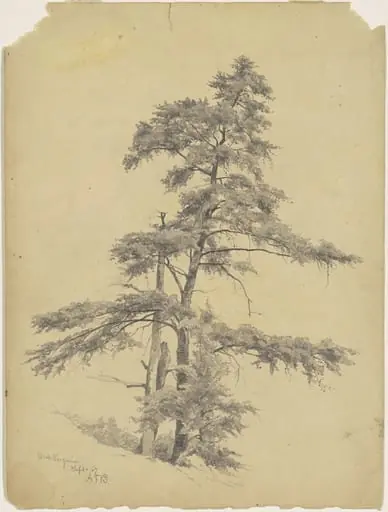
Tree is a graphite drawing by the Romanticist artist James Goodwyn Clonney. It dates from 1839 and is held in the collection of the National Gallery of Art.
About this work
Overview
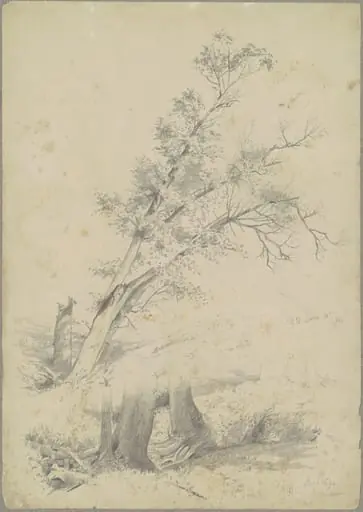
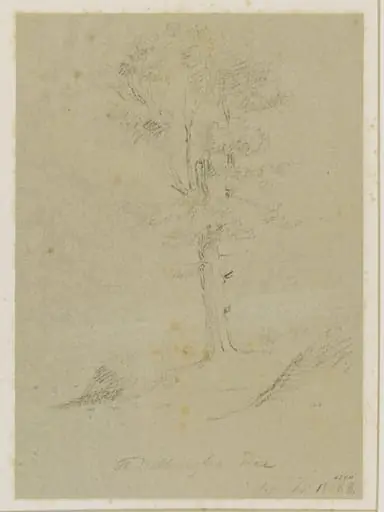
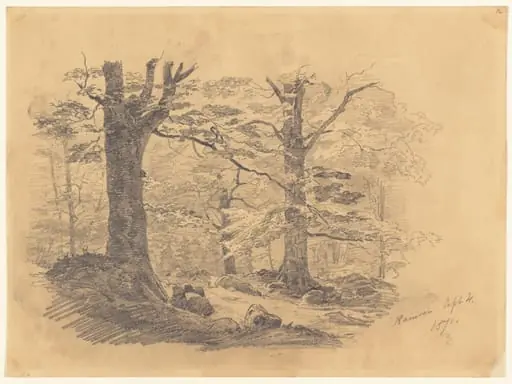
James Goodwyn Clonney’s drawing *Tree* (1839) is executed in graphite on wove paper. The work presents a solitary arboreal form rendered with delicate, controlled lines, occupying the entire surface without surrounding detail. Its modest scale reflects Clonney’s habit of producing intimate, finely wrought pieces that emphasize everyday subjects.
Subject & Meaning
The composition isolates a single tree, allowing the viewer to focus on its silhouette and the subtle variations of tone that suggest bark texture and foliage. By removing any narrative context, the drawing invites contemplation of the tree as a simple, natural object, a hallmark of Clonney’s interest in ordinary rural life.
Technique & Style
Clonney employs graphite to achieve a range of values, from light washes that define the trunk’s curvature to darker strokes that suggest shadowed leaves. The paper’s smooth surface supports the fine, continuous lines characteristic of his miniature works, while the restrained palette aligns the piece with Romantic sensibilities that prized emotive simplicity.
History & Provenance
Created in 1839, *Tree* belongs to the period when Clonney, an English‑born artist active in the United States, was establishing his reputation as a genre painter and lithographer. The drawing has remained in private collections before entering its current institutional holding, where it is displayed as an example of his early graphic output.
Own this work as a print
Artist & collection
Artist
James Goodwyn Clonney (28 December 1812, Liverpool (?) – 7 October 1867, Binghamton, NY) was an English-born American genre painter and lithographer.