Artwork
A Stand of Trees
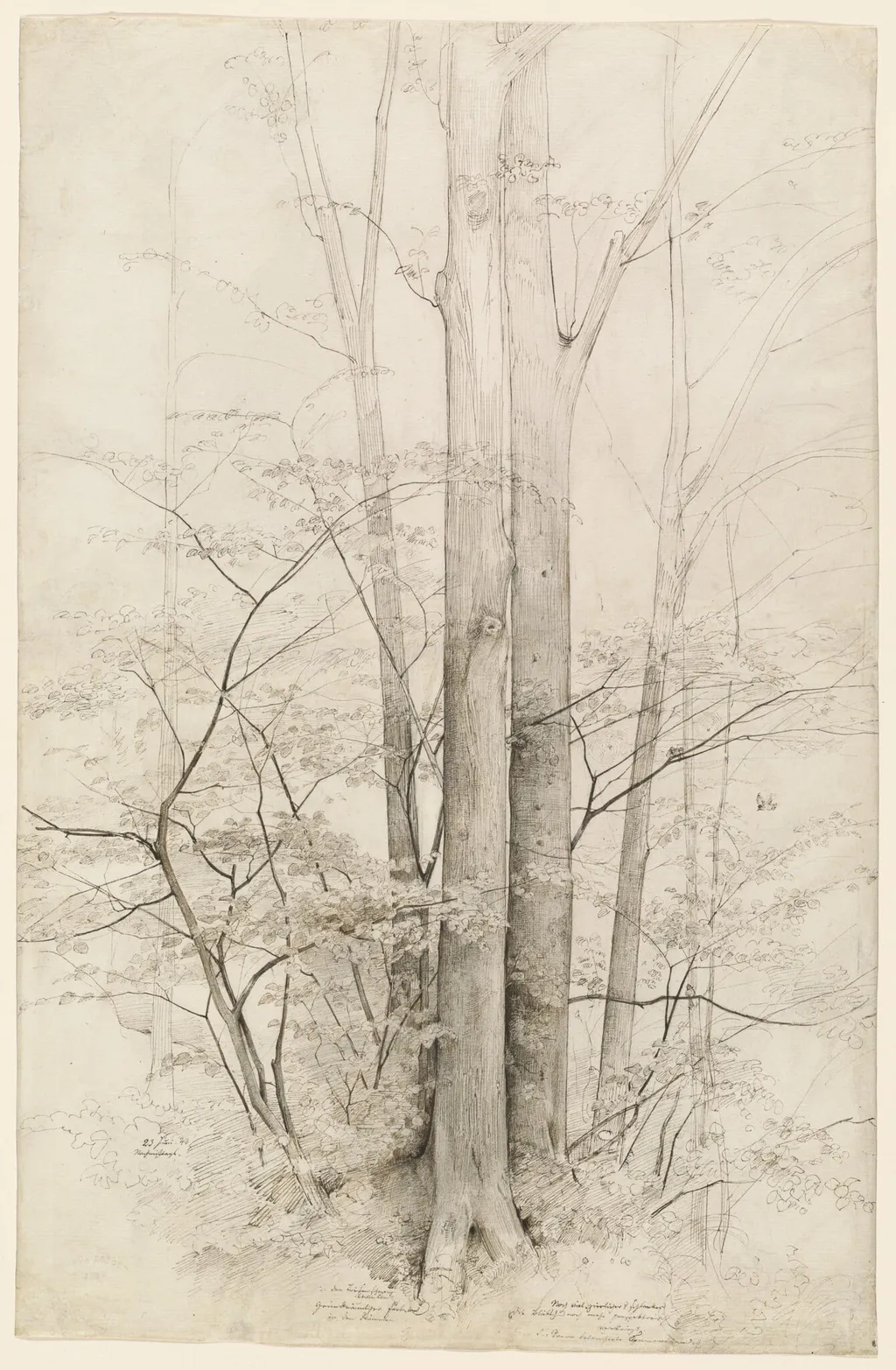
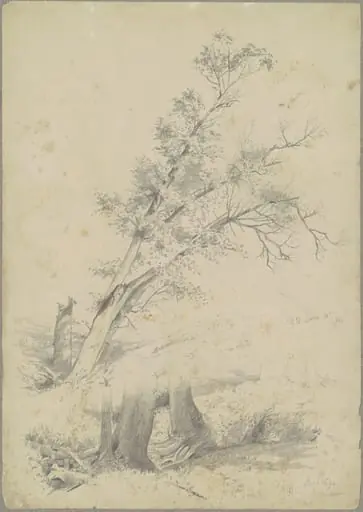
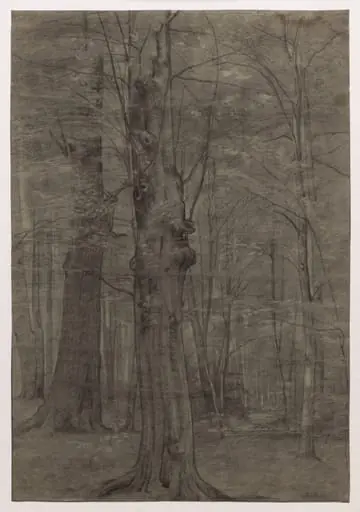
A Stand of Trees is an ink drawing by the Romanticist artist Heinrich Dreber. It dates from 1840 and is held in the collection of the National Gallery of Art.
About this work
Overview
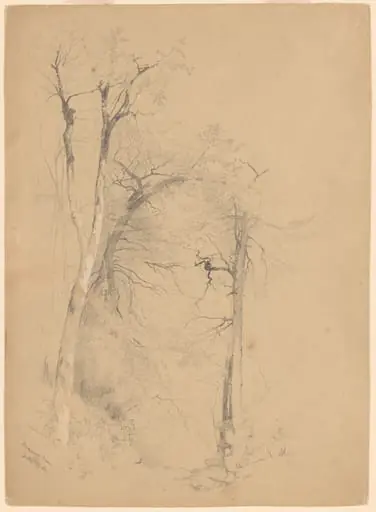
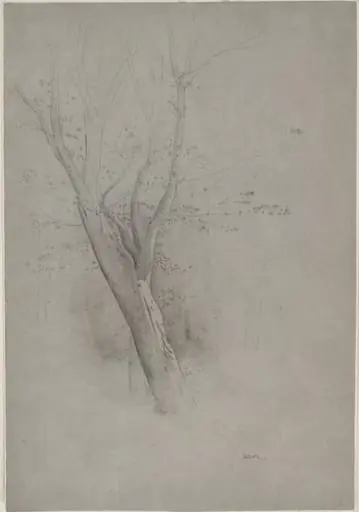
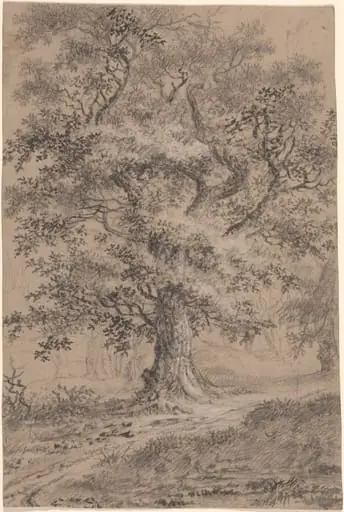
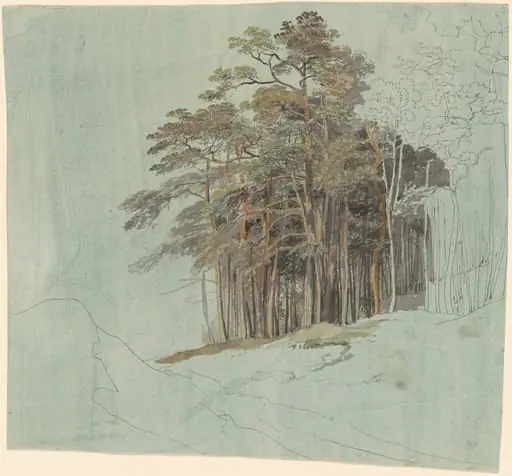
Created in 1840 by Heinrich Dreber, this drawing depicts a modest cluster of trees on a gentle rise. Executed in pen and ink over graphite, it captures the quiet presence of nature without narrative flourish. The composition is restrained, focusing on form and atmosphere rather than detail. The paper’s laid texture subtly influences the ink’s absorption, enhancing the work’s tactile quality.
Subject & Meaning
The subject is a group of bare trees, their trunks leaning slightly as if shaped by wind. No figures or structures appear, emphasizing solitude and natural rhythm. The absence of a defined horizon or sky suggests a moment suspended in time. The work conveys stillness through absence, inviting contemplation of the trees’ endurance rather than their beauty.
Technique & Style
Fine pen lines define branches and roots, built through delicate cross-hatching that suggests texture without overdefinition.
Dreber employed stumping to soften graphite into velvety shadows, avoiding harsh contrasts. Fine pen lines define branches and roots, built through delicate cross-hatching that suggests texture without overdefinition. The gray ink adds tonal variation, while the underlying pencil guides form without dominating. The technique favors subtlety: light is implied, not rendered, and space is suggested through tone, not perspective.
History & Provenance
The drawing was made during Dreber’s active years in Germany, when landscape studies were common among artists training in observational precision. It likely originated as a preparatory sketch or personal study, not a commissioned piece. Its survival suggests it was valued for its quiet craftsmanship, though its early ownership remains undocumented.
Context
In the mid-19th century, German artists increasingly turned to nature as a subject worthy of close study, influenced by Romanticism and emerging scientific observation. Dreber’s work aligns with this trend, rejecting grandeur for intimate observation. Unlike idealized landscapes, this drawing embraces the unadorned, reflecting a shift toward authenticity in artistic representation.
Legacy
Though Dreber is not widely known today, this drawing exemplifies a quiet tradition of German draftsmanship that prioritized technical restraint and natural observation. Its preservation offers insight into how artists engaged with the landscape beyond symbolism, focusing instead on the physical presence of trees, light, and earth in a moment of stillness.
Artist & collection