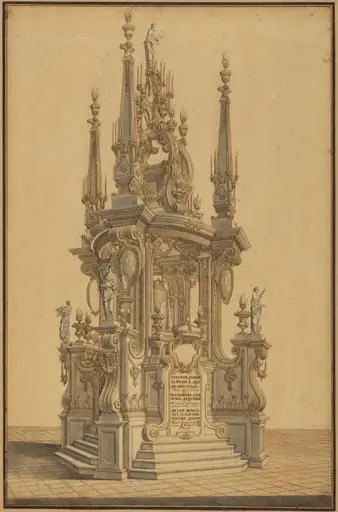
Artwork
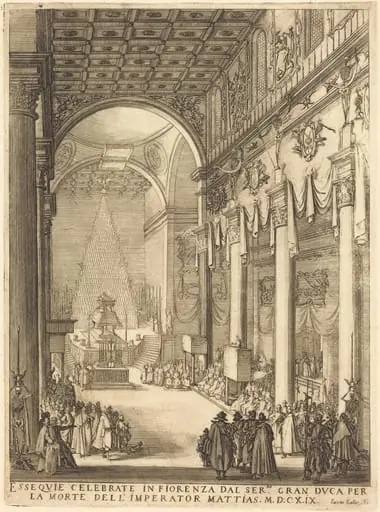
Catafalque for the Funeral of the Duke of Parma Antonio I in the Church of S. Maria Maddalena in Bologna
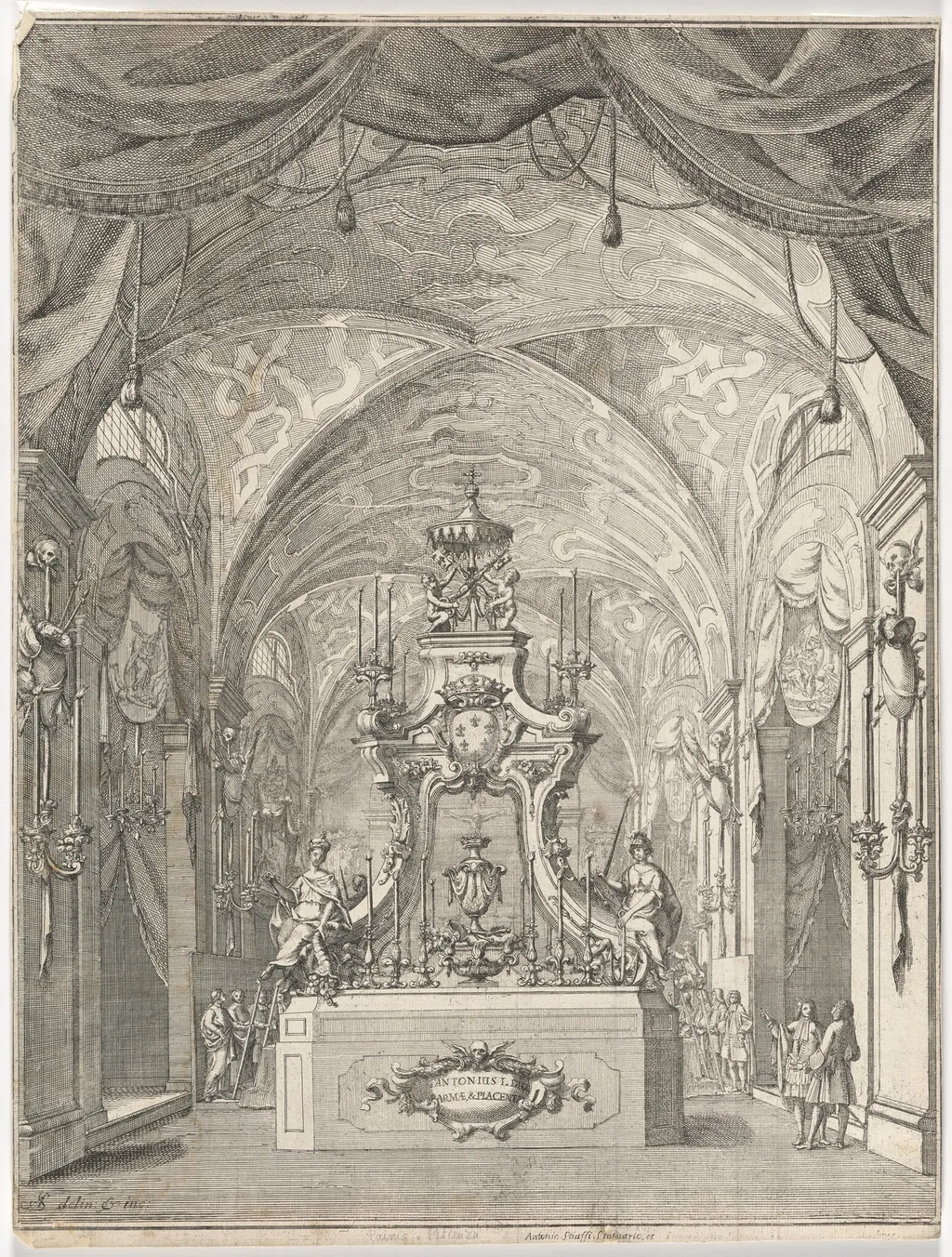
Catafalque for the Funeral of the Duke of Parma Antonio I in the Church of S. Maria Maddalena in Bologna is an ink print by the Baroque artist Antonio Stiassi. It dates from 1731 and is held in the collection of the National Gallery of Art.
About this work
Overview
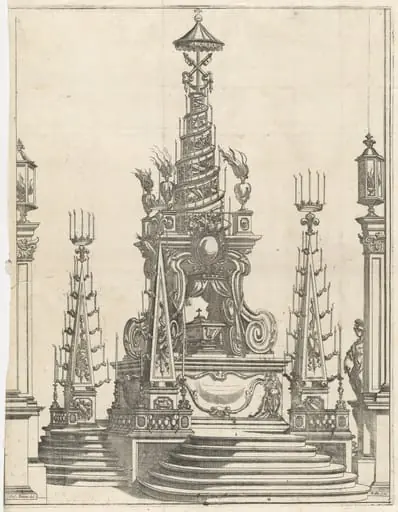
Antonio Stiassi’s etching, dated around 1731, depicts the elaborate catafalque erected for the funeral of Duke Antonio I of Parma within Bologna’s Church of Santa Maria Maddalena. Executed in the print medium of etching, the work is part of the National Gallery of Art’s collection in Washington, D.C.
Subject & Meaning
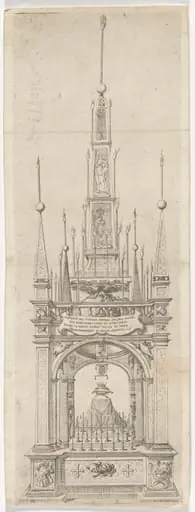
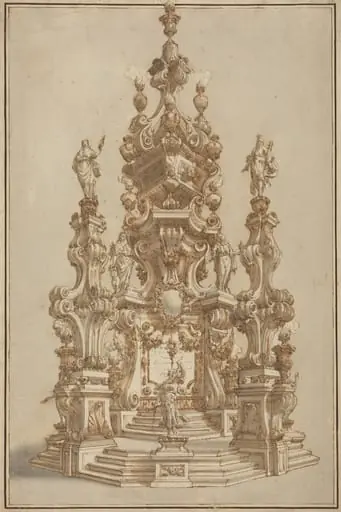
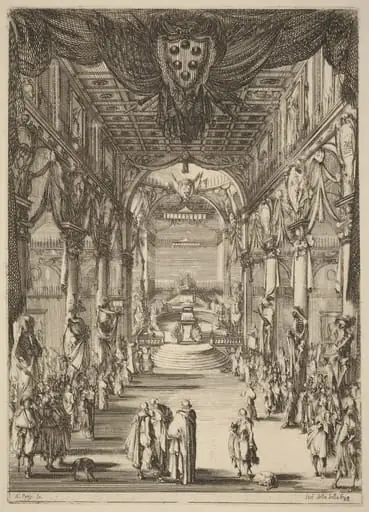
The image presents a solemn interior scene where a towering, richly ornamented catafalque dominates the nave. Flanked by statues of robed figures, the structure bears carved motifs, candles, and a heraldic shield, suggesting a ceremonial tribute to a high-ranking noble. Below, smaller attendants and mourners gather, reinforcing the ritual’s public and private dimensions.
Technique & Style
Stiassi employs fine incised lines to model architectural elements and sculptural forms, creating a convincing sense of depth and texture. The contrast of dense hatching with lighter areas conveys the play of light on candles and stone, while the precise rendering of heraldic details demonstrates the artist’s skill in the etching process.
History & Provenance
Created shortly after the duke’s death, the print likely served as a documentary record of the funeral’s visual program. It entered the National Gallery of Art’s holdings in the 20th century, though the exact path of ownership prior to acquisition is not recorded in the available documentation.
Context
In early‑18th‑century Italy, elaborate funerary monuments were common in ecclesiastical settings, reflecting both religious devotion and the political stature of the deceased. The catafalque’s design, with its heraldic shield and attendant figures, aligns with contemporary Baroque sensibilities that emphasized theatricality and grandeur in commemorative architecture.
Artist & collection

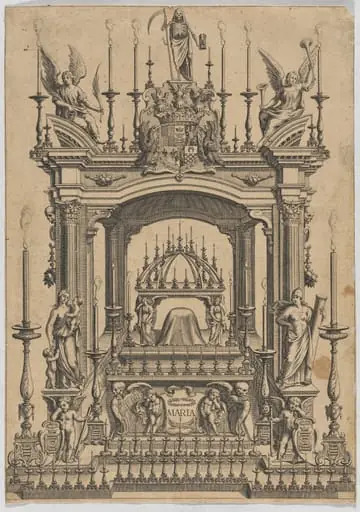 Catafalque for an Unknown Woman Named Maria
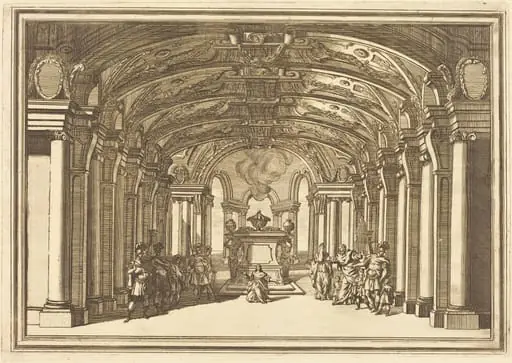 Il Greco in Troia: Plate 8
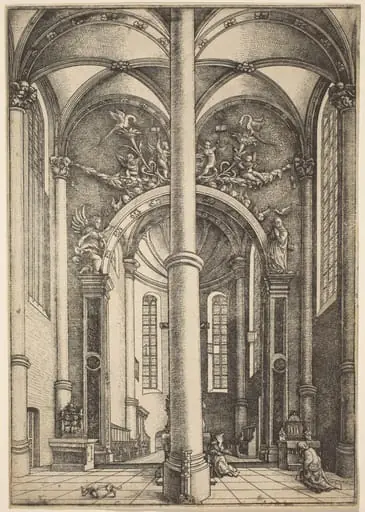 Interior of the Church of Saint Katherine with Parable of the Pharisee and the Publican
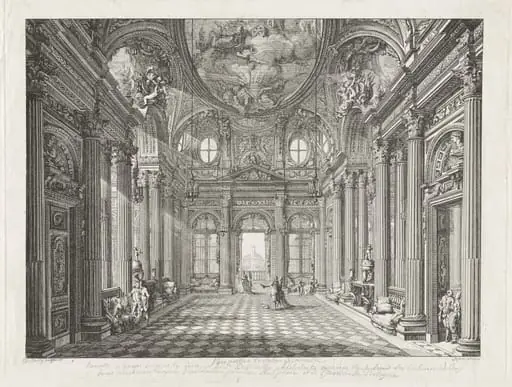 Perspectival View of the Salon of the Palazzo Spinola, Genoa
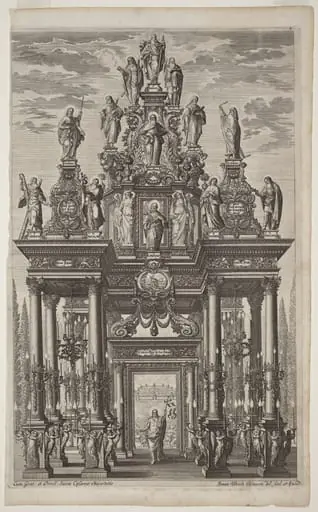 Frontispiece with Triumphal Arch with Christ and the Apostles
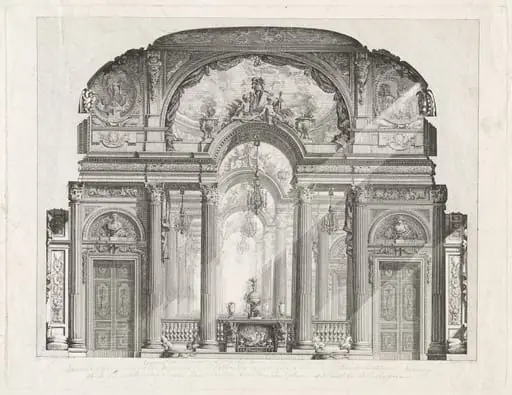 Cross Section of the Salon of the Palazzo Spinola, Genoa
 The Catafalque of the Emperor Mathias