Artwork
Clergyman (?)
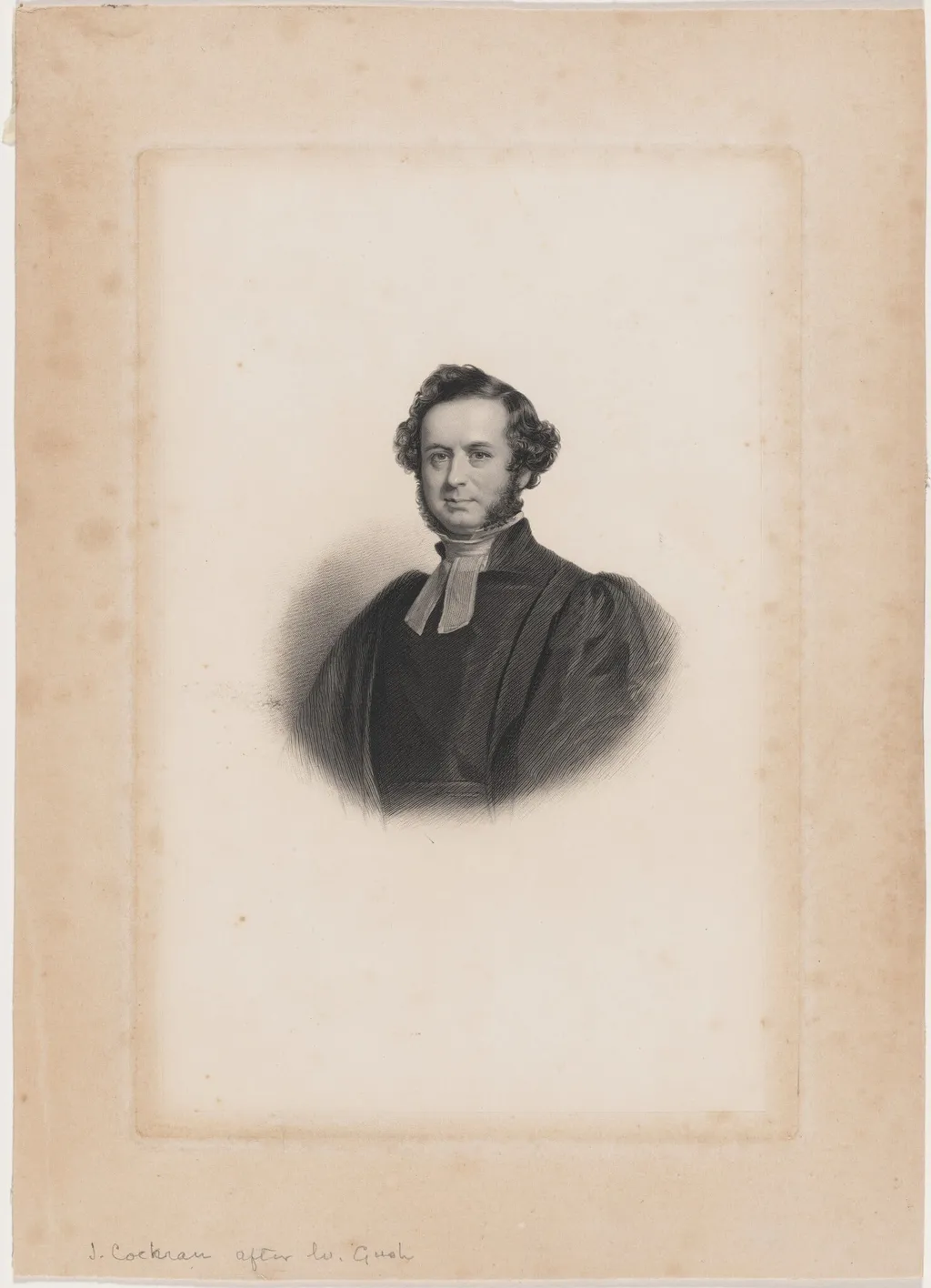
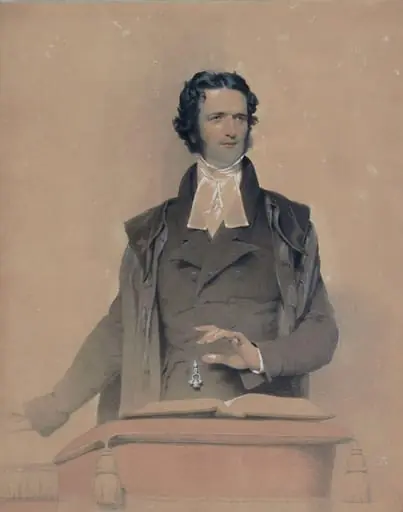
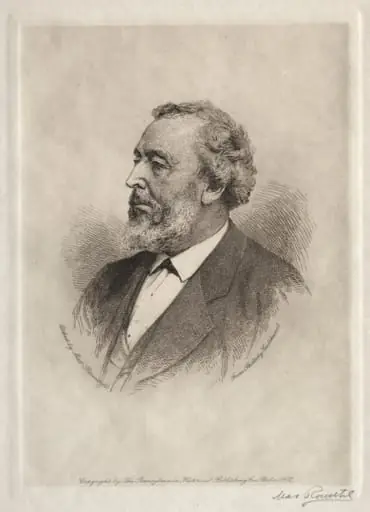
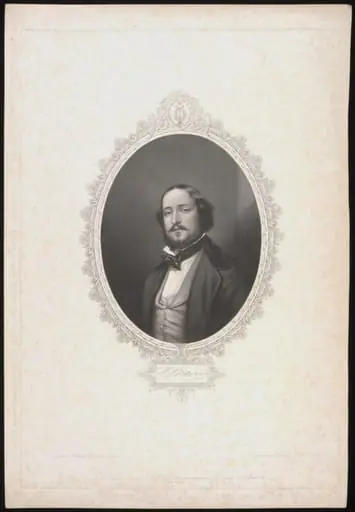
Clergyman (?) is an ink print by the Romanticist artist J. Cochran. It dates from 1840 and is held in the collection of the National Gallery of Art. An engraving produced in 1840 by J.
About this work
Overview
Rendered with precise linear detail, the image emphasizes the subject’s facial structure and clothing through controlled shading.
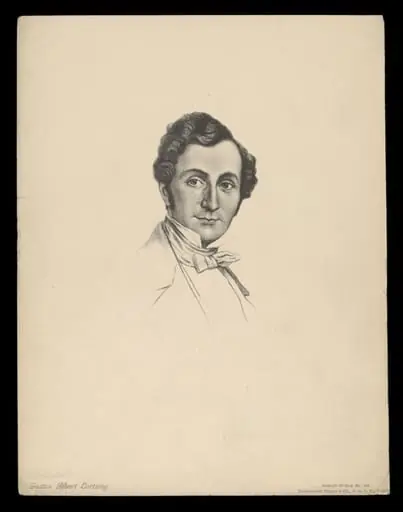
An engraving produced in 1840 by J. Cochran, this black-and-white portrait depicts a man in formal attire, possibly a clergyman. Rendered with precise linear detail, the image emphasizes the subject’s facial structure and clothing through controlled shading. The plain background isolates the figure, directing focus to the texture of fabric and the subtlety of expression. The work exemplifies the technical precision typical of mid-19th-century printmaking.
Subject & Meaning
The figure wears a dark suit with a high white collar, a common garment for religious or professional men of the period. His direct gaze and composed demeanor suggest solemnity or authority, though his exact identity remains unconfirmed. The absence of contextual elements or symbols leaves his role open to interpretation, reinforcing the portrait’s focus on personal presence rather than institutional affiliation.
Technique & Style
Cochran employed fine, incised lines to model form and texture, particularly in the rendering of the collar’s crisp edges and the wavy hair. Shading is achieved through cross-hatching and varying line density, creating volume without tone. The method reflects standard engraving practices of the era, where clarity and reproducibility were prioritized over expressive brushwork, suited for mass distribution in publications.
History & Provenance
The engraving was produced in 1840, during a period when engraved portraits were widely circulated in books and periodicals. No documented ownership history or original publication context is known. It survives as a standalone print, likely one of many impressions made from the original copper plate, though the plate’s current location and the artist’s full biography remain obscure.
Context
In the 1840s, engraved portraits served as affordable visual records for a growing literate public. They appeared in biographical dictionaries, religious publications, and family albums. This work aligns with a broader trend of depicting individuals with restrained dignity, reflecting societal values of propriety and quiet authority, particularly among clergy and professionals.
Legacy
Though not attributed to a major artistic figure, the engraving stands as an example of skilled commercial printmaking from the early Victorian era. It preserves a visual type common in its time—unadorned, serious, and meticulously rendered—offering insight into how ordinary individuals of status were visually represented before the rise of photography.
Artist & collection