Artwork
Rev. Edward Irving
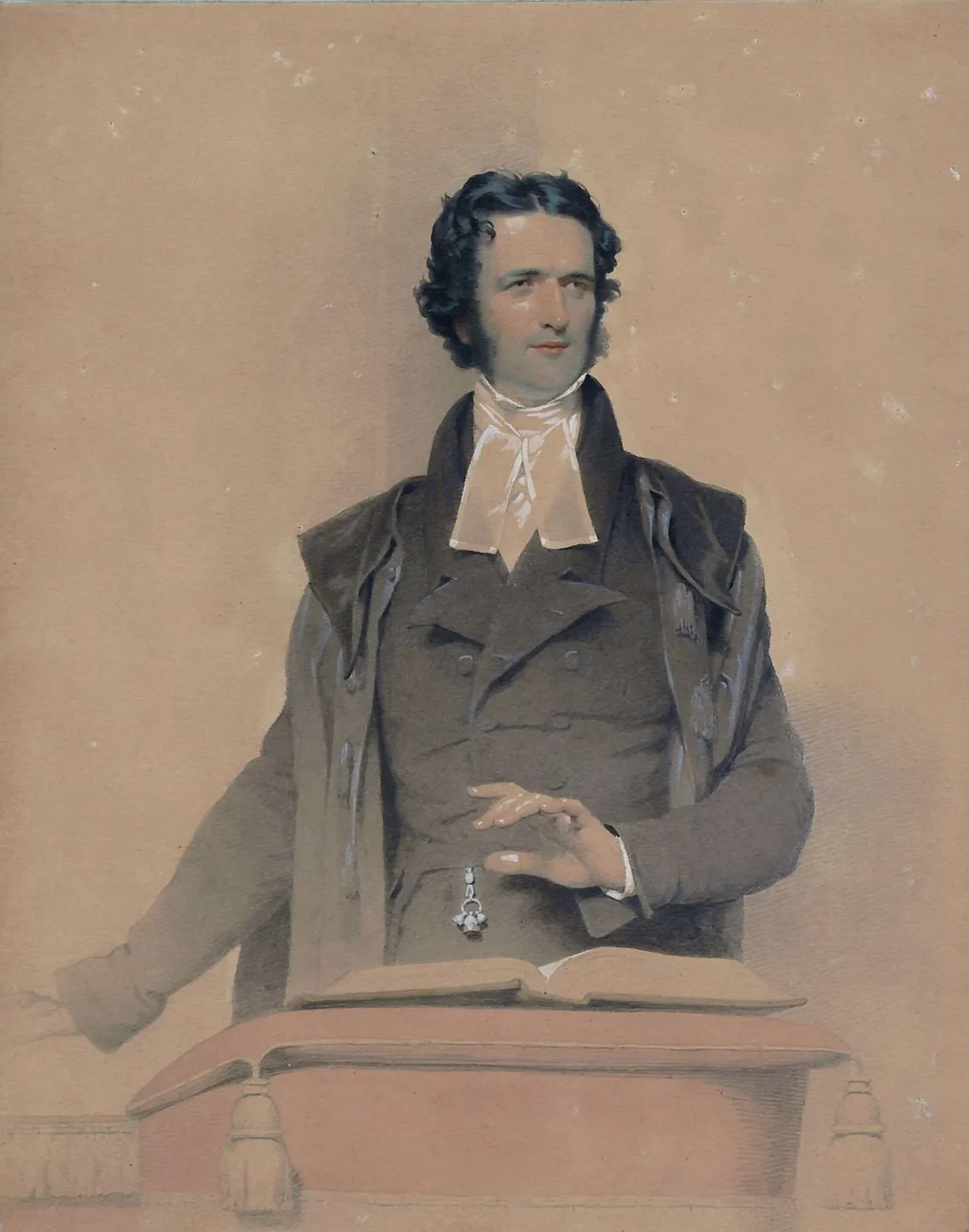
Rev. Edward Irving is a watercolor work on paper by the British Romanticist artist Andrew Robertson. It dates from 1823 and is held in the collection of the Victoria and Albert Museum.
About this work
Overview
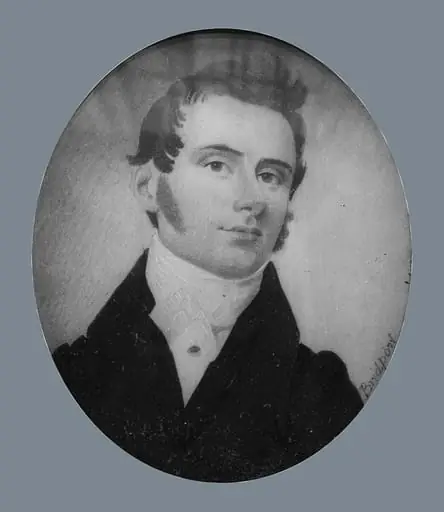
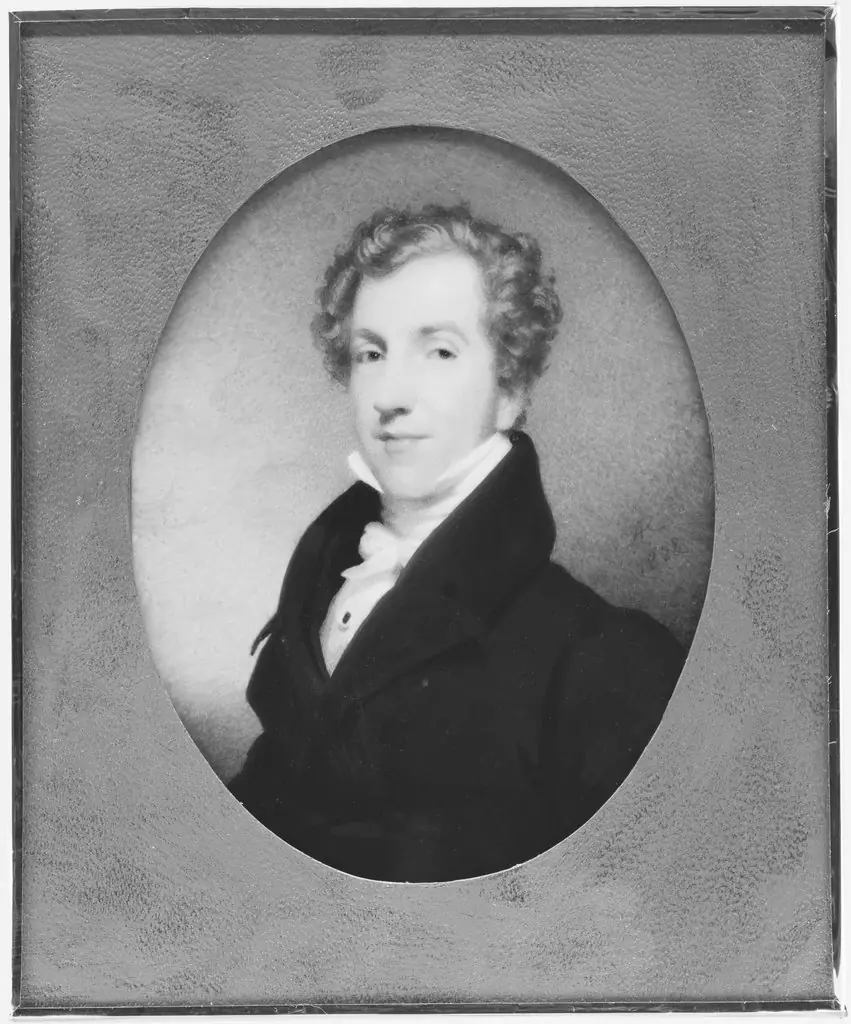
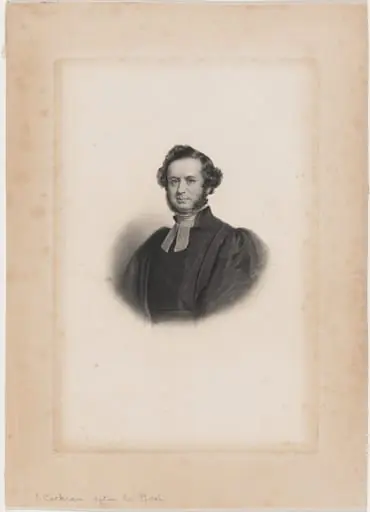
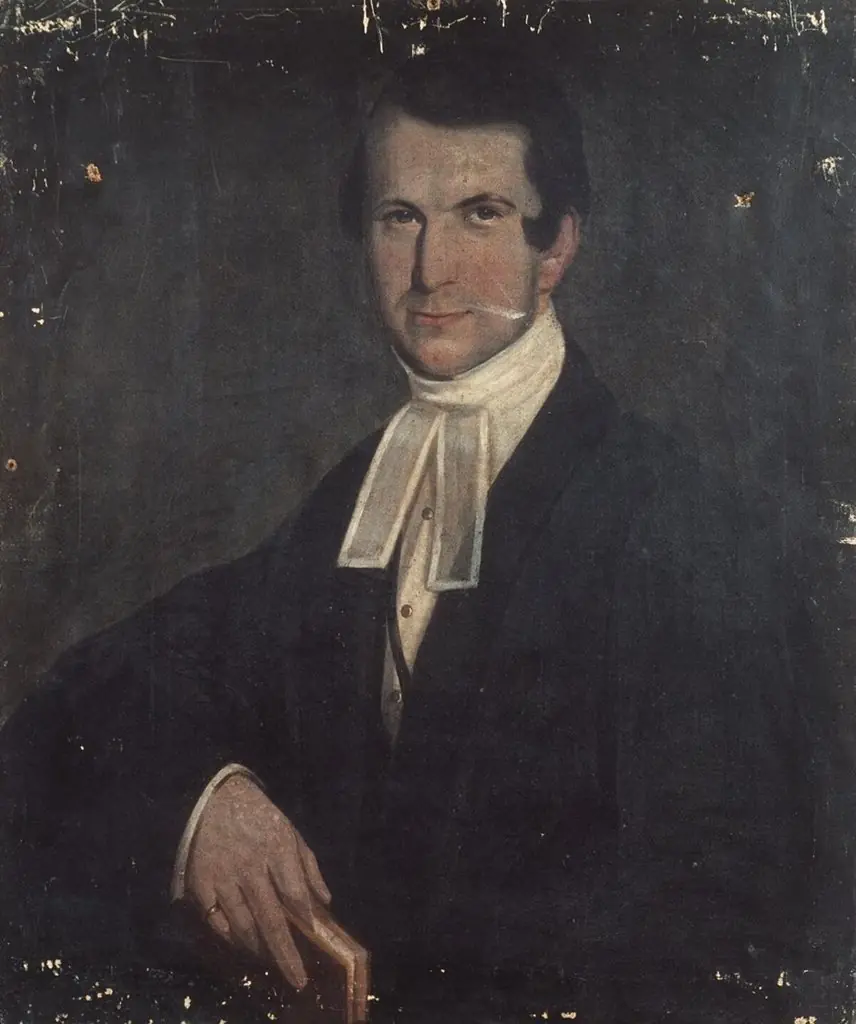
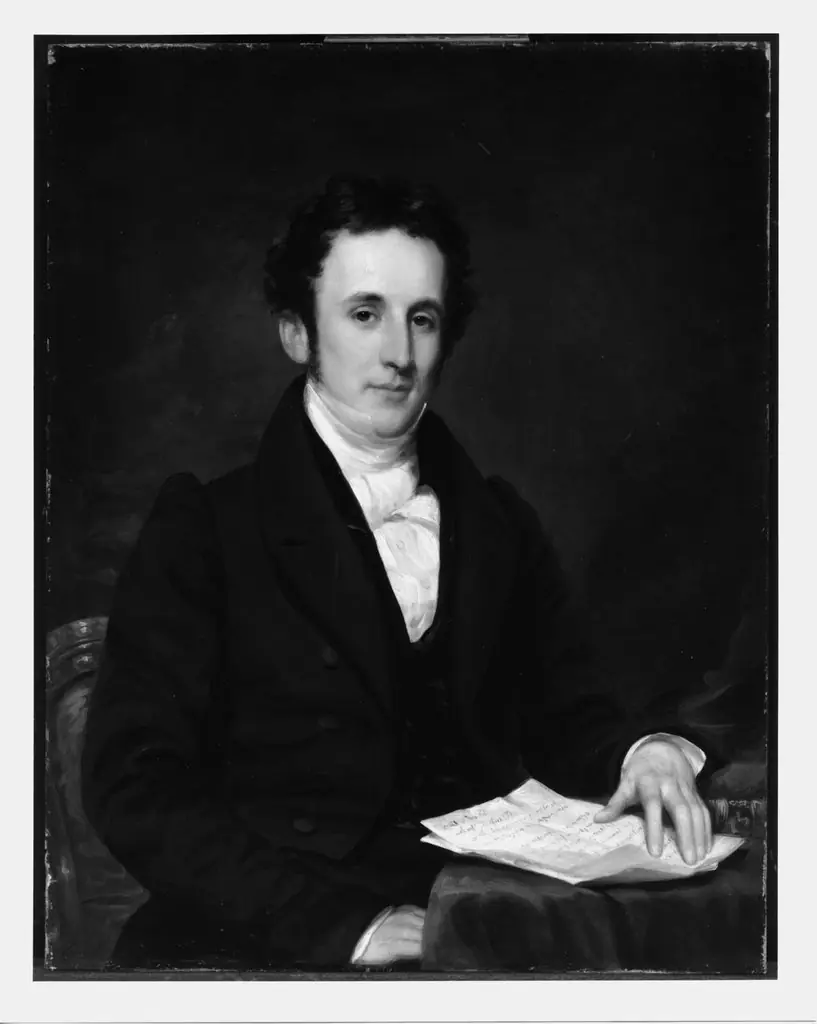
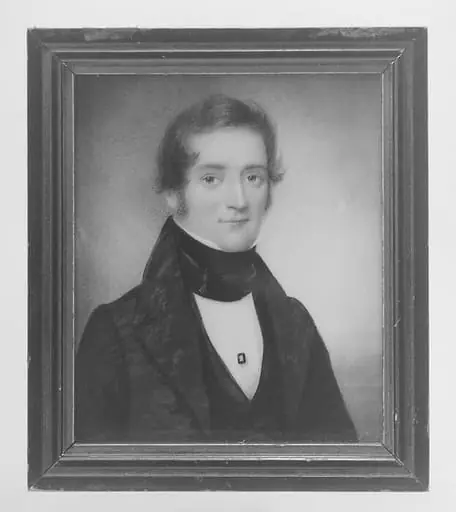
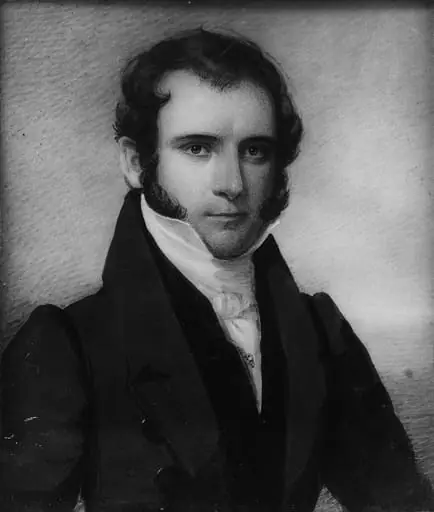
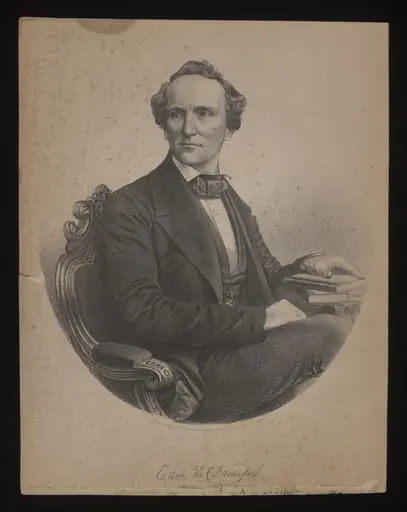
This 1823 watercolour by Andrew Robertson portrays Reverend Edward Irving, a Scottish minister, in a half-length composition. Rendered with delicate brushwork, the image captures him seated at a desk, hands resting on a book, against a neutral background. The subdued palette and intimate scale reflect the quiet dignity of the subject, typical of early 19th-century portrait studies in watercolour.
Subject & Meaning
Edward Irving was a prominent preacher whose theological views later led to his trial for heresy in 1833. The portrait presents him not in the pulpit, but in contemplative stillness, emphasizing his intellectual and spiritual presence. The white cravat and small medal draw attention to his clerical identity and personal devotion, suggesting a man defined by conviction rather than spectacle.
Technique & Style
Andrew Robertson employed soft, translucent watercolour strokes to model Irving’s face and hands, creating subtle gradations of light and shadow.
Andrew Robertson employed soft, translucent watercolour strokes to model Irving’s face and hands, creating subtle gradations of light and shadow. The dark coat contrasts with the pale cravat and medal, enhancing facial detail without overt drama. The plain background eliminates distraction, focusing attention on the subject’s expression and posture, characteristic of restrained British portrait practice of the period.
History & Provenance
The painting was once in the possession of J.B. Robertson Esq., likely a relative or associate of the artist. Its survival through the 19th century reflects its personal rather than public significance. Though Irving’s later movement gained followers, this portrait predates his most controversial years, preserving his image as a respected clergyman before public division.
Context
In the 1820s, watercolour portraiture was widely used for intimate depictions of clergy, scholars, and professionals. Irving’s portrayal aligns with this tradition, avoiding theatricality in favor of quiet realism. His eventual leadership of the Catholic Apostolic Church emerged from theological debates of the era, but this image captures him before those conflicts became public.
Legacy
The portrait endures as a visual record of a figure whose influence extended beyond his lifetime. Though Irving’s doctrines were contested, this image preserves his demeanor during a period of relative stability. It remains a quiet testament to the role of personal portraiture in documenting religious figures whose ideas would later shape new ecclesiastical movements.
Artist & collection

Artist