Artwork
The Official Opening of the 1862 London International Exhibition
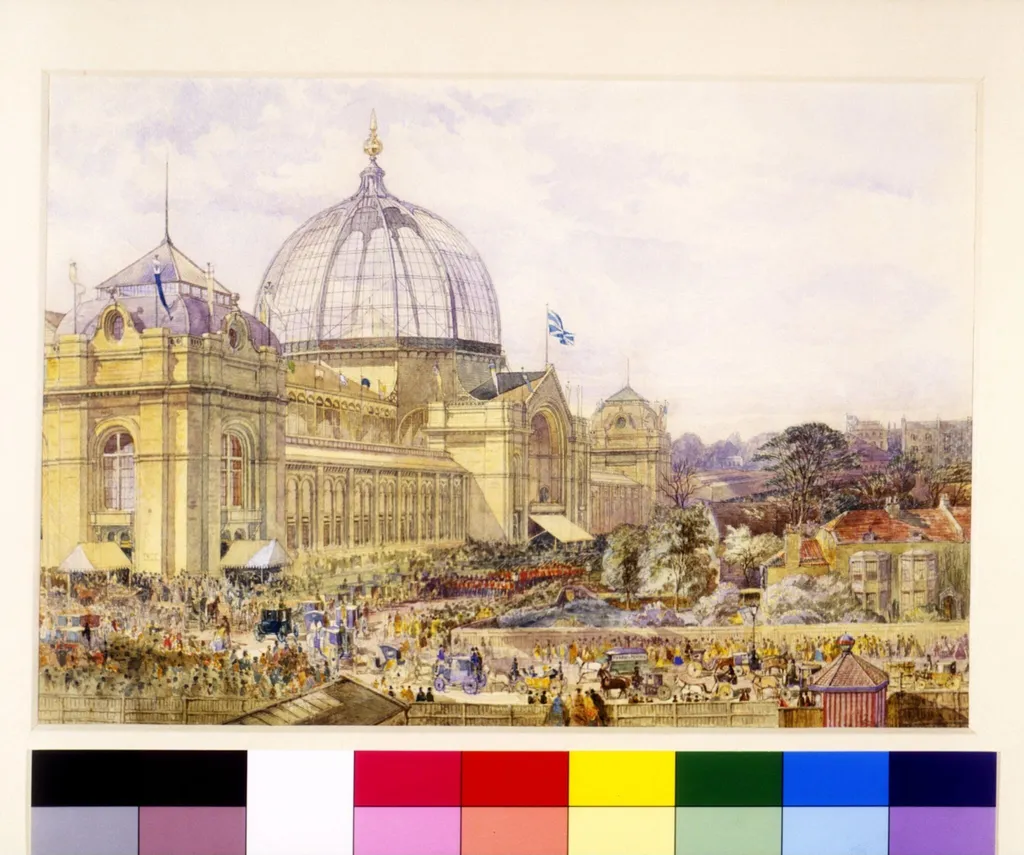
The Official Opening of the 1862 London International Exhibition is a watercolor work on paper by the Impressionist artist Edward Sherratt Cole. It dates from 1862 and is held in the collection of the Victoria and Albert Museum.
About this work
Overview
A watercolour on paper by Edward Sherratt Cole, completed in 1862, records the ceremonial opening of the London International Exhibition.
A watercolour on paper by Edward Sherratt Cole, completed in 1862, records the ceremonial opening of the London International Exhibition. Executed in delicate washes over pencil underdrawing, the work bears the artist’s signature. It captures a moment of public occasion with restrained detail, emphasizing architectural grandeur and the movement of a diverse crowd gathered before the exhibition hall.
Subject & Meaning
The scene portrays the official commencement of a global showcase of industry, science, and art, reflecting Victorian Britain’s confidence in progress and international collaboration. The crowd’s varied postures suggest anticipation rather than celebration, underscoring the event’s civic significance. The building, as the focal point, symbolizes institutional ambition, while the attendees represent the broad public engagement with modernity.
Technique & Style
Cole employed transparent watercolour layers to suggest light and atmosphere, with pencil lines guiding architectural forms and figure groupings. The palette is muted, dominated by soft greys, ochres, and pale blues, enhancing the sense of a hazy, overcast day. Brushwork is precise yet fluid, avoiding overt detail in favor of suggestive forms that convey motion and spatial depth without theatricality.
History & Provenance
Commissioned to document the 1862 exhibition, the watercolour was likely intended for institutional or private archival use. It remained in private hands for much of the 20th century before entering a public collection. Its survival is notable, as many contemporary records of the exhibition were lost or dispersed following its closure.
Context
The London International Exhibition of 1862 followed the success of the 1851 Great Exhibition, aiming to reinforce Britain’s role as a global hub of innovation. Held in South Kensington, the building was designed by Francis Fowke and reflected the era’s preference for functional yet ornamental architecture. Public attendance was high, and visual records like Cole’s served to legitimize and commemorate civic achievement.
Legacy
Though not widely exhibited today, the watercolour remains a valuable primary source for understanding how public events were visually documented in mid-19th-century Britain. It stands apart from later Impressionist approaches, offering instead a restrained, observational style aligned with topographical tradition rather than avant-garde experimentation.
Artist & collection
Artist

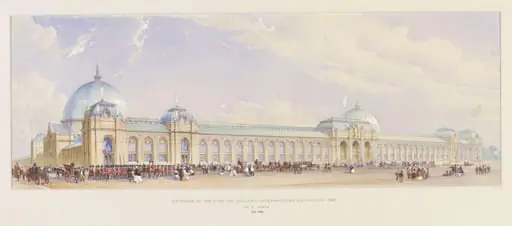 International Exhibition 1862
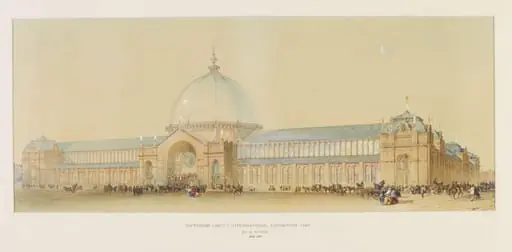 A perspective view of the west front of the International Exhibition 1862
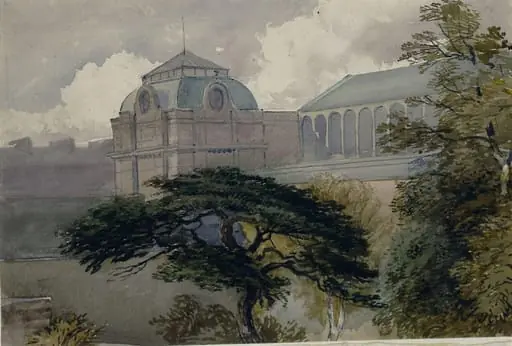 View of the exhibition buildings of 1862
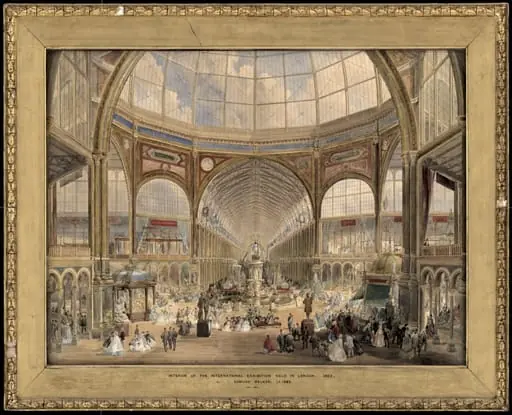 Interior of the international exhibition of 1862
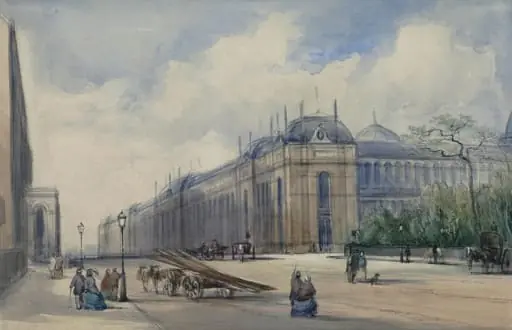 South-east aspect of the 1862 Exhibition Building
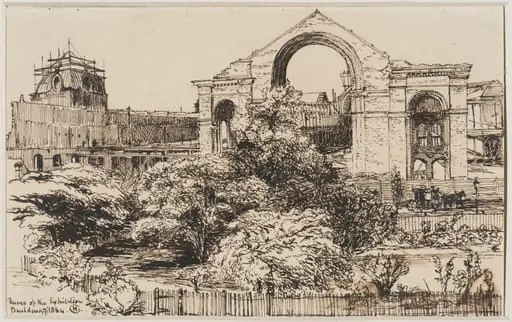 Ruins of the Exhibition building of 1862
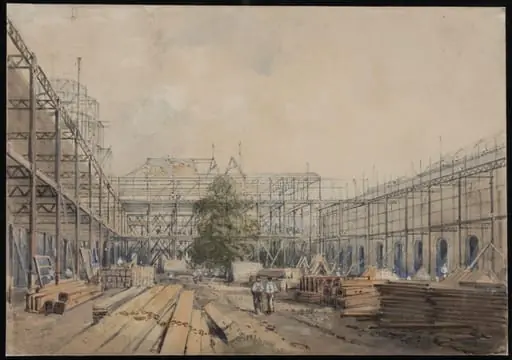 The South Court during the construction in September 1861 of the building for the International Exhibition, South Kensington