Artwork
Saint Germain, L'Auxerrois
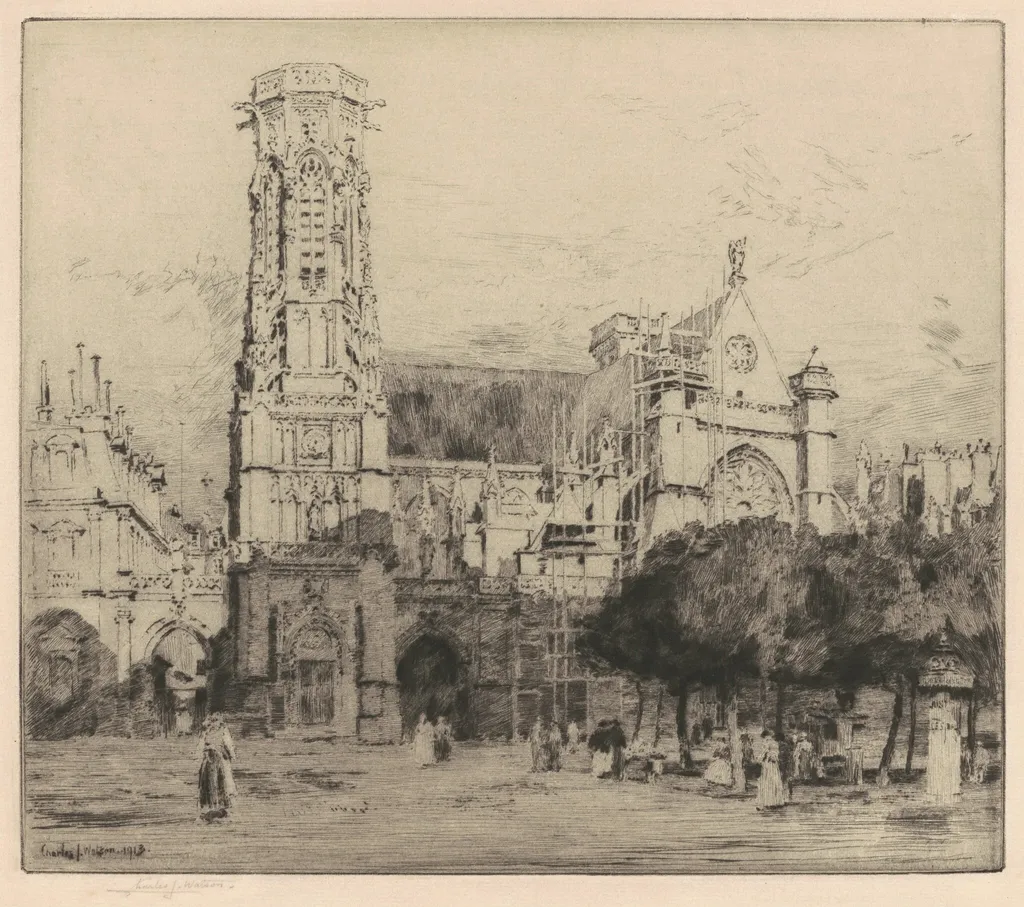
Saint Germain, L'Auxerrois is an ink print by Charles J. Watson. It dates from 1913 and is held in the collection of the National Gallery of Art. Created in 1913 by Charles J.
About this work
Overview
Created in 1913 by Charles J. Watson, this print depicts a street scene in L'Auxerrois, France, centered on the Church of Saint-Germain. Executed in etching and drypoint on laid paper, the work captures a quiet urban moment with meticulous line work. The textured surface of the paper enhances the tactile quality of the image, characteristic of early 20th-century printmaking practices.
Subject & Meaning
The scene portrays ordinary life around a Gothic parish church, with pedestrians in period dress moving along the sidewalk. The church, rendered with architectural precision, serves as both landmark and silent witness to daily routines. No overt religious narrative is present; instead, the image suggests the integration of sacred architecture into the rhythm of secular life.
Technique & Style
Watson employed etching and drypoint to achieve fine, varied lines that model light and depth. The drypoint’s burr adds soft, velvety shadows, particularly in the tree canopies and building recesses. The composition relies on contrast between the intricate stonework and the looser, darker foliage, creating a sense of spatial recession without perspective distortion.
History & Provenance
The print was made during Watson’s period of active travel in northern France, where he documented regional architecture. It was likely produced as part of a series of urban studies, intended for private collectors and print societies. No public record of early ownership exists, but its preservation suggests it was valued within artistic circles of the time.
Context
In 1913, European printmakers were reviving traditional techniques in response to industrialization’s visual homogenization. Watson’s focus on vernacular architecture aligned with broader interests in regional identity and craft. His work reflects a quiet resistance to modernity, emphasizing the enduring presence of medieval structures amid changing urban life.
Legacy
Though not widely exhibited, the print remains an example of early 20th-century British printmaking’s engagement with French topography. It contributes to a modest but persistent tradition of architectural observation in print, valued for its technical restraint and unembellished realism rather than dramatic effect.
Artist & collection

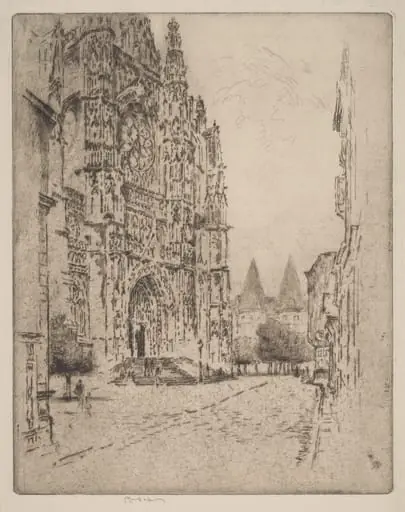 Towers of the Bishop's Palace, Beauvais
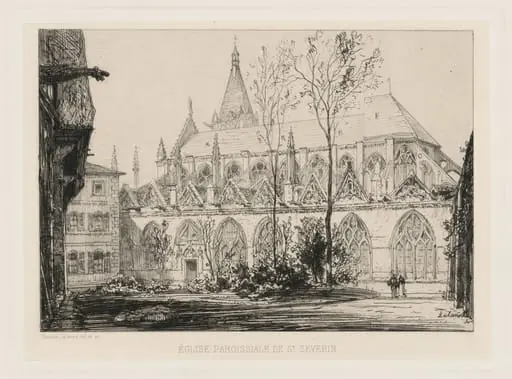 Église Paroissiale de St. Séverin
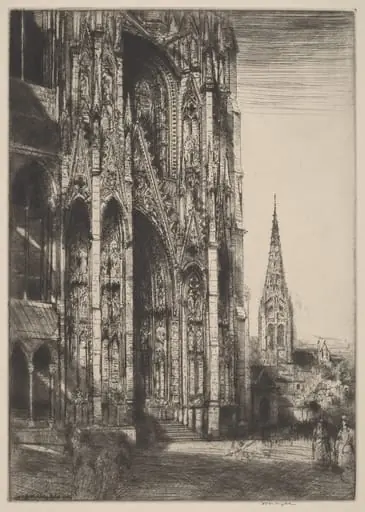 Gothic Night
 Le Pont-au-Change, Paris
 House Where Whistler Died
 Rossetti's House
 Magnificent Kensington
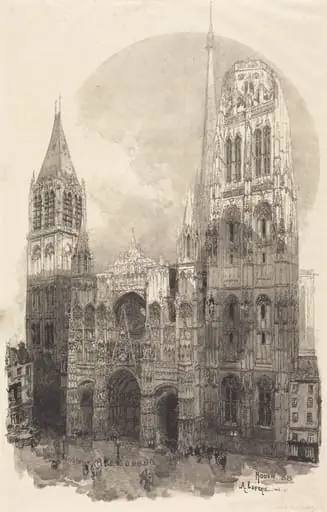 Rouen Cathedral (La Cathedral de Rouen)
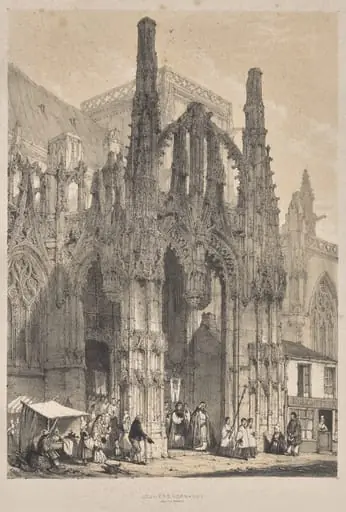 Architecture of the Middle Ages: Louviers, Normandy, South Porch
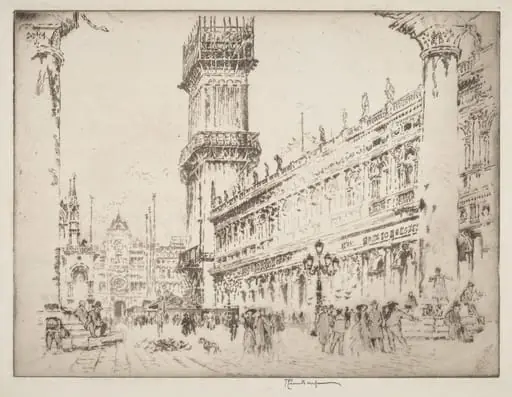 Rebuilding the Campanile, Venice, No.II