Artwork
South-east aspect of the 1862 Exhibition Building
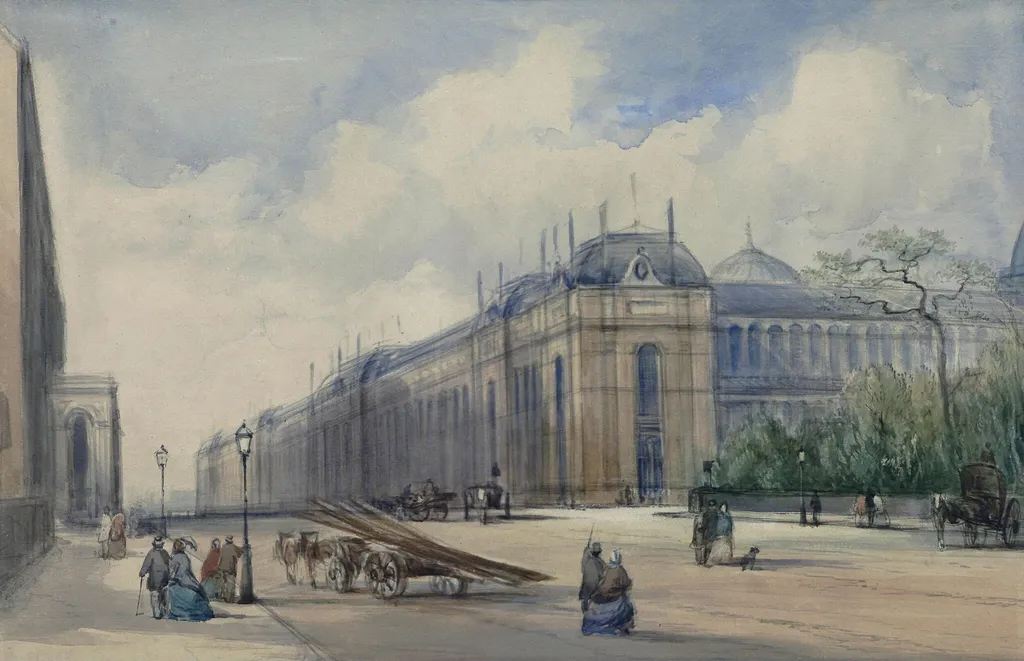
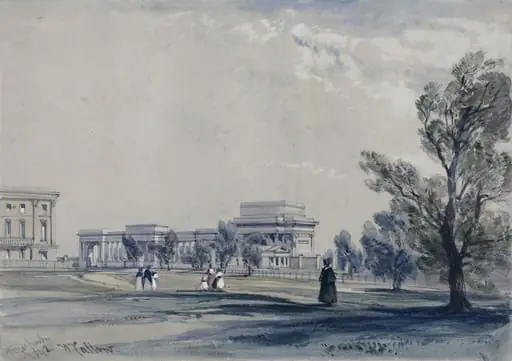
South-east aspect of the 1862 Exhibition Building is a watercolor work on paper by the Impressionist artist William Callow. It dates from 1862 and is held in the collection of the Victoria and Albert Museum. This watercolour captures the south-east elevation of the 1862 International Exhibition Building in London, viewed along Cromwell Road.
About this work
Overview
Callow, rendered the architecture with careful detail and a subdued palette, emphasizing the interplay between monumental structure and daily activity.
This watercolour captures the south-east elevation of the 1862 International Exhibition Building in London, viewed along Cromwell Road. The composition includes fragments of the adjacent South Kensington Museum Gardens and a quiet urban scene. The artist, W. Callow, rendered the architecture with careful detail and a subdued palette, emphasizing the interplay between monumental structure and daily activity. The work is signed in the lower corner, confirming authorship.
Subject & Meaning
The painting presents a moment of ordinary life amid a grand exhibition space. Figures sit on the grass, stroll, or ride in carriages, while a dog and a discarded wooden beam suggest unscripted moments. The presence of umbrellas and casual attire implies a mild, overcast day. Rather than celebrating the building’s purpose, the artist observes its integration into the rhythms of public life, treating architecture as a backdrop to human routine.
Technique & Style
Executed in watercolour, the work employs soft washes and restrained tones to evoke a hazy, atmospheric quality. Details are suggested rather than sharply defined, particularly in the figures and foliage, lending the scene a sketch-like immediacy. The light blue sky and diffused clouds enhance the sense of calm, while the muted greens and greys unify the composition. Callow’s brushwork is deliberate yet fluid, avoiding theatricality in favor of quiet observation.
History & Provenance
Created shortly after the 1862 International Exhibition closed, the painting likely served as a personal record of the site’s post-exhibition state. It was produced by William Callow, a known topographical artist who documented British landmarks throughout the 19th century. The work entered the Victoria and Albert Museum’s collection, where it remains as part of a broader archive of exhibition-related visual materials.
Context
The 1862 Exhibition Building, designed by Francis Fowke, was a temporary structure erected for the International Exhibition, following the model of the Great Exhibition of 1851. Though intended for short-term use, its location in South Kensington became a cultural anchor. Callow’s painting reflects the transition from grand exposition to public parkland, capturing the site’s evolving identity in the years before the permanent museum complex took shape.
Legacy
As a record of a fleeting architectural moment, the watercolour contributes to the visual documentation of London’s 19th-century cultural infrastructure. Callow’s focus on pedestrian life and atmospheric light aligns with broader trends in topographical art, where the everyday was valued as much as the monumental. The work endures not as a celebration of spectacle, but as a quiet testament to how public spaces are inhabited and remembered.
Artist & collection

 (Uusi) Ruotsalainen teatteri
 Rue de Rivoli and Pavillon Marsan
 Entrance to Hyde Park at Hyde Park Corner
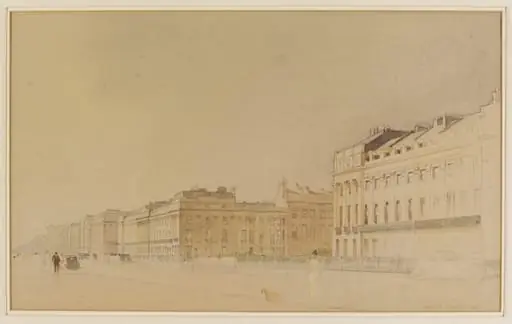 Brunswick Terrace, Hove
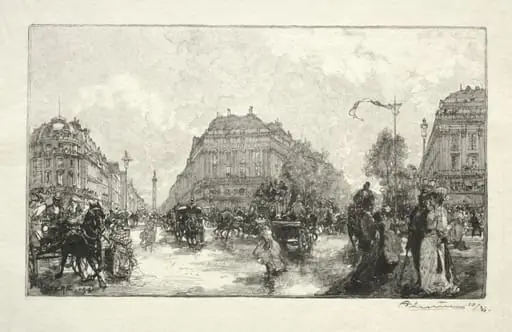 Place de l'Opera
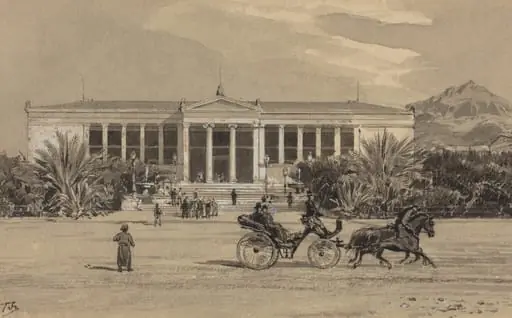 University
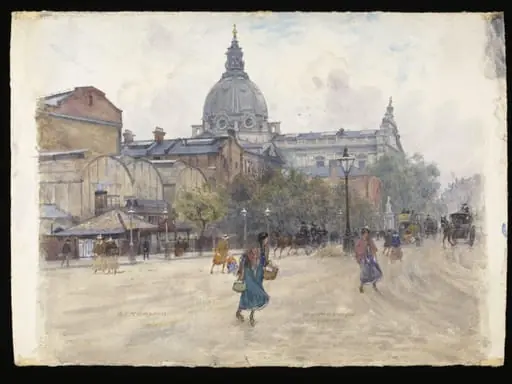 The South Kensington (now Victoria & Albert) Museum and the Brompton Oratory, about 1897.
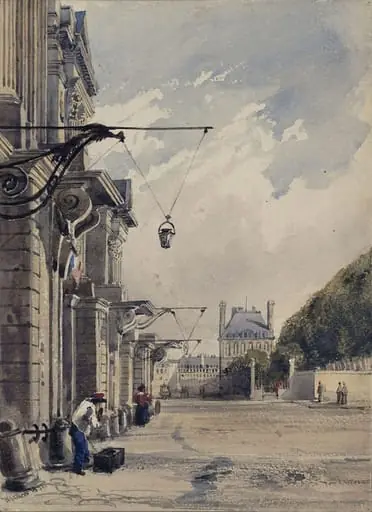 The Rue de Rivoli, near the Tuileries, Paris
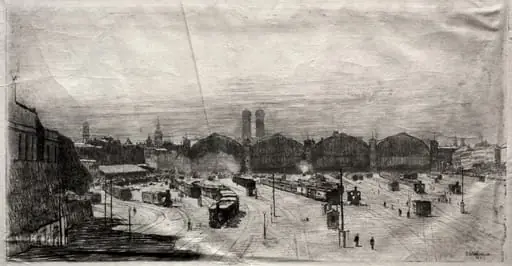 Railroad Station
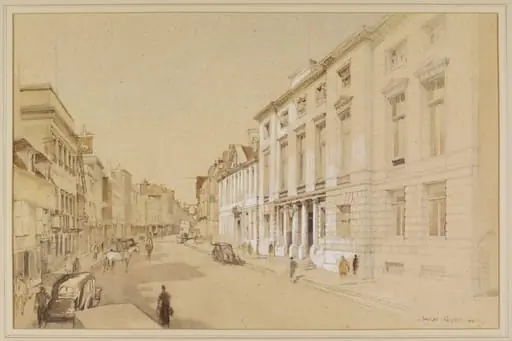 The County Hall and High Street, Lewes
 The Old Corcoran Gallery of Art
 Belvedere Palace, Vienna