Artwork
Pharaoh’s Daughter Finding Moses
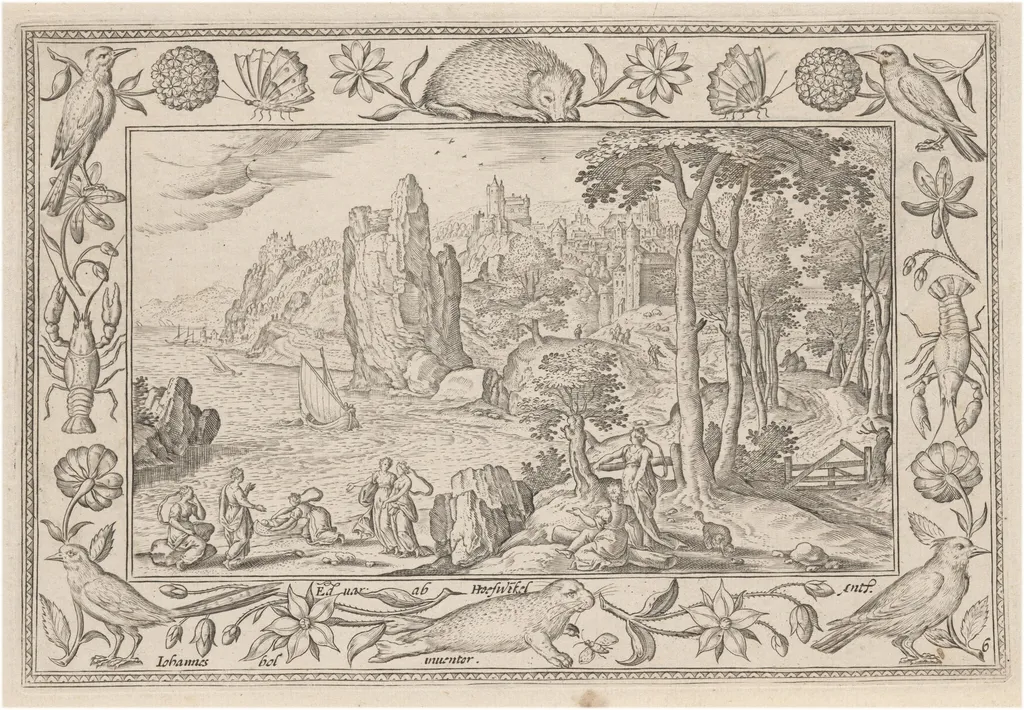
Pharaoh’s Daughter Finding Moses is an ink print by the Renaissance artist Adriaen Collaert. It dates from 1584 and is held in the collection of the National Gallery of Art.
About this work
Overview
Adriaen Collaert created this engraving around 1584, depicting a biblical episode from the Book of Exodus. Rendered in fine linear detail on laid paper, the print belongs to a series illustrating Old Testament stories. It is currently held in the collection of the National Gallery of Art in Washington, D.C., where it serves as an example of late 16th-century Northern European printmaking.
Subject & Meaning
The composition guides the viewer’s eye from the central figures to the distant palace, reinforcing the child’s royal destiny.
The scene illustrates the moment when Pharaoh’s daughter discovers the infant Moses in a basket among the reeds of the Nile. She is shown reaching toward the child, while attendants observe nearby. The narrative emphasizes divine providence and compassion, central themes in the Exodus story. The composition guides the viewer’s eye from the central figures to the distant palace, reinforcing the child’s royal destiny.
Technique & Style
Collaert employed precise engraving techniques to render texture and depth, using fine cross-hatching for shadows and delicate lines for fabric and foliage. The figures are rendered with classical poise, reflecting Renaissance ideals of proportion and gesture. The landscape background, though simplified, includes architectural and botanical elements that ground the scene in a recognizable, yet idealized, setting.
History & Provenance
The print was produced during Collaert’s active years in Antwerp, a center for reproductive engraving. It likely circulated as part of a devotional or educational series, common in Protestant regions where biblical imagery remained popular despite iconoclasm. The National Gallery of Art acquired the work as part of its broader collection of European prints, preserving its historical and artistic context.
Context
Collaert worked within a tradition of Flemish printmakers who translated paintings into engravings for wider dissemination. His work responded to demand for religious imagery in households and scholarly circles. Though the Counter-Reformation influenced Catholic regions, Protestant areas still valued biblical narratives, making such prints valuable tools for moral instruction and visual storytelling.
Legacy
Collaert’s engraving exemplifies the role of printmaking in spreading religious narratives across Europe during the late Renaissance. While not widely known today, his technique influenced later generations of engravers who sought clarity and narrative precision. The work remains a documented artifact of how biblical stories were visually codified and reproduced for public consumption in the 16th century.
Artist & collection


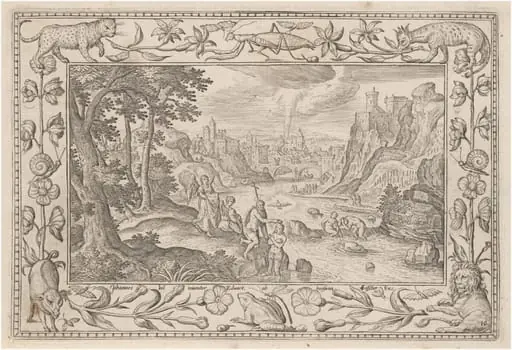 The Baptism of Christ
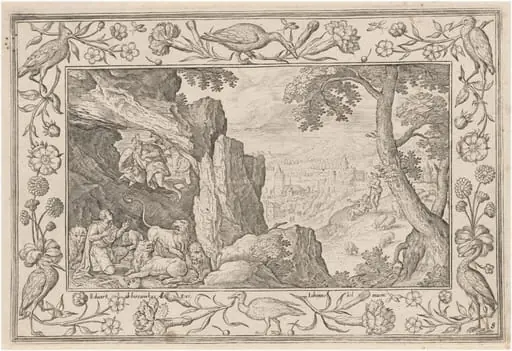 Daniel in the Lion’s Den
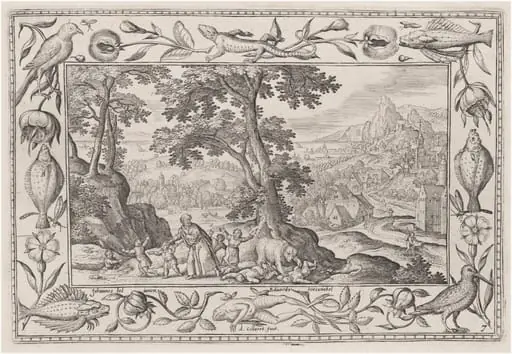 The Mocking Children Cursed by Elijah and Eaten by a She-Bear
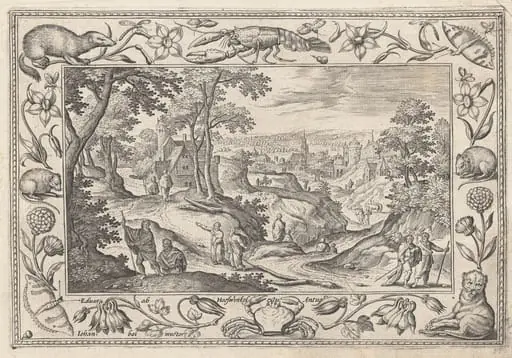 The Sending Out of the Apostles
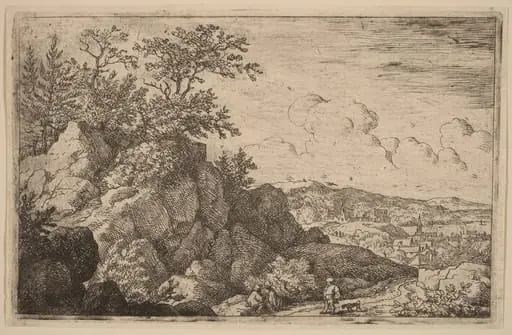 Peasant with His Dog
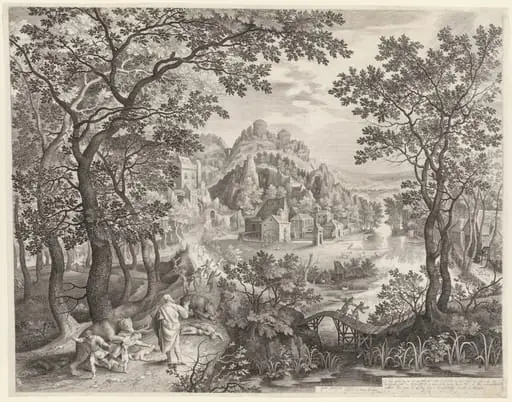 Elisha Cursing the Children of Bethel Who Are Being Devoured by the Bears
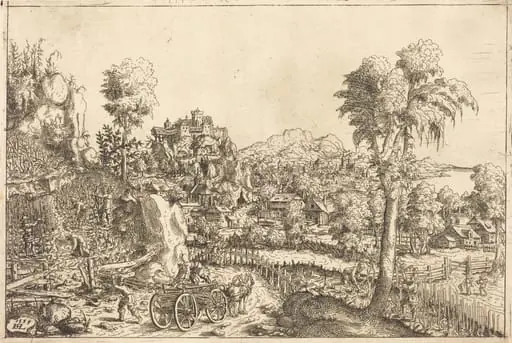 Landscape with a Vineyard
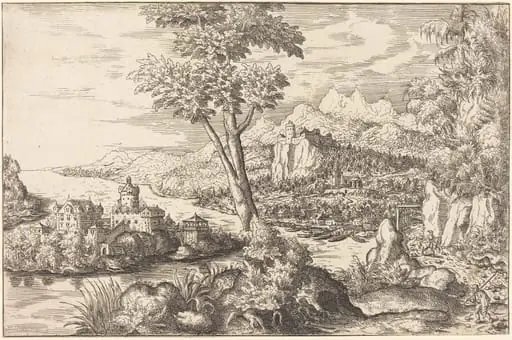 Landscape with Three Men
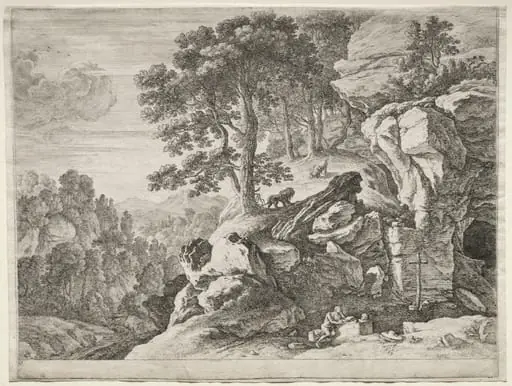 The Penitents: St. Jerome in the Desert
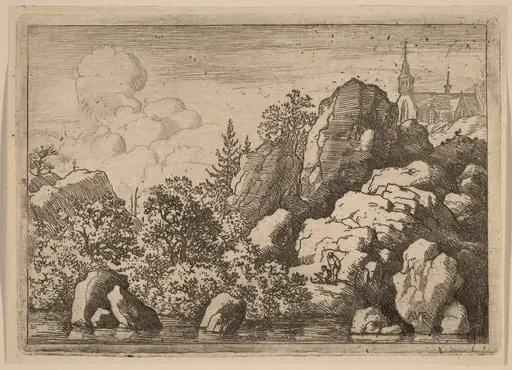 Church on a Hill
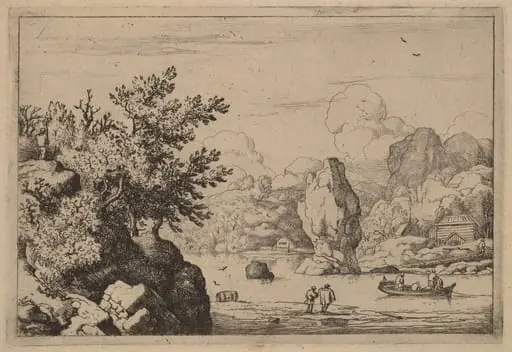 Rock in the Middle of a River
 View of the River Rhine