Artwork
Elisha Cursing the Children of Bethel Who Are Being Devoured by the Bears
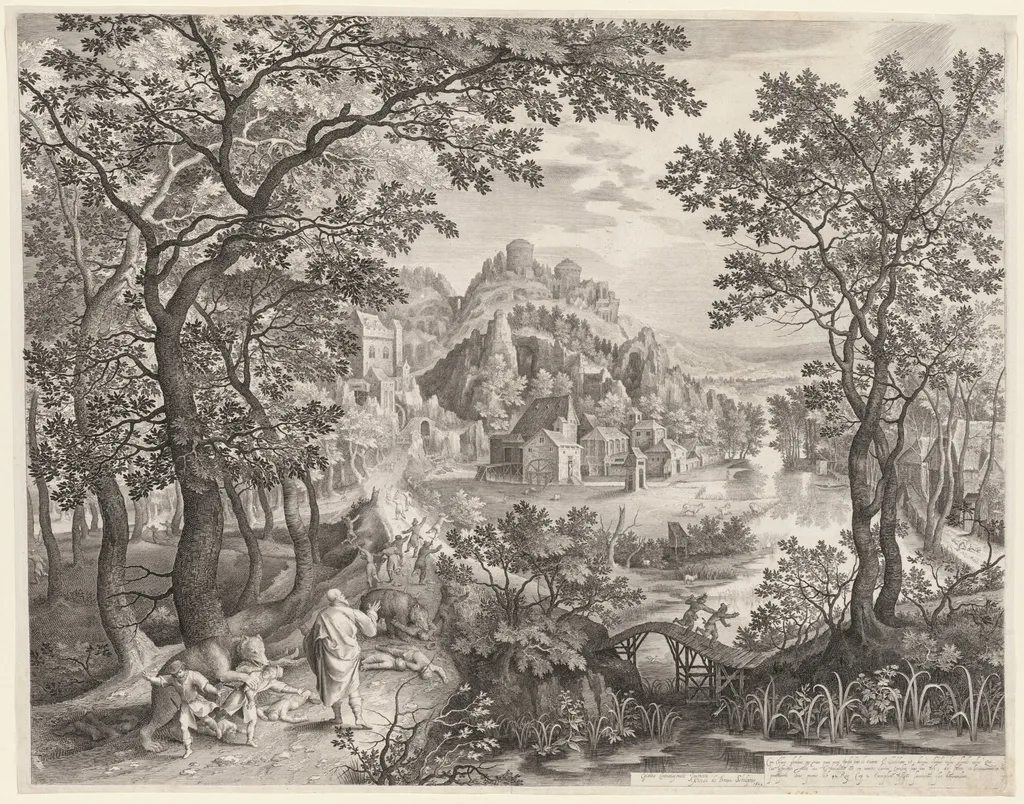
Elisha Cursing the Children of Bethel Who Are Being Devoured by the Bears is a print by the Baroque artist Nicolaes de Bruyn. It dates from 1602 and is held in the collection of the Cleveland Museum of Art.
About this work
This print shows two angry bears attacking a group of screaming children in a dark forest. The bears look huge and the kids scatter in terror.
De Bruyn made this in 1602 using fine lines to build up shadows and lights. The tiny Latin quote at the bottom tells the story of Elisha and the disrespectful crowd.
Look for Nicolaes de Bruyn (Netherlandish, 1571–1656) next.
Overview
Elisha Cursing the Children of Bethel Who Are Being Devoured by the Bears is a 1602 print by Nicolaes de Bruyn, a Netherlandish artist. The work depicts a violent scene from the Old Testament.
Subject & Meaning
The print illustrates a passage from 2 Kings 2:23-24, in which the prophet Elisha curses a group of children who mock him, resulting in their death at the hands of two bears. The scene conveys a moral lesson about the importance of respecting old age.
Technique & Style
De Bruyn employed fine lines to create a range of shadows and lights, achieving a tonal depth reminiscent of paintings by Gillis van Coninxloo. The technique suggests that prints like this one may have served as affordable alternatives to paintings.
History & Provenance
Created in 1602, the print features a Latin inscription at the bottom, quoting the relevant biblical passage. The work is characteristic of de Bruyn's style during this period.
Artist & collection

Artist
Nicolaes de Bruyn (Antwerp, 1571 – Rotterdam, 1656) was a Flemish engraver, who after training in Antwerp was active in the Dutch Republic.

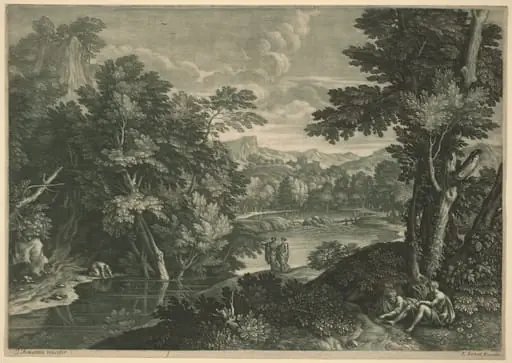 Landscape
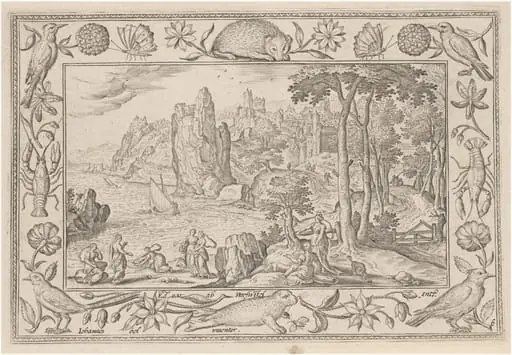 Pharaoh’s Daughter Finding Moses
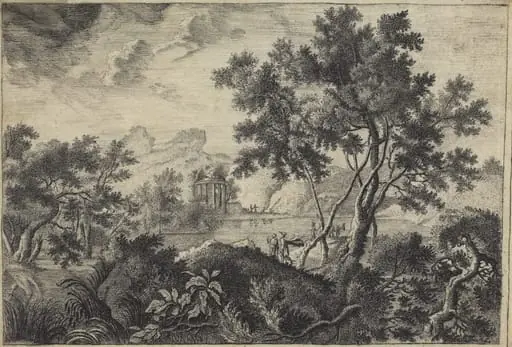 Classical Landscape with a Tempietto
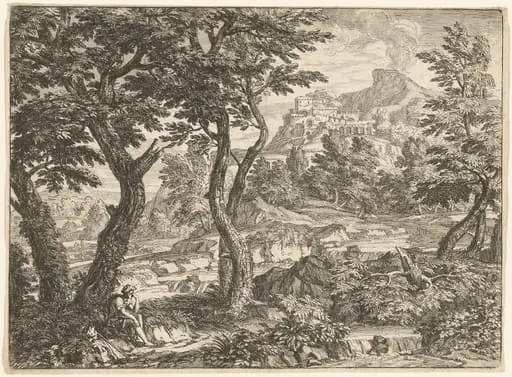 Landscape with a Traveler Resting
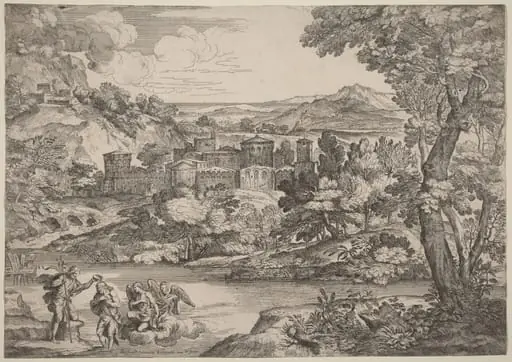 The Baptism of Christ, Set in a Mountainous Landscape
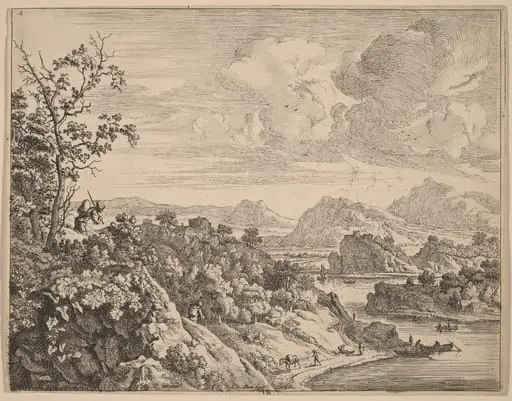 View of the River Rhine
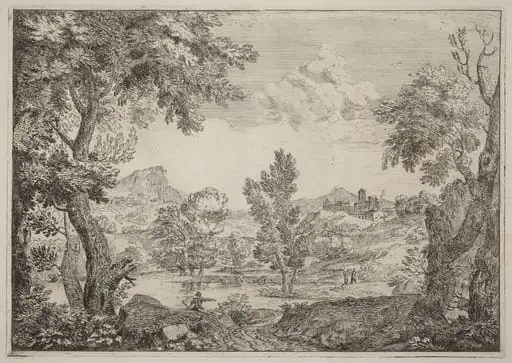 The Stream
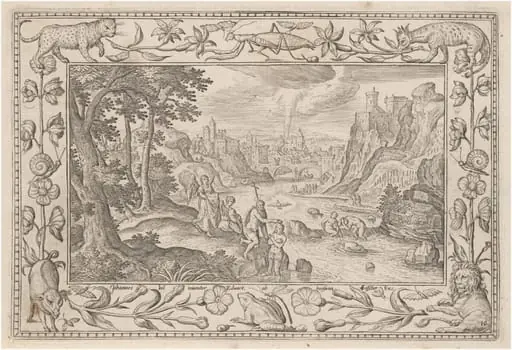 The Baptism of Christ
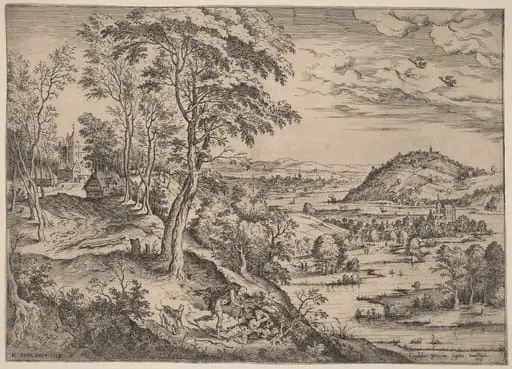 Cephalus and Procris
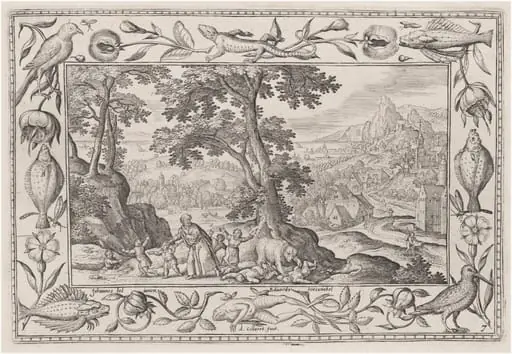 The Mocking Children Cursed by Elijah and Eaten by a She-Bear
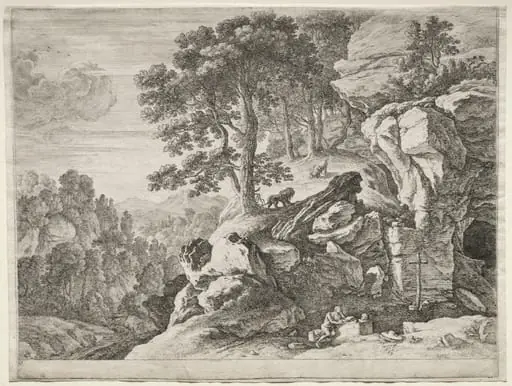 The Penitents: St. Jerome in the Desert