Artwork
Design for a Cartouche
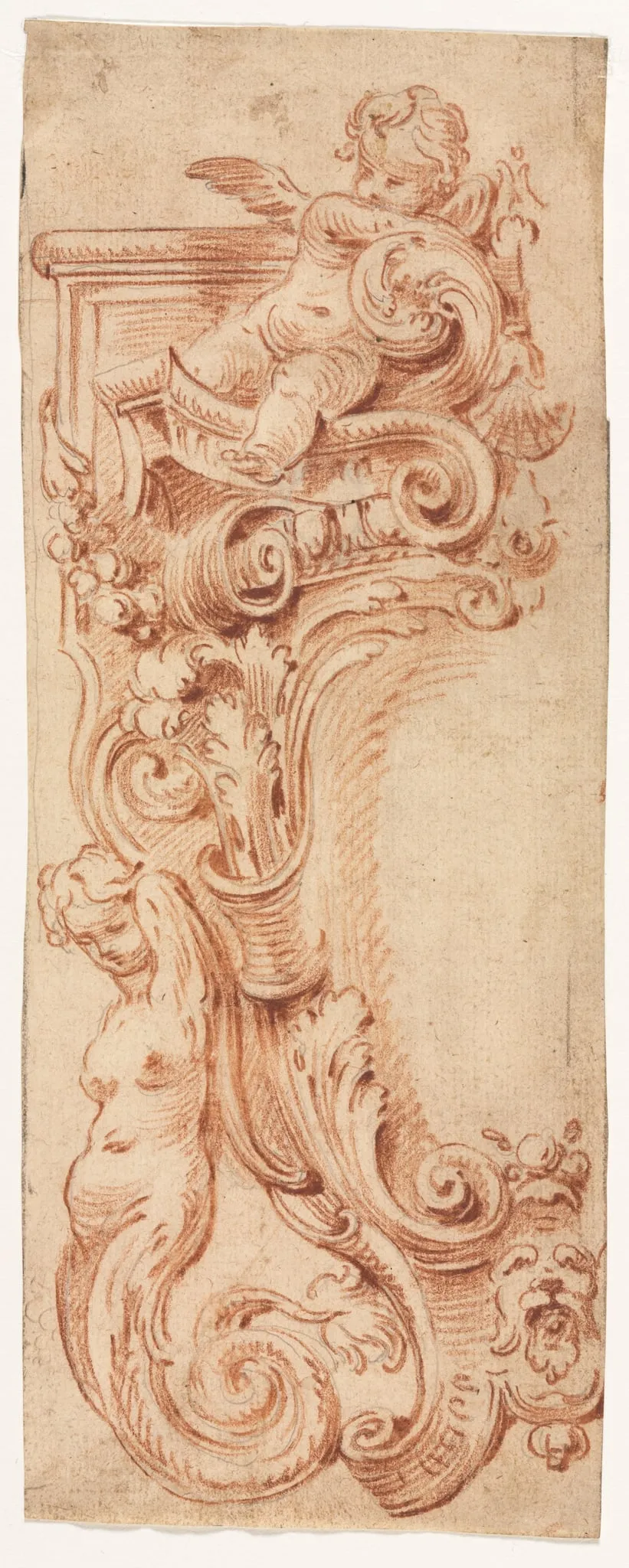
Design for a Cartouche is a drawing by the Baroque artist Gilles Marie Oppenord. It dates from 1704 and is held in the collection of the Cleveland Museum of Art.
About this work
Overview
Design for a Cartouche is a paper drawing executed in brown ink by French designer Gilles‑Marie Oppenord around 1704. The work measures a modest size and is part of the collection of the Cleveland Museum of Art. It presents a decorative frame composed of intertwined vines, leaves and scrolls, with a tiny bird perched at the upper edge, giving the composition a sense of lightness.
Subject & Meaning
The drawing functions as a preparatory study for a cartouche—a ornamental border traditionally used to enclose portraits, coats of arms or inscriptions. The inclusion of natural motifs such as foliage and a bird reflects the Baroque fascination with integrating organic forms into architectural and heraldic settings, suggesting both elegance and a subtle reference to the natural world.
Technique & Style
Oppenord employed a fluid brown ink line, allowing the vines and scrolls to interlace tightly while maintaining clarity. Overlapping curls are rendered with varying pressure, creating depth without obscuring detail. The overall composition exemplifies the elaborate, dynamic ornamentation characteristic of early‑18th‑century French Baroque design, where movement and intricate patterning dominate.
History & Provenance
Created circa 1704, the drawing remained in private hands before being acquired by the Cleveland Museum of Art, where it now resides in the European decorative arts collection. Its provenance traces a typical path for design studies of the period, moving from workshop use to later collection by institutions interested in Baroque decorative drawing.
Context
During the early 1700s, French designers like Oppenord supplied ornamental schemes for aristocratic interiors, royal commissions and printed pattern books.
During the early 1700s, French designers like Oppenord supplied ornamental schemes for aristocratic interiors, royal commissions and printed pattern books. The cartouche motif was a staple of Baroque visual language, used to frame important imagery and convey status. This drawing illustrates how designers balanced elaborate detail with functional clarity, a hallmark of the period’s decorative practice.
Artist & collection

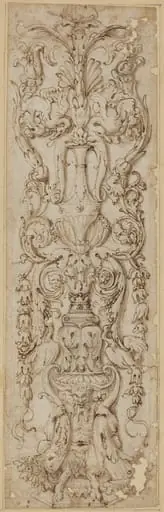 Grotesque with a Satyr
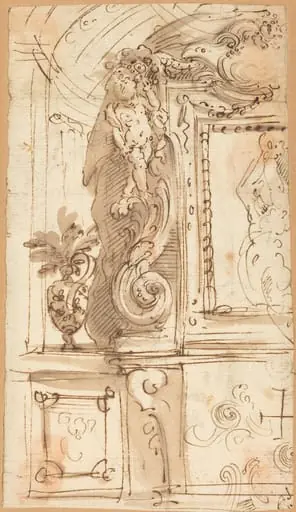 An Elaborately Sculpted Frame
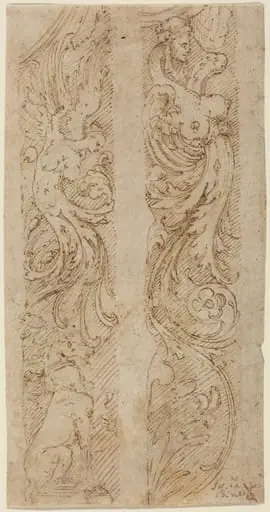 Grotesque Decorations for Wall Panels
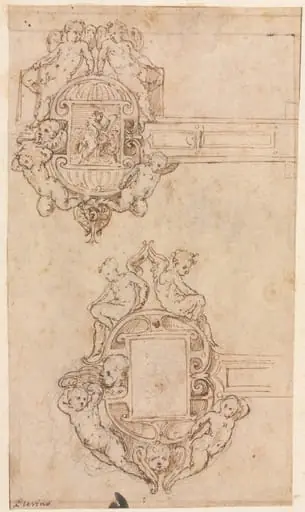 Design for Decorative Hinges (recto)
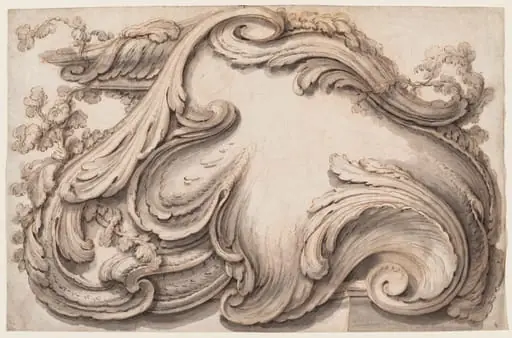 Rocaille Cartouche
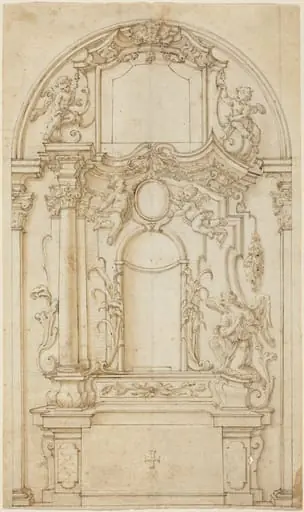 Study for an Altar and a Reredos
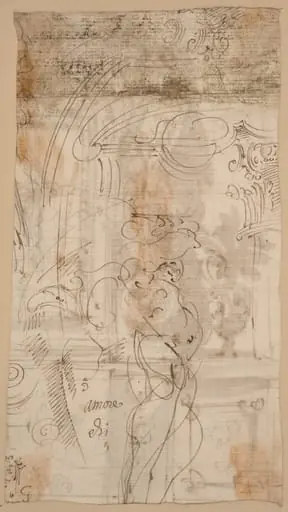 An Architectural Study with an Atlantid
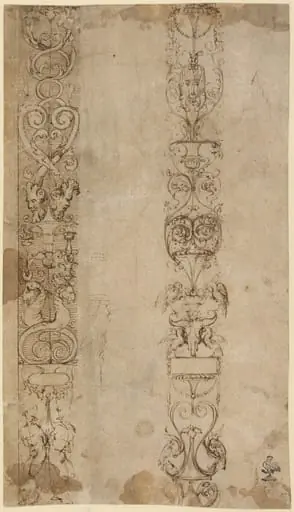 Grotteschi
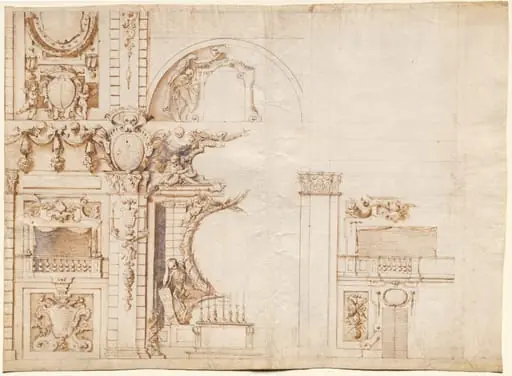 Study for the 'Essequie' Conducted in San Lorenzo, Florence, in 1637 in Honour of Holy Roman Emperor Ferdinand II