Artwork
The Cherry Blossoms - High Tea
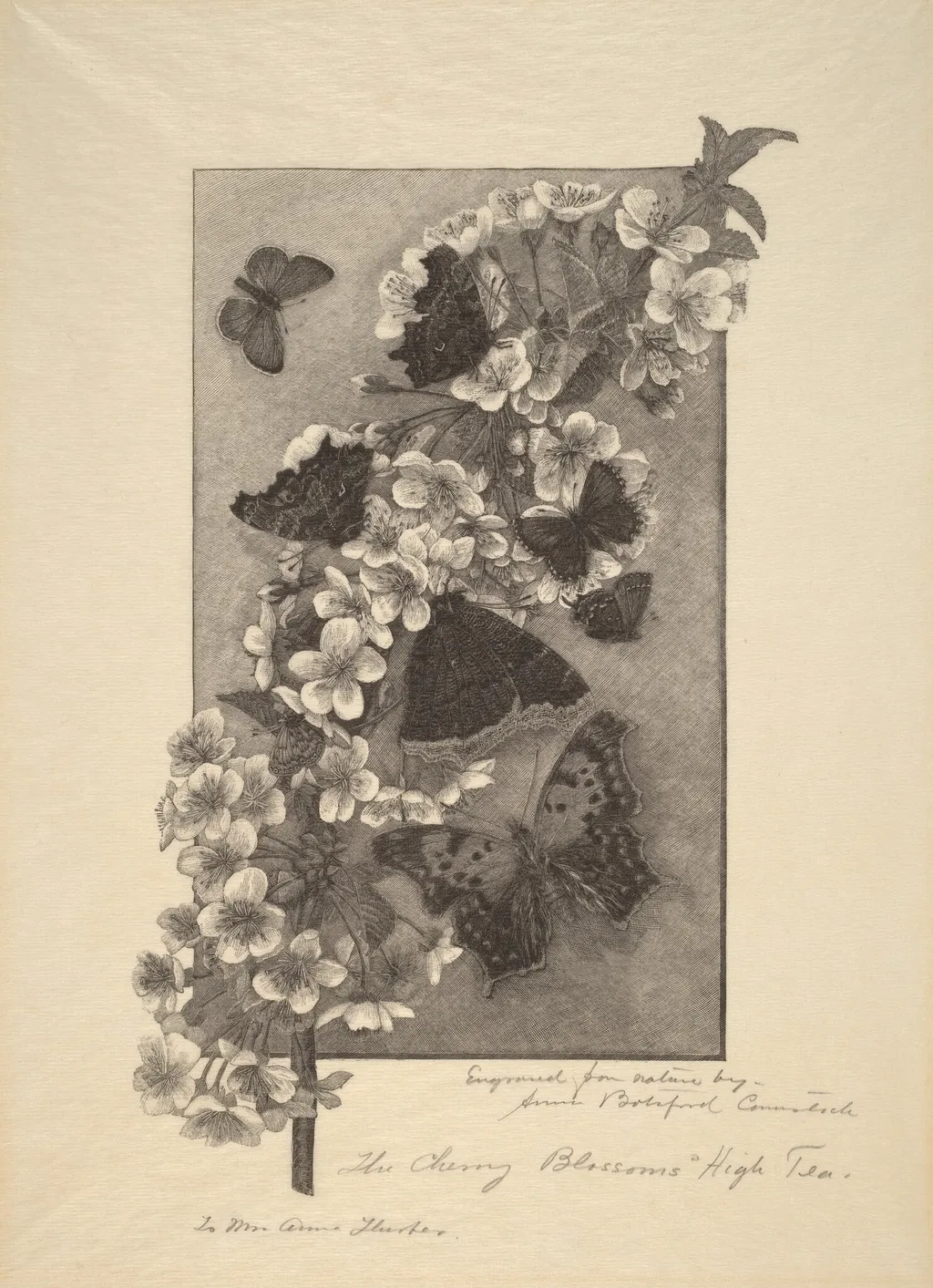
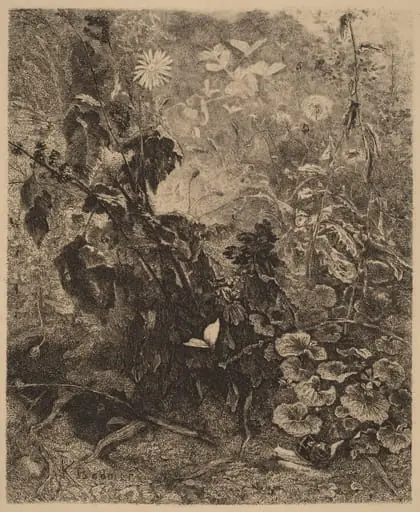
The Cherry Blossoms - High Tea is an ink print by the Impressionist artist Anna Botsford Comstock. It dates from 1890 and is held in the collection of the National Gallery of Art.
About this work
Overview
Created around 1890 by Anna Botsford Comstock, 'The Cherry Blossoms - High Tea' is a black-and-white wood engraving that captures a quiet moment in nature.
Created around 1890 by Anna Botsford Comstock, 'The Cherry Blossoms - High Tea' is a black-and-white wood engraving that captures a quiet moment in nature. The composition centers on a cluster of cherry blossoms, rendered with fine linear detail, and includes two butterflies resting among the branches. The plain background isolates the floral subject, emphasizing its delicate structure and natural grace.
Subject & Meaning
The image presents cherry blossoms not as a symbolic flourish but as an intimate observation of botanical life. The inclusion of butterflies suggests transient movement within stillness, reinforcing themes of ephemerality and quiet vitality. The title, 'High Tea,' subtly evokes domestic tranquility, aligning the natural scene with the refined rhythms of everyday life.
Technique & Style
Comstock employed wood engraving, a technique involving incising fine lines into the end grain of hardwood. This allowed for exceptional precision, enabling the rendering of petal textures and delicate stems with remarkable clarity. The monochromatic palette enhances the tonal subtlety, while the absence of background detail directs attention to the intricate carving and the life within the branches.
History & Provenance
The print emerged during Comstock’s active period as a naturalist and illustrator, closely tied to her work in scientific education. Though not widely exhibited in its time, it was likely produced for private or academic circulation, reflecting her commitment to merging artistic precision with botanical accuracy. Its survival suggests it was valued within circles interested in natural history illustration.
Context
In the late 19th century, wood engraving was a respected medium for scientific and literary illustration, particularly in the United States. Comstock’s work aligned with broader movements that sought to bring natural observation into domestic and educational spaces. Her focus on flora and fauna reflected a growing public interest in nature study, especially among women engaged in science and art.
Legacy
Comstock’s engraving remains a quiet example of how artistic technique could serve scientific observation. While not widely known today, it contributes to a larger body of work that helped legitimize women’s roles in natural history illustration. Its enduring appeal lies in its restraint—offering no grand narrative, only a precise, meditative glimpse of nature’s small moments.
Artist & collection


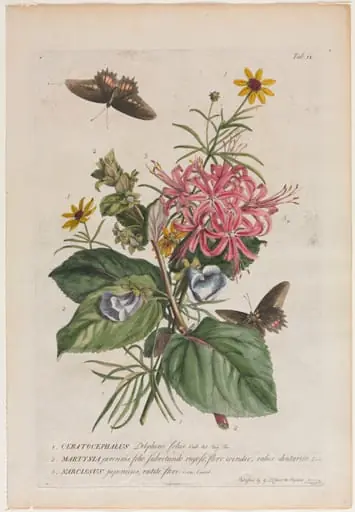 Plantae et papiliones rariores: No. 9
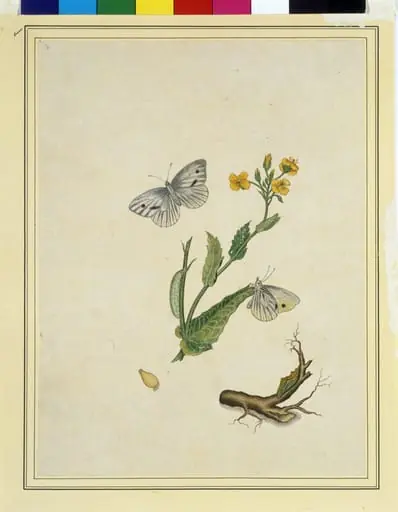 Cabbage worms
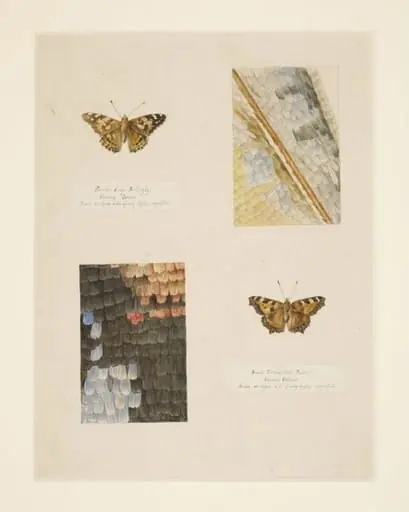 Studies of Small Tortoiseshell and Painted Lady butterflies, with magnified studies of the wings
 Plantae et papiliones rariores: No. 7
 Madagascar periwinkle (catharanthus roseus) and butterflies
 Swallow-tailed Butterfly and Twelve Other Insects
 Fleurs (Flowers)
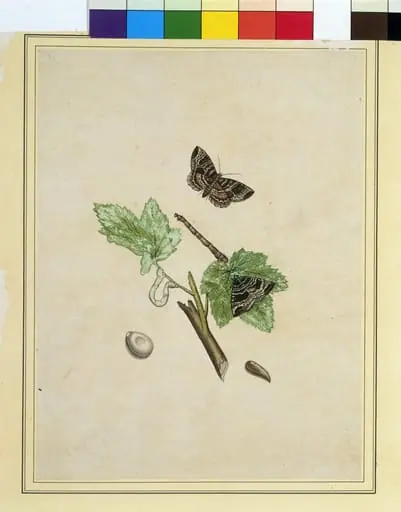 Geometrid moths
 Escargots et papillons
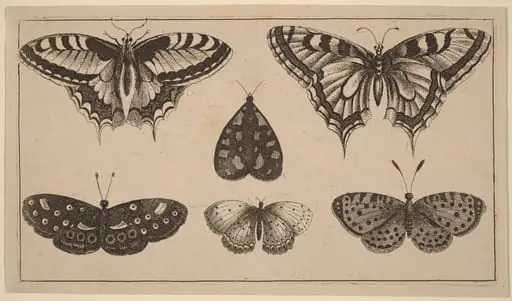 Five Butterflies and a Moth
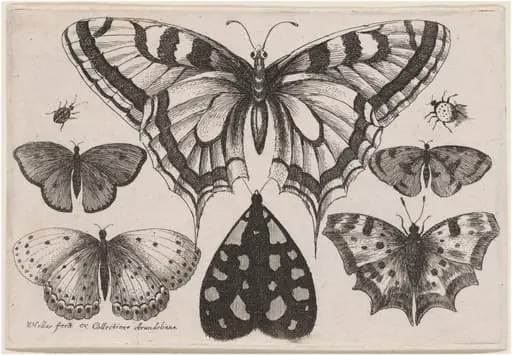 Five Butterflies, a Moth, a Beetle, and a Spider
 Untitled