Artwork
Untitled
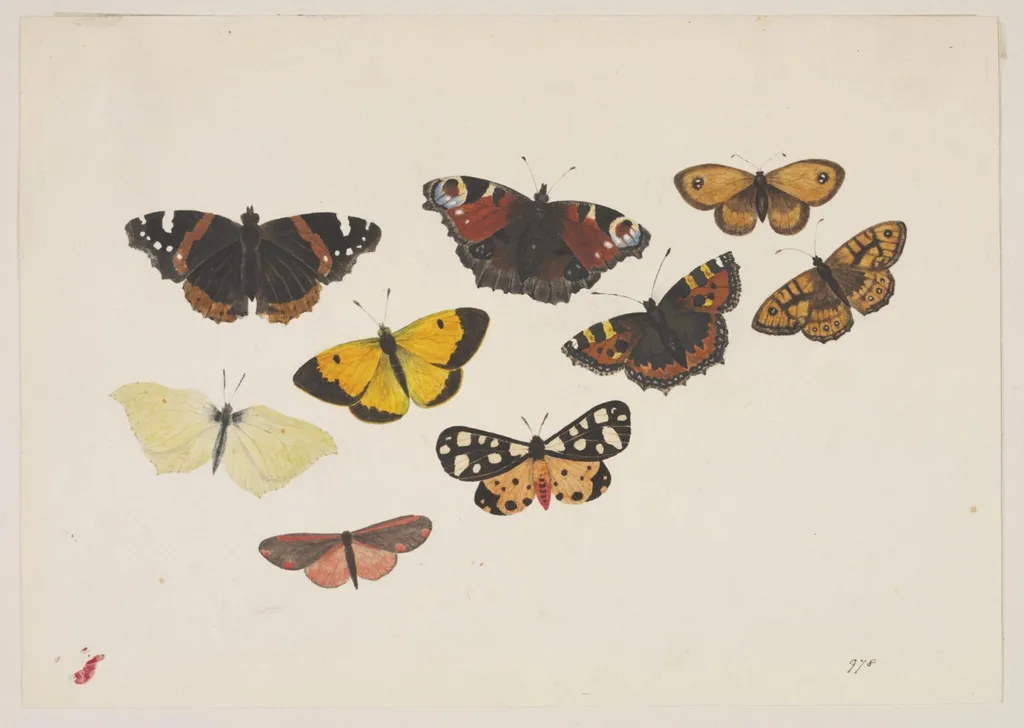
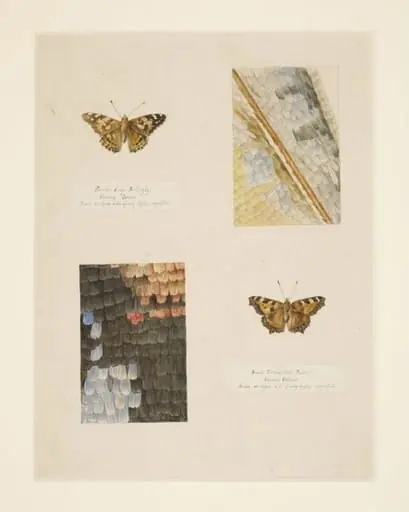
Untitled is a watercolor work on paper by Alexander Dyce. It dates from 1850 and is held in the collection of the Victoria and Albert Museum.
About this work
Overview
Created around 1850, this watercolor by Alexander Dyce presents a precise arrangement of eight butterflies on a pale ground.
Created around 1850, this watercolor by Alexander Dyce presents a precise arrangement of eight butterflies on a pale ground. The work belongs to the collection of the Victoria and Albert Museum and exemplifies the 19th-century tradition of natural history illustration, where scientific observation merged with artistic refinement. The medium’s transparency allows for subtle layering, enhancing the delicate texture of the insects’ wings.
Subject & Meaning
The painting depicts a collection of butterflies, each pinned and displayed as specimens. Their varied wing patterns—bright yellows, oranges, and blacks with white markings—suggest an interest in biodiversity and classification. The arrangement, though orderly, avoids rigid symmetry, hinting at the natural variability found in the wild. The work reflects a period when collecting and documenting nature was both scholarly and aesthetic.
Technique & Style
Dyce employed watercolor with meticulous brushwork to render fine details of each butterfly’s wings. The pigments are applied in thin, translucent washes, preserving the paper’s brightness while defining intricate venation and color gradients. Soft edges and controlled wet-on-wet techniques lend a lifelike quality, avoiding heavy outlines. The technique prioritizes accuracy over dramatic effect, aligning with naturalist conventions of the time.
History & Provenance
The painting entered the Victoria and Albert Museum’s collection as part of its broader holdings in 19th-century decorative and fine arts. Its origin as a private study or scientific exercise is likely, given its focus on entomological detail. No record of public exhibition prior to its museum acquisition exists, suggesting it was intended for personal or educational use rather than public display.
Context
In mid-19th-century Britain, the study of natural history flourished among amateur and professional scientists alike. Watercolor was a favored medium for documenting flora and fauna due to its precision and portability. Dyce’s work aligns with contemporaries such as John James Audubon and Sarah Stone, who combined artistic skill with empirical observation, contributing to a cultural fascination with the natural world.
Legacy
Though not widely known outside institutional circles, this piece contributes to the understanding of how scientific illustration informed artistic practice in Victorian Britain. It stands as a quiet testament to the era’s dedication to cataloging nature, bridging the gap between art and science. Its preservation in a major museum ensures continued access for study and reflection on historical modes of observation.
Artist & collection

Artist
Alexander Dyce was a Scottish writer and scholar. He was very well known for his books on Shakespeare.

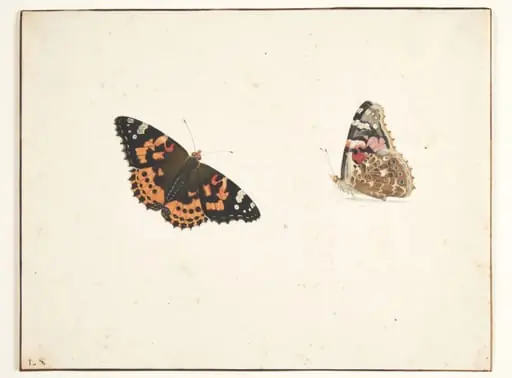 To studier af en tidselfugl (vanessa cardui l.)
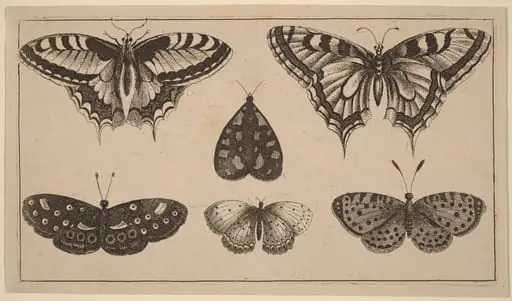 Five Butterflies and a Moth
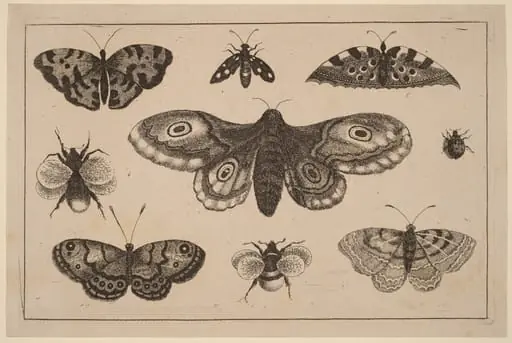 Moth, Butterflies, and Bees
 Swallow-tailed Butterfly and Twelve Other Insects
 Five Butterflies
 Studies of Small Tortoiseshell and Painted Lady butterflies, with magnified studies of the wings
 Five Butterflies, a Moth, a Beetle, and a Spider
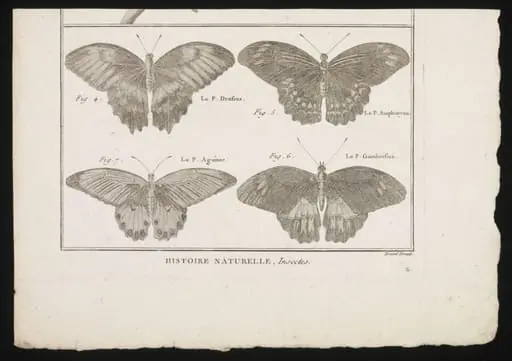 Untitled
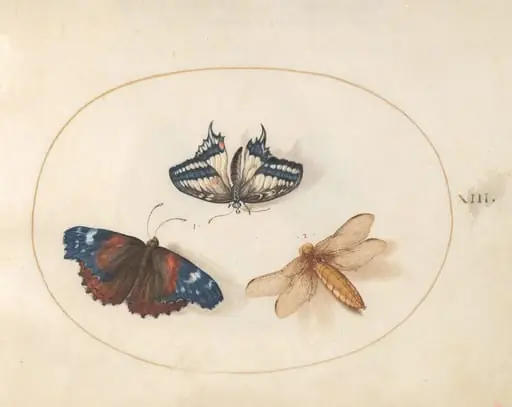 Plate 13: Yellow Swallowtail and Red Admiral Butterflies with a Dragonfly (Broad-Bodied Chaser?)
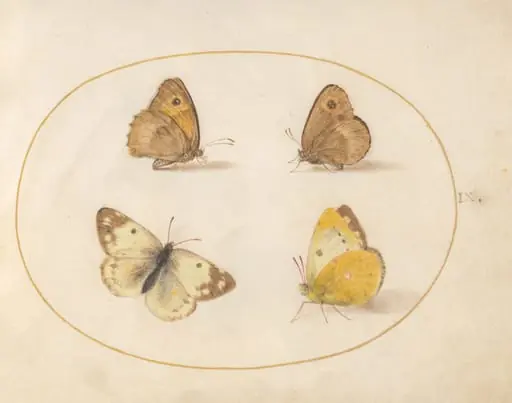 Plate 9: Meadow Brown, Gatekeeper, Clouded Yellow, and Bath White Butterflies
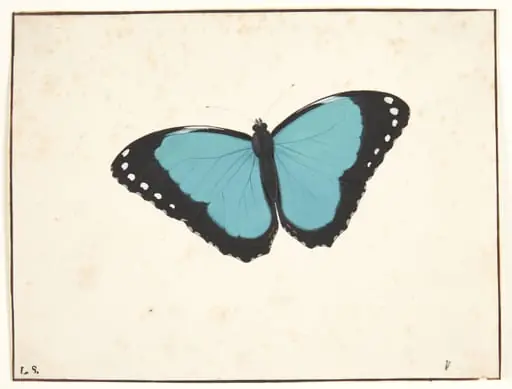 En eksotisk dagsommerfugl
 Moth, Three Butterflies, and Two Beetles