Artwork
Ely Cathedral, Cambridgeshire, S.W. View
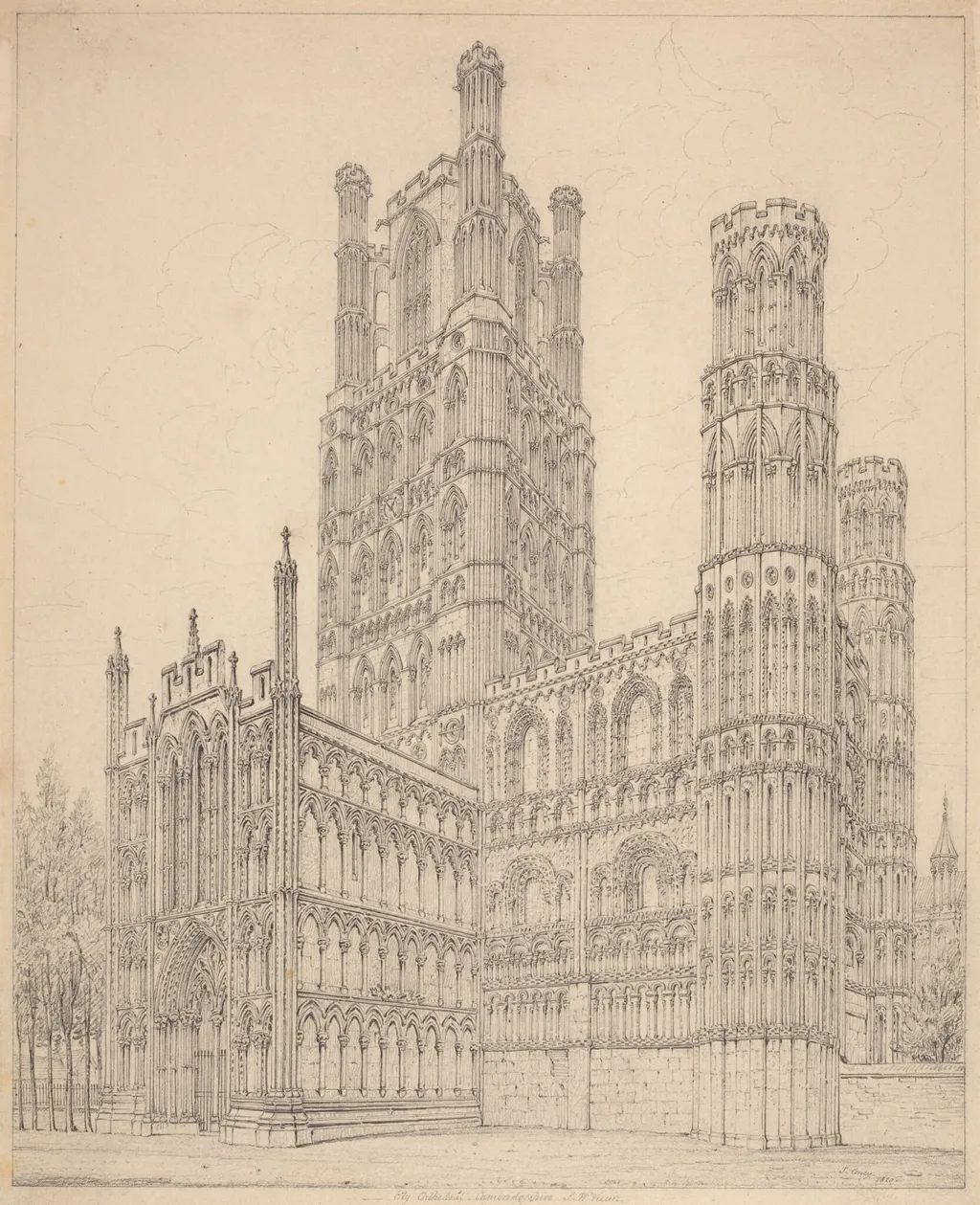
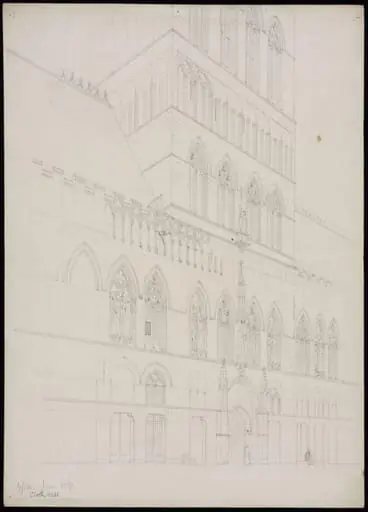
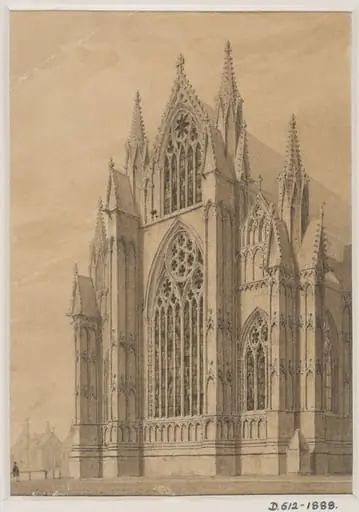
Ely Cathedral, Cambridgeshire, S.W. View is a graphite drawing by the Romanticist artist John Coney. It dates from 1820 and is held in the collection of the National Gallery of Art.
About this work
Overview
The work functions as a precise visual record of the building’s architecture during the early nineteenth century.
John Coney’s 1820 graphite drawing presents a southwest perspective of Ely Cathedral in Cambridgeshire. Rendered on heavy wove paper, the composition foregrounds the cathedral’s soaring towers and intricate Gothic façade, while a modest landscape of trees and a low fence recedes behind. The work functions as a precise visual record of the building’s architecture during the early nineteenth century.
Subject & Meaning
The drawing concentrates on the cathedral’s structural elements—tall spires, pointed lancet windows, and elaborate stone carving—highlighting its status as a prominent example of English Gothic design. By isolating the edifice from surrounding urban features, Coney emphasizes the spiritual and civic significance of the cathedral within its rural setting.
Technique & Style
Executed entirely in graphite, Coney employs fine, controlled lines to delineate each stone block, window mullion, and ornamental detail. The use of heavy wove paper provides a smooth surface that supports the crisp rendering of texture and depth. This meticulous, topographical approach reflects the early‑19th‑century British tradition of architectural drawing, which valued accuracy and clarity over expressive brushwork.
History & Provenance
Created in 1820, the drawing belongs to a period when antiquarian interest in medieval architecture was rising in Britain. It likely served as a study piece for architects or scholars documenting historic structures. The work is presently held in a public collection, though its exact acquisition path remains undocumented.
Artist & collection