Artwork
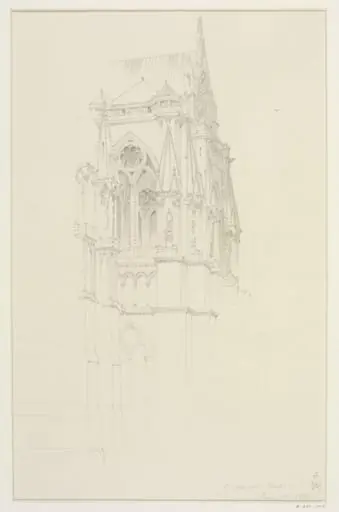
Exterior view of a church in France
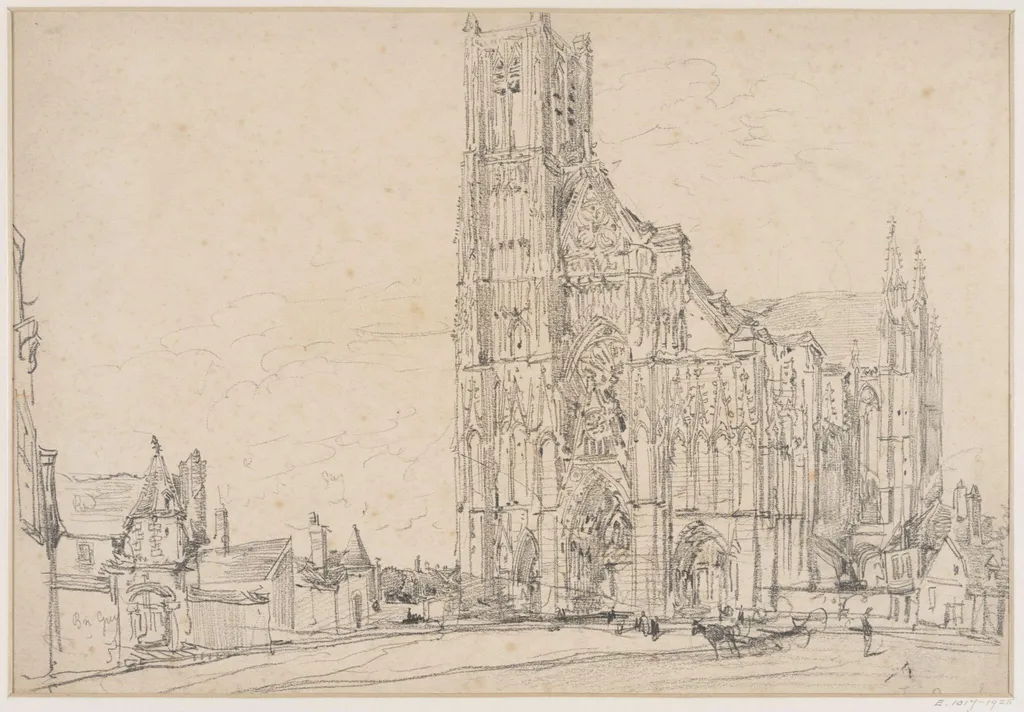
Exterior view of a church in France is a drawing by the Romanticist artist John Junior Burgess. It dates from 1833 and is held in the collection of the Victoria and Albert Museum.
About this work
Overview
It reflects the 19th-century tradition of topographical drawing, where architectural observation was paired with atmospheric sensitivity.
Created in 1833 by John Junior Burgess, this pencil drawing captures the exterior of a French church in a quiet rural setting. Executed in fine linear detail, the work belongs to the collection of the Victoria and Albert Museum. It reflects the 19th-century tradition of topographical drawing, where architectural observation was paired with atmospheric sensitivity. The absence of human figures emphasizes stillness and solitude.
Subject & Meaning
The drawing focuses on a Gothic-style church with slender spires and ornate stonework, standing as the dominant structure in a modest landscape. Surrounding buildings are low and unadorned, reinforcing the church’s spiritual and architectural centrality. The empty surroundings suggest contemplation rather than activity, evoking a sense of timelessness and quiet devotion without overt narrative or symbolism.
Technique & Style
Burgess employed cross-hatching and stippling to model the church’s textured stonework and the play of light and shadow across its surfaces. Delicate line work defines architectural details, while softer, scattered marks suggest the surrounding vegetation and ground. The precision of the rendering aligns with topographical conventions, yet the tonal gradations introduce a lyrical quality that moves beyond mere documentation.
History & Provenance
The drawing entered the Victoria and Albert Museum’s collection as part of its broader holdings in 19th-century British graphic art. While little is documented about Burgess’s travels, the work suggests he may have sketched the site during a journey through France. Its preservation reflects 19th-century interest in architectural study and the cultural value placed on travel sketches by amateur and professional artists alike.
Context
Produced during the height of Romanticism, the drawing aligns with contemporary tastes for evocative, atmospheric landscapes and medieval architecture. Though not overtly dramatic, its quiet mood resonates with Romantic ideals of solitude and reverence for the past. Similar sketches by British artists often served as personal records of foreign travel, blending observation with emotional resonance.
Legacy
This drawing contributes to a broader archive of 19th-century architectural studies, preserving a moment in the visual record of French ecclesiastical structures. It exemplifies how amateur artists contributed to the documentation of heritage sites before widespread photography. Its endurance in a major museum underscores the historical value placed on careful, restrained observation in art.
Artist & collection
Artist
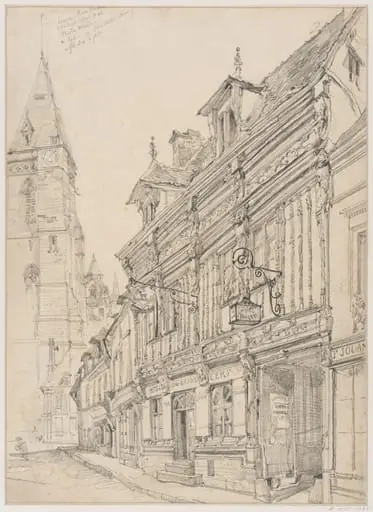
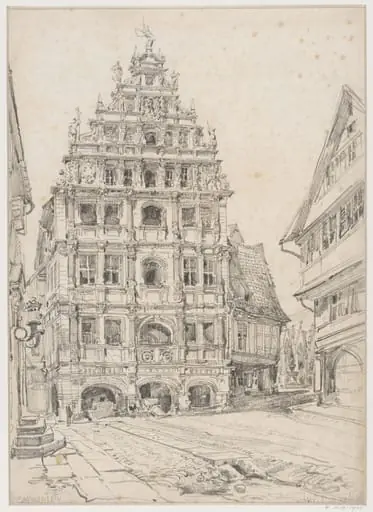
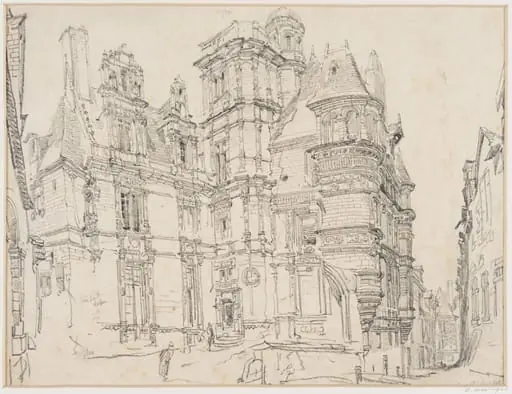
John Junior Burgess drew the architectural bones of 19th-century Europe—church facades, grand hotels, ducal homes, and concert halls—all in precise line.

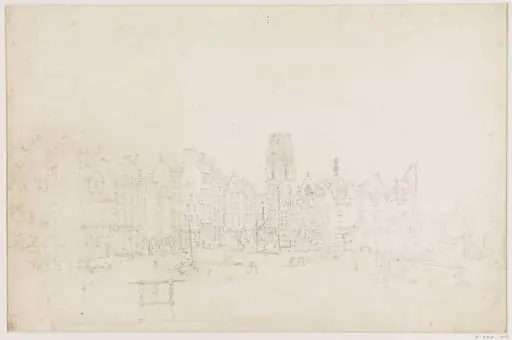 A view in Rotterdam
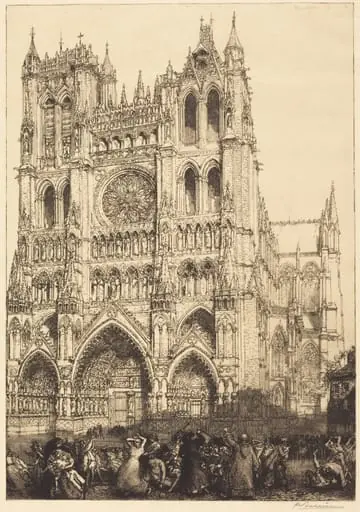 Amiens Cathedral (Cathedrale d'Amiens - Jour d'inventaire)
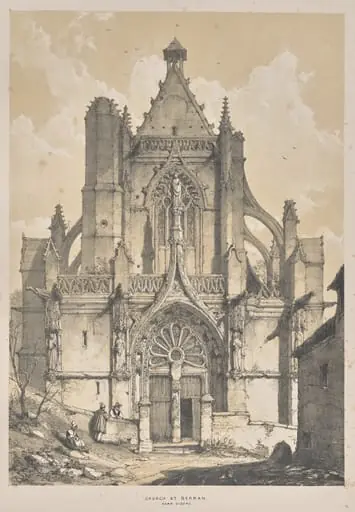 Architecture of the Middle Ages: Church at Serran, near Gisore
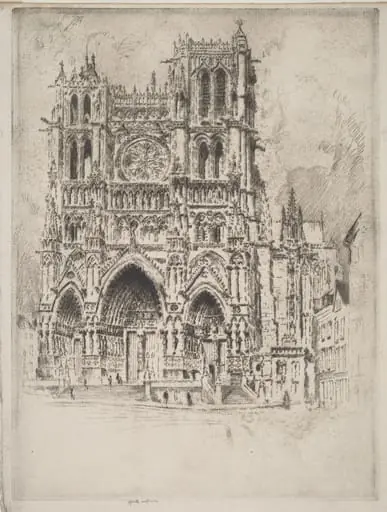 The West Front, Amiens
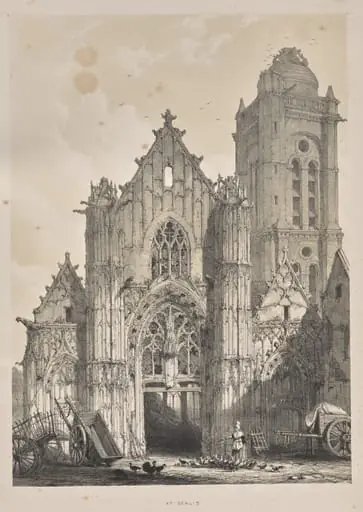 Architecture of the Middle Ages: At Senlis
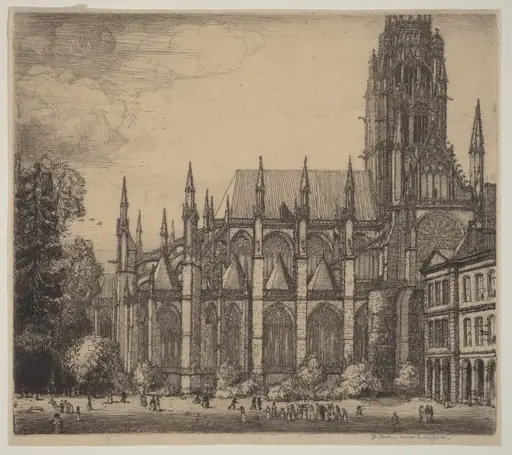 St. Ouen, Rouen
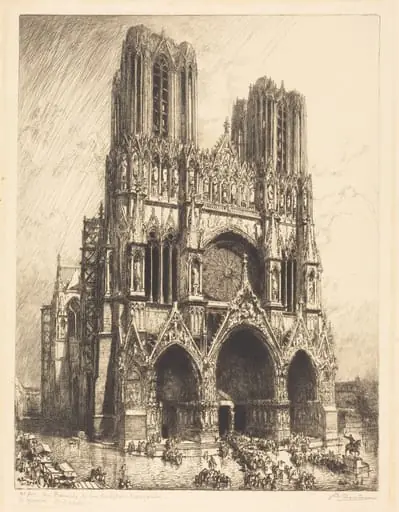 Reims Cathedral (Cathedrale de Reims)
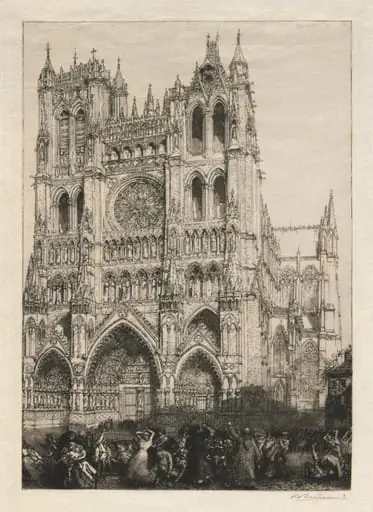 Amiens Cathedral, Inventory Day
 Architectural drawing
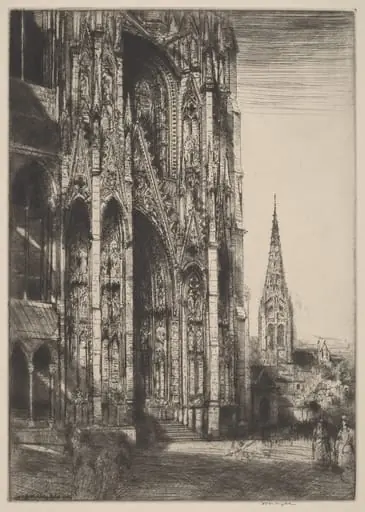 Gothic Night
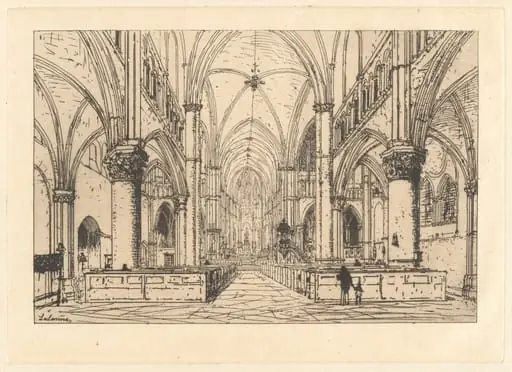 Church Interior