Artwork
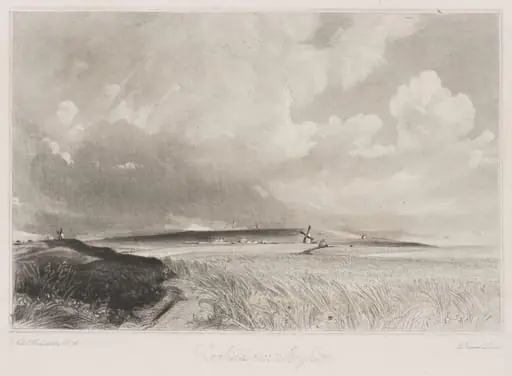
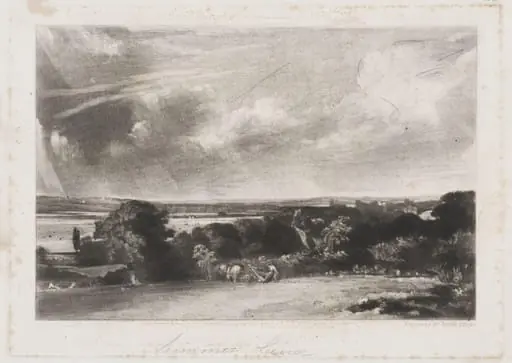
Cornfield near Brighton
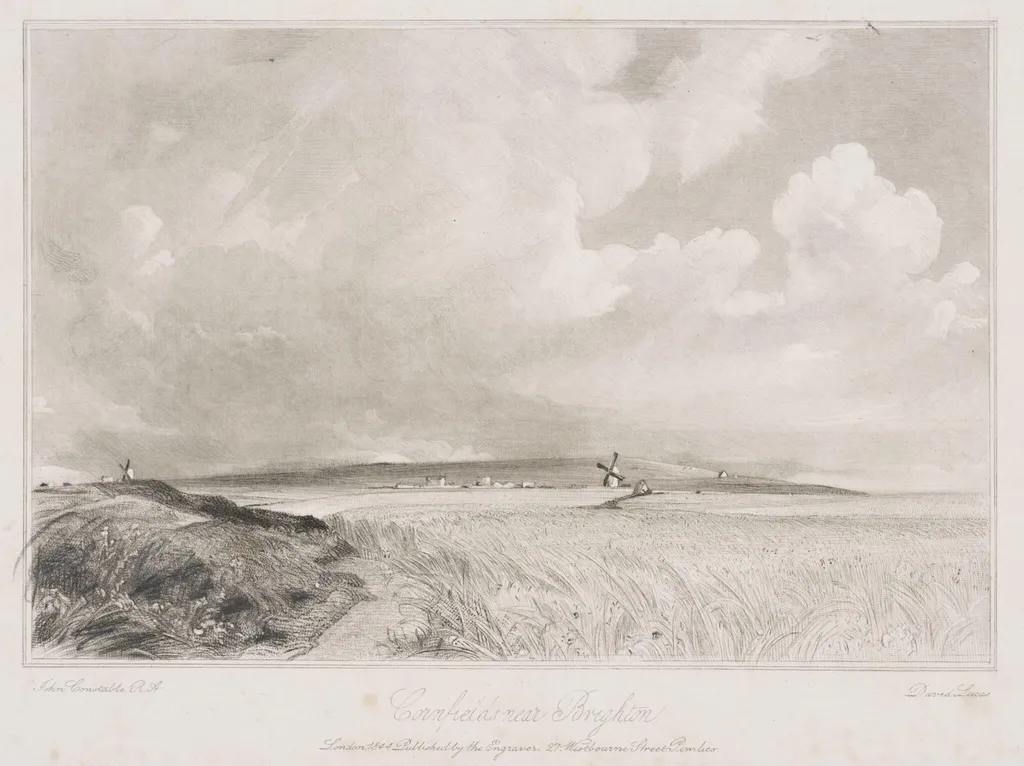
Cornfield near Brighton is a print by John Constable. It is held in the collection of the Victoria and Albert Museum.
About this work
Overview
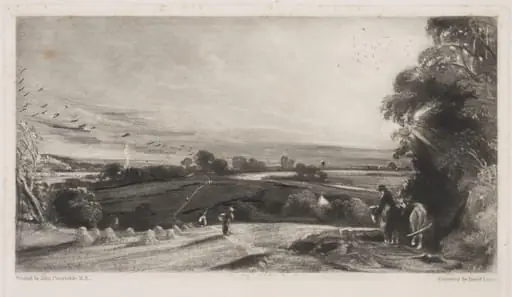
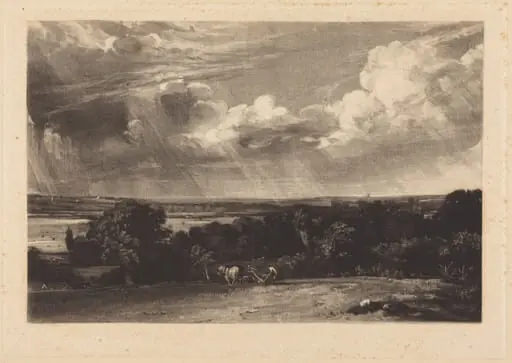
Cornfield near Brighton is one of twenty-two mezzotints published in John Constable’s series English Landscape, issued between 1830 and 1832.
Cornfield near Brighton is one of twenty-two mezzotints published in John Constable’s series English Landscape, issued between 1830 and 1832. Supervised by Constable himself, the prints were produced by David Lucas, a skilled but then obscure engraver. The project aimed to translate Constable’s oil sketches into tonal prints, preserving the atmospheric qualities of his landscape studies. Though initially overlooked, the series became a defining statement of his artistic philosophy in his final years.
Subject & Meaning
The print depicts a rural scene near Brighton, capturing the quiet interplay of light and land. Constable selected such views not for grandeur but for their emotional resonance and personal familiarity. He intended these images to convey nature’s rhythmic harmony, emphasizing how light and shadow shape perception. The subject reflects his belief that English countryside held intrinsic value, worthy of serious artistic attention beyond picturesque convention.
Technique & Style
Executed in mezzotint, the print relies on a labor-intensive process that achieves subtle gradations of tone. Lucas, under Constable’s close direction, used roughened copper plates and meticulous scraping to replicate the soft transitions of sky, cloud, and field found in Constable’s sketches. The result is a print rich in atmospheric depth, where darkness and luminosity evoke the transient effects of weather and time, mirroring the artist’s observational rigor.
History & Provenance
Published in six installments between 1830 and 1832, the series was revised by Constable in 1833. After his death in 1837, Lucas continued to print from the original plates and added new images. Some impressions were made decades later, complicating attribution. The series was never commercially successful in Constable’s lifetime, but its plates remained in use well into the 19th century, preserving his vision beyond his death.
Context
Constable turned to printmaking late in life, partly to assert his artistic legacy amid public indifference. He drew inspiration from Claude Lorrain’s tonal landscapes and Turner’s luminous skies, yet sought to ground his work in the specific character of English rural life. At a time when landscape was often dismissed as secondary to history painting, English Landscape offered a quiet rebuttal: nature itself, rendered with fidelity, could carry profound meaning.
Legacy
Though little recognized during his lifetime, Constable’s English Landscape series later influenced 19th-century printmakers and landscape artists who valued tonal nuance over detail. Lucas’s mezzotints became essential references for understanding Constable’s approach to light and atmosphere. The series is now seen as a pivotal bridge between Romantic sensibility and modern landscape representation, affirming the dignity of everyday natural scenes.
Artist & collection
Artist
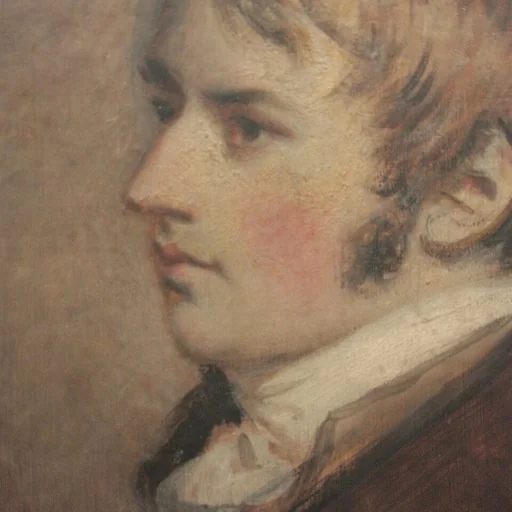
John Constable (; 11 June 1776 – 31 March 1837) was an English landscape painter in the Romantic tradition.