Artwork
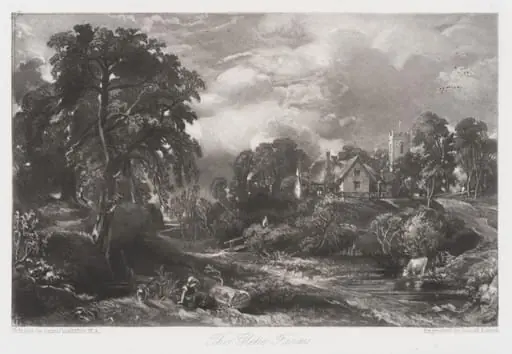
Jaques and the Wounded Stag. Scene from "As you like it."
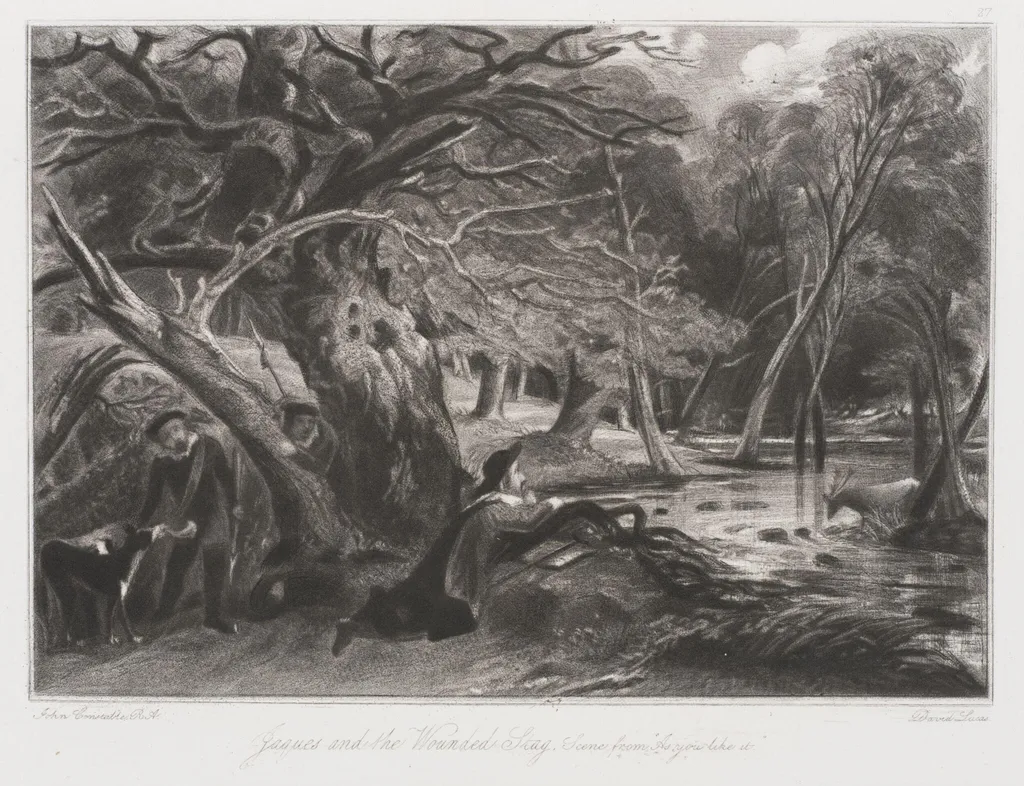
Jaques and the Wounded Stag. Scene from "As you like it." is a print by the Impressionist artist John Constable. It is held in the collection of the Victoria and Albert Museum.
About this work
This print shows a scene from Shakespeare’s "As You Like It." John Constable made it in 1855. It’s a mezzotint, a print process that gives deep blacks and soft shades.
Prints like this were rare back then. Constable chose this scene late in life for a special series. He guided another artist, David Lucas, to cut the plates carefully.
Look up the Victoria and Albert Museum.
Overview
Though executed in 1855, it belongs to a series initiated in the early 1830s, with plates refined and reissued posthumously.
This mezzotint is part of a late-career project by John Constable, produced under his direct supervision to disseminate his vision of English landscape through print. Though executed in 1855, it belongs to a series initiated in the early 1830s, with plates refined and reissued posthumously. The image, depicting a moment from Shakespeare’s As You Like It, diverges from Constable’s typical rural scenes, signaling a personal, literary turn in his final years.
Subject & Meaning
The scene illustrates Jaques encountering the wounded stag in the Forest of Arden, a moment of melancholy reflection on nature’s cruelty and human frailty. Constable, drawn to Shakespeare’s emotional depth, used this literary reference to align his own artistic philosophy with themes of natural order and quiet sorrow. The stag’s vulnerability mirrors Constable’s sense of his own artistic isolation and the transience of life.
Technique & Style
Executed in mezzotint by David Lucas under Constable’s close guidance, the print achieves rich tonal gradations and deep blacks characteristic of the medium. Unlike conventional landscape prints, this work blends naturalistic detail with atmospheric mood, emphasizing light’s role in shaping emotional tone. Constable’s revisions ensured the print retained the subtlety of his oil sketches, prioritizing nuance over sharp definition.
History & Provenance
The print originated in Constable’s English Landscape series, begun in 1830 and revised after his death in 1837. Though the series primarily featured landscapes, this Shakespearean subject was added later, likely during the 1850s reissue of plates. Lucas, initially a minor engraver, became central to the project’s execution, preserving Constable’s intent through meticulous handwork on copper plates.
Context
In his final years, Constable sought to secure his legacy amid limited contemporary recognition. By selecting literary scenes alongside natural views, he expanded his artistic narrative beyond topography to include moral and poetic dimensions. The choice of mezzotint—a labor-intensive, tonally rich method—reflected his desire for depth and permanence, countering the ephemeral nature of public reception.
Legacy
The print stands as a rare fusion of English landscape tradition and literary symbolism in 19th-century printmaking. Though not widely circulated in its time, it influenced later artists interested in the emotional potential of print. Its survival in collections like the Victoria and Albert Museum underscores its role as a personal testament, bridging Constable’s visual language with literary introspection.
Own this work as a print
Artist & collection
Artist
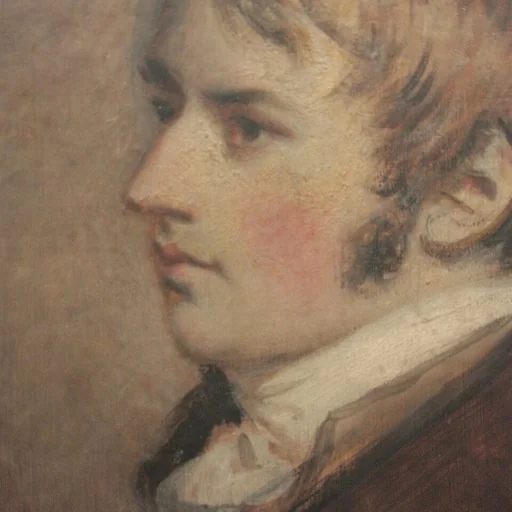
John Constable (; 11 June 1776 – 31 March 1837) was an English landscape painter in the Romantic tradition.