Artwork
Procris and Cephalus
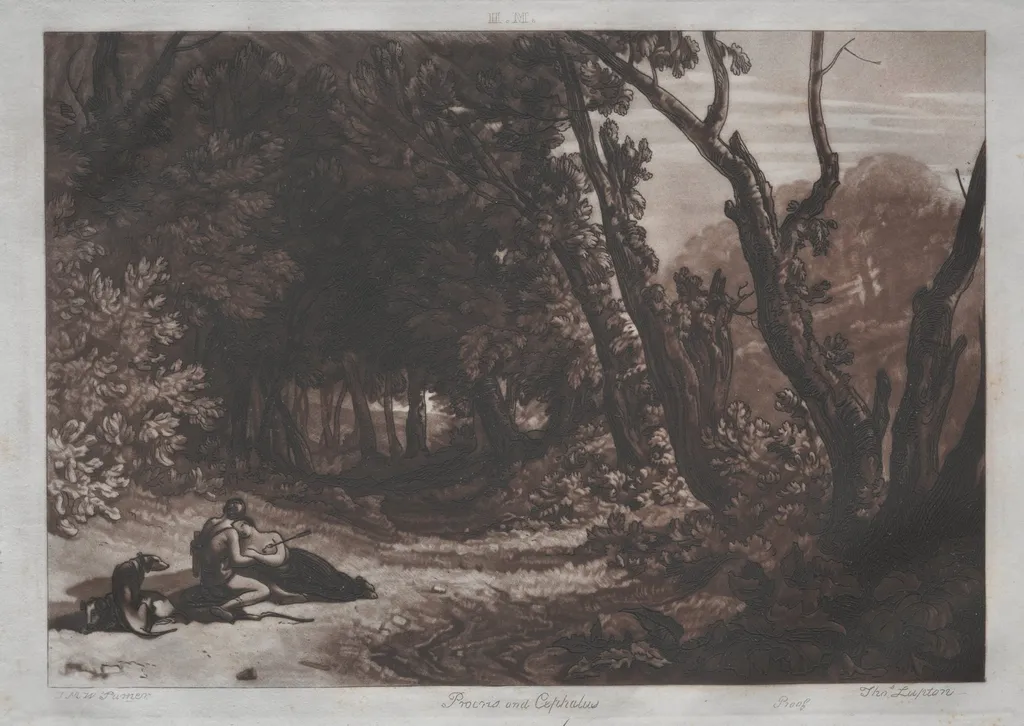
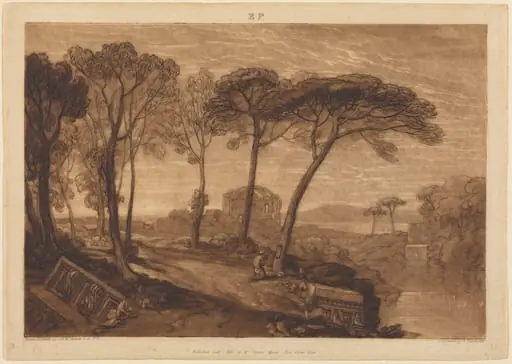
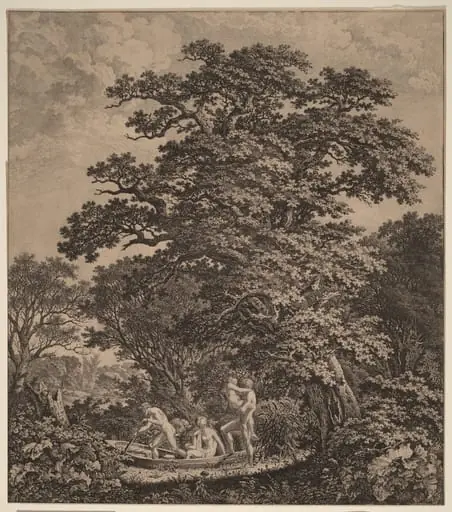
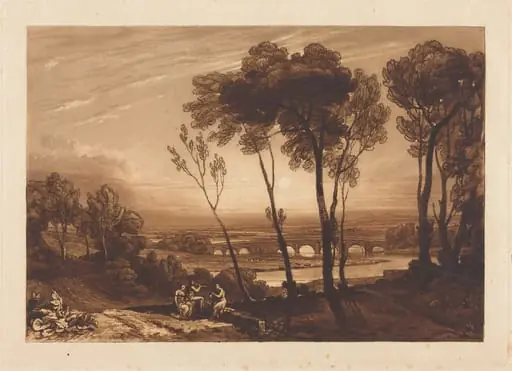
Procris and Cephalus is a print by the Romanticist artist Joseph Mallord William Turner. It dates from 1812 and is held in the collection of the Cleveland Museum of Art.
About this work
Overview
Created in 1812, this print by Joseph Mallord William Turner illustrates a moment from Greek mythology involving Procris and Cephalus.
Created in 1812, this print by Joseph Mallord William Turner illustrates a moment from Greek mythology involving Procris and Cephalus. Though Turner is better known for expansive landscapes and seascapes, this work presents a restrained, intimate scene. It captures a quiet woodland interlude rather than a dramatic climax, distinguishing it from his more turbulent compositions. The medium and scale suggest a study or preparatory piece, possibly linked to a larger painting.
Subject & Meaning
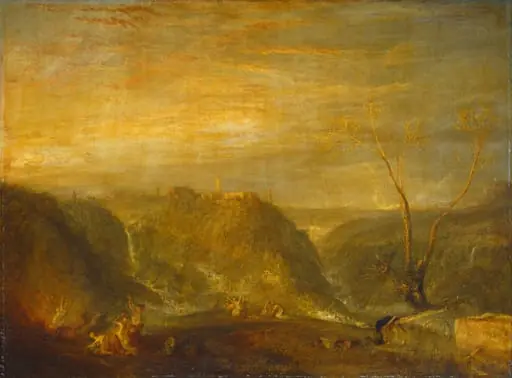
The scene references the myth of Cephalus, a hunter who, while resting in the woods, plays his flute to summon his hound. His wife, Procris, secretly follows him, suspecting infidelity. The moment depicted is one of stillness before tragedy—Cephalus unaware of her presence, the dog at his side. Turner’s choice of this quiet moment emphasizes tension beneath serenity, aligning with Romanticism’s interest in psychological depth within classical narratives.
Technique & Style
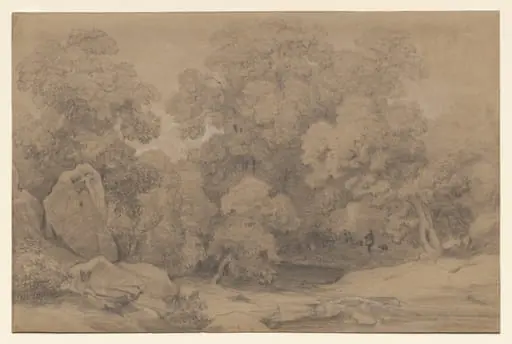
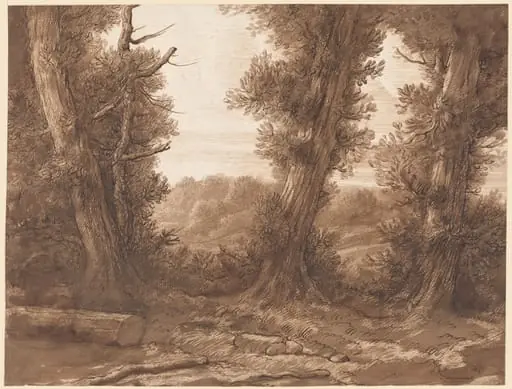
Turner employs subtle tonal gradations to model the forest’s forms, using light and shadow to suggest volume without sharp outlines. The trees are rendered with loose, textured strokes, their trunks dark against diffused, dappled light filtering through sparse canopies. The composition avoids dramatic contrast, favoring a hushed atmosphere. This restrained use of chiaroscuro reflects a shift toward atmospheric suggestion over narrative clarity, anticipating later developments in landscape representation.
History & Provenance
The print likely originated as a study for Turner’s 1812 oil painting of the same subject, now in the Tate Britain collection. It may have been produced for private circulation or as part of his working process, common among artists of the period. Its survival suggests it was valued by contemporaries for its compositional clarity, though it was never widely published. No record indicates public exhibition during Turner’s lifetime.
Context
In early 19th-century Britain, classical mythology remained a favored subject for artists seeking to elevate landscape painting with moral or emotional weight. Turner’s engagement with myth aligned with Romantic ideals that prioritized feeling over didacticism. While contemporaries like John Constable focused on rural realism, Turner infused mythic narratives with psychological nuance, using nature as both setting and emotional mirror.
Legacy
Though less celebrated than Turner’s later seascapes, this print reveals his early mastery of mood through light and composition. Its quiet intensity influenced later artists exploring emotional subtlety in landscape, particularly those moving away from overt drama toward atmospheric suggestion. The work stands as a quiet bridge between academic tradition and the more abstracted naturalism that would emerge in the decades following his death.
Artist & collection
Artist
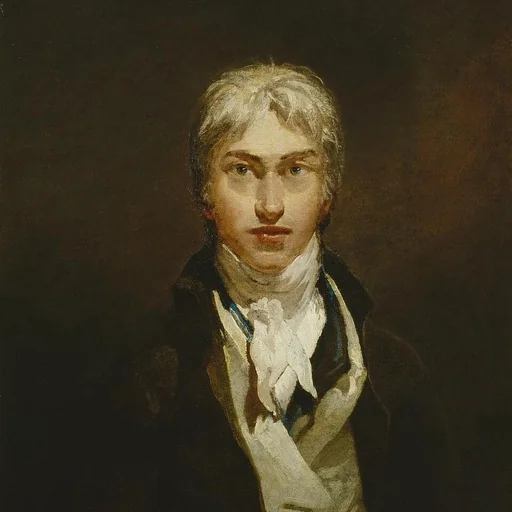
Joseph Mallord William Turner was born in 1775 at Maiden Lane, Covent Garden, where his father kept a barber and wig-making shop.