Artwork
The Poacher
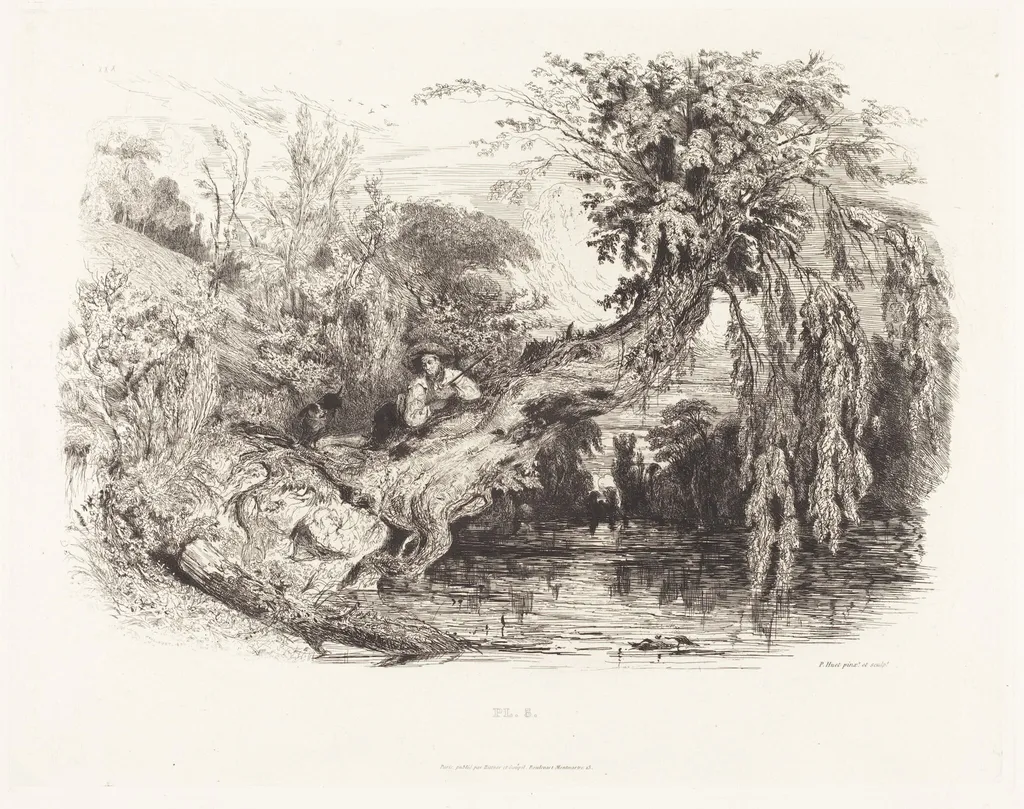
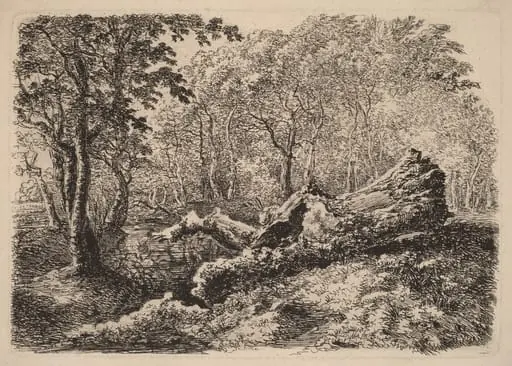
The Poacher is an ink print by the Romanticist artist Paul Huet. It dates from 1834 and is held in the collection of the National Gallery of Art.
About this work
Overview
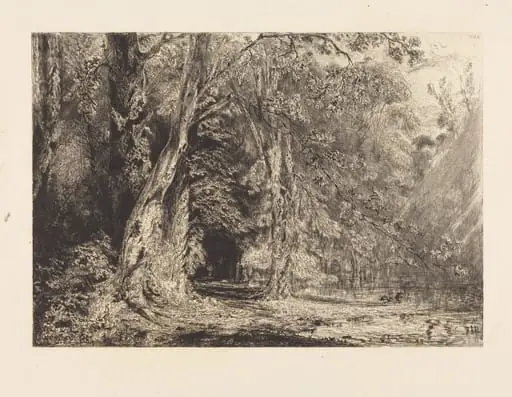
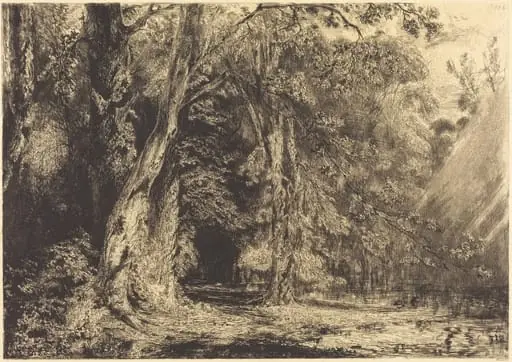
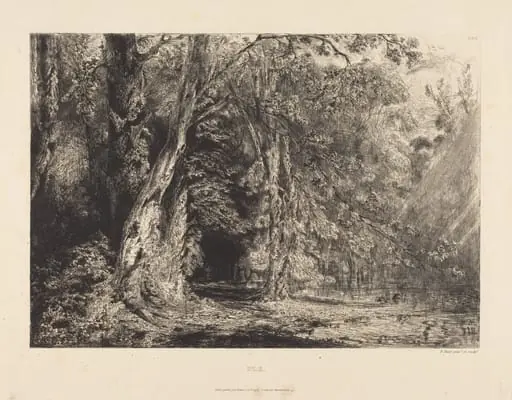
Created in 1834, The Poacher is an etching on chine collé by French artist Paul Huet. It is part of the National Gallery of Art’s collection in Washington, D.C. The work captures a solitary figure in a small boat on a quiet river, surrounded by dense, overgrown trees. Its subdued tonality and intimate scale reflect Huet’s interest in natural landscapes and quiet human presence within them.
Subject & Meaning
The figure, seated in a boat, holds a small object—possibly a fish or a tool—suggesting an act of clandestine gathering. The composition avoids dramatic tension, instead emphasizing solitude and concealment. The dense foliage and still water frame the figure as an unobtrusive presence, evoking themes of transgression, survival, and the quiet boundary between human need and natural order.
Technique & Style
Huet employed fine, incised lines typical of etching to render texture in the trees and rippling water. The use of chine collé—a technique bonding thin paper to a heavier support—enhanced the delicacy of the inked lines and allowed subtle tonal gradations. The absence of strong contrasts and the meticulous detail create a hushed, atmospheric effect, characteristic of early Romantic printmaking.
History & Provenance
The print was made in 1834 during Huet’s early career, a period when he focused on landscape and rural scenes. It entered the National Gallery of Art’s collection through the A.W. Mellon Bequest in 1937. Its preservation in good condition reflects its significance as an example of 19th-century French printmaking, though it was not widely exhibited during Huet’s lifetime.
Context
In the 1830s, French artists increasingly turned to nature as a subject beyond idealized landscapes. Huet’s work aligned with a growing interest in the everyday and the marginal—figures like poachers, fishermen, and woodcutters appeared as quiet witnesses to rural life. This print reflects a shift toward realism and emotional restraint in Romantic-era print culture.
Legacy
The Poacher remains a modest but telling example of Huet’s contribution to French printmaking. While not as widely recognized as his larger paintings, the work illustrates his sensitivity to atmosphere and quiet narrative. It continues to be studied for its technical finesse and its representation of the human relationship with nature in early industrial France.
Artist & collection


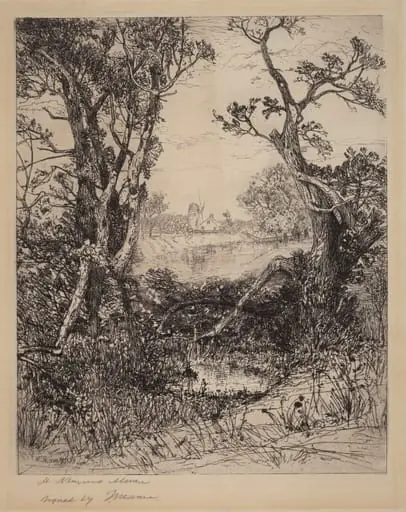 Summer—Easthampton
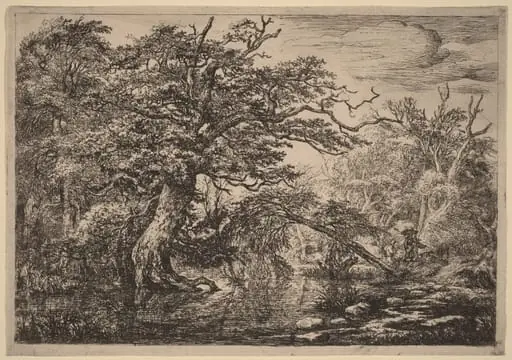 A Forest Marsh with Travelers on a Bank (The Travelers)
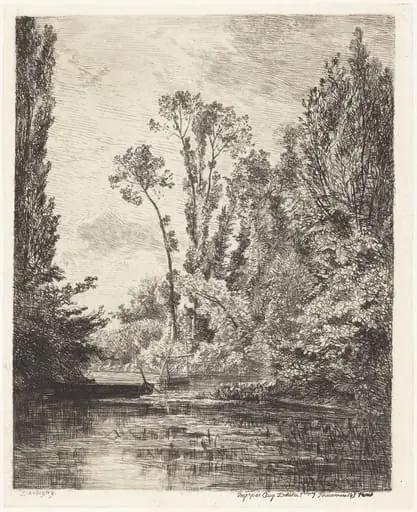 The Virgin Islands in Bezons (Les Iles vierges a Bezons)
 The Old Willow at a Brook
 Saint-Pierre Stream near Pierrefond (Ruisseaude Saint-Pierre, pres Pierrefond)
 Back of the Mills
 Trees by a River
 Flooding in the Forest of the Ile Séguin
 Flooding in the Forest of the Ile Séguin
 L'Ile Séguin in Flood
 The River at Llangollen
 Mouldering Tree Trunk