Artwork
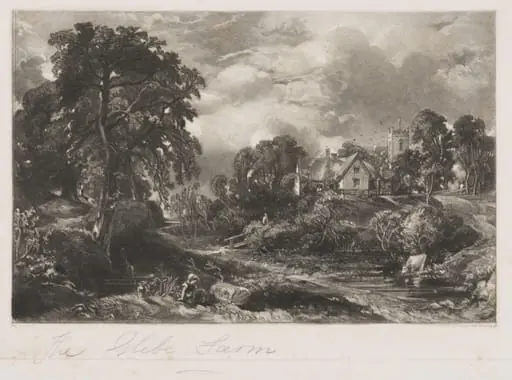
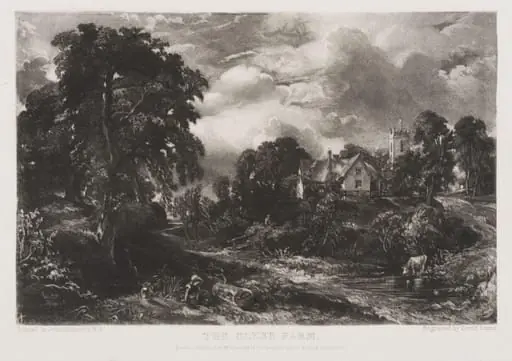
The Glebe Farm
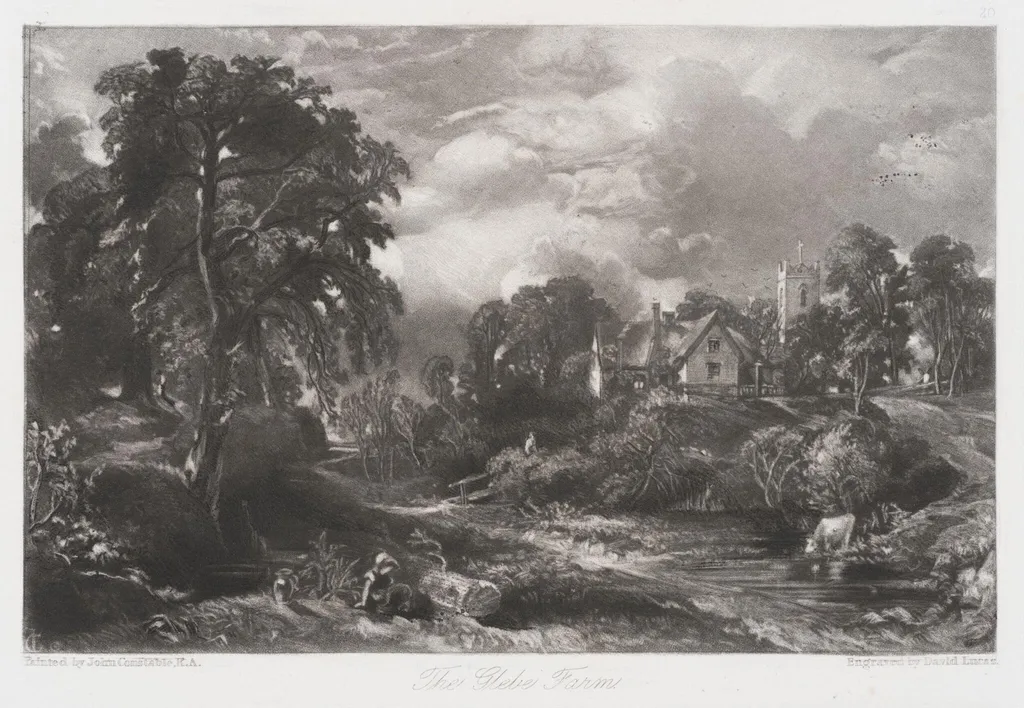
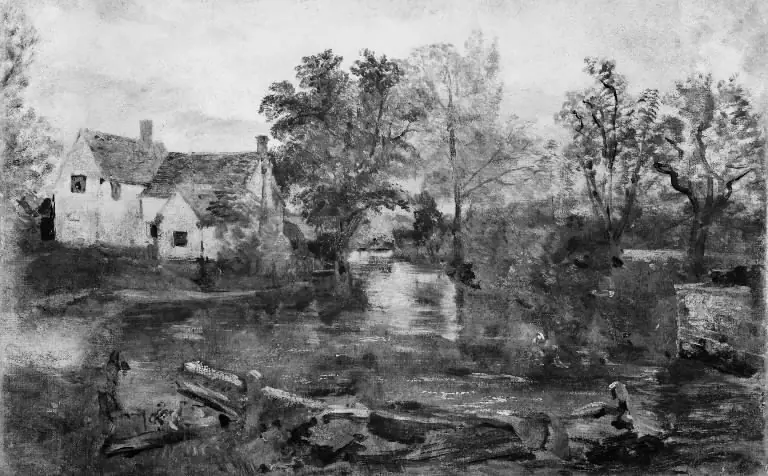
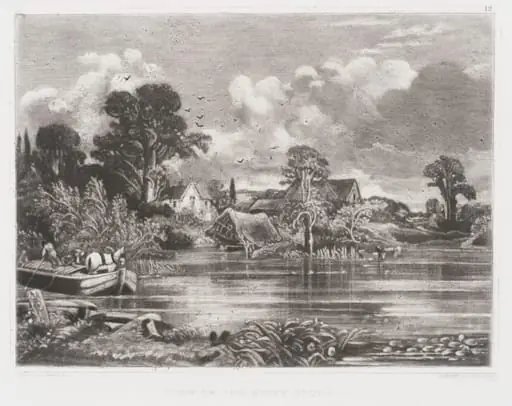
The Glebe Farm is a print by the Impressionist artist John Constable. It is held in the collection of the Victoria and Albert Museum.
About this work
Overview
Though initially met with limited commercial success, the series became a defining statement of his artistic philosophy in his final years.
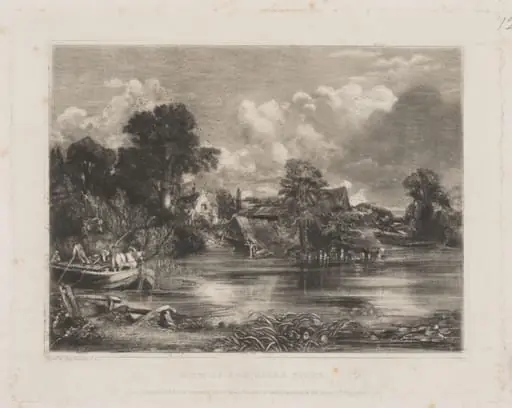
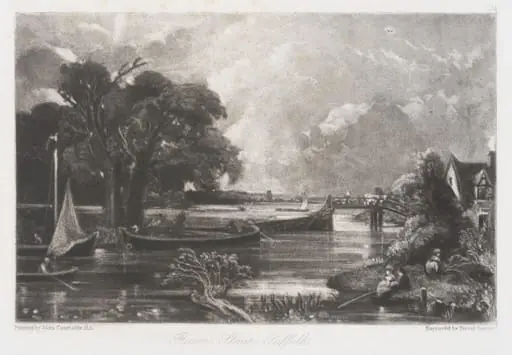
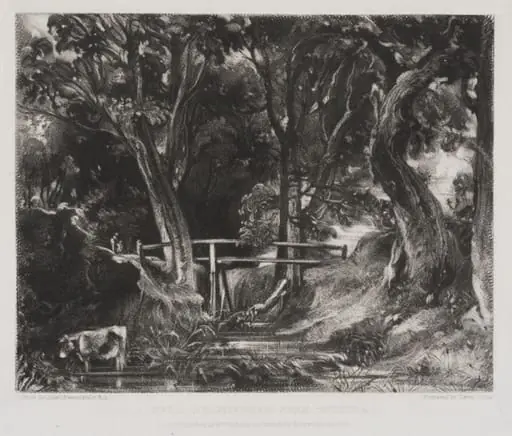
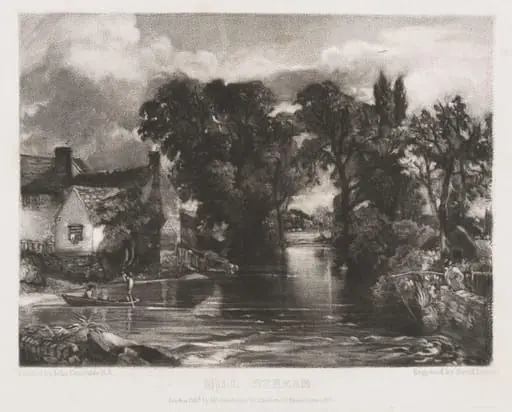
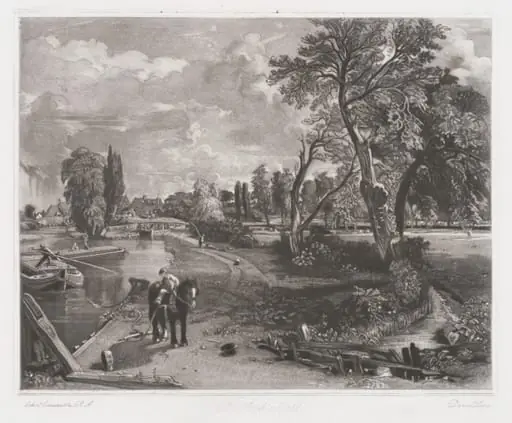
The Glebe Farm is one of twenty-two mezzotints produced in the series Various Subjects of English Landscape, published between 1830 and 1832 under John Constable’s direct supervision. Executed by David Lucas, the prints were derived from Constable’s oil sketches and finished works, intended as a lasting record of his vision of the English countryside. Though initially met with limited commercial success, the series became a defining statement of his artistic philosophy in his final years.
Subject & Meaning
The Glebe Farm depicts a modest rural scene, likely drawn from Constable’s native Suffolk, emphasizing quiet domesticity and the harmony between land and livelihood. Rather than idealizing the landscape, Constable focused on ordinary, working environments, infusing them with emotional weight. The composition reflects his belief that nature’s essence lay in its subtle shifts of light and atmosphere, not grandeur or ornamentation.
Technique & Style
David Lucas employed mezzotint—a labor-intensive tonal technique—to replicate the soft gradations and atmospheric depth of Constable’s oil sketches. The print captures the play of light across fields and buildings with nuanced gradations of black and gray, avoiding sharp outlines. Constable closely directed Lucas, insisting on fidelity to the original’s mood, resulting in prints that feel more like painted studies than conventional engravings.
History & Provenance
The series was published in six installments between 1830 and 1832, with a revised second edition issued in 1833. After Constable’s death in 1837, Lucas continued to reprint the original plates and added new ones based on unpublished works. Some impressions were printed decades later, making surviving early states rare. The project was funded privately and never achieved wide circulation during Constable’s lifetime.
Context
Constable turned to printmaking late in life as a means to assert his artistic legacy amid public indifference to his work. Drawing from the tonal traditions of Claude Lorrain and Turner, he sought to elevate landscape painting beyond mere topography. English Landscape positioned rural England not as a backdrop but as a subject worthy of serious artistic inquiry, countering prevailing tastes for romanticized or dramatic scenery.
Legacy
Though commercially overlooked in its time, the series later influenced 19th-century printmakers and landscape artists who valued tonal subtlety over linear precision. The Glebe Farm and its companions are now held in major collections as key examples of how printmaking could convey the intimacy and emotional texture of natural observation. Constable’s collaboration with Lucas remains a landmark in the history of artist-led reproductive print projects.
Own this work as a print
Artist & collection
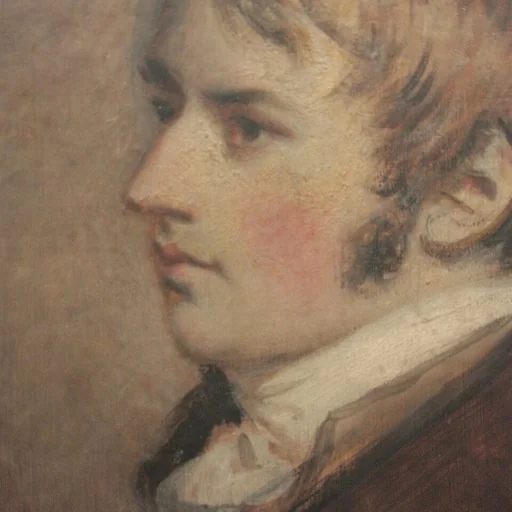
Artist
John Constable (; 11 June 1776 – 31 March 1837) was an English landscape painter in the Romantic tradition.