Artwork
Oxen Plowing
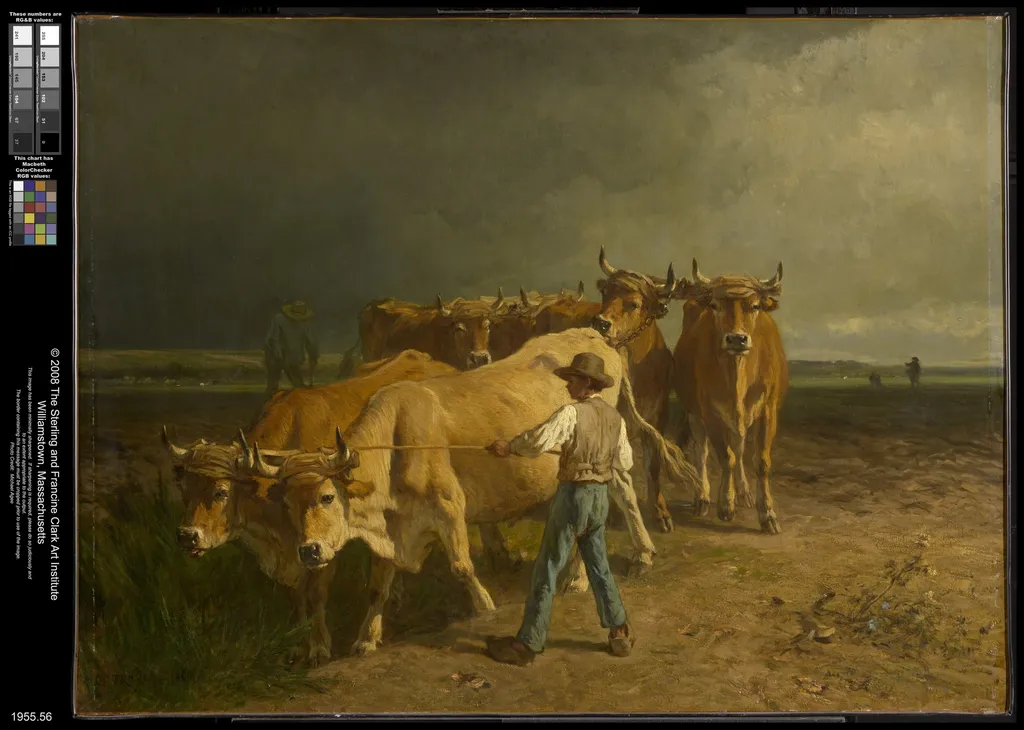
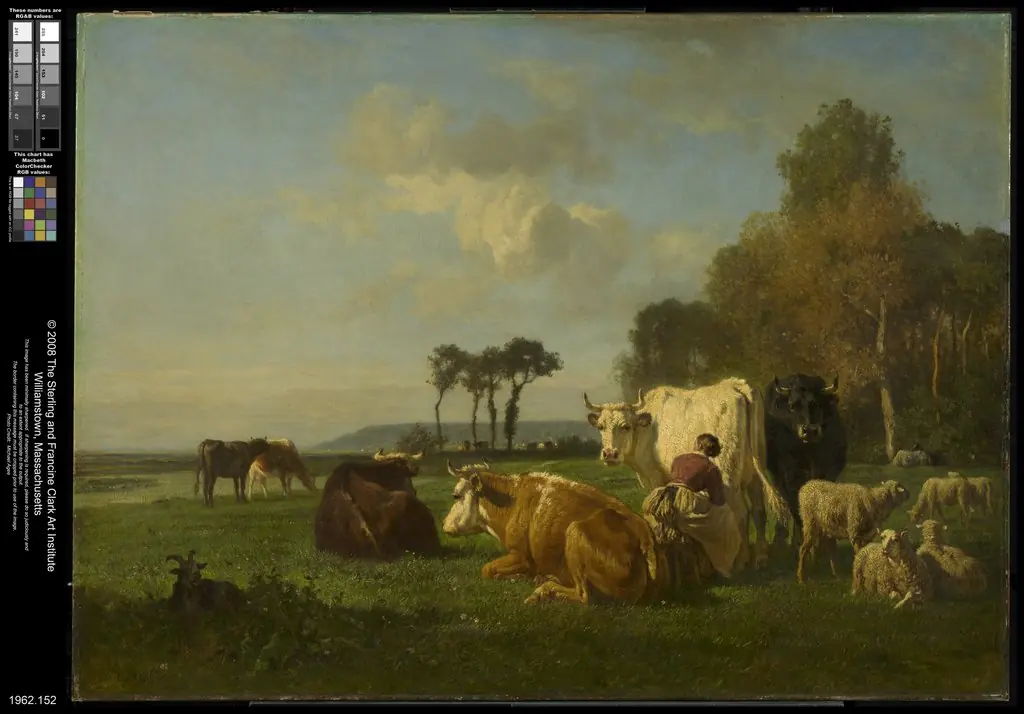
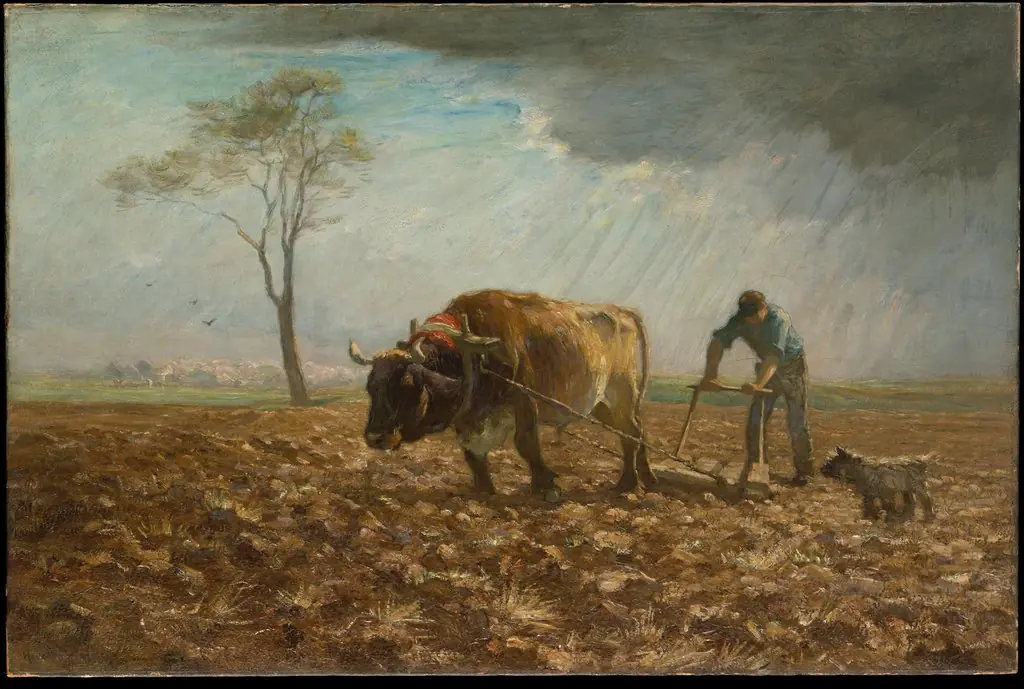
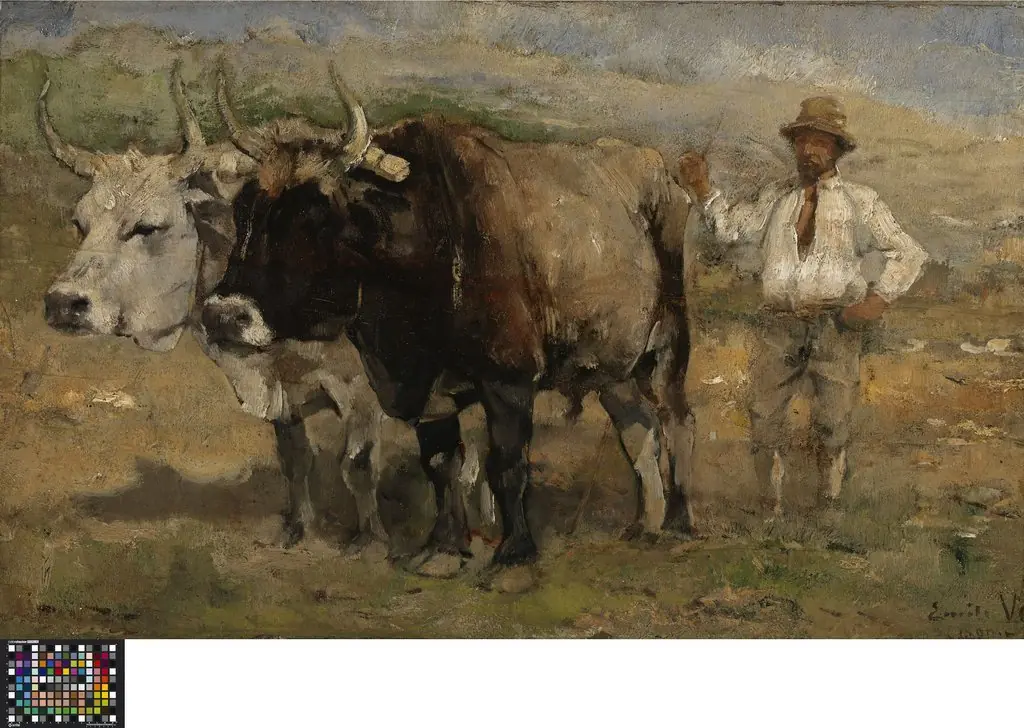
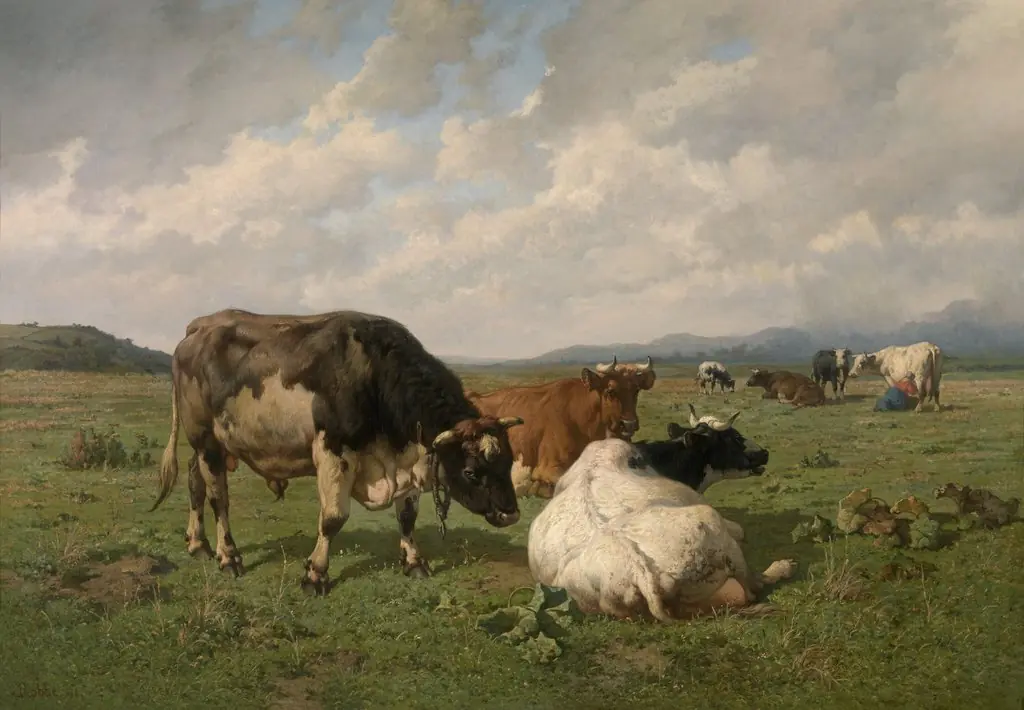
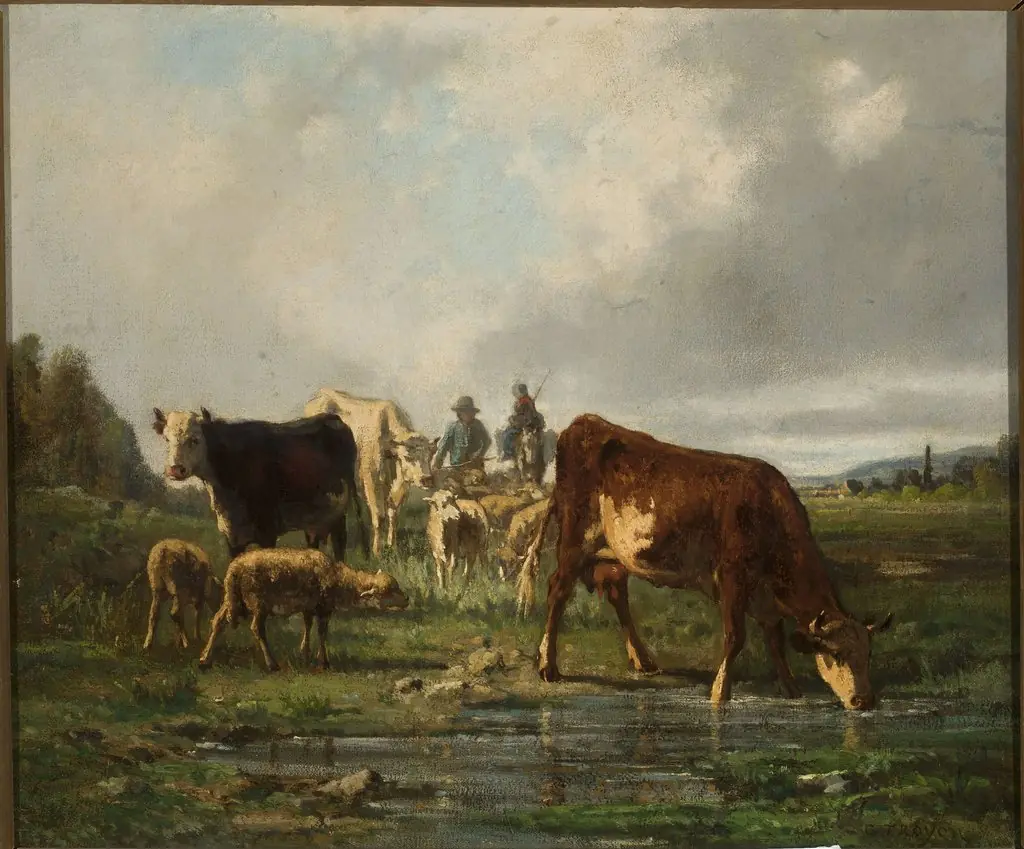
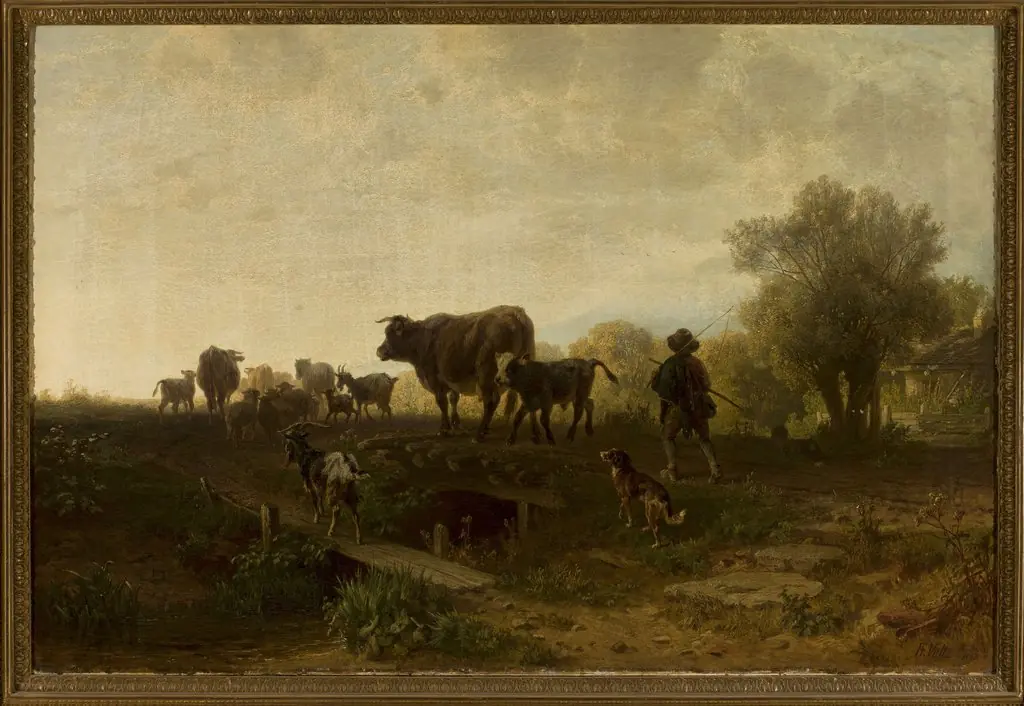
Oxen Plowing is an oil painting by the Realist artist Constant Troyon. It dates from 1860 and is held in the collection of the Clark Art Institute.
About this work
Overview
The scene captures a moment of agricultural work with minimal drama, focusing on the physical rhythm of plowing rather than narrative or symbolism.
Oxen Plowing, painted in 1860 by Constant Troyon, is an oil-on-canvas work depicting rural labor in the French countryside. It resides in the collection of the Clark Art Institute. The scene captures a moment of agricultural work with minimal drama, focusing on the physical rhythm of plowing rather than narrative or symbolism. The composition is grounded in observation, reflecting Troyon’s commitment to portraying everyday rural life with quiet dignity.
Subject & Meaning
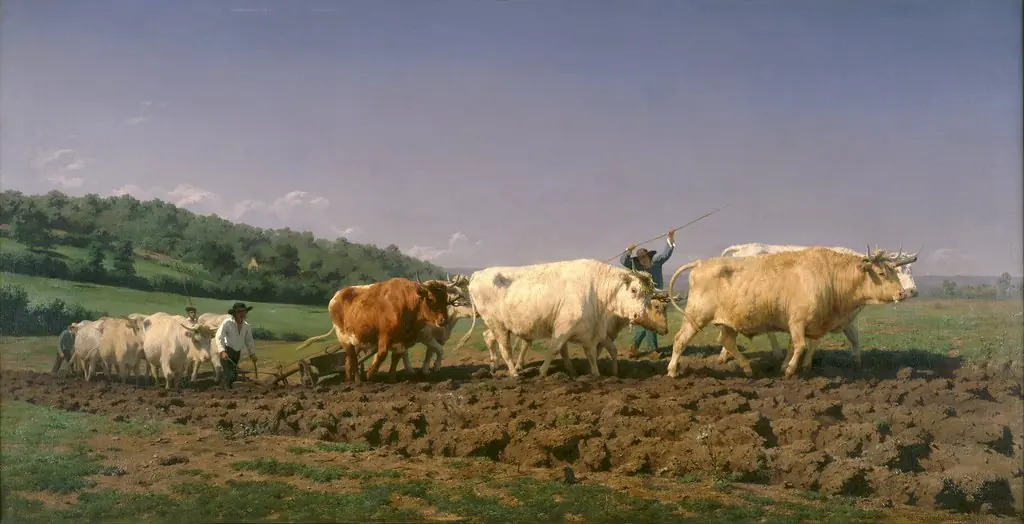
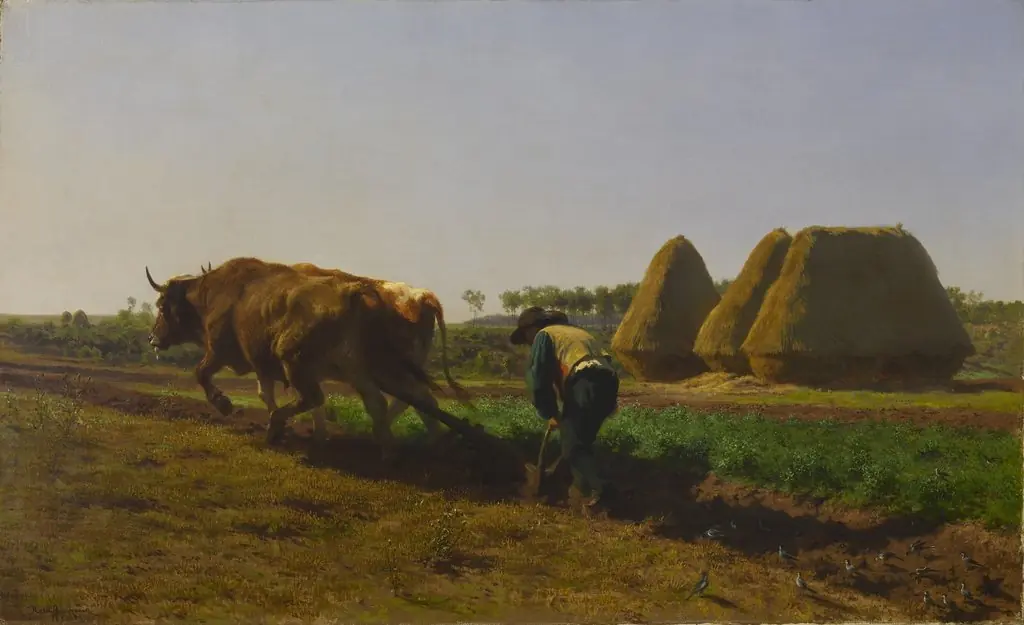
The painting shows two figures engaged in fieldwork: one man guides a pair of oxen pulling a plow, while another works at a distance. The oxen, heavy and steady, embody endurance, while the men’s postures suggest routine and quiet determination. There is no idealization—this is work as it was lived, not celebrated. The absence of grandeur reinforces a theme of humble, necessary labor, central to Troyon’s artistic vision of rural France.
Technique & Style
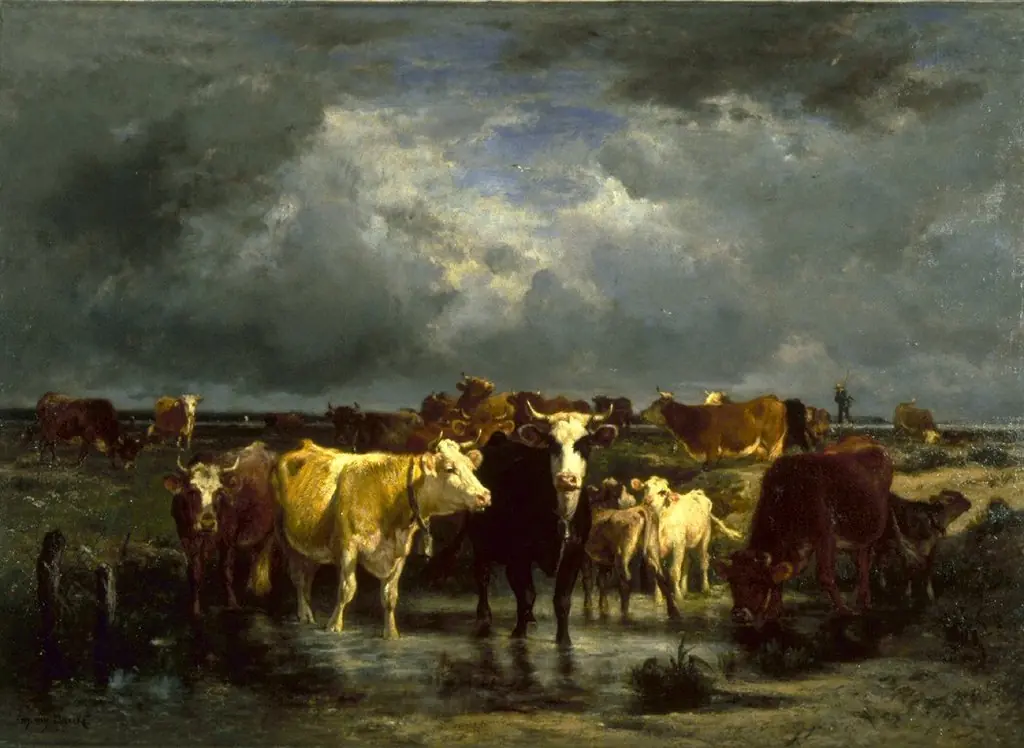
Troyon applied oil paint with loose, textured brushwork that captures the roughness of earth, fabric, and animal hide. The palette is restrained—earthy browns, muted greens, and ashen grays—mirroring the overcast sky and the unadorned landscape. Light is diffused, avoiding dramatic contrasts, which enhances the sense of a real, unaltered moment. The visible strokes lend a tactile quality, grounding the scene in physical reality rather than polished finish.
History & Provenance
Created in 1860, the painting emerged during a period when French artists increasingly turned to rural subjects as industrialization reshaped society. Troyon, associated with the Barbizon School, sought authenticity in landscape and animal painting. The work entered the Clark Art Institute’s collection through the Sterling and Francine Clark bequest, preserving its connection to 19th-century French realism and the broader movement to elevate everyday scenes in art.
Context
In mid-19th century France, artists like Troyon rejected academic grandeur in favor of scenes from peasant life. The Barbizon School, to which he belonged, emphasized direct observation of nature and labor. Oxen Plowing aligns with this ethos, reflecting a cultural shift toward valuing the dignity of rural work. It stands apart from romanticized depictions, offering instead a sober, unembellished view of agricultural existence.
Legacy
Troyon’s work contributed to the legitimization of rural and animal subjects in fine art, influencing later realist and impressionist painters. Oxen Plowing remains a quiet testament to the persistence of traditional farming methods before mechanization. Its enduring presence in a major American collection underscores its role as a representative example of French naturalism, valued for its sincerity rather than spectacle.
Artist & collection

Artist
Constant Troyon (French pronunciation: ; August 28, 1810 – February 21, 1865) was a French painter of the Barbizon school.