Artwork
Peisaj
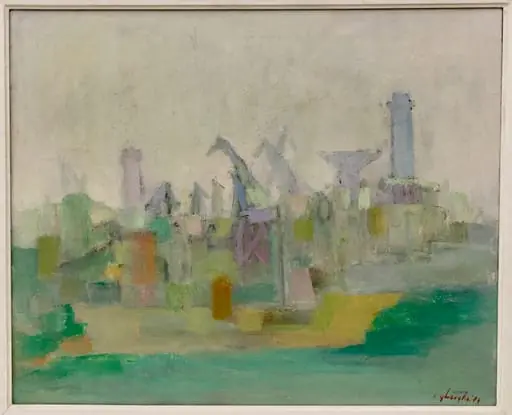
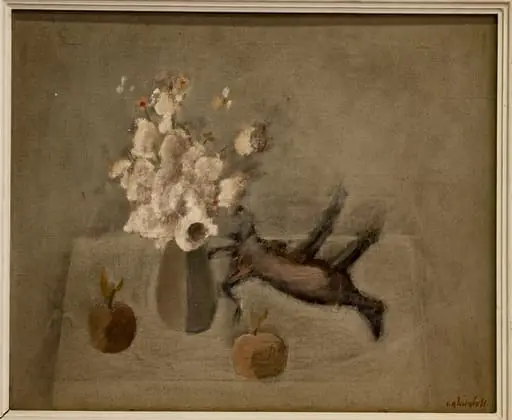
Peisaj is an unspecified painting by Gheorghe Constantin. It is held in the collection of the Gavrila Simion Eco-Museum Research Institute Tulcea.
About this work
Overview
What remains suggests a scene of natural or architectural elements, though the original composition is now barely legible.
This work, titled *Peisaj* (Romanian for 'landscape'), presents a deteriorated surface within a weathered wooden frame. The image itself is indistinct, marked by fading pigments and surface cracks that obscure finer details. What remains suggests a scene of natural or architectural elements, though the original composition is now barely legible. The painting’s condition reflects significant age and exposure.
Subject & Meaning
The title implies the work was intended as a landscape, though its current state resists clear interpretation. Faint outlines of trees or structures emerge from the thin, degraded layers of paint, leaving the original subject ambiguous. The erosion of the image may invite reflection on transience, memory, or the fragility of artistic representation, though the artist’s precise intent remains uncertain.
Technique & Style
Executed with sparse, translucent brushwork, the painting exhibits a delicate, almost ethereal quality. The thin application of pigment has resulted in uneven coverage and visible cracking, likely due to environmental factors over time. The style aligns with approaches that prioritize suggestion over detail, though the work’s current condition complicates stylistic classification.
History & Provenance
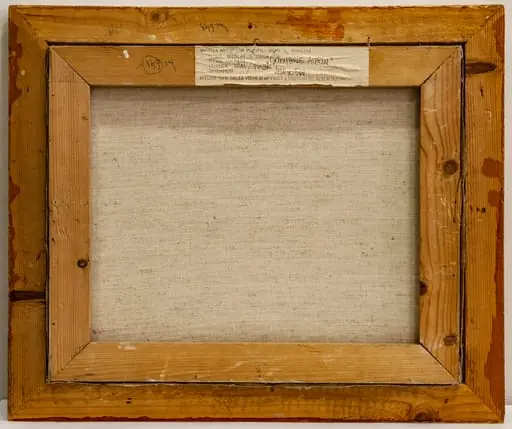
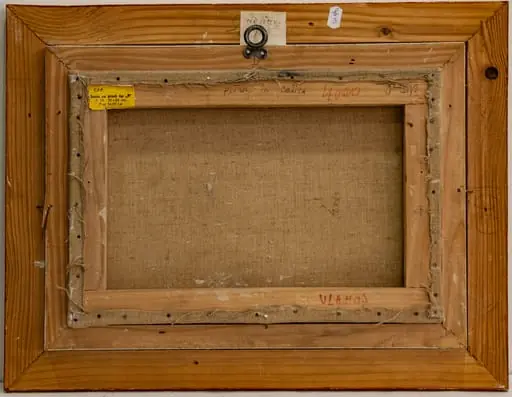
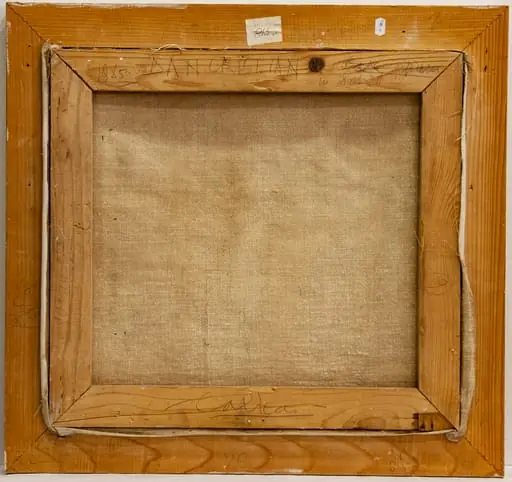
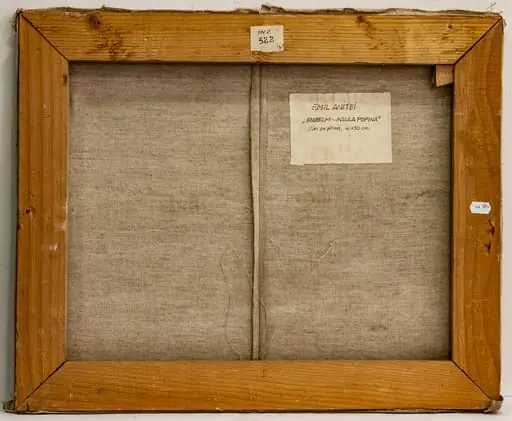
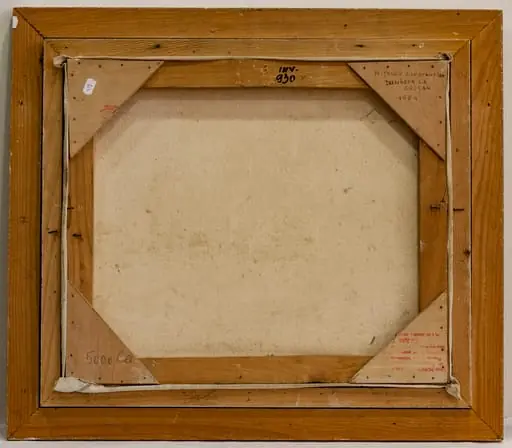
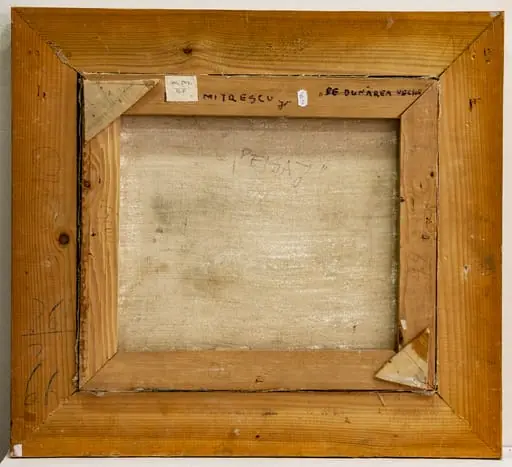
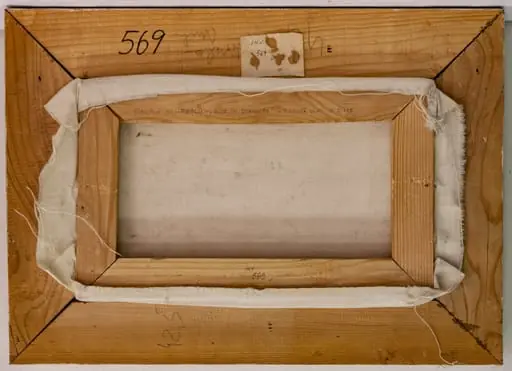
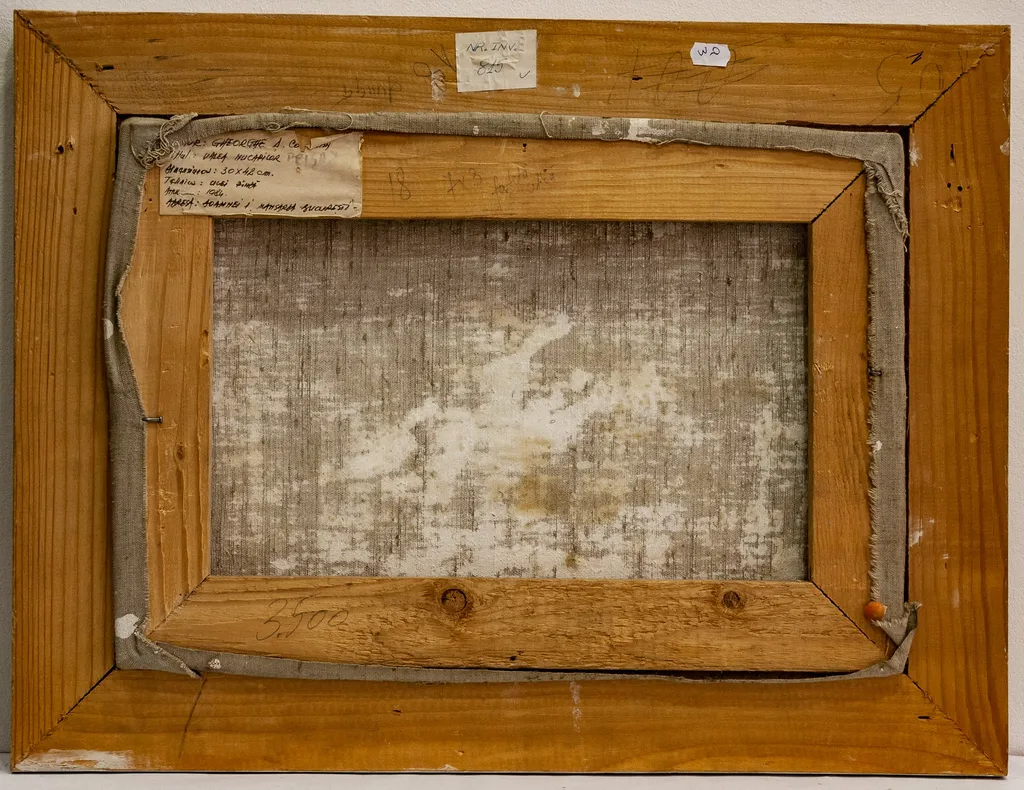
Evidence of the painting’s history appears on the reverse of the frame, where handwritten notes and a label suggest careful preservation. These inscriptions may indicate prior ownership, exhibition, or cataloging, though their exact significance is unclear. The work’s age and the title’s language hint at a possible Romanian origin, though further documentation is lacking.
Context
The painting’s state of decay situates it within a broader discourse on the material vulnerability of artworks. Landscapes of this kind often served as studies, decorative pieces, or personal reflections, though the absence of clear details limits contextual analysis. Its survival, despite deterioration, underscores the enduring value placed on even fragmentary works.
Artist & collection
Artist
Gheorghe Constantin painted quiet scenes of places and seasons—landscape paintings like Peisaj and Tulcea - fereastră către lume, plus a print called Fructe și aspect de toamnă.
Museum
Gavrila Simion Eco-Museum Research Institute Tulcea
Continue through works from the same source collection.