Artwork
Fisherman's Daughter at Nieuwpoort
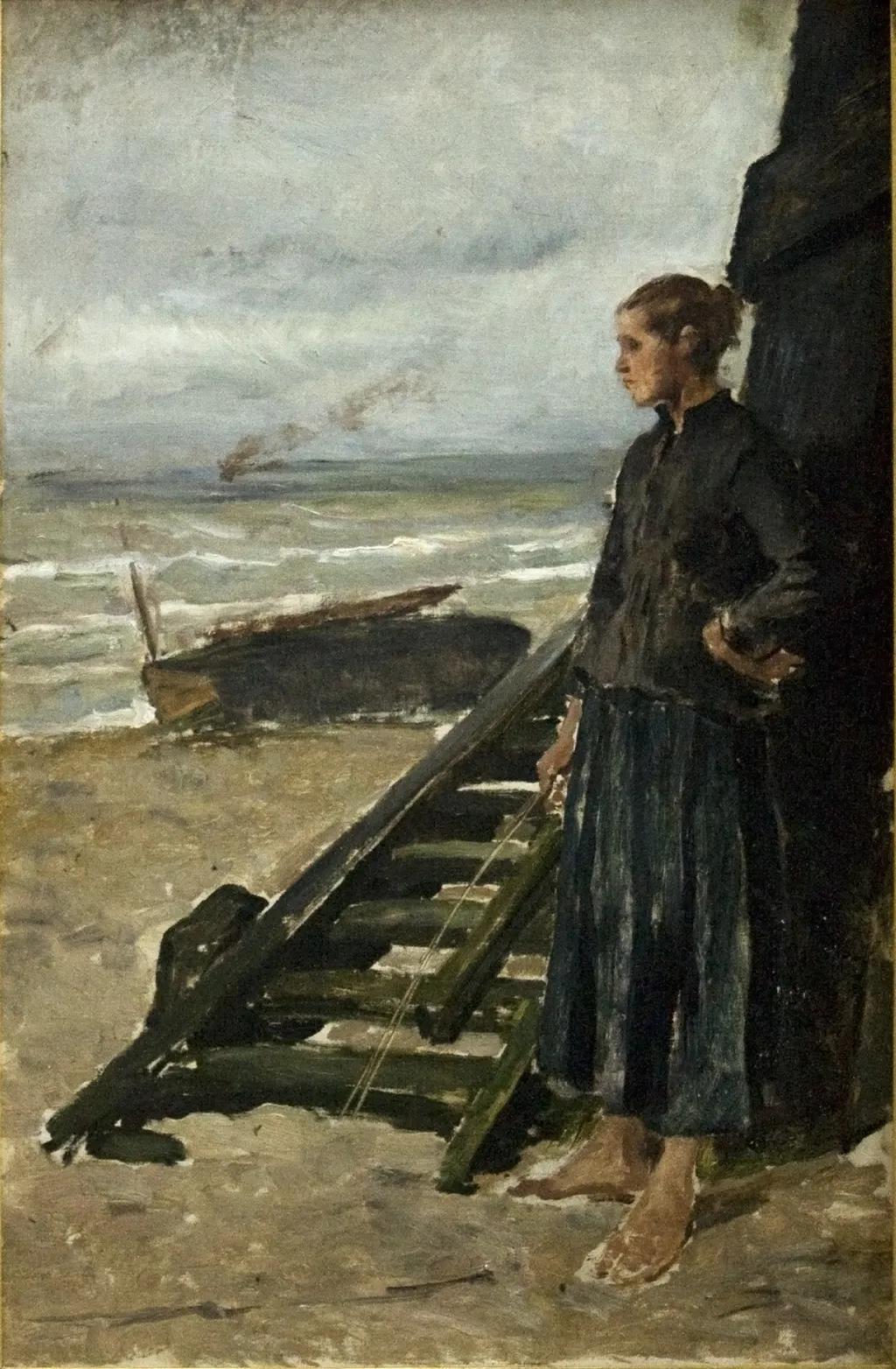
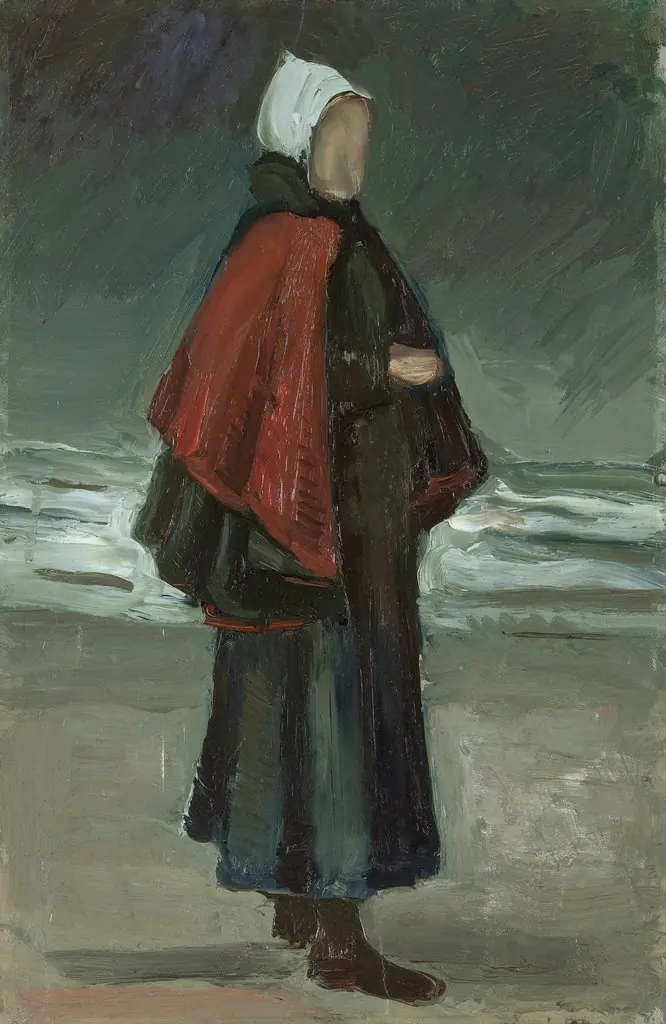
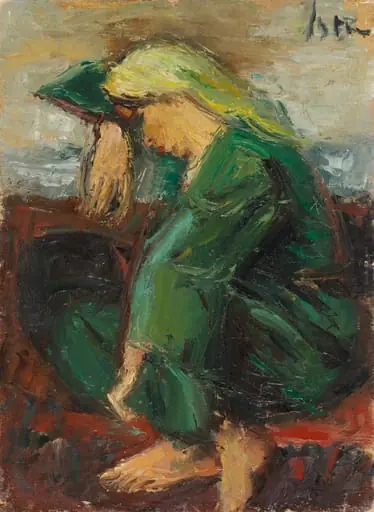
Fisherman's Daughter at Nieuwpoort is an oil painting by the Realist artist Constantin Meunier. It dates from 1878 and is held in the collection of the Royal Museums of Fine Arts of Belgium.
About this work
Overview
Painted around 1878 by Belgian artist Constantin Meunier, this oil on canvas depicts a young girl on the shore of Nieuwpoort.
Painted around 1878 by Belgian artist Constantin Meunier, this oil on canvas depicts a young girl on the shore of Nieuwpoort. Meunier, known for his focus on working-class life, rendered the scene with restrained tones and loose brushwork, capturing a quiet moment of stillness amid the coastal environment. The work belongs to the Realist tradition, prioritizing everyday subjects over idealized narratives.
Subject & Meaning
The figure is the daughter of a local fisherman, standing alone on the beach, her gaze directed toward the horizon. Her simple dress and pulled-back hair suggest modesty and labor, while her solitary posture evokes anticipation or resignation. Meunier presents her not as a symbol of romance or poverty, but as a quiet witness to the rhythms of coastal life, embodying the endurance of those dependent on the sea.
Technique & Style
Meunier employed a muted palette of grays, browns, and muted blues, harmonizing with the overcast coastal atmosphere. Brushstrokes are loose and tactile, suggesting wind and movement without overt detail. The forms are simplified, with the girl and the dark object beside her rendered with economy. This approach avoids sentimentality, favoring a direct, almost documentary quality grounded in observation.
History & Provenance
The painting was completed during Meunier’s most active period of social realism and entered the collection of the Royal Museums of Fine Arts of Belgium in the late 19th or early 20th century. It has remained in Belgian public ownership since, reflecting the institution’s commitment to preserving national artistic responses to industrial and rural labor conditions of the era.
Context
In the late 1870s, Belgium was undergoing industrial expansion, yet coastal communities like Nieuwpoort retained traditional livelihoods. Meunier, influenced by socialist ideals, sought to elevate the visibility of laborers in art. This painting aligns with his broader project of portraying workers not as subjects of pity, but as integral figures in the nation’s social fabric.
Legacy
Meunier’s focus on ordinary laborers influenced later generations of European realists and social painters. While not widely exhibited internationally, this work remains a key example of his commitment to visualizing the dignity of manual labor. Its presence in Belgium’s national collection underscores its role in documenting the quiet resilience of coastal communities during a period of rapid change.
Own this work as a print
Artist & collection

Artist
Constantin Meunier (French pronunciation: ; 12 April 1831 – 4 April 1905) was a Belgian painter and sculptor.

Museum
Royal Museums of Fine Arts of Belgium
Continue through works from the same source collection.