Artwork
Joc de copii
Joc de copii is an unspecified painting by Constantin Nicolae. It is held in the collection of the Moldova National Museum Complex.
About this work
Overview
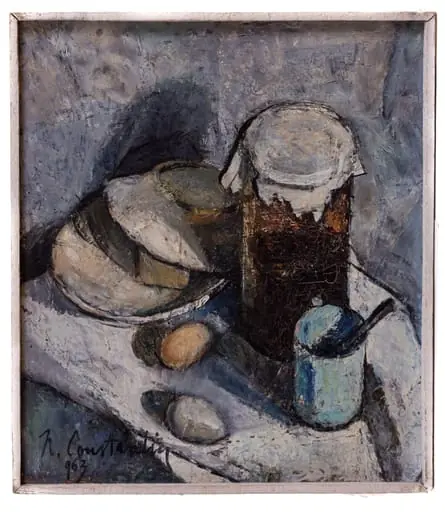
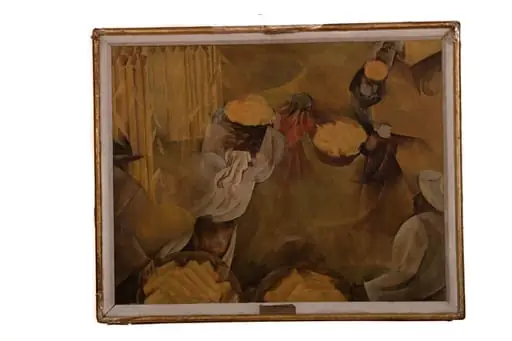
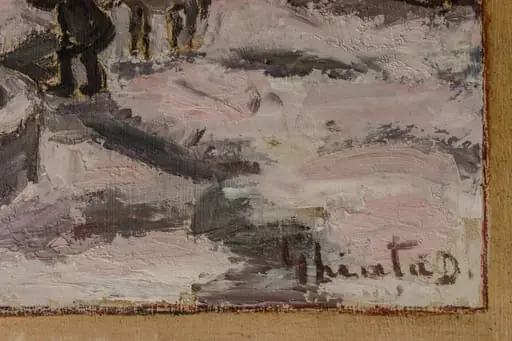
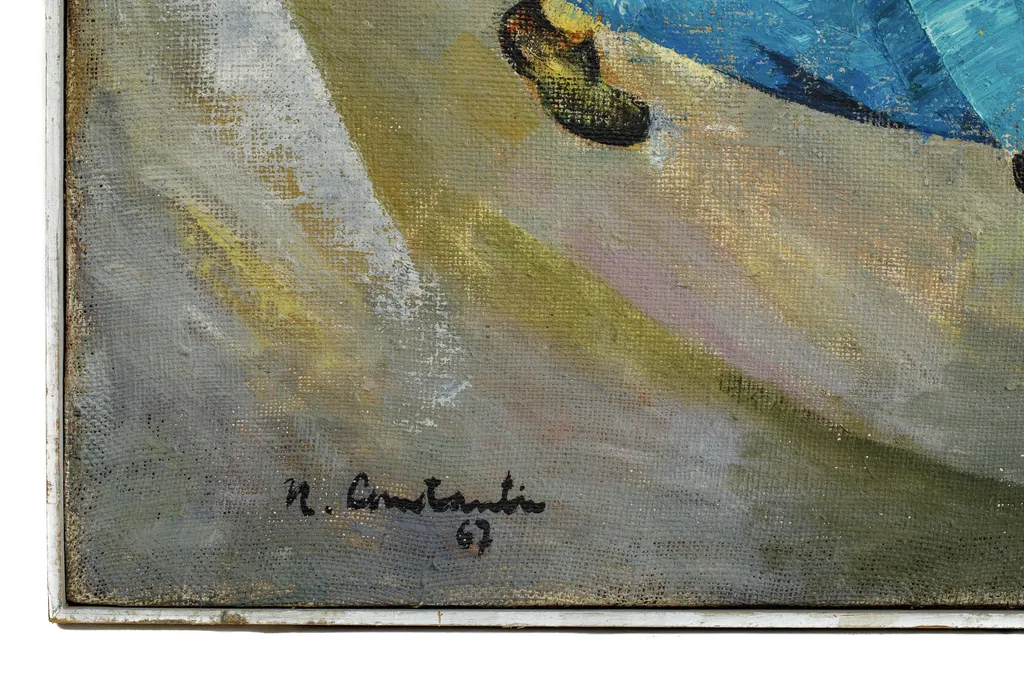
Joc de copii is a painted work whose surface is dominated by a heavily textured application of pigment. The composition is rendered in a subdued palette of greens, grays, yellows, with occasional touches of blue and brown. The overall effect appears deliberately unfinished, suggesting a rapid, gestural approach to the image.
Subject & Meaning
The title, translated as "Children's Play," hints at a scene of youthful activity, though the visual details remain vague due to the loose handling of form. The ambiguous representation invites viewers to infer the presence of children through suggestion rather than precise depiction.
Technique & Style
The artist employed an impasto method, laying paint on the canvas in thick, palpable strokes that give the surface a sculptural quality. This vigorous brushwork creates a sense of immediacy and physicality, emphasizing the materiality of the medium over detailed representation.
History & Provenance
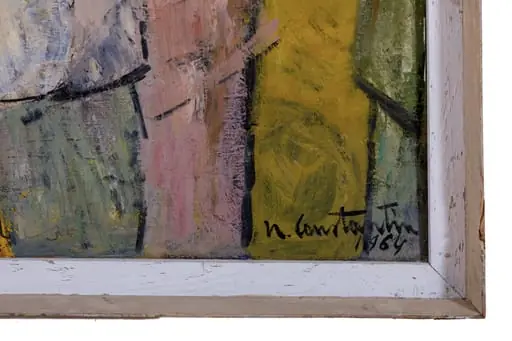
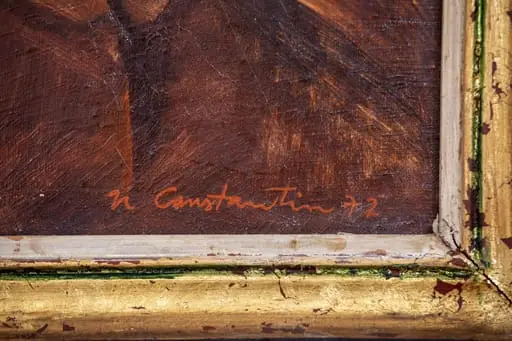
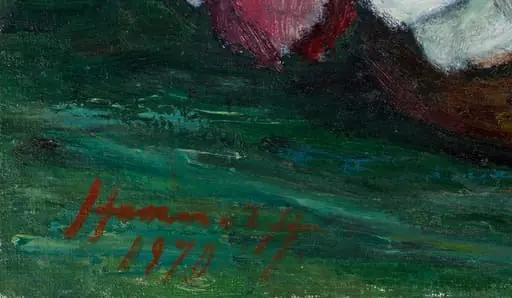
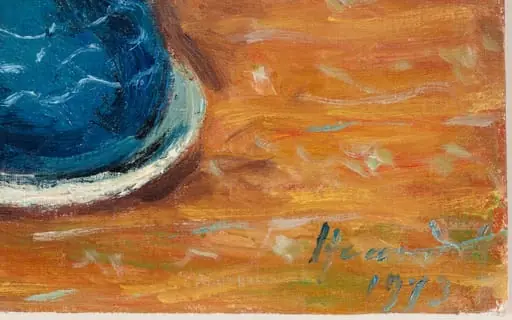
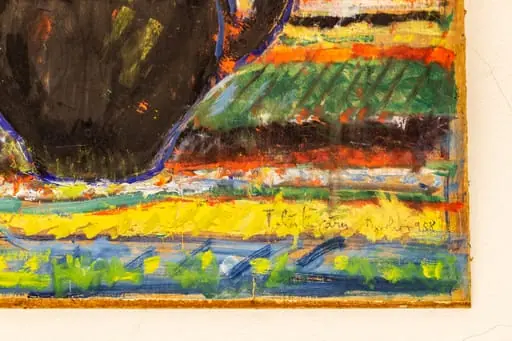
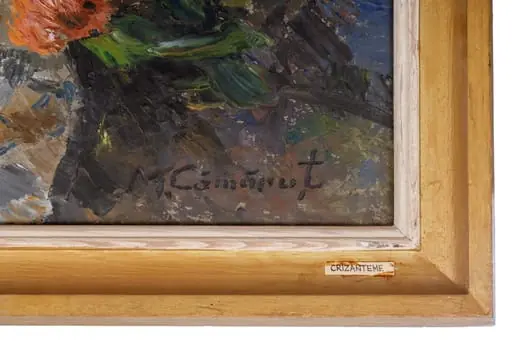
A faint inscription in the lower right corner reads "N. Constantini," which is interpreted as the signature of Nicolae Constantini. No further documentation of the work’s ownership or exhibition history is currently available.
Context
The painting aligns with early 20th‑century trends that favored expressive surface treatment and a move away from academic finish. Its muted tonal scheme and emphasis on texture reflect broader modernist interests in the tactile possibilities of paint.
Legacy
While specific influence or critical reception of Joc de copii remains undocumented, the work exemplifies the impasto technique’s capacity to convey motion and spontaneity, contributing to ongoing discussions of texture in modern painting.
Artist & collection
Artist
Constantin Nicolae made small prints and paintings of everyday life in Iași around 1900.