Artwork
Aurul pământului
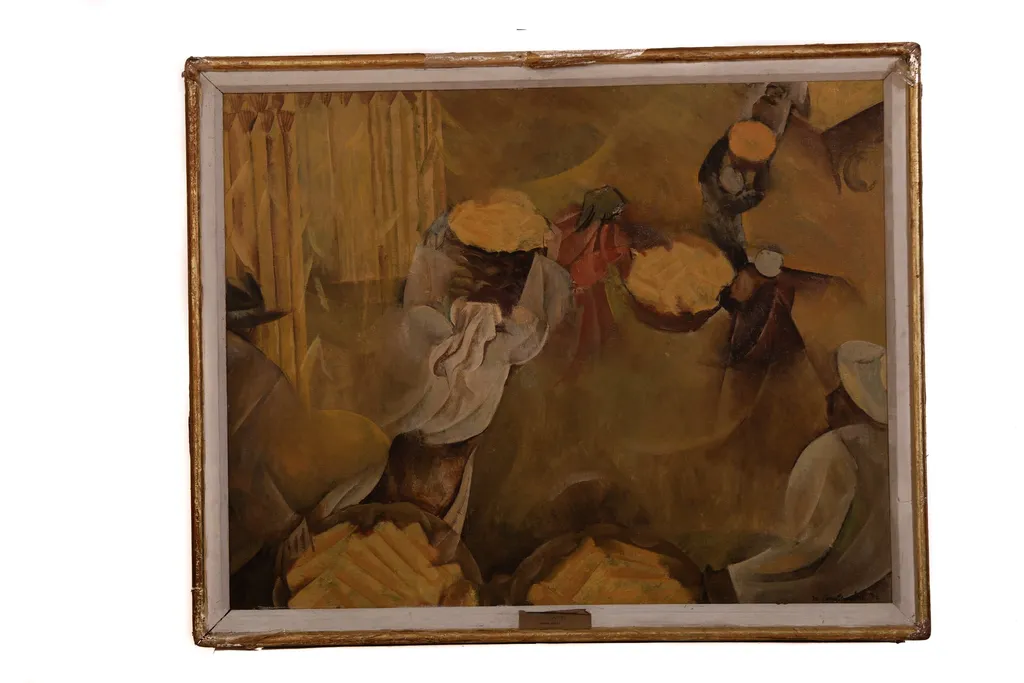
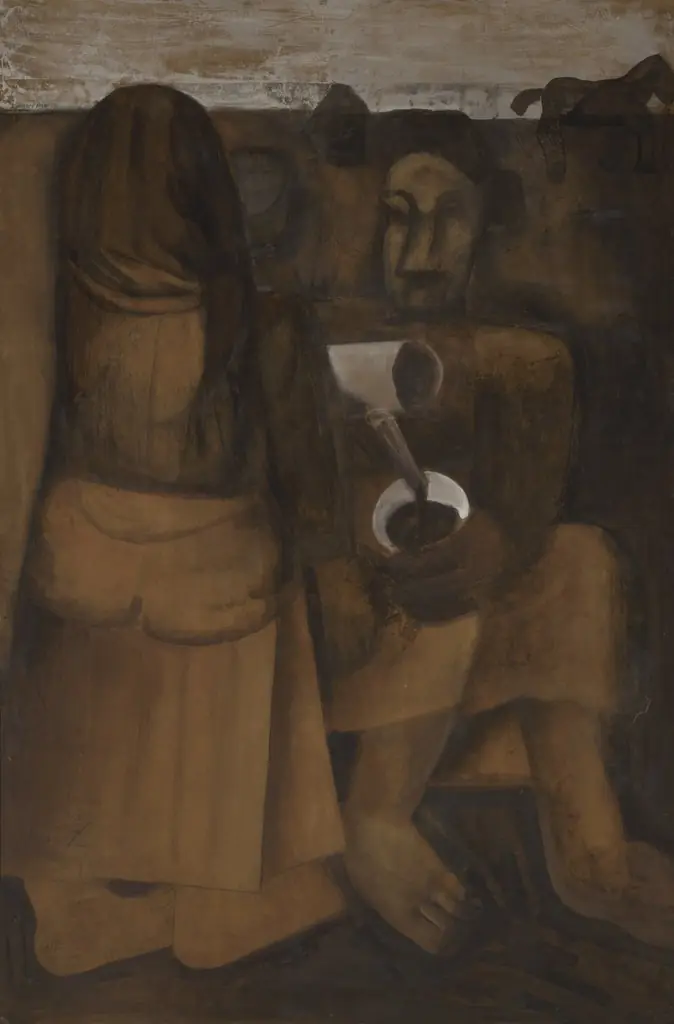
Aurul pământului is a print by Constantin Nicolae. It is held in the collection of the Moldova National Museum Complex. The work presents a dimly lit interior where two individuals are engaged in a quiet activity.
About this work
Overview
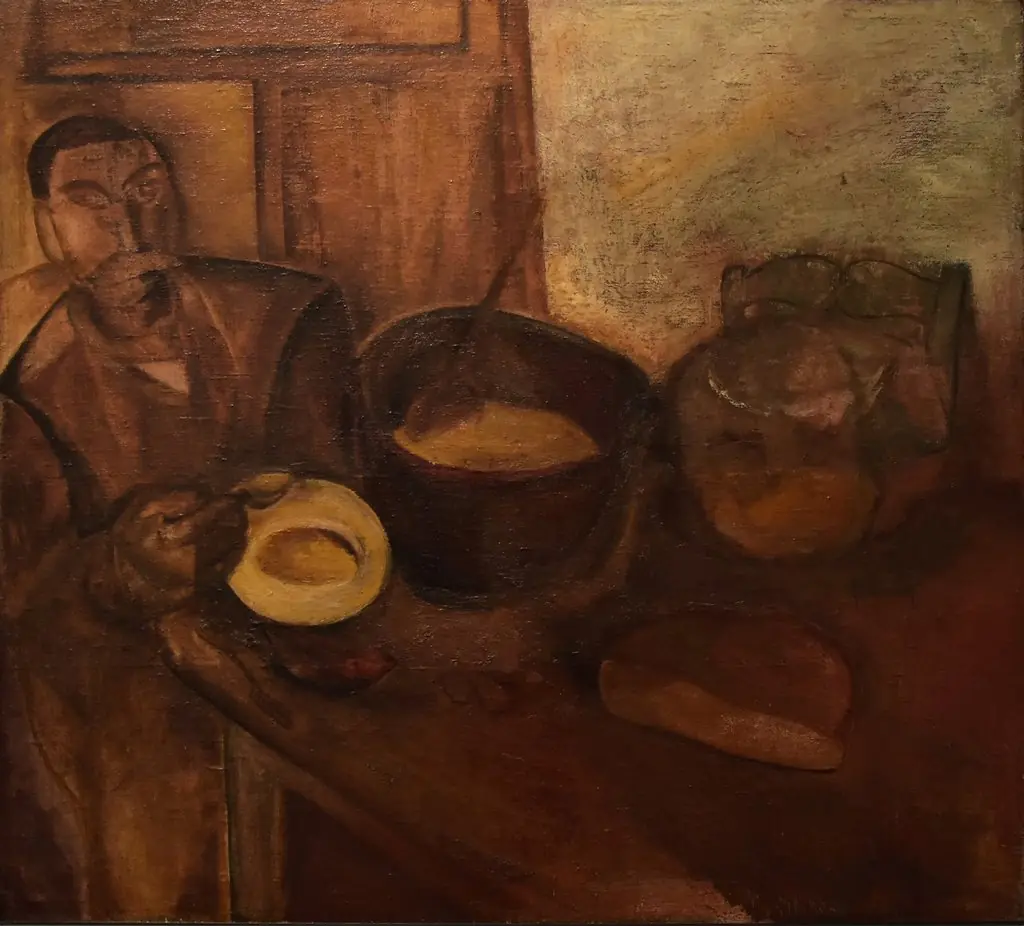
The work presents a dimly lit interior where two individuals are engaged in a quiet activity. One figure leans forward, cradling a basket brimming with round items that may be fruit or loaves, while the other stands nearby, distinguished by a hat and a red sash, also holding a similar container. The composition is anchored in warm earth tones that contrast with a shadowy, indistinct backdrop.
Subject & Meaning
The scene suggests a moment of domestic labor or market preparation, emphasizing the tactile presence of the gathered produce. The juxtaposition of the bent, laboring figure with the upright, possibly supervisory companion may hint at a social hierarchy or cooperative effort within a rural or agrarian setting, inviting contemplation of everyday sustenance.
Technique & Style
Paint is applied in thick, impasto strokes that create a textured surface, lending the image a palpable, almost sculptural quality.
Paint is applied in thick, impasto strokes that create a textured surface, lending the image a palpable, almost sculptural quality. The heavy brushwork emphasizes the materiality of the medium, while the limited palette of browns, yellows, and muted shadows reinforces a sense of warmth and solidity. Light appears to emanate from a low source, casting the figures into relief against the dark surroundings.
Context
The work aligns with a tradition of genre painting that focuses on ordinary labor scenes, often rendered with a heightened sense of physicality through robust paint handling. Its earthy coloration and emphasis on manual activity reflect broader artistic interests in depicting the dignity of work and the tactile reality of rural life.
Artist & collection
Artist
Constantin Nicolae made small prints and paintings of everyday life in Iași around 1900.