Artwork
Desen I
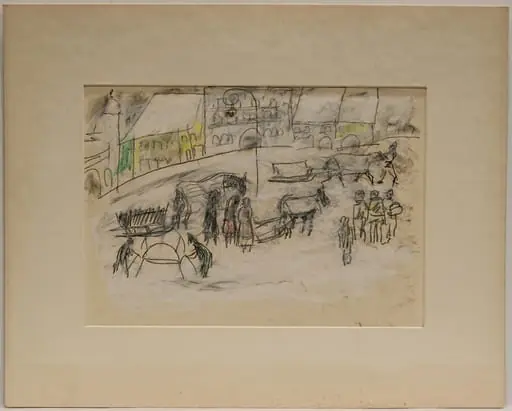
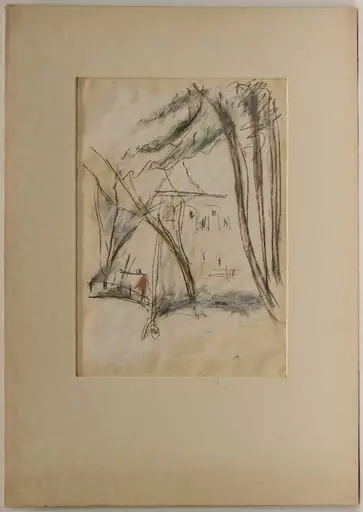
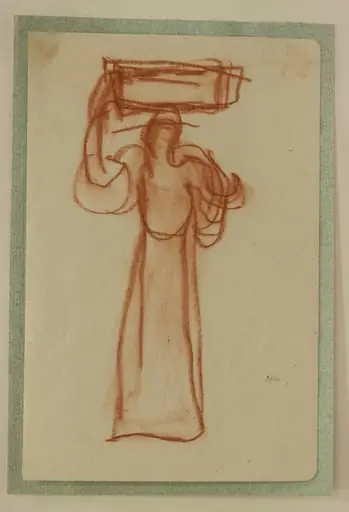
Desen I is a drawing by Mac Constantinescu. It dates from 1950 and is held in the collection of the Gavrila Simion Eco-Museum Research Institute Tulcea.
About this work
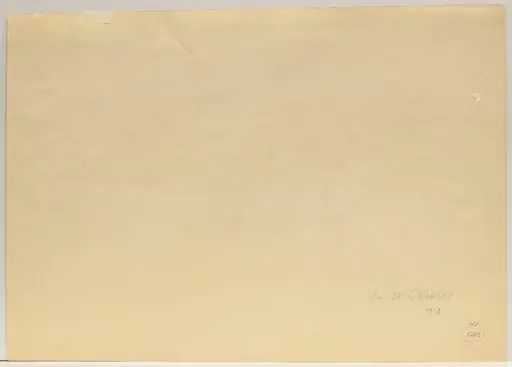
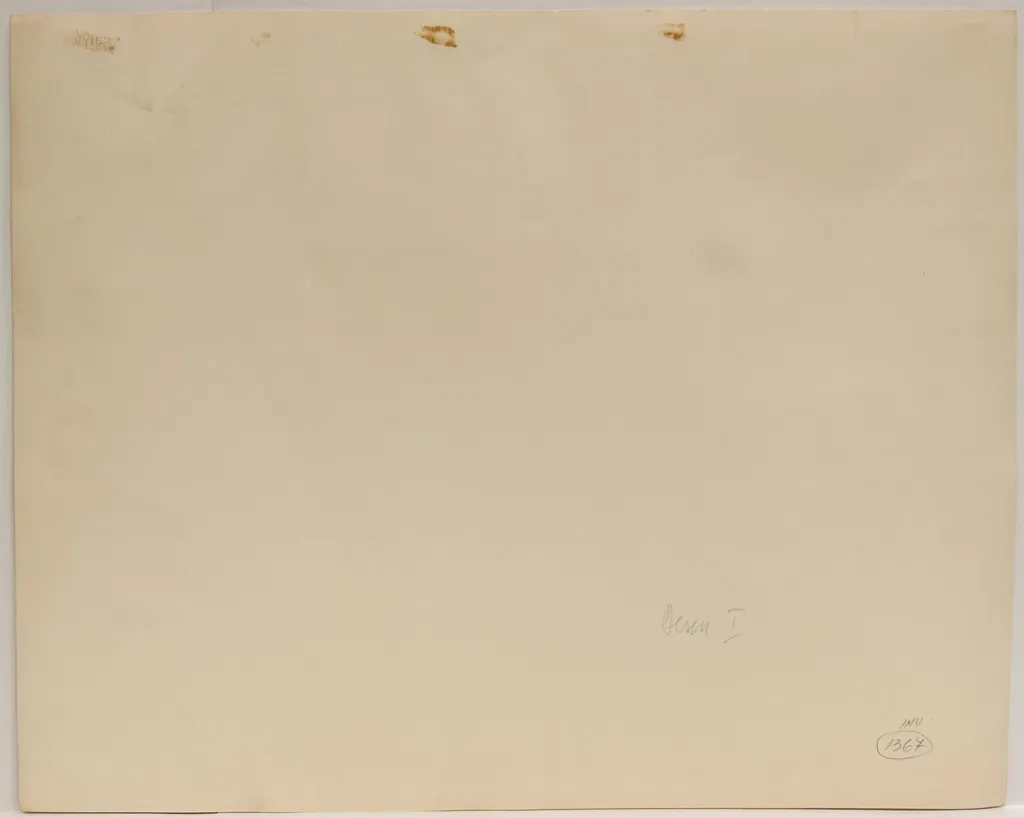
There’s a faint handwritten signature in the corner that looks like "Desen I," and a small number "1367" circled nearby.
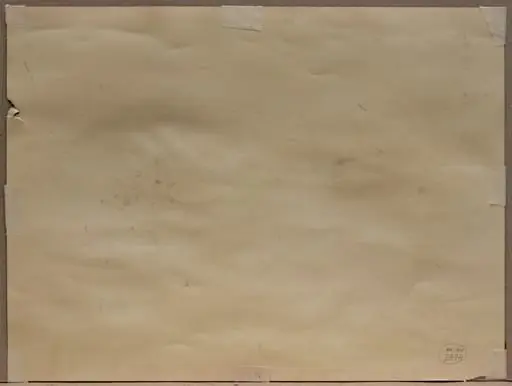
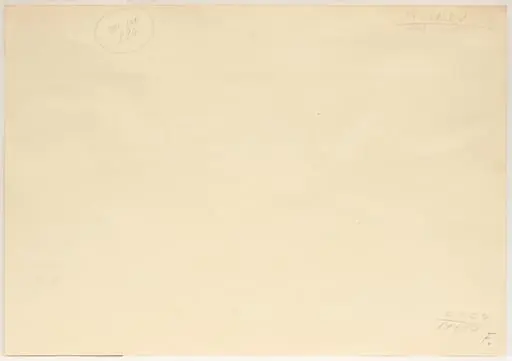
This is a blank, pale yellow paper with almost no marks. There’s a faint handwritten signature in the corner that looks like "Desen I," and a small number "1367" circled nearby. The edges show some wear, and the paper has a slightly rough texture.
The simplicity here is the point—no shapes, no lines, just an empty surface. It’s like a drawing that never got started, or maybe it’s meant to be empty.
If you like this kind of minimal work, look up cross-hatching next to see how artists create depth with tiny lines.
Overview
Desen I, created around 1950 by Constantinescu, Mac, is a minimalist sheet of pale yellow paper with negligible visual content. It is part of the collection at the Museum of Ethnography. The surface bears only a faint handwritten inscription reading 'Desen I' and a circled numeral '1367.' The paper’s edges are worn, and its texture is subtly rough, suggesting handling or age. Its near-total emptiness defines its presence.
Subject & Meaning
The work resists conventional representation, offering no figures, lines, or compositional elements. Its title, meaning 'Drawing I,' may imply an intention to begin, or perhaps to question the necessity of mark-making. The absence of form invites consideration of artistic intent, absence as content, or the ritual of labeling an object as art despite its lack of traditional features.
Technique & Style
The piece employs no deliberate drawing techniques—no shading, no contour, no pattern. The faint signature and circled number suggest administrative or cataloging gestures rather than artistic expression. The paper’s texture and wear are incidental, not manipulated. The style aligns with postwar explorations of reduction, where the material itself becomes the subject through its neutrality.
History & Provenance
The work entered the Museum of Ethnography’s collection without documented context beyond its creation date and maker. Its origin as part of a private archive or academic exercise remains unclear. The circled number likely served as an inventory identifier, indicating it was one of many similar items. No exhibition history or prior ownership is recorded, reinforcing its quiet, unassuming status.
Context
Created in the early 1950s, Desen I emerged during a period when Eastern European artists increasingly engaged with abstraction and conceptual minimalism, often under political constraints that discouraged overt expression. Its blankness may reflect a quiet resistance, a withdrawal from prescribed imagery, or an experiment in art’s essential conditions—surface, support, and the act of naming.
Legacy
Desen I contributes to a broader discourse on non-objective art in mid-century Eastern Europe, where simplicity was sometimes the only viable form of autonomy. It stands as a quiet counterpoint to more elaborate works of the era, prompting reflection on what constitutes a drawing, and whether the void between intention and execution can hold meaning. Its preservation suggests recognition of its conceptual weight.
Artist & collection
Artist
Romanian artist Mac Constantinescu left behind small, direct studies in stone and paper.
Museum
Gavrila Simion Eco-Museum Research Institute Tulcea
Continue through works from the same source collection.