Artwork
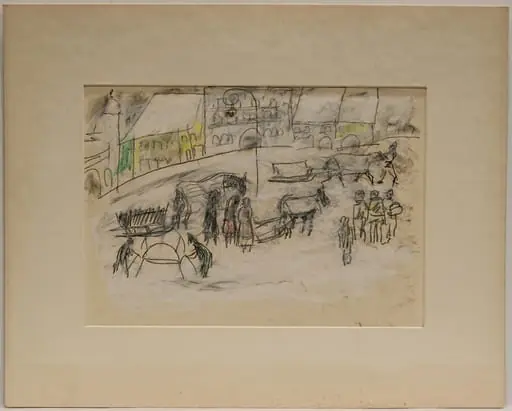
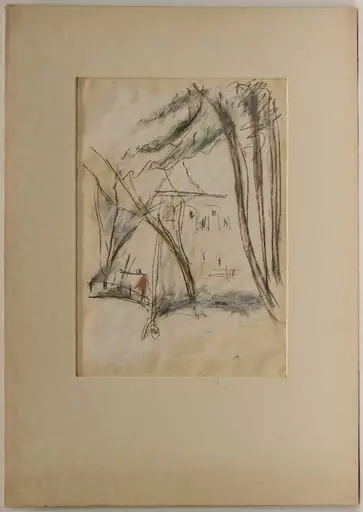
Peisaj din Cișmigiu
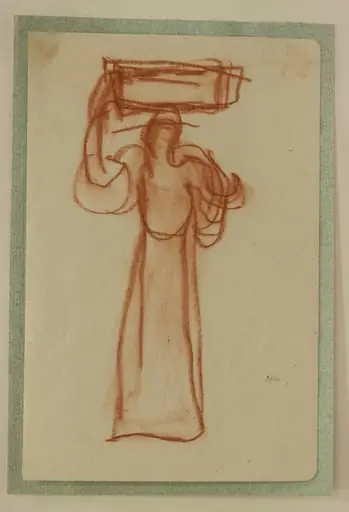
Peisaj din Cișmigiu is a drawing by Mac Constantinescu. It dates from 1950 and is held in the collection of the Gavrila Simion Eco-Museum Research Institute Tulcea. Created around 1950 by Constantinescu, Mac, this work is a nearly blank sheet of paper with a uniform beige tone.
About this work
In the bottom right corner, a small handwritten number "1364" is barely visible.
This is a blank-looking sheet of paper with a faint, even beige tone. The edges show some wear, and there’s a thin, light-colored border at the top. In the bottom right corner, a small handwritten number "1364" is barely visible.
The paper looks like it was once used for drawing, but now it’s mostly empty. The smooth surface has a few tiny marks, maybe from old sketches or dust.
If you’re curious about drawings like this, check out stippling.
Overview
Created around 1950 by Constantinescu, Mac, this work is a nearly blank sheet of paper with a uniform beige tone. It bears minimal visual content—only faint surface marks and a thin, light border at the top. The edges show signs of age and handling, and a small, faded numeral '1364' appears in the lower right. The piece is cataloged as an image within the Museum of Ethnography's collection, though its visual presence is subdued.
Subject & Meaning
The title 'Peisaj din Cișmigiu' suggests a landscape of Cișmigiu, a well-known park in Bucharest, but no discernible imagery remains. The work may represent an abandoned sketch or the remnants of a preparatory study, its original subject erased or faded. Its emptiness invites reflection on the impermanence of artistic process rather than depicting a specific scene.
Technique & Style
The surface exhibits a smooth, even texture, consistent with drawing paper that once held light pencil or charcoal marks. Tiny, indistinct abrasions suggest prior sketching, possibly in stippling or light hatching, now nearly vanished. The absence of bold lines or shading indicates a tentative or ephemeral approach, as if the artist began a study but left it incomplete.
History & Provenance
The work entered the Museum of Ethnography’s collection with minimal documentation. Its faint numbering implies it was once part of a larger series or archive. No record of its creation context or the artist’s intent survives. The paper’s wear and muted appearance suggest it was handled or stored over decades, possibly as a study rather than a finished piece.
Context
In postwar Romania, many artists produced sketches as working tools, often discarding or neglecting them after use. This sheet may reflect that practice—part of a broader culture where preliminary drawings were valued for process, not preservation. Its survival, unremarkable in appearance, offers a quiet glimpse into the everyday labor behind artistic production.
Legacy
Though visually sparse, the work endures as a physical trace of an unrecorded moment in the artist’s practice. It challenges assumptions about what constitutes a finished artwork, emphasizing the significance of absence and erosion in artistic legacy. Its preservation suggests a later recognition of the value in fragments, not just final forms.
Artist & collection
Artist
Romanian artist Mac Constantinescu left behind small, direct studies in stone and paper.
Museum
Gavrila Simion Eco-Museum Research Institute Tulcea
Continue through works from the same source collection.