Artwork
Canal la Agighiol
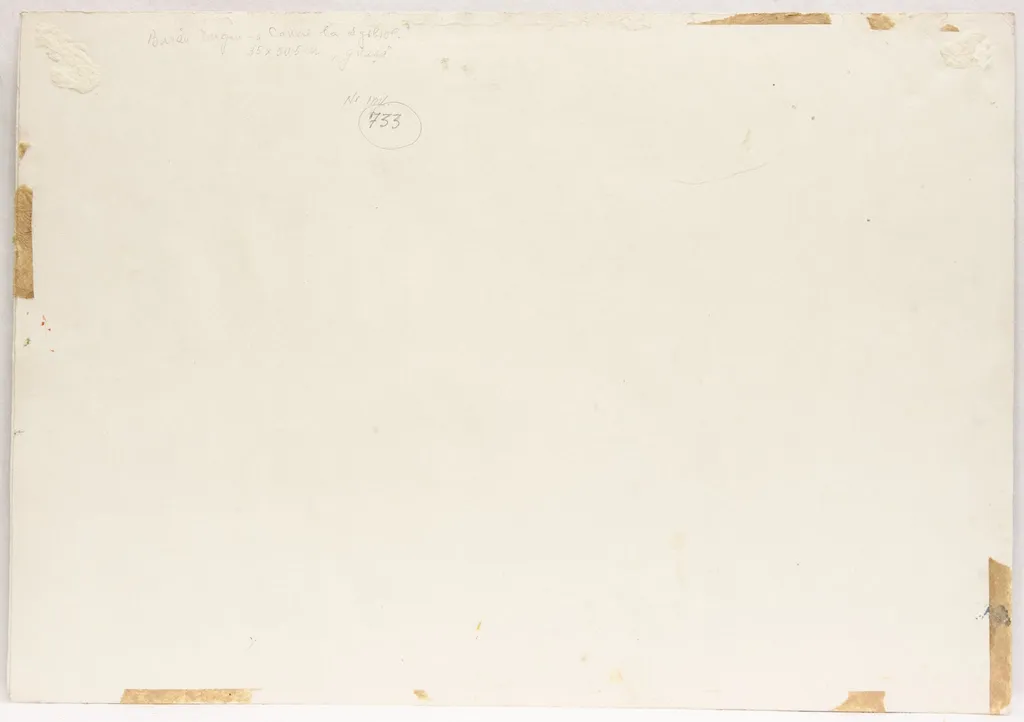
Canal la Agighiol is a print by Eugeniu Barău. It dates from 1950 and is held in the collection of the Gavrila Simion Eco-Museum Research Institute Tulcea.
About this work
Overview
The work’s title implies a geographical subject, yet the visual field is empty, challenging conventional expectations of representation.
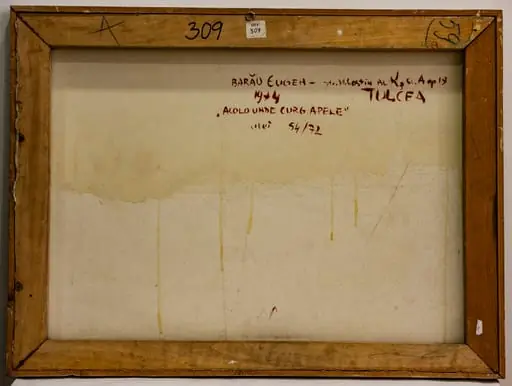
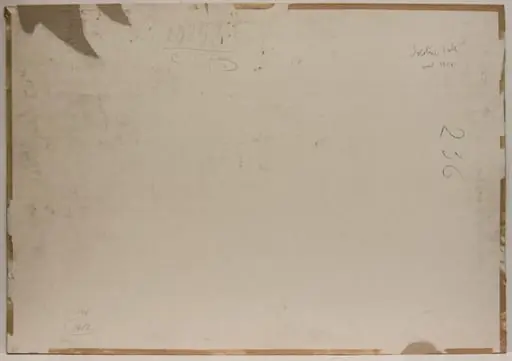
Eugeniu Barău’s Canal la Agighiol, dated around 1950, presents no pictorial content—only a blank sheet of paper with faint, partially obscured handwriting at the top and a small circled numeral '733' in the lower right. The surface is lightly colored, edged with brown tape, suggesting prior handling or archival repair. The work’s title implies a geographical subject, yet the visual field is empty, challenging conventional expectations of representation.
Subject & Meaning
The title references a canal near Agighiol, a village in Romania, but the image contains no depiction of landscape, water, or infrastructure. The fragmented script may relate to documentation, survey notes, or administrative records, hinting at bureaucratic or cartographic origins. The absence of imagery invites interpretation as a conceptual gesture—perhaps a record stripped of its visual context, or a deliberate negation of representation.
Technique & Style
The work is executed in ink on paper, with minimal intervention. The handwriting is faded and partially torn, indicating age and physical degradation. The circled number '733' appears as a catalog marker, while the brown tape along the margins suggests institutional handling. The style is unadorned, functional, and devoid of artistic embellishment, aligning more with archival material than traditional art.
History & Provenance
The piece is held in the collection of the Museum of Ethnography, implying its classification as a cultural artifact rather than a fine art object. Its condition—torn edges, faded text, and repair tape—suggests it was once part of a larger set of documents, possibly field notes or land surveys. Its survival as a standalone item may reflect accidental preservation or a curatorial decision to isolate it as a conceptual fragment.
Context
Created in postwar Romania, the work may reflect the era’s emphasis on documentation, infrastructure, and state-led development. Canals like Agighiol were often tied to agricultural or flood-control projects. Barău, known for his engagement with rural life and material culture, may have repurposed a mundane record as an artistic statement, questioning the boundaries between data and meaning in a period of intense bureaucratic control.
Legacy
Canal la Agighiol stands as an early example of conceptual art in Romanian practice, predating international movements that privileged idea over image. Its endurance in a museum context underscores a shift in how cultural institutions value ephemeral or non-visual artifacts. The work invites reflection on what is preserved, why, and how absence can carry historical weight.
Artist & collection
Artist
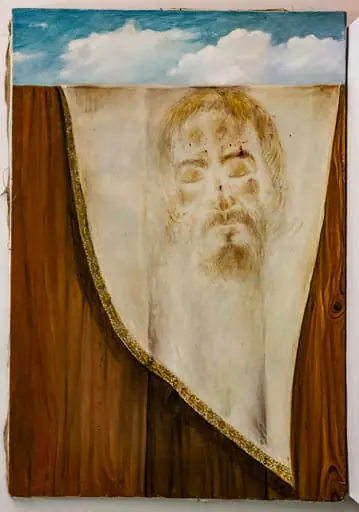
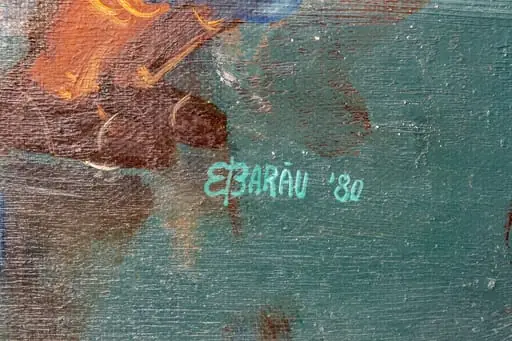
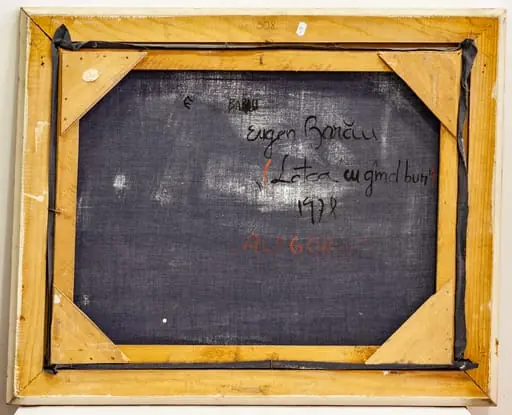
Eugeniu Barău made small prints and one painting filled with everyday scenes. In *Iarna* and *Canal la Agighiol* you’ll find quiet winter streets and docks where the water barely moves. *Alegorie I Lotca cu gând bun*…
Museum
Gavrila Simion Eco-Museum Research Institute Tulcea
Continue through works from the same source collection.