Artwork
Haggersgate, Whitby
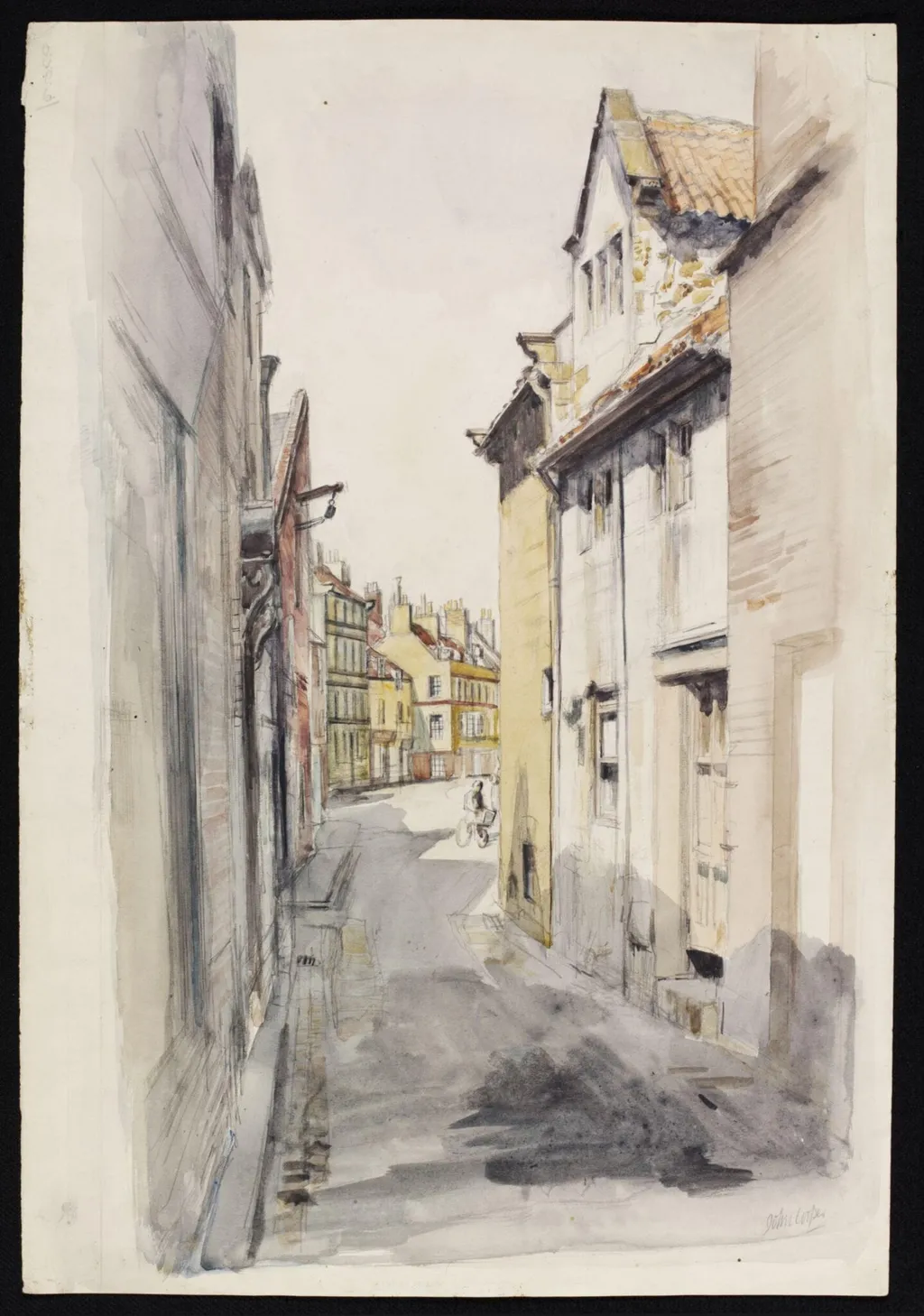
Haggersgate, Whitby is a watercolor work on paper by John Cooper. It dates from 1940 and is held in the collection of the Victoria and Albert Museum.
About this work
Overview
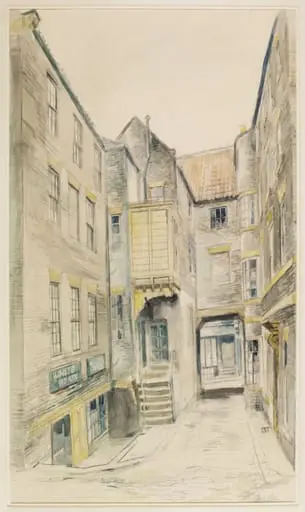
John Cooper’s watercolour Haggersgate, Whitby, completed in 1940, captures a quiet urban lane in the coastal town of Whitby.
John Cooper’s watercolour Haggersgate, Whitby, completed in 1940, captures a quiet urban lane in the coastal town of Whitby. Painted as part of the Recording Britain initiative, the work reflects a broader effort to document vernacular architecture and everyday landscapes during wartime. The scene is rendered in delicate washes, emphasizing the subtle interplay of light and structure without dramatic emphasis.
Subject & Meaning
The painting portrays a narrow street flanked by modest warehouses and residential buildings, terminating in terraced homes near the harbor. An isolated cyclist in the distance suggests quiet daily life amid wartime uncertainty. The absence of crowds or activity underscores a sense of stillness, perhaps reflecting the pause in normal rhythms caused by the war, while affirming the endurance of ordinary places.
Technique & Style
Cooper employed loose, fluid brushwork and translucent watercolor layers to evoke atmosphere rather than detail. The soft edges and muted tones—whites, pale yellows, and warm browns—create a hazy, atmospheric quality. The technique avoids sharp definition, allowing the medium’s natural bleed to suggest texture and depth, aligning with traditional British watercolor practices of the period.
History & Provenance
Commissioned under the Recording Britain project, initiated by Sir Kenneth Clark, the painting was one of over 1,500 works produced between 1939 and 1942. The scheme supported artists financially while preserving visual records of threatened landscapes. Haggersgate, Whitby entered the Victoria and Albert Museum’s collection as part of this archive, ensuring its preservation as a historical document.
Context
Created during the early years of World War II, the painting emerged from a national effort to safeguard Britain’s visual heritage against potential destruction. Urban development and wartime bombing loomed as threats, prompting a deliberate focus on modest, unassuming architecture. Cooper’s depiction of Whitby’s working streets reflects a commitment to recording the everyday, not the monumental.
Legacy
Haggersgate, Whitby remains part of a significant archive that redefined the cultural value of topographical watercolor. The Recording Britain collection, now held by the V&A, continues to inform studies of wartime Britain and the role of art in social preservation. Cooper’s quiet observation of a local street exemplifies how minor scenes gained historical weight through collective effort.
Artist & collection
Artist
John Cooper specialized in quiet watercolor views of northern England from the 1940s.

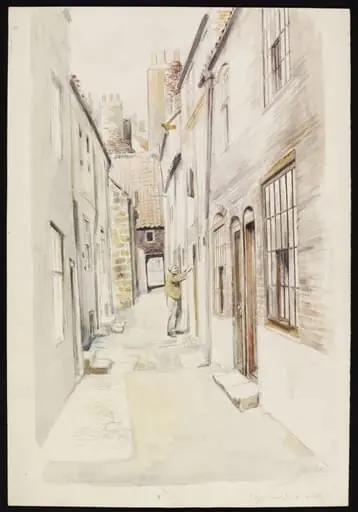
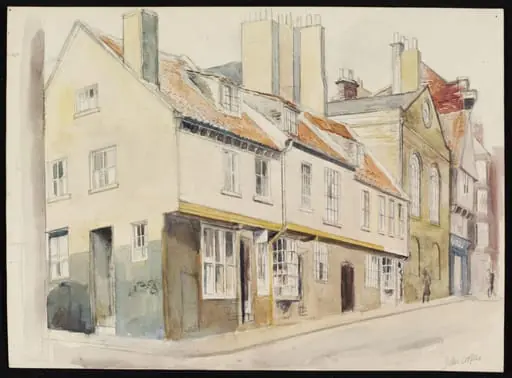 Tudor Houses, Church Street, Whitby
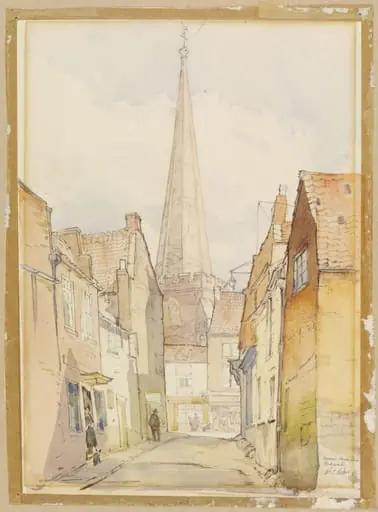 Mansion House Lane, Bridgwater
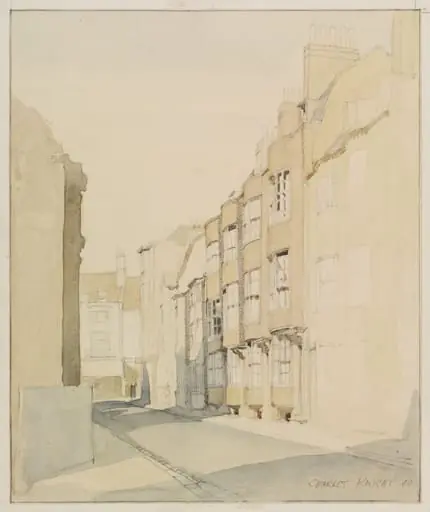 3 - 12, Charles Street, off Brighton Front
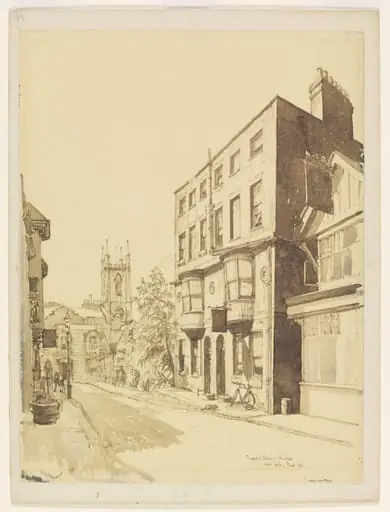 Church Street, (west side) Windsor
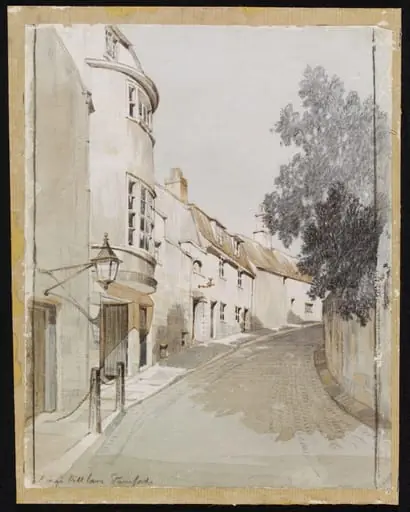 King's Mill Lane, Stamford, Rutlandshire
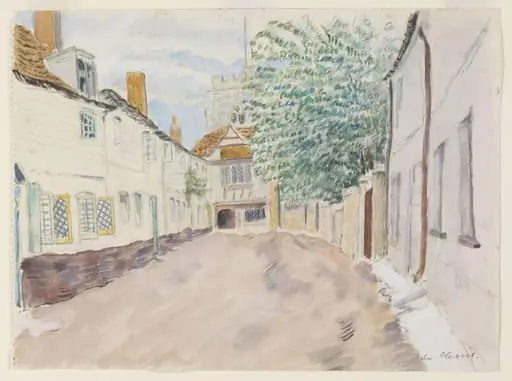 Lych Gate, Bray
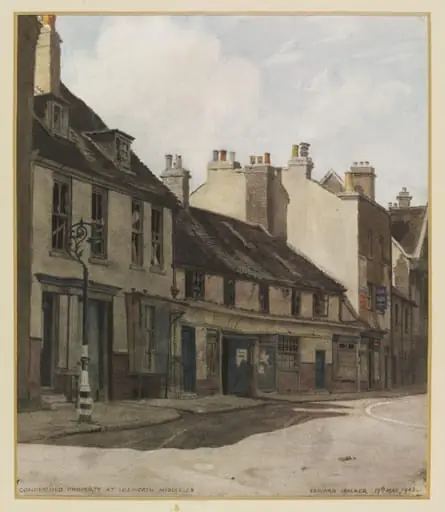 Condemned Property at Isleworth
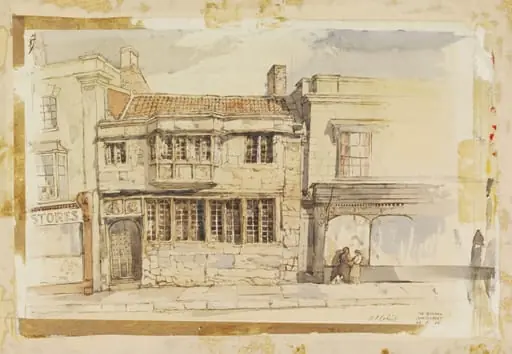 The Tribunal, Glastonbury
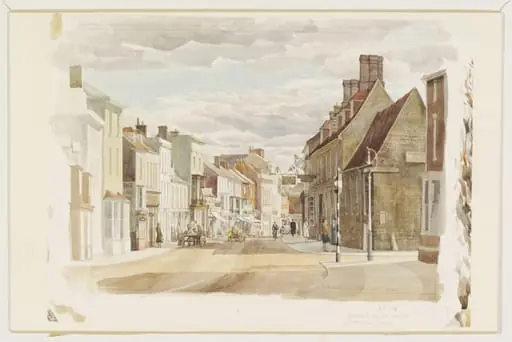 Towcester High Street from the Pomfret Arms Corner, Northamptonshire