Artwork
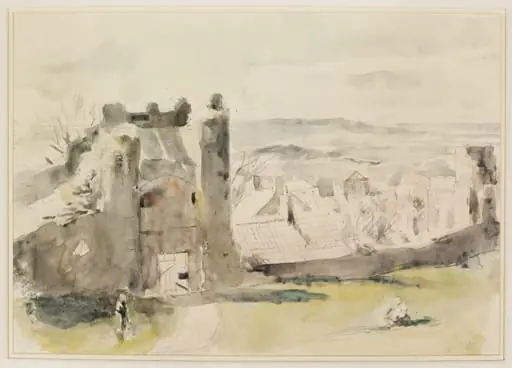
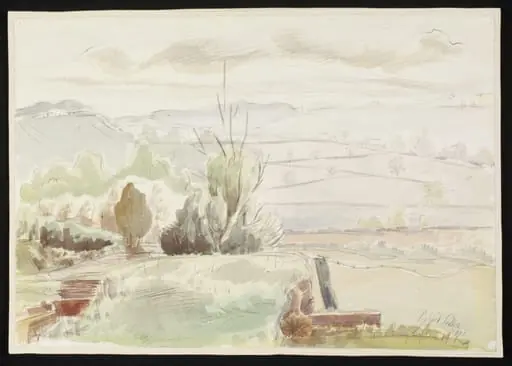
View from the Terrace, Rievaulx
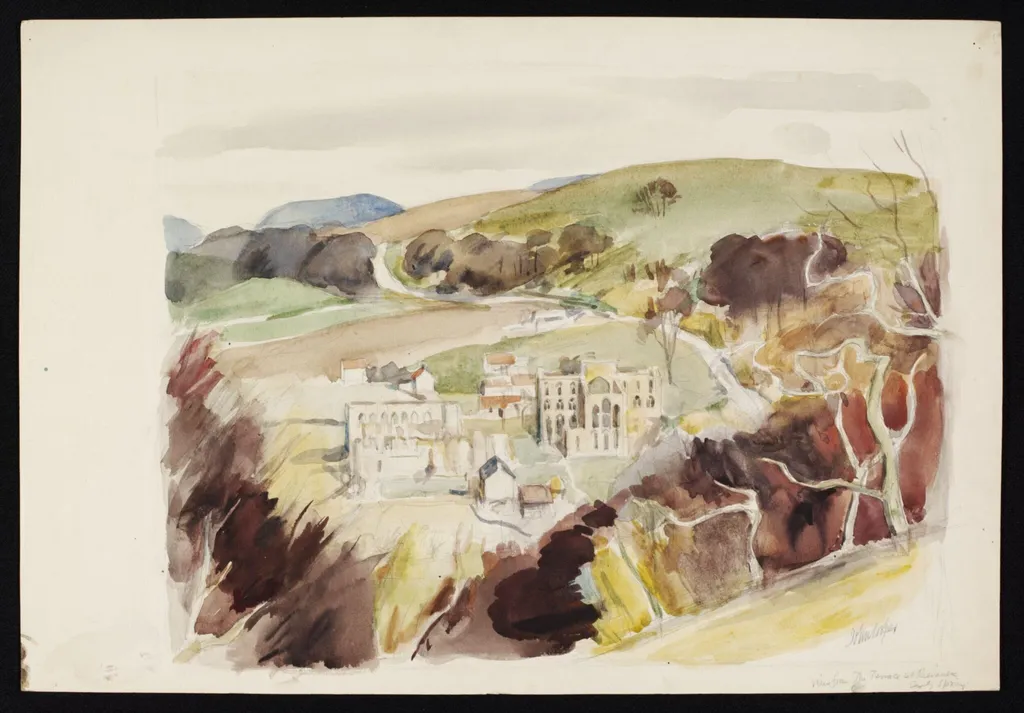
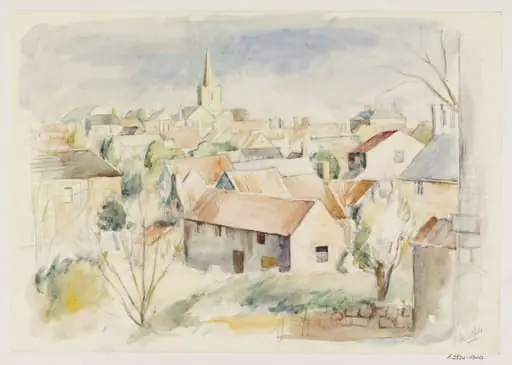
View from the Terrace, Rievaulx is a watercolor work on paper by John Cooper. It dates from 1940 and is held in the collection of the Victoria and Albert Museum.
About this work
Overview
Commissioned by the Pilgrim Trust and overseen by Sir Kenneth Clark, the project enlisted artists to record scenes at risk from conflict or modernization.
John Cooper's 1940 watercolour, View from the Terrace, Rievaulx, was produced as part of the Recording Britain project, a wartime initiative to document the nation’s landscapes. Commissioned by the Pilgrim Trust and overseen by Sir Kenneth Clark, the project enlisted artists to record scenes at risk from conflict or modernization. Cooper’s work contributes to a collection of over 1,500 pieces, capturing the quiet endurance of Britain’s rural and historical sites during a time of national uncertainty.
Subject & Meaning
The painting presents a downward perspective of Rievaulx Abbey’s ruins, nestled within a rolling valley. The abbey, once a major Cistercian monastery, appears as a fragmented silhouette against the landscape, its presence softened by distance and atmosphere. Rather than emphasizing decay, the scene evokes continuity — the ruins integrated into the land, suggesting resilience and quiet memory. The absence of human figures reinforces a contemplative, timeless mood.
Technique & Style
Cooper employed loose, fluid watercolour washes to render the terrain and architecture with a sense of atmospheric depth. Muted greens, browns, and greys dominate, creating a subdued tonal harmony. Brushwork is deliberate yet unforced, allowing pigment to bleed slightly at edges, enhancing the softness of the远景. The technique avoids sharp definition, favoring suggestion over detail, which lends the scene a lyrical, almost ethereal quality without resorting to romanticization.
History & Provenance
Created in 1940, the work was produced under the Recording Britain initiative, which sought to preserve visual records of the British countryside amid wartime disruption. Cooper’s watercolour entered the collection of the Victoria and Albert Museum alongside hundreds of other works from the project. Its provenance is well-documented through institutional archives, reflecting its role as a deliberate cultural record rather than a personal artistic statement.
Context
During the Second World War, British cultural institutions feared the loss of heritage sites to bombing or neglect. Recording Britain responded by commissioning artists to document landscapes before they vanished. Rievaulx Abbey, though already in ruins since the 16th century, symbolized enduring national history. Cooper’s view from the terrace reflects a broader effort to anchor identity in place, emphasizing quiet beauty over grandeur.
Legacy
The Recording Britain collection remains a vital archive of 20th-century British topography and wartime cultural priorities. Cooper’s watercolour, like others in the series, continues to inform historical and artistic studies of landscape representation during crisis. Its restrained aesthetic and documentary purpose distinguish it from later, more expressive traditions, offering a quiet counterpoint to the turbulence of its time.
Artist & collection
Artist
John Cooper specialized in quiet watercolor views of northern England from the 1940s.

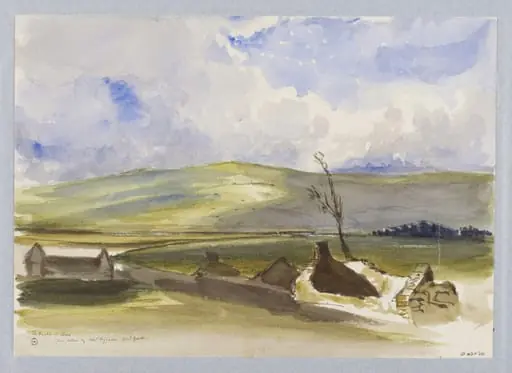 Sketches made during the Campaign of 1854-55 in the Crimea, Circassia and Constantinople
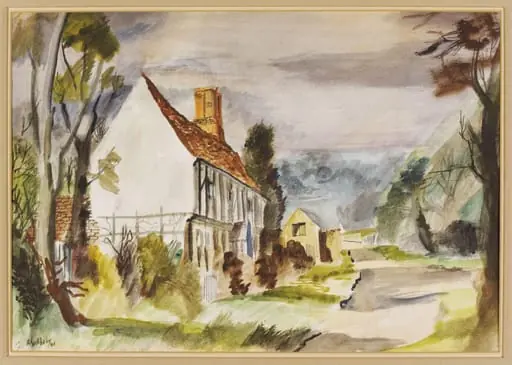 Old House at Bulmer
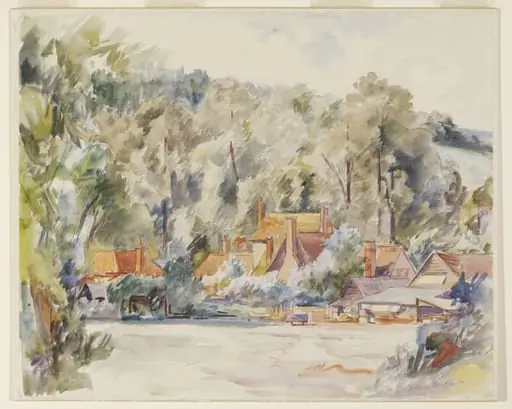 The Chequers Inn, Fingest
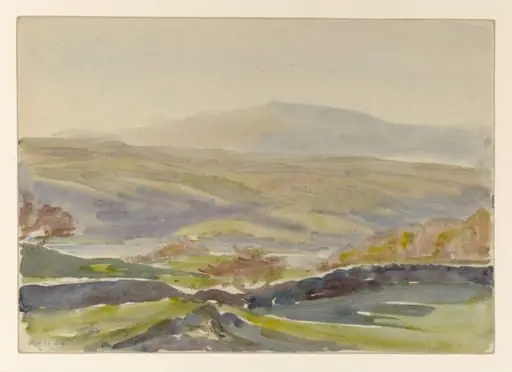 Monk Coniston moor
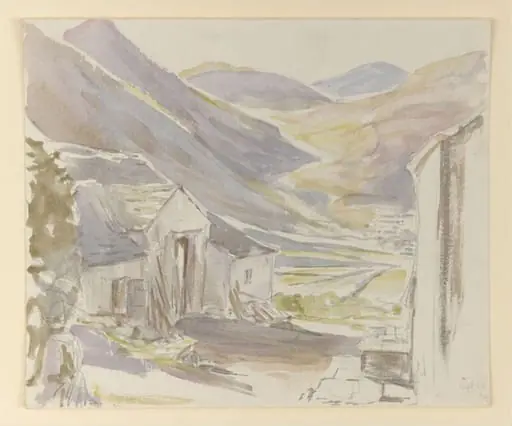 The Newlands Horseshoe of mountains seen from the Newlands valley
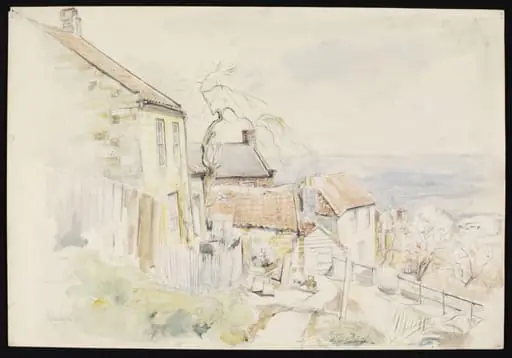 View down the Flags, Runswick Bay
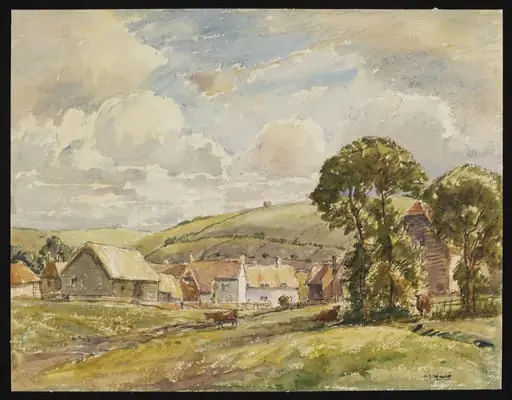 Wishford, Wylye Valley
 Porter Valley, No.2
 A view over hills and valleys