Artwork
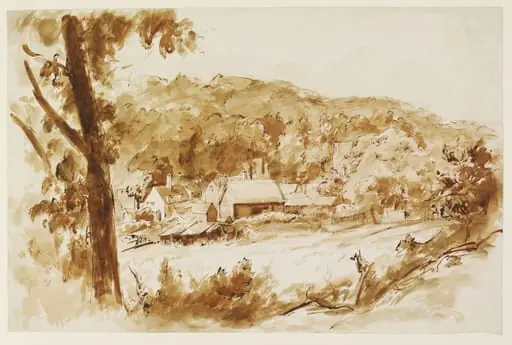
The Chequers Inn, Fingest
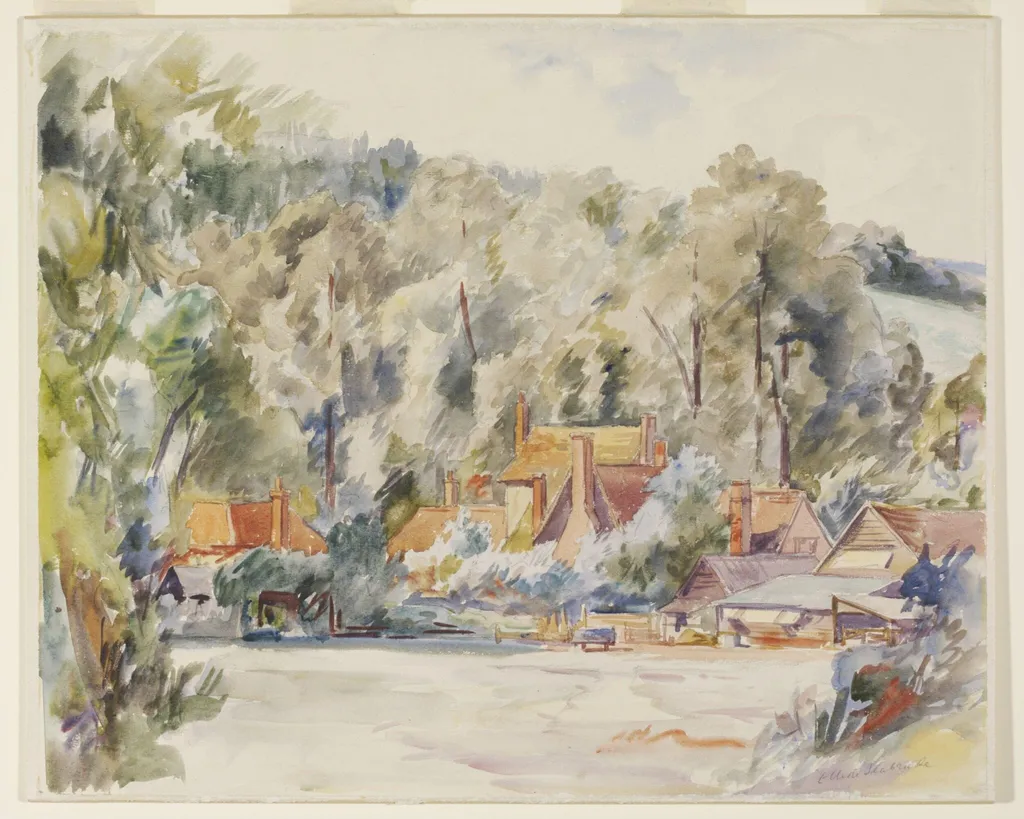
The Chequers Inn, Fingest is a watercolor work on paper by Seabrooke. It dates from 1940 and is held in the collection of the Victoria and Albert Museum.
About this work
Overview
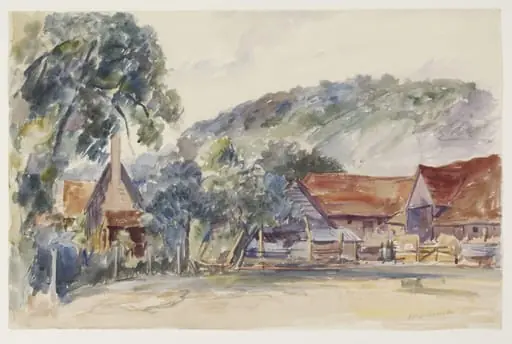
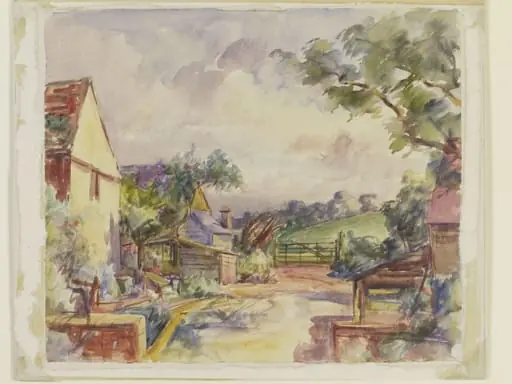
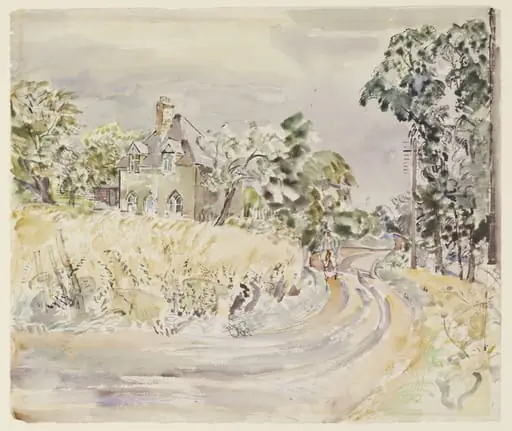
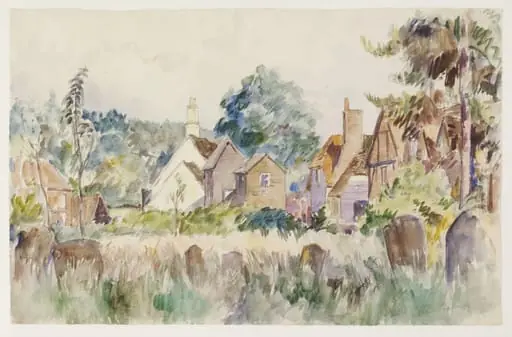
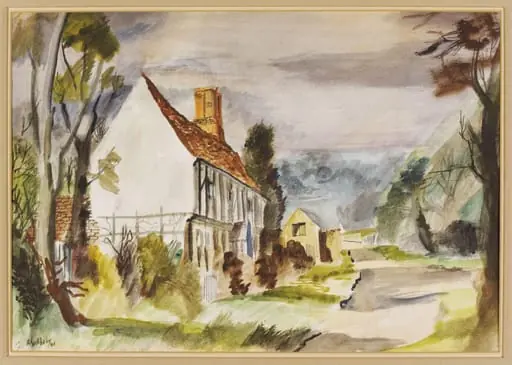
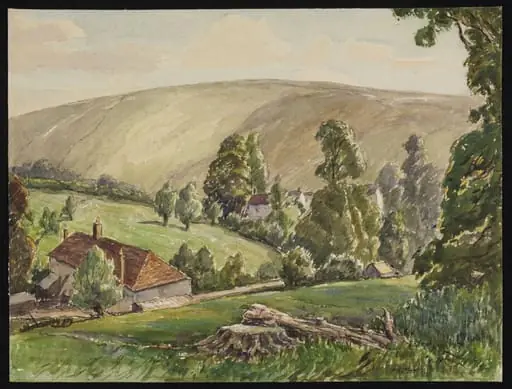
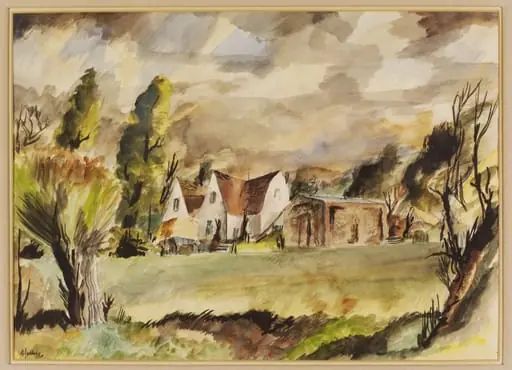
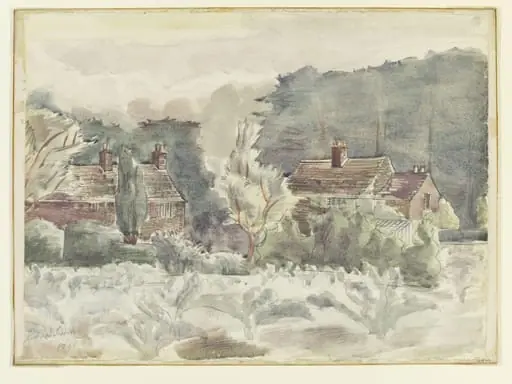
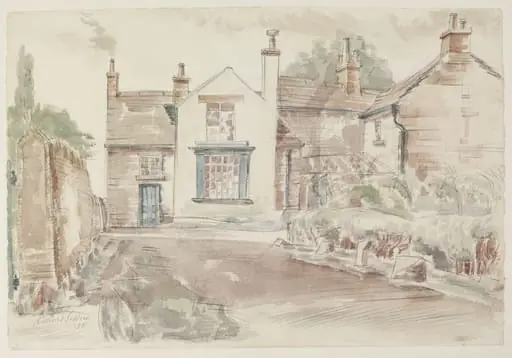
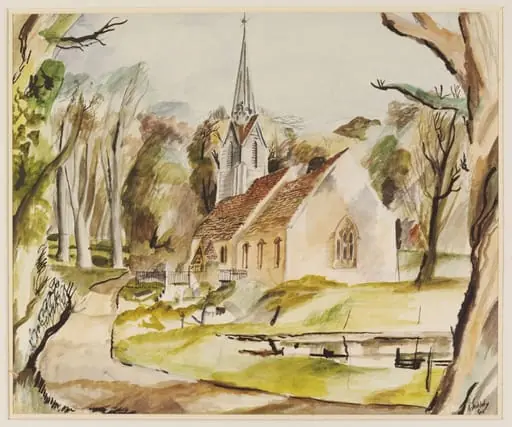
This 1940 watercolour by Seabrooke portrays the Chequers Inn set within the village of Fingest. A cluster of modest cottages and a winding road sit beneath a canopy of mature trees on a gentle slope, the composition anchored by a prominent tree whose branches dominate the upper field. The palette of muted greens and earth tones conveys the quiet rural atmosphere of the English countryside.
Subject & Meaning
The work records a typical English village scene, emphasizing the relationship between built structures and their natural surroundings. By focusing on the inn and its surrounding dwellings, the painting reflects the everyday life of a community anchored in tradition, suggesting a sense of continuity amid the broader disruptions of the era.
Technique & Style
Seabrooke employs loose, expressive brushwork that captures the texture of foliage and the weathered roofs with a sense of immediacy. The watercolour medium allows for transparent washes of green and brown, creating depth while preserving the spontaneity of the scene. The handling of light and shadow is subtle, enhancing the atmospheric quality without detailed realism.
History & Provenance
The piece belongs to the Recording Britain project, a wartime scheme initiated in 1940 to document the nation’s visual heritage. Funded by the Pilgrim Trust and overseen by Sir Kenneth Clark, the program commissioned artists to produce works that would safeguard images of vulnerable sites. This watercolour entered the collection as part of that effort and remains in the Recording Britain archive.
Context
Created during World War II, the painting reflects contemporary anxieties about the loss of historic landscapes to bomb damage, urban growth, and agricultural change. By depicting a tranquil village scene, it contributes to a broader narrative that sought to affirm national identity and preserve a visual record of places that might otherwise disappear.
Artist & collection
Artist
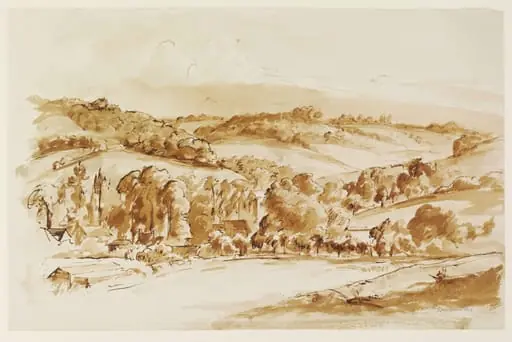
This watercolor artist recorded the rolling hills and stone cottages of the Chilterns in the 1940s.