Artwork
The Defence of Basing House by the Cavaliers against the Roundheads
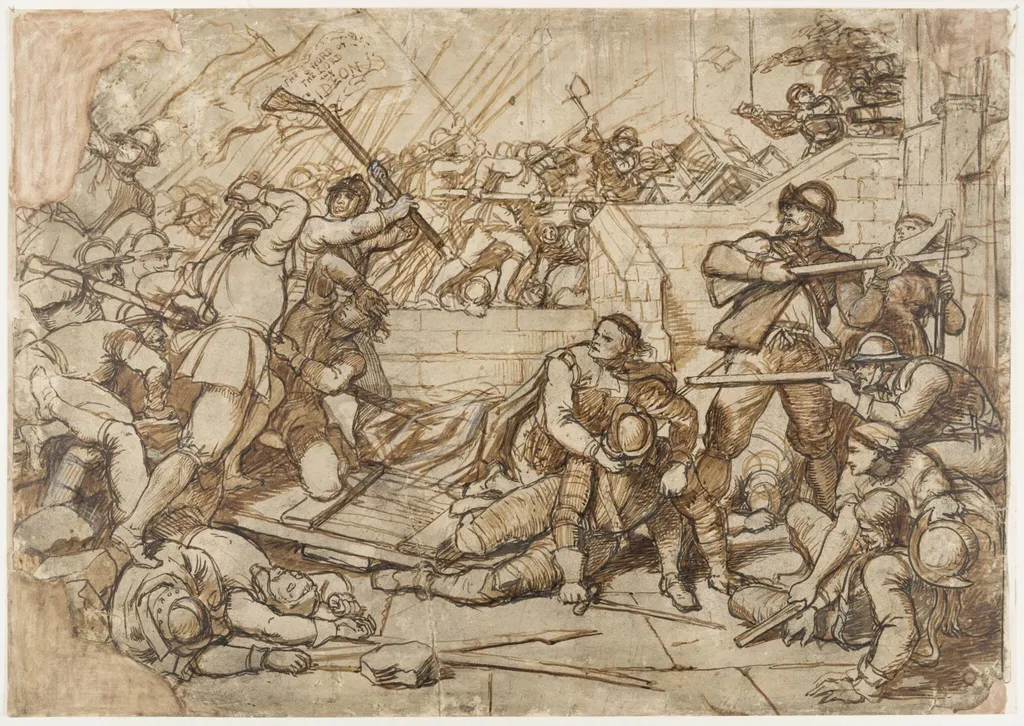
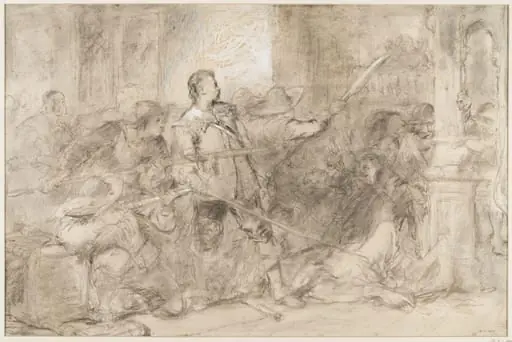
The Defence of Basing House by the Cavaliers against the Roundheads is a drawing by the Impressionist artist Cope. It dates from 1881 and is held in the collection of the Victoria and Albert Museum. This sepia drawing serves as a preparatory study for a fresco commissioned for the Peers' Corridor in the House of Lords.
About this work
Overview
This sepia drawing serves as a preparatory study for a fresco commissioned for the Peers' Corridor in the House of Lords.
This sepia drawing serves as a preparatory study for a fresco commissioned for the Peers' Corridor in the House of Lords. Executed in 1862, it was intended to guide the final wall painting rendered in the water-glass technique. The work captures a moment from the English Civil War, focusing on the defense of Basing House by Royalist forces against Parliamentarian troops, rendered with urgency rather than finish.
Subject & Meaning
The scene depicts the violent struggle during the 1644 siege of Basing House, a Royalist stronghold. Figures are locked in close combat—some standing, others fallen—emphasizing the chaos and brutality of the conflict. The drawing does not idealize heroism but conveys the confusion and physical toll of urban warfare, reflecting the historical reality of the siege’s intensity and duration.
Technique & Style
The artist employed rapid, expressive lines in sepia ink to suggest motion and tension. Forms are suggested through loose strokes and overlapping contours rather than detailed rendering. Cross-hatching and smudged areas create depth and texture, particularly in the rubble and armor, prioritizing emotional immediacy over polished finish. The sketch-like quality underscores its function as a working study.
History & Provenance
Commissioned as part of a decorative program for the House of Lords, the fresco and its preparatory drawings were produced under the direction of the Royal Commission for the Fine Arts. The drawing remained in the parliamentary collection after the fresco’s completion. Its survival offers insight into the process of large-scale Victorian historical painting and the political use of art in the 19th century.
Context
The depiction of Basing House’s defense aligned with mid-19th-century Romantic interest in chivalric conflict and national history. While Parliament had defeated the Royalists in the 17th century, Victorian audiences increasingly viewed the Cavaliers with nostalgic sympathy. The commission reflected a broader cultural effort to visually anchor British institutions in a dramatized, heroic past.
Legacy
The drawing stands as a rare surviving example of preparatory work for a Victorian fresco executed in the water-glass technique, a method rarely used in Britain. Its raw energy contrasts with the polished finish of the final mural, offering scholars a window into the artist’s decision-making process. It remains a significant artifact in the study of 19th-century historical illustration and parliamentary art.
Own this work as a print
Artist & collection
Artist
This artist worked in the 1800s and left detailed drawings and watercolors of old battles and quiet country life.

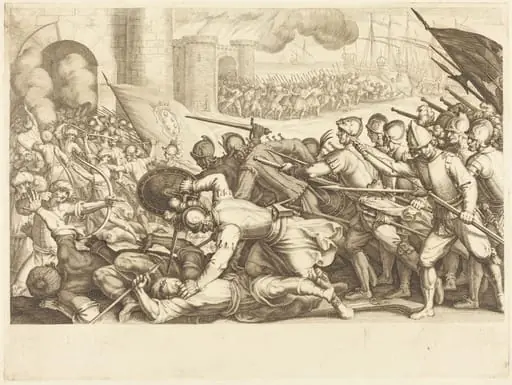 The Troops Forcing the Gate of a Town
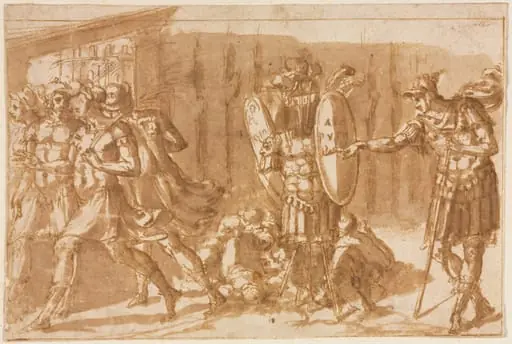 Victorious Soldiers with Trophy
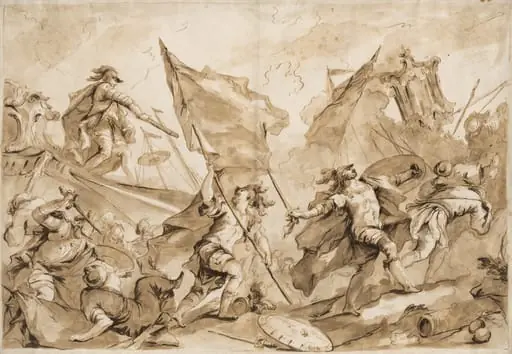 Jacopo Marcello Directing the Assault of Gallipoli
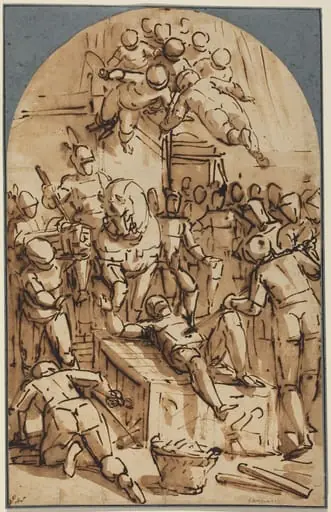 The Martyrdom of Saint Lawrence
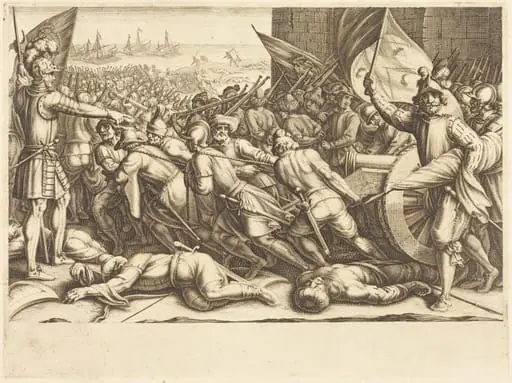 The Re-embarkation of the Turks
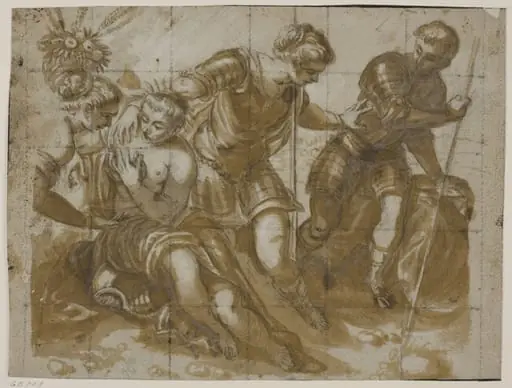 Minerva, Mars and Venus after Jacopo Tintoretto’s painting in the Sala dell’Anticollegio, Doge’s Palace, Venice
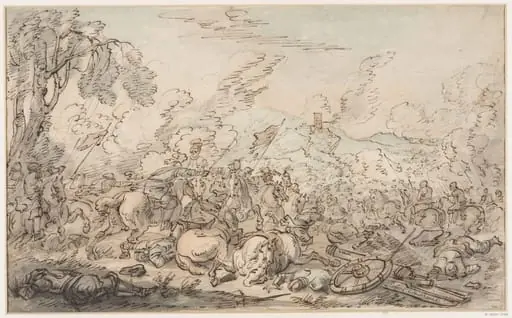 Untitled
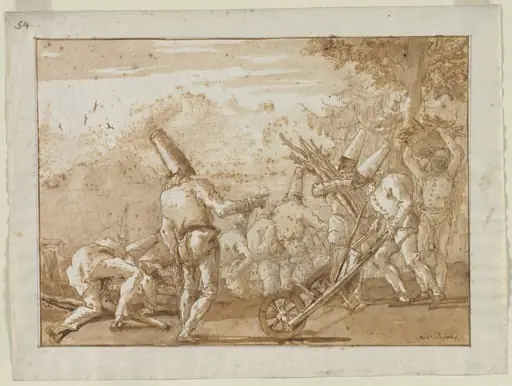 Gathering Wood
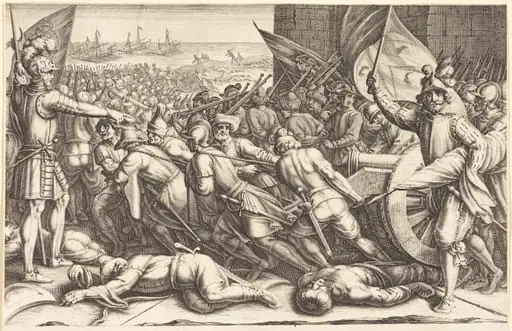 The Re-embarkation of the Troops
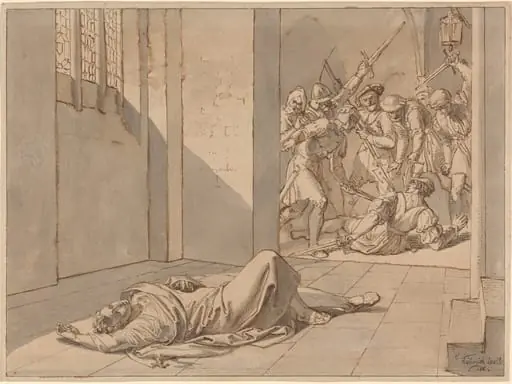 The Assassination of King Wenzel III
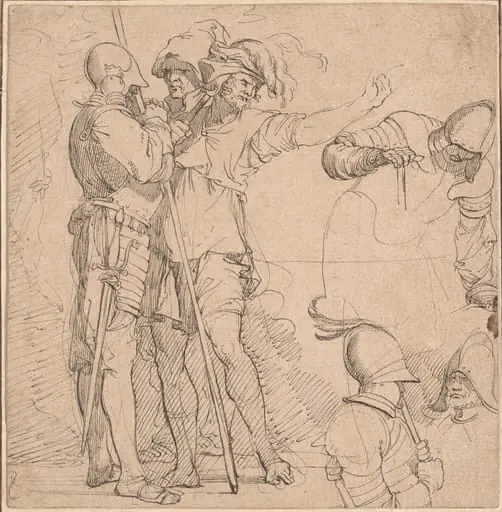 Capriccio Derived from Salvator Rosa's "Figurine"
 A fight between Cavaliers and Puritans